
Magnitude 7.7 Earthquake Devastates Flores, Killing 51 and Displacing Thousands
When the earth shook beneath the Flores Sea at dawn on Saturday, the tremor was felt not only across the islands of East Nusa Tenggara but as a stark reminder for the entire ASEAN region of our shared vulnerability along the Pacific Ring of Fire. The magnitude 7.7 earthquake that struck off the coast of Flores Island has claimed at least 51 lives, displaced thousands, and triggered a tsunami warning that sent more than 2,000 residents fleeing to higher ground.
When the earth shook beneath the Flores Sea at dawn on Saturday, the tremor was felt not only across the islands of East Nusa Tenggara but as a stark reminder for the entire ASEAN region of our shared vulnerability along the Pacific Ring of Fire. The magnitude 7.7 earthquake that struck off the coast of Flores Island has claimed at least 51 lives, displaced thousands, and triggered a tsunami warning that sent more than 2,000 residents fleeing to higher ground. For Thai readers who have walked the corridors of Komodo International Airport or sailed the turquoise waters near Labuan Bajo, this disaster carries a deeply personal resonance, echoing the trauma of the March 2025 Sagaing earthquake that shook Bangkok's skyline.
Magnitude 7.7 Earthquake Devastates Flores Island, Killing 51 and Displacing Thousands in Indonesia's East Nusa Tenggara
Bangkok, Thailand — The deadliest earthquake to strike Indonesia since the 2022 West Java disaster tore through the island of Flores at 05:58 WITA on Saturday, August 15, 2026 (21:58 UTC August 14), leaving a trail of collapsed buildings, shattered infrastructure, and grieving communities. The quake, which registered a maximum Mercalli intensity of VIII (Severe) with a peak ground acceleration of 0.635 g, originated from a shallow thrust fault just 10 kilometers beneath the earth's surface, approximately 68 kilometers north-northwest of the coastal town of Ende. As rescue teams from across the archipelago race against time to pull survivors from the rubble, the full scale of this catastrophe continues to unfold, with the death toll expected to rise in the coming days.
A Dawn of Destruction: How the Earthquake Unfolded
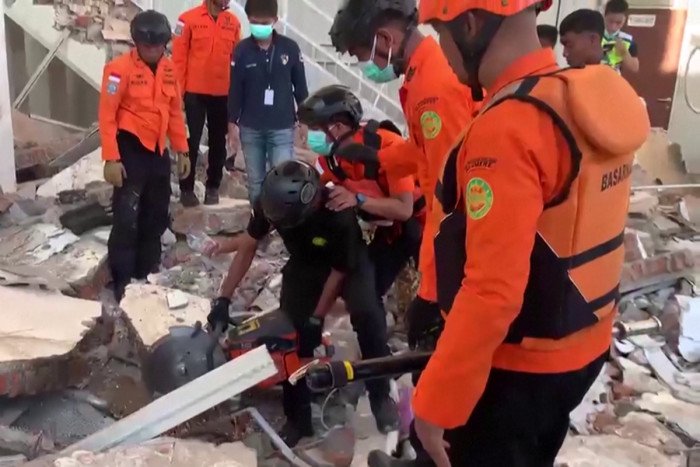
The earthquake struck while most residents of East Nusa Tenggara (NTT) were still asleep, a cruel timing that East Nusa Tenggara Governor Emanuel Melkiades Laka Lena said proved fatal for many. "Most victims died while asleep as rubble fell on them," the governor reported, describing scenes of sudden, silent tragedy across the region. The rupture occurred along the Flores back-arc thrust fault (FBAT), a geological feature that BMKG director Wijayanto confirmed had been previously evaluated to generate a maximum possible magnitude of 7.8 to 7.9. The shallow depth of just 10 kilometers amplified the shaking, sending violent tremors through communities from Ende to Maumere and beyond.
The initial shock was preceded by a foreshock of magnitude 4.6 on August 2, a warning sign that went largely unheeded. Within hours of the main event, BMKG recorded more than 235 aftershocks, with the total eventually reaching 341, including a significant magnitude 6.1 tremor. Wijayanto warned that the high rate of aftershocks is expected to continue for two to three weeks, keeping residents on edge and complicating rescue efforts. The relentless shaking has left survivors traumatized, with many refusing to return indoors even as night falls.
Death Toll Rises: Communities Count Their Losses
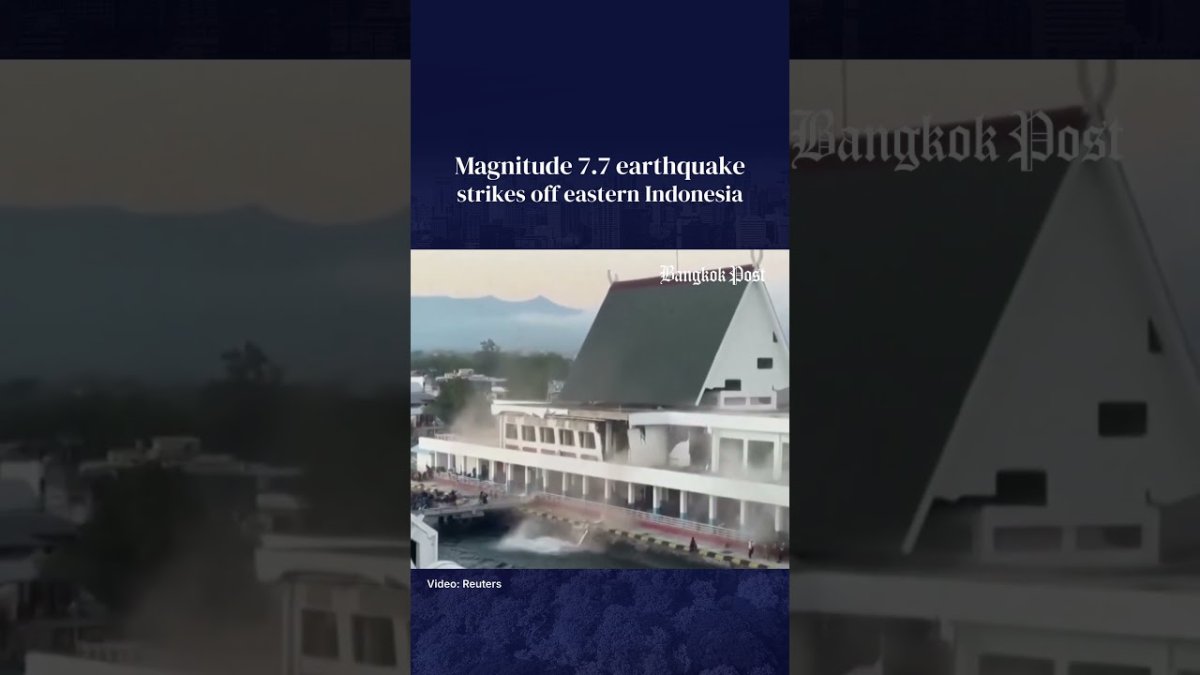
The human cost of this disaster is staggering. At least 51 people have been confirmed dead, with more than 113 injured — 36 seriously and 77 with minor wounds, according to Deputy Health Minister Benjamin Paulus Octavianus. The hardest-hit areas paint a grim picture of localized devastation. In East Manggarai Regency, 14 people were killed when a building collapsed, while the Reok District in Manggarai reported at least 8 deaths. The coastal city of Maumere suffered 2 deaths and 5 injuries, but it was the collapse of a maritime passenger terminal that created a particularly harrowing scene — the gangway to an inter-island ferry collapsed as passengers were boarding, throwing several people into the sea.
The death toll of 51 makes this the deadliest earthquake in Indonesia since the 2022 West Java earthquake, a sobering statistic for a nation that has grown tragically accustomed to seismic catastrophe. Governor Laka Lena declared a 14-day emergency on August 16, mobilizing all available resources to respond to the crisis. The displaced population now exceeds 9,290 people, with around 5,000 officially evacuated and more than 3,300 in the Sikka region either self-evacuating or sheltering in a local sports arena. Makeshift shelters have sprung up across the affected areas — a field outside the Ende police station has become an informal refuge, while 15 patients and five infants are being cared for in a tent outside Ende Regional General Hospital after patients at two hospitals in Sikka and Ende were evacuated.
Tourism Heartland Hit: Labuan Bajo and Komodo National Park Affected
For the tourism industry that forms the economic backbone of this region, the earthquake has delivered a devastating blow. In Labuan Bajo, the gateway to the famed Komodo National Park and a destination increasingly popular with Thai travellers, two Chinese tourists were injured at a hotel as buildings sustained damage across the town. Komodo International Airport, which handles the steady stream of visitors heading to see the legendary Komodo dragons, was among the structures damaged. On Padar Island, a popular trekking destination within the national park, 986 tourists found themselves stranded after maritime port services were suspended, awaiting evacuation while aftershocks continued to rattle the region.
The disruption extends far beyond the tourist hotspots. Frans Sales Lega Airport suffered a partial ceiling collapse, while Umbu Mehu Kunda Airport also sustained damage. Roads between Ende-Nagekeo and Ende-Maumere have become impassable, severing critical supply lines and hampering rescue operations. The state energy company Pertamina reported that 20 petrol stations are not operational due to power outages, further complicating logistics in an already challenging environment. For Thai travellers who have flocked to Labuan Bajo and the surrounding islands in increasing numbers, this disaster serves as a stark reminder of the region's geological volatility — and the importance of robust disaster preparedness across ASEAN's tourism corridors.
Tsunami Warning and the Scramble to Higher Ground
The immediate aftermath of the earthquake brought a secondary terror: the threat of a tsunami. A tsunami warning was issued and then rescinded, but not before more than 2,000 people had fled to higher ground in a desperate scramble for safety. The warning proved justified in part — waves up to 1.61 meters were recorded, and a tsunami flooded a beach and village in the Siontapina Sub-District of Buton, South Sulawesi, demonstrating the far-reaching impact of this seismic event. Witness Abdul Mutas, 63, of Sikka, described the panic: "I only brought my body... The tides were rising, so we ran."
The psychological toll of the tsunami threat is evident in the behavior of survivors. Deputy Regent of Sikka Simon Subandi observed, "Almost all of Sikka's residents didn't dare stay indoors, so they slept on a porch or a tent outside." This fear is well-founded — the region has a traumatic history with tsunamis. The 1992 magnitude 7.5 earthquake on Flores killed approximately 2,500 people, and the 2018 Palu earthquake spawned a tsunami that killed more than 4,400. For the people of eastern Indonesia, the memory of these disasters is never far from the surface, and the decision to sleep under the open sky rather than risk another collapsing roof is a rational response to an ever-present threat.
Massive Rescue and Relief Operation Underway
In response to the catastrophe, Indonesian authorities have launched one of the largest disaster response operations in recent years. President Prabowo Subianto ordered a delegation of senior officials to NTT to assess the situation, including Coordinating Minister Pratikno, Home Affairs Minister Tito Karnavian, Public Works Minister Dody Hanggodo, Basarnas head Mohammad Syafii, and BNPB chief Suharyanto. The search-and-rescue priority remains locating people trapped under rubble, with Basarnas dispatching teams from Bali and West Nusa Tenggara to augment local efforts. Approximately 100 Mobile Brigade Corps (Brimob) police officers plus 137 members from Java have been deployed, while the Indonesian National Armed Forces (TNI) has committed 1,267 personnel to the operation.
In total, more than 3,500 soldiers and police have been mobilized, according to cabinet secretary Teddy Indra Wijaya. The relief effort includes 50,000 food packages delivered through the Presidential Assistance program and 27 tons of relief supplies sent to the affected areas. More than 1,300 homes have been damaged according to BNPB, with over 150 homes, schools, hospitals, and offices destroyed or rendered unusable. The scale of the response reflects both the severity of the disaster and the Indonesian government's determination to provide swift assistance to the affected communities, even as the full extent of the damage continues to be assessed.
Regional Implications: ASEAN Solidarity and Shared Vulnerability
For Thailand and the broader ASEAN community, this earthquake is more than a distant tragedy — it is a reminder of our shared geological fate. Indonesia, an archipelago of about 290 million people, straddles the Pacific Ring of Fire, a horseshoe-shaped zone of intense seismic activity that also touches parts of Myanmar, where a magnitude 7.7 earthquake struck near Sagaing on March 28, 2025, killing more than 3,000 people across Myanmar and Thailand and collapsing a skyscraper under construction in Bangkok. The parallels between these two events are striking, and they underscore the importance of regional cooperation in disaster management under the AADMER agreement, which binds ASEAN member states to collaborate on emergency response and preparedness.
Thailand's Department of Disaster Prevention and Mitigation (DDPM) and the Thai Meteorological Department closely monitor regional seismic events, and the lessons learned from both the Sagaing earthquake and now this Flores disaster will inform future preparedness strategies. For Thai travellers, the affected areas — Labuan Bajo, Komodo National Park, Bali, and Lombok — are among the most popular destinations in Southeast Asia, and the disruption to tourism infrastructure will have ripple effects across the regional travel industry. The stranded tourists on Padar Island and the damaged airports serve as a reminder that when the earth moves in one part of ASEAN, the consequences are felt throughout the region.
What to Watch For
In the coming days and weeks, the focus will remain on search-and-rescue operations and the delivery of aid to isolated communities. The expected continuation of aftershocks for two to three weeks will keep residents on edge and complicate recovery efforts. The Indonesian government's 14-day emergency declaration provides a framework for coordinated response, but the reconstruction of homes, schools, hospitals, and infrastructure will take months, if not years. The tourism industry in Labuan Bajo and the surrounding islands will need sustained support to recover, and regional partners like Thailand can play a role in supporting ASEAN's collective resilience.
As the people of Flores begin the long process of rebuilding, the international community — and particularly their ASEAN neighbours — will be watching closely. The earthquake has once again demonstrated that natural disasters do not respect national borders, and that the strength of our region lies in our ability to stand together in times of crisis. For Thailand, the memory of the Sagaing earthquake and the collapse of that Bangkok skyscraper remains fresh, and the images from Flores will resonate deeply. The road to recovery will be long, but the spirit of the Indonesian people, like the spirit of the Thai people after our own disasters, will endure.
By Ann Srisawat, Staff Writer
Keywords: Flores earthquake, East Nusa Tenggara earthquake, Indonesia earthquake 2026, Labuan Bajo earthquake, Komodo National Park, tsunami warning, Flores back-arc thrust fault, ASEAN disaster response, Thai travellers Indonesia, magnitude 7.7 earthquakeThis article was produced with AI-assisted research and editorial support. Reporting is based on sources cited in the article.
What's Your Reaction?
 Like
0
Like
0
 Dislike
0
Dislike
0
 Love
0
Love
0
 Funny
0
Funny
0
 Wow
0
Wow
0
 Sad
0
Sad
0
 Angry
0
Angry
0

Southeast Asia Correspondent at Global1.News. Based in Bangkok, covering Thai and Southeast Asian politics, economy, technology, and culture. Deep regional perspective on one of the world's most dynamic regions.














Comments (0)