
Judge Sentences Lev Shlosberg to 11 Years in Prison for Anti-War Statements
Russian opposition politician Lev Shlosberg was sentenced to 11 years and one month in prison for anti-war statements under wartime censorship laws, as the Supreme Court rejected his Yabloko party's election appeal on the same day.
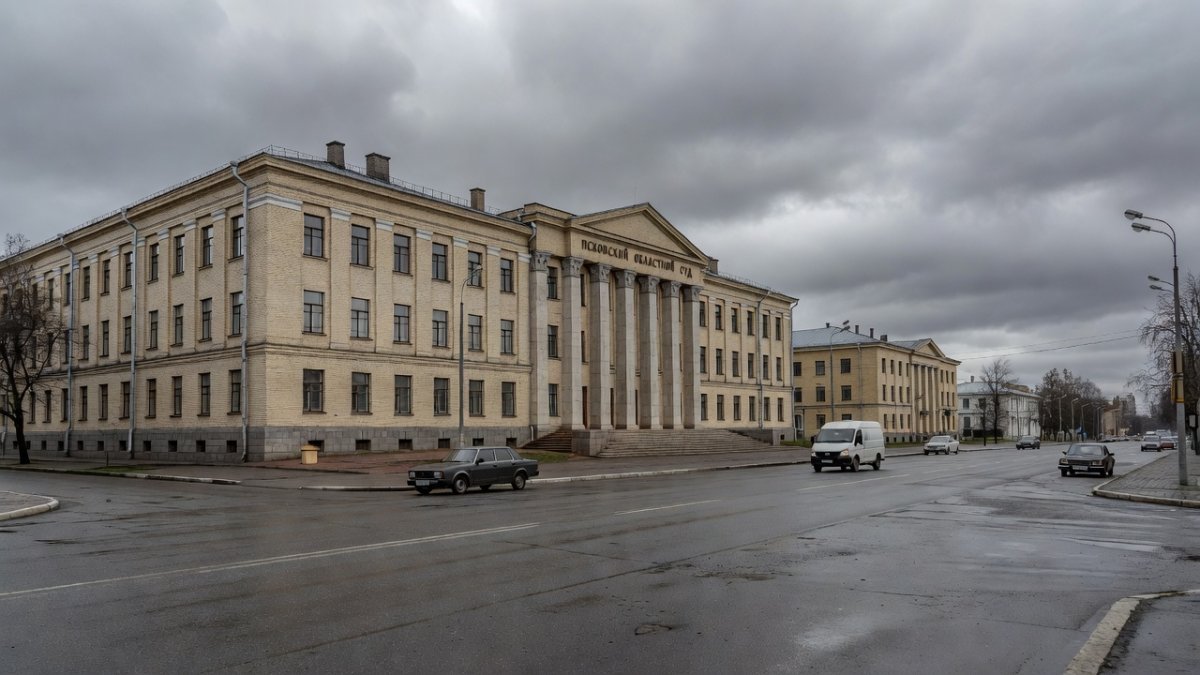
A judge in the Pskov region has sentenced veteran opposition politician Lev Shlosberg to 11 years and one month in prison on charges of "discrediting" the Russian military and spreading "fake news" about it, Russian media reported Monday. The sentence, which partially combines near-maximum penalties under wartime censorship laws with a previous conviction, lands on the same day Russia’s Supreme Court rejected an appeal from Shlosberg’s party, Yabloko, over its removal from next month’s parliamentary ballot. The twin legal blows mark a significant escalation in the Kremlin’s crackdown on anti-war voices just weeks before Russians head to the polls in September.
Shlosberg Sentenced Under Wartime Censorship Laws
The Pskov City Court handed down the sentence on Monday, according to the exiled news outlet Mediazona. State prosecutors had sought a sentence of 12 years and one month. The verdict partially combines near-maximum penalties under Russia’s wartime censorship statutes with a previous November 2025 conviction, in which Shlosberg was sentenced to 420 hours of community service for violating Russia’s "foreign agent" law.
Shlosberg, a senior member of the liberal Yabloko party, pleaded not guilty to the charges. In his final statement to the court, he rejected the prosecution’s case outright. "I am an innocent man, against whom criminal charges have been unlawfully brought, who was unlawfully deprived of liberty pending a court verdict, and who is being unlawfully deprived of liberty following a court verdict," Shlosberg said, according to court reports.
The Feb. 25, 2022 Telegram Post
The military "fakes" charge stems from a Telegram post dated Feb. 25, 2022, in which Shlosberg reshared content from the now-defunct Ekho Moskvy radio station. The post featured a British tabloid cover depicting President Vladimir Putin alongside a bloodied woman. Shlosberg argued in court that he made the post before Russia passed its wartime censorship laws, which criminalize the dissemination of "false" information about the armed forces.
The separate "discrediting" charge is linked to a January 2025 public debate in which Shlosberg was accused of calling for a ceasefire in Ukraine. Shlosberg denied publishing a video of the debate on social media and noted that the specific statements cited by prosecutors were actually made by his debate opponent, according to Mediazona.
Procedural Irregularities in the Trial
The legal proceedings have been marked by procedural irregularities, according to independent news outlets. Novaya Gazeta reported that the Pskov City Court judge refused to question Shlosberg directly, reading transcripts from earlier sessions instead. In addition, after Shlosberg’s three defense attorneys missed hearings due to illness and scheduling conflicts, the judge appointed a state lawyer and rejected motions to decline the representation.
Defense lawyers have indicated they will appeal the verdict, though legal experts note that appellate courts in Russia rarely overturn convictions in politically sensitive cases. The sentence is expected to be served in a penal colony, though the specific facility has not yet been announced.
Supreme Court Rejects Yabloko’s Appeal
On the same day as Shlosberg’s sentencing, Russia’s Supreme Court rejected an appeal by Yabloko, upholding a decision to cancel the registration of its federal slate of candidates for next month’s State Duma elections. Earlier this month, the Supreme Court disqualified Yabloko from parliamentary elections for copyright violations during campaign activity and for breaking campaign finance laws by allegedly accepting funding from abroad.
That ruling, which is now final, removes Russia’s oldest liberal party — and what was the only registered party campaigning on a pro-peace platform — from the nationwide party-list ballot. While Yabloko candidates can still run in single-member districts, securing a parliamentary seat through those races is far more challenging.
Rybakov: 'A Mere Imitation of a Court Proceeding'
Yabloko party chairman Nikolai Rybakov, who attended Monday’s appeal hearing, slammed the Supreme Court’s decision. "What we witnessed was the mere imitation of a court proceeding. Yet we will continue to use every available avenue to prove that we are right — every legal means at our disposal," Rybakov told journalists outside the Supreme Court building.
"As you saw, the court made no attempt to examine or engage with the substance of the case. In fact, we are not at all certain that the members of the bench even understood what the matter before them was actually about," Rybakov added. "Yabloko was effectively disqualified from the election for standing for peace and freedom. Those who removed us from the ballot stand for the exact opposite political direction."
Yabloko’s 'Plan B' and the Road to September
Rybakov said Yabloko was preparing a "plan B" for Russians who support the party’s pro-peace platform but who are now unable to vote for its candidates in the parliamentary elections. While he did not provide further details about those alternative plans, he said Yabloko would file an appeal to the Supreme Court ruling with Russia’s Constitutional Court.
Under Russian election law, half of the State Duma’s 450 seats are distributed among the list of political parties that receive more than 5% of the votes. The remaining 225 seats are given to the winners of elections in single-member constituencies. Yabloko, which is not currently represented in parliament, has been campaigning on calls for an immediate ceasefire in Ukraine, freedom of information and an end to political repression.
EU Plans Most Far-Reaching Sanctions
The legal crackdown in Moscow comes as the European Union prepares to significantly expand sanctions against Russia over its war in Ukraine. EU foreign policy chief Kaja Kallas told the German newspaper Die Welt that the bloc is planning its most extensive sanctions listings since the start of the war. "EU sanctions have already cost Russia dearly, depriving Russia's war machine of over 1 trillion euros [$1.16 trillion], and for the fall I am putting forward the most far-reaching sanctions listings since the start of the war," Kallas said.
"Once adopted, they would immediately raise the total number of sanctioned Russian entities by a third. The pressure must keep growing until Moscow ends its war," said Kallas, who leads the European External Action Service (EEAS), the EU's diplomatic service. EU diplomatic sources later told Reuters that the EEAS would propose targeting around 1,600 Russian individuals and entities, mostly linked to the military-industrial complex. The designations will include travel and transaction bans as well as asset freezes, the sources added.
Timing and Scope of New Sanctions
The EEAS is expected to present the new sanctions list to EU countries in early September, with an aim to adopt them in October, the sources added. The listings are not expected to be accompanied by sectoral sanctions — which are under the European Commission's purview — as part of an effort to speed up their adoption. EU sanctions must be approved unanimously.
Traditional EU packages against Russia, which combine sectoral measures and full designations, have frequently become dogged by lengthy disputes. During negotiations for the latest 21st package, Greece raised an issue over a forthcoming ban on Russian liquefied natural gas transfers. That package was approved in July, imposing curbs on Russia's banking sector and cryptocurrency networks.
A Political Landscape Reshaped by War
Russians will head to the polls in September to elect a new State Duma and regional officials in a vote that the ruling United Russia party is expected to dominate but which could offer insight into how four years of war in Ukraine have reshaped the country’s political landscape. The removal of Yabloko from the party-list ballot and the sentencing of Shlosberg signal that the Kremlin is unwilling to tolerate even a symbolic anti-war presence in the formal political arena.
Observers suggest this could indicate a broader strategy to consolidate power ahead of the elections, ensuring that no opposition voice gains a platform to challenge the official narrative on the war. For ordinary Russians, the events of Monday underscore the narrowing space for political dissent, as the state deploys wartime censorship laws and electoral disqualification to silence critics.
Implications for the Opposition
The simultaneous legal actions against Shlosberg and Yabloko are likely to have a chilling effect on remaining opposition figures. With Yabloko removed from the party-list ballot and its most prominent member now facing more than a decade in prison, the liberal opposition has lost its primary institutional vehicle for contesting the September elections.
Rybakov’s defiant remarks outside the Supreme Court suggest that Yabloko will continue to challenge its disqualification through legal channels, though the prospects for success appear limited. The party’s "plan B" remains vague, but it may involve encouraging supporters to back like-minded candidates in single-member districts or to engage in protest voting.
International Reaction and the Road Ahead
The EU’s planned sanctions expansion, set to be presented in early September, will likely add further pressure on Moscow just as the election campaign enters its final weeks. Kallas’s statement that the new listings would raise the total number of sanctioned Russian entities by a third signals a significant intensification of Western pressure.
For Shlosberg, the immediate road ahead leads to a penal colony. His lawyers have vowed to appeal, but the procedural irregularities documented by Novaya Gazeta and Mediazona are unlikely to sway appellate judges in a case of this nature. The veteran politician’s final words in court — declaring his innocence and condemning the proceedings as unlawful — may stand as his last public statement for years to come.
This article was produced with AI-assisted research and editorial support. Sources: The Moscow Times, Mediazona, Novaya Gazeta, Reuters, Die Welt.
By Irina Volkov, Staff Writer
What's Your Reaction?
 Like
0
Like
0
 Dislike
0
Dislike
0
 Love
0
Love
0
 Funny
0
Funny
0
 Wow
0
Wow
0
 Sad
0
Sad
0
 Angry
0
Angry
0
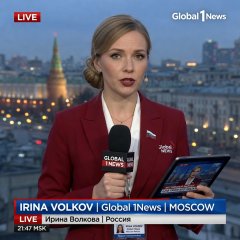
Russia/Eastern Europe Correspondent at Global1.News. Covering Russian politics, energy, security, and the shifting dynamics of the post-Soviet space. Provides clear-eyed analysis on one of the world's most opaque regions.












Comments (0)