
Jamaica Welcomes 40 New Citizens as US Applications Surge
Jamaica welcomed 40 new citizens at a 22 July 2026 PICA ceremony in Kingston, as US-based citizenship applications surged 25% in 2025, reflecting growing demand for Caribbean nationality amid regional migration pressures.
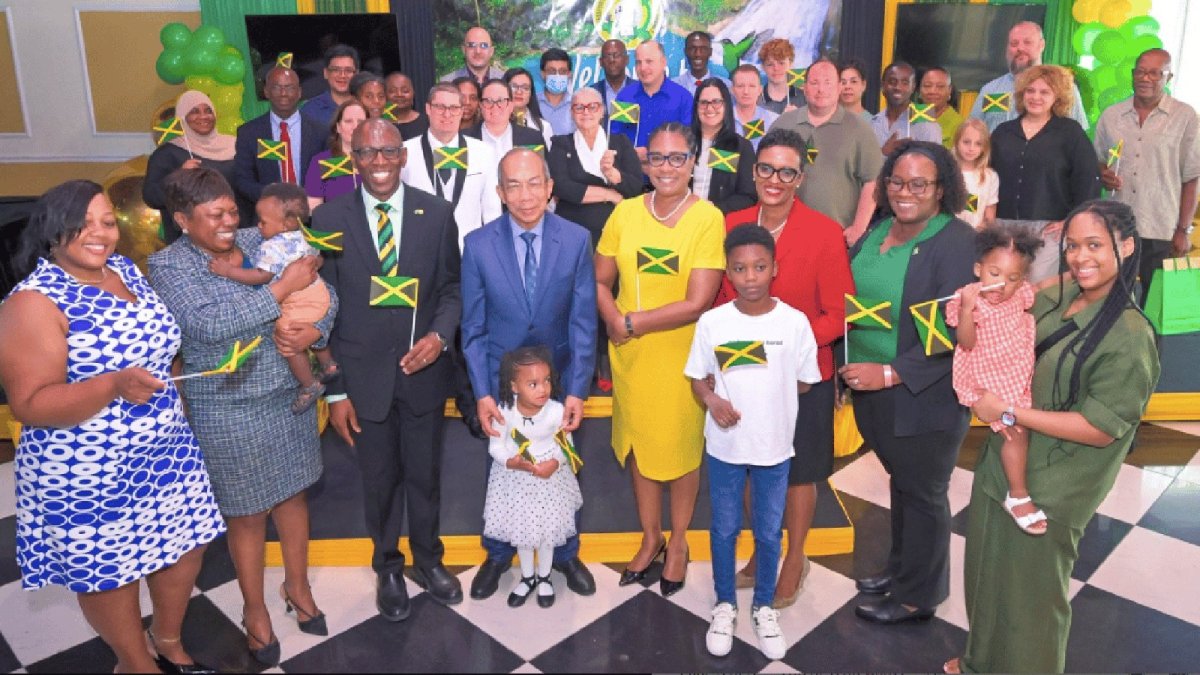
Kingston, Jamaica — On a warm July morning at the Terra Nova All-Suite Hotel in Kingston, 30 non-Commonwealth foreign nationals from 14 different countries stood together, hands raised, and pledged their loyalty to a nation many of them had come to call home. Another ten Commonwealth citizens joined them, bringing the total to 40 new Jamaicans sworn in at the Passport, Immigration and Citizenship Agency (PICA) naturalisation ceremony on 22 July 2026.
The scene was one of quiet triumph — a blend of nerves, relief and joy as families watched parents and children take the Oath of Allegiance. Among the 30 non-Commonwealth citizens were 12 women, 13 men and five children, each carrying their own story of migration, hope and new beginnings. Twenty-one were granted citizenship through naturalisation, four by descent, and one registered as a minor, reflecting the multiple legal pathways Jamaica offers to belonging.
A Ceremony of Belonging, Not Just Paperwork
For Williams, whose words carried the ceremony's central theme, the event was about more than legal formalities. "The certificates that will be issued today, it's not just a piece of paper. It's really joining a family. It's really joining a Jamaican family – Caribbean family and, indeed, a global family, and we want you to enjoy all of what we have and to contribute to what we have," Williams said, reframing the citizenship certificate as an entry into an interconnected web of kinship that spans the island, the region and the diaspora.
That framing resonated deeply with the new citizens. Tamargo, who addressed the gathering on behalf of the cohort, spoke of a shared sense of arrival and responsibility, pledging to respect Jamaican law and values and to contribute positively to their new society. It was a sentiment that echoed earlier PICA ceremonies, where gratitude and commitment have become recurring themes.
Chang anchored the occasion in Jamaica's national motto, "Out of Many, One People," urging the new citizens to participate actively in democracy, uphold the rule of law and care for their communities. For Chang, citizenship is both a privilege and a civic duty — a message that carries particular weight at a time when the region is grappling with questions of identity, migration and belonging.
Surge in US-Based Applications Signals Growing Demand
The ceremony comes at a moment of heightened regional interest in Caribbean nationality, and the numbers tell a compelling story. Applications for Jamaican citizenship from the United States surged 25 per cent in 2025, rising to 2,899 from 2,214 in 2024, according to data from the Jamaican Embassy in Washington, DC. Marriage-based applications jumped an even more striking 76 per cent in the same period.
These figures suggest that demand for Jamaican nationality is growing well beyond its traditional diaspora roots. For many in the United States, where immigration status has become increasingly precarious, Jamaican citizenship offers a stable anchor — a legal identity that cannot be easily revoked. The surge reflects a real hunger for belonging at a time when American immigration policy feels uncertain for many Caribbean nationals and their families.
The trend also raises practical questions for PICA and the Ministry of National Security. With application volumes climbing, will the agency expand or increase the frequency of naturalisation ceremonies to manage the backlog? And what of the processing times for marriage-based citizenship applications, which currently take up to four years? These are live policy issues that will shape how Jamaica manages its growing appeal as a nationality destination.
Third-Country Agreements Add New Complexity
Adding another layer of complexity are the third-country deportation agreements between Jamaica and the United States. These arrangements introduce new categories of foreign nationals arriving on the island, raising the question of who qualifies to remain — and on what terms. The implementation of these agreements, particularly which English-speaking nationals may seek authorisation to stay, is becoming a matter of increasing scrutiny for PICA and the Ministry of National Security.
For Caribbean readers, this is familiar terrain. Trinidad and Tobago, Barbados and Guyana all run their own naturalisation frameworks, each with distinct rules and procedures. But none publicises ceremony-level detail the way Jamaica now does, and few can match the geographic spread of nationalities that Jamaica welcomed on that July morning. The ceremony swore in citizens spanning five legal pathways to nationality — a breadth that underscores Jamaica's openness, even as neighbouring territories tighten their immigration posture.
A Quietly Countercultural Approach in a Region Under Pressure
While the Caribbean diaspora faces rising pressure abroad — including US denaturalisation moves affecting Caribbean nationals — Jamaica is doing something quietly countercultural: expanding its national family by design. The 25 per cent surge in US-based applications isn't incidental; it reflects a genuine desire for a stable nationality anchor at a time when American immigration status feels fragile for many. Jamaica absorbing that interest with ceremony rather than bureaucratic indifference is a genuine soft-power asset.
Yet the moment is not without its tensions. Even as thousands of Jamaicans leave the island's shores every year to start new lives elsewhere, some people come from far and wide to proudly become Jamaican citizens. Meanwhile, two Jamaicans deported by the United States to Eswatini have said they will stay there, not wanting to return home — a stark reminder of the complex push-and-pull dynamics that shape Caribbean migration.
What's disturbing, some observers note, is hearing born-Jamaicans say these new citizens shouldn't count as Jamaican, criticising many of them for not being black — in the same breath as condemning countries like the US for not receiving more Jamaicans, Haitians and other Caribbean people. It's a double standard that undercuts the very openness Jamaica celebrates in its motto.
CARICOM Free Movement and the Road Ahead
The ceremony also reignites questions about regional integration. Will Jamaica ever get to easy immigration and free movement across CARICOM, the way Barbados, Belize, Dominica and St Vincent are now exploring? Jamaica is showing it is happy to welcome new citizens — but only on its own terms. The government's part of the ledger, critics argue, is the processing backlog and its own reluctance to take in Haitian refugees — not the prejudice of individual citizens.
For the new citizens sworn in on 22 July, however, the moment was personal. They came from 14 nationalities, spanning continents and cultures, each choosing Jamaica as their home. In doing so, they joined a nation that has long defined itself by its openness — a nation that, even as it loses thousands of its own to emigration each year, continues to welcome others with open arms.
The ceremony at Terra Nova was a small event in the grand scheme of things — 40 people, one hotel ballroom, a few hours of speeches and oaths. But it speaks to something larger: Jamaica's quiet confidence in its own identity, its willingness to grow by inclusion, and its belief that citizenship is not a zero-sum game but a shared investment in the future.
As the new citizens filed out of the hotel, clutching their certificates and posing for photographs with family and friends, they carried with them more than legal documents. They carried membership in a family — Jamaican, Caribbean and global — and the responsibility that comes with it. For a region often defined by departure, it was a refreshing reminder that some people still choose to arrive.
By Sharon Sahatoo, Staff Writer
This article was produced with AI-assisted research and editorial support.
What's Your Reaction?
 Like
0
Like
0
 Dislike
0
Dislike
0
 Love
0
Love
0
 Funny
0
Funny
0
 Wow
0
Wow
0
 Sad
0
Sad
0
 Angry
0
Angry
0

Caribbean Correspondent at Global1.News. Based in Port of Spain, Trinidad, covering Caribbean politics, economy, energy, climate, and culture. Amplifying the voices and stories of the Caribbean region.













Comments (0)