
Israeli Strikes Kill 11 in Lebanon as Hezbollah Vows Response
Israeli airstrikes killed 11 people in southern Lebanon on Saturday, including three children, in the deadliest escalation since the June ceasefire. Hezbollah vowed retaliation as both sides prepare for U.S.-sponsored negotiations in Rome, threatening the framework deal's fragile stability.
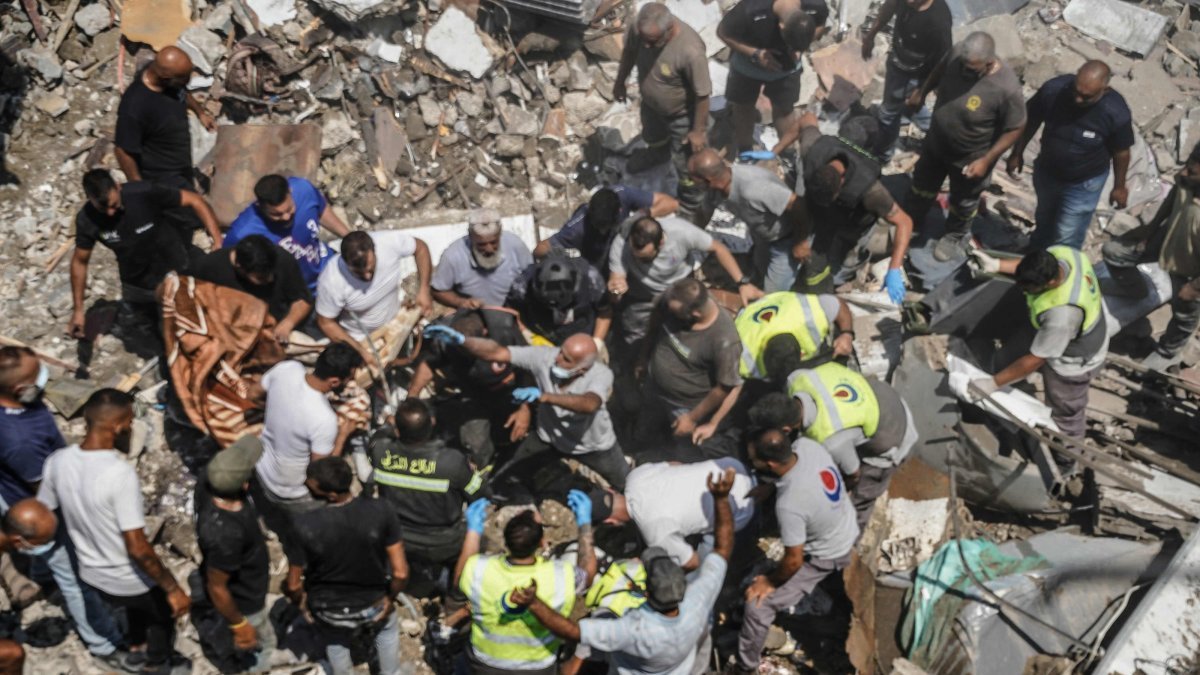
The fragile calm that has held across the Israel-Lebanon border since the June framework agreement is showing severe strain. Early Saturday morning, Israeli airstrikes killed at least 11 people in southern Lebanon, including three children and two women, according to Lebanon’s Health Ministry. The strikes, which targeted the villages of Ansar and Deir Zahrani, mark one of the deadliest single incidents since the ceasefire took hold two months ago and have triggered an immediate vow of retaliation from Hezbollah.
The Israeli military stated the strikes were a response to an attack by the Iran-backed group on its troops operating in the Ali al-Taher ridge area, a strategic hill overlooking the Nabatieh region. This escalation comes at a critical juncture, as both sides prepare for an eighth round of U.S.-sponsored direct negotiations scheduled for early next month in Rome. The violence threatens to derail a diplomatic process that has already faced significant implementation hurdles, raising questions about the viability of the June deal and the broader regional stability that Washington has been attempting to engineer.
The Anatomy of the Escalation
Lebanon’s state-run National News Agency (NNA) reported that Israel "escalated its attacks on the south" early Saturday, detailing an airstrike on a home in Ansar and a series of strikes on the Ali al-Taher ridge. A subsequent strike was reported in the southern town of Deir Zahrani. The Health Ministry confirmed that seven people were killed in Ansar, including three children and two women, with President Joseph Aoun stating that "an entire family" had been wiped out in the attack. In Deir Zahrani, four others were killed and 17 wounded, including a child and 11 women, raising an earlier toll of two dead.
An Agence France-Presse (AFP) correspondent at the scene in Ansar described a destroyed building as rescuers combed through the rubble, with a swimming pool clouded and gray with dust and debris. The NNA noted that the strike near Ansar was "the first at this geographical depth since the ceasefire two months ago," with both Ansar and Deir Zahrani located approximately 20 kilometers from the border. This geographical expansion is a significant development, suggesting that Israel is willing to project force deeper into Lebanese territory than it has in recent weeks, a move that carries substantial risk of further escalation.
The Israeli army defended its actions, stating it had struck "Hezbollah terror infrastructure in the areas of Nabatieh and Ansar" in response to "action" by Hezbollah against Israeli soldiers in the Ali al-Taher ridge area. In a subsequent statement, the military asserted that Hezbollah had "attacked our forces inside the agreed security zone," a strip of territory around 10 kilometers deep inside Lebanon where Israeli forces are currently operating, calling it "a serious violation of the agreement." This framing is crucial, as it positions the Israeli strikes not as an offensive escalation but as a defensive measure to enforce the terms of the June framework.
Lebanese Leadership Responds
The Lebanese government has reacted with alarm, with Prime Minister Nawaf Salam issuing a stark rebuke of the Israeli actions. "Those killed in Ansar are not 'military infrastructure' and the women and children who were killed are not military targets," Salam said, urging Israel to halt the "extremely dangerous" escalation. His statement underscores the deep frustration within the Lebanese state, which is caught between implementing an unpopular agreement and facing the consequences of Israeli military action on its sovereign territory.
Parliament Speaker Nabih Berri, a Hezbollah ally, delivered a more pointed message, calling the attacks a signal "to the sponsors of the negotiations and the ceasefire agreements to bear their responsibility ... before it's too late." Berri’s statement is a direct appeal to Washington, the primary sponsor of the negotiations, to pressure Israel into compliance. It also reflects the growing political pressure within Lebanon on the government to abandon the negotiation track, a sentiment that Hezbollah is actively cultivating.
President Joseph Aoun characterized Saturday’s attacks as "a clear message" about the negotiations and U.S. efforts to implement the agreement. His interpretation suggests that Israel is deliberately using military force to shape the political landscape ahead of the Rome talks, signaling its unwillingness to make concessions on key issues like the security zone and the pace of its withdrawal. This view aligns with Hezbollah’s assertion that the escalation reflects a desire by Israeli Prime Minister Benjamin Netanyahu "to escalate the war in order to strengthen his domestic political position."
Hezbollah’s Calculated Response
Hezbollah’s official response has been one of defiance, vowing that the Israeli strikes "will be met with an appropriate response." The group called on Lebanese authorities to abandon what it described as the "humiliating path of direct negotiations," a clear attempt to undermine the government’s position and reassert its own role as the primary defender of Lebanese sovereignty. The group’s statement also accused Israel of "targeting civilians and expanding the areas targeted," a narrative designed to rally domestic support and portray the government’s diplomatic approach as a failure.
However, Hezbollah’s calculus is complex. The group has been significantly degraded by the war, which began in March when it drew Lebanon into the broader Middle East conflict with rocket fire in support of its backer, Iran. Lebanese authorities say the subsequent Israeli response, including heavy airstrikes and a ground invasion, has killed more than 4,300 people. While violence has dropped since the U.S.-Iran memorandum of understanding in June, Hezbollah’s military capabilities have been severely diminished, and its leadership is wary of triggering a full-scale re-escalation that it may not be able to sustain.
The group’s call for an "appropriate response" is deliberately ambiguous. It could range from symbolic rocket fire into northern Israel to a more limited attack on Israeli forces within the security zone. The key variable is whether Hezbollah assesses that a measured response can restore deterrence without inviting a devastating Israeli counter-strike that would further erode its position. The group’s chief, Naim Qassem, on Friday accused Lebanese authorities of subjecting the country’s armed forces to undue pressure by implementing the deal, signaling that Hezbollah views the disarmament provisions of the framework as a direct threat to its existence.
The Framework Deal Under Strain
The June framework deal, brokered by the United States, includes several contentious provisions: the disarmament of Hezbollah, a gradual withdrawal of Israeli forces from southern Lebanon, and the deployment of the Lebanese army to the region, starting in "pilot zones." Each of these elements is proving difficult to implement. The disarmament of Hezbollah is a red line for the group, which views its arsenal as essential to its deterrence posture against Israel. The gradual Israeli withdrawal is equally problematic, as Israeli Defense Minister Israel Katz this week visited southern Lebanon, vowing to keep troops in the "security zone."
This direct contradiction between Israeli actions and the framework’s commitments has created a credibility gap. A U.S. State Department official has stated that "a permanent military presence in southern Lebanon is not consistent with the commitments made in the framework," but Washington has so far been unwilling or unable to compel Israel to alter its behavior. This dynamic places the United States in a difficult position, as it seeks to maintain its role as an honest broker while its primary regional ally appears to be violating the terms of the agreement it helped negotiate.
The Lebanese army, meanwhile, is being asked to deploy to areas where Hezbollah retains significant influence and where Israeli forces are still present. This creates an impossible situation for the Lebanese state, which lacks the capacity to disarm Hezbollah by force and faces domestic political backlash for cooperating with Israel’s security demands. The result is a stalemate that benefits no one, with the Lebanese population bearing the brunt of the continued violence and instability.
Regional and International Implications
The escalation in southern Lebanon has significant implications beyond the immediate border region. For Iran, Hezbollah remains its most important proxy network, a strategic asset that provides depth and deterrence against Israel. While Tehran has been focused on de-escalation since the June memorandum of understanding, it cannot afford to see Hezbollah completely dismantled. The group’s survival is central to Iran’s regional strategy, and any move that threatens its core capabilities would likely trigger a strong response from Tehran, potentially through other proxies in Syria, Iraq, or Yemen.
For Saudi Arabia and the Gulf states, the renewed violence is a destabilizing factor that complicates their own normalization and security calculations. The Arab-Israeli normalization dynamics, which have been a cornerstone of U.S. policy in the region, are predicated on a degree of stability. A renewed Israel-Hezbollah war would force Gulf states to choose between condemning Israeli actions, which would strain their nascent ties with Jerusalem, and remaining silent, which would expose them to domestic criticism. This is a delicate balancing act that the Gulf states would prefer to avoid.
The United States, as the sponsor of the negotiations, faces a critical test of its credibility. Washington has invested significant political capital in the June framework and the broader effort to reshape the Middle East’s security architecture. If the deal collapses, it would represent a major foreign policy setback and would embolden actors like Russia and China, who have been positioning themselves as alternative mediators in the region. The upcoming Rome talks will be a crucial indicator of whether the United States can translate its diplomatic ambitions into concrete results on the ground.
Strategic Calculus and the Road to Rome
Each party enters the Rome negotiations with distinct objectives and leverage. Israel, under Prime Minister Netanyahu, seeks to maintain a security buffer in southern Lebanon and to ensure that Hezbollah is permanently disarmed. Its leverage lies in its overwhelming military superiority and its willingness to use it, as demonstrated by Saturday’s strikes. However, Israel’s position is weakened by its domestic political turmoil and its international isolation over the conduct of the war, which has drawn widespread condemnation.
Hezbollah, despite its military losses, retains significant political power within Lebanon and the ability to disrupt any agreement it deems unfavorable. Its leverage is its capacity for asymmetric warfare and its ability to destabilize the region. However, the group is operating from a position of weakness, and its leadership knows that a full-scale war would be catastrophic for Lebanon and for its own survival. The group’s call for an "appropriate response" is therefore likely to be calibrated to avoid a complete breakdown of the ceasefire while demonstrating that it cannot be ignored.
The Lebanese government, led by President Aoun and Prime Minister Salam, is in the most precarious position. It is seeking to implement an agreement that is deeply unpopular with a significant portion of its population, while facing pressure from Israel, Hezbollah, and its own domestic constituents. Its leverage is minimal, but its role is essential. Without a functioning Lebanese state to implement the deal, the framework is meaningless. The government’s ability to navigate this minefield will determine whether the Rome talks produce a sustainable outcome or merely a temporary pause in the violence.
Conclusion: A Precarious Path Forward
The Israeli strikes on Ansar and Deir Zahrani have exposed the fragility of the June framework and the deep mistrust that persists between the parties. The deaths of civilians, including children, have inflamed public opinion in Lebanon and given Hezbollah a powerful propaganda tool to undermine the government’s negotiating position. The coming days will be critical, as Hezbollah decides on the nature of its "appropriate response" and as international mediators work to prevent a full-scale re-escalation.
The road to Rome is fraught with obstacles. The framework deal’s provisions on disarmament, withdrawal, and deployment are all facing significant resistance, and the violence of the past 48 hours has made compromise even more difficult. The United States must decide whether it is willing to exert real pressure on Israel to comply with the terms of the agreement, or whether it will allow the status quo to continue, with all its attendant risks. For the people of southern Lebanon, who have endured months of war and displacement, the stakes could not be higher. The promise of a stable peace remains elusive, and the specter of renewed conflict looms large over the region.
By Malik Hassan, Staff Writer
This article was produced with AI-assisted research and editorial support. Reporting is based on sources cited in the article.
What's Your Reaction?
 Like
0
Like
0
 Dislike
0
Dislike
0
 Love
0
Love
0
 Funny
0
Funny
0
 Wow
0
Wow
0
 Sad
0
Sad
0
 Angry
0
Angry
0

Middle East Correspondent at Global1.News. Based in Beirut, covering politics, conflict, energy, and society across the Middle East. Brings context and depth to a region often reduced to headlines.














Comments (0)