
Israeli soldier who shot wounded Palestinian in the head pardoned ‘in the spirit’ of Jewish holiday
President Isaac Herzog’s decision to pardon former army medic Elor Azaria has reignited a painful chapter of the Israeli‑Palestinian conflict, reminding the world of the human cost of a single bullet and the fragile balance between national narratives and international law.
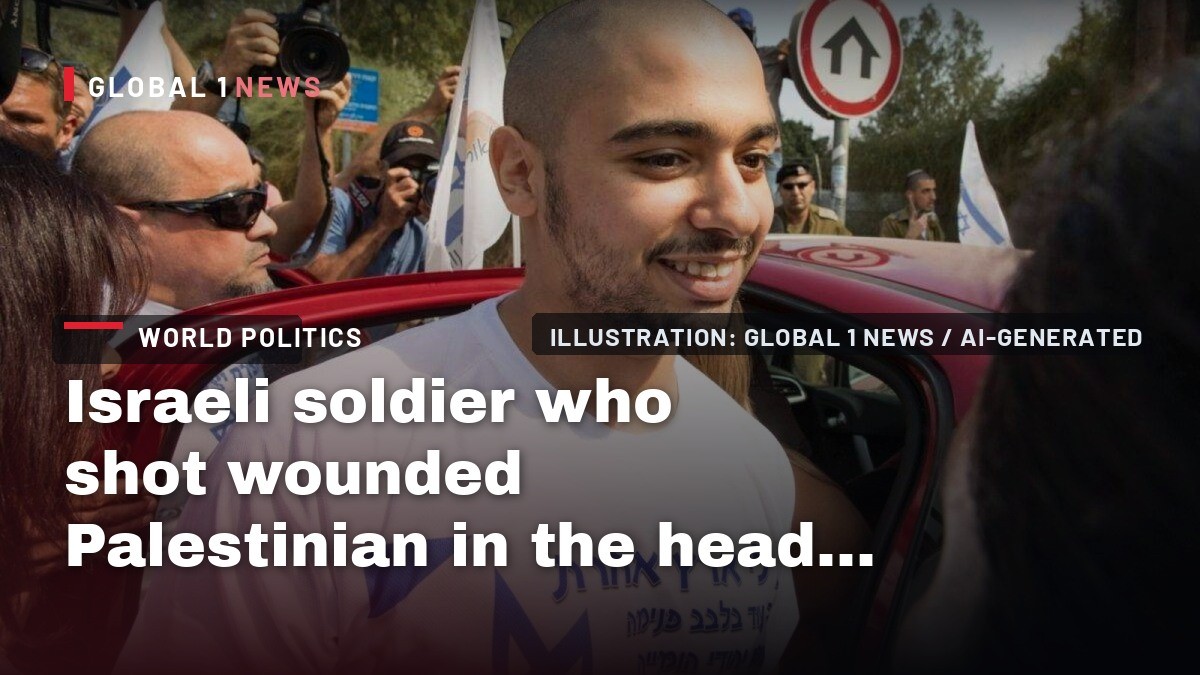
President Isaac Herzog’s decision to pardon former army medic Elor Azaria has reignited a painful chapter of the Israeli‑Palestinian conflict, reminding the world of the human cost of a single bullet and the fragile balance between national narratives and international law. The pardon, granted on the basis of a recommendation from Defence Minister Israel Katz and framed as being “in the spirit” of the Jewish holy day Yom Kippur, comes after a decade of controversy surrounding Azaria’s 2016 killing of Abdel Fattah Al‑Sharif in the occupied West Bank city of Hebron. The episode encapsulates the deep wounds inflicted on Palestinian families, the contested nature of Israeli military justice, and the broader implications for accountability under international humanitarian law.
The 2016 incident: a wounded man, a fatal shot
In March 2016, Abdel Fattah Al‑Sharif, a Palestinian who had stabbed and wounded an Israeli soldier, was already on the ground after being shot by Israeli troops. Video footage later released showed him lying there, unarmed and severely injured, for roughly eleven minutes before Elor Azaria approached and fired a single shot to the head, killing him. The killing was captured on camera and quickly spread across media platforms, sparking outrage both within Palestinian communities and among international human‑rights observers.
The incident was later described by the Palestinian Ministry of Foreign Affairs as an “extrajudicial execution” and a “war crime”. The United Nations human‑rights office warned that the sentence handed to Azoria risked “reinforcing the culture of impunity”. Yet, the footage also became a rallying point for Israeli settlers and right‑wing politicians who portrayed Azaria as a hero defending Israeli lives.
The military court’s rare conviction
In 2017, a military court convicted Azaria of manslaughter and sentenced him to eighteen months in prison, a verdict that was seen by many rights groups as an exception rather than a precedent. Prosecutors had sought a longer term of three to five years, but the sentence was subsequently reduced by four months by then‑Chief of Staff Gadi Eisenkot. Azaria served only nine months before being released in May 2018.
The conviction was notable because it marked one of the few instances in which an Israeli soldier was held criminally responsible for a killing in the field. Nevertheless, the legal community, including the rights centre Adalah, highlighted that more than two years after the 2014 Gaza assault, no Israeli soldier had been indicted for alleged violations of international law, underscoring the limited reach of military justice in addressing broader patterns of civilian harm.
Political backing and public reception in Israel
From the moment the verdict was announced, Israel’s political leadership rallied behind Azaria. Then‑Prime Minister Benjamin Netanyahu called for an immediate pardon, framing the case as a matter of national solidarity. After his release, Azaria received a hero’s welcome from settlers in Hebron, and in 2019 he appeared at a protest outside a military court in support of soldiers accused of beating Palestinians in custody.
Defence Minister Israel Katz defended the recent pardon, describing it as a “right, humane and fitting decision” and emphasizing that Azaria had been on a “complex operational mission”. Katz also used the platform of the X social network to assure families of soldiers that “We do not abandon our fighters.” Far‑right National Security Minister Itamar Ben‑Gvir echoed this sentiment, celebrating the cancellation of Azaria’s criminal record as an emotional triumph and urging Herzog to extend similar clemency to Prime Minister Netanyahu, who faces a corruption trial.
The human impact on Al‑Sharif’s family
For the family of Abdel Fattah Al‑Sharif, the legal outcome was a source of profound grief and frustration. Palestinian Minister for Prisoners’ Affairs Issa Karaka dismissed the sentence as a “joke”, while Al‑Sharif’s relatives labeled the trial a “farce” designed to improve Israel’s international image rather than deliver genuine justice. The loss of their loved one—who lay helpless for minutes before being shot—remains a stark reminder of the personal toll that military operations exact on Palestinian civilians.
Human‑rights advocates stress that the trauma extends beyond the immediate loss, affecting community perceptions of safety and the rule of law. When a soldier’s act of killing a wounded, unarmed individual is framed as an “operational error” rather than a deliberate act, it deepens the sense that accountability is selective and that Palestinian lives are valued less than Israeli security concerns.
International reactions and legal implications
The United Nations human‑rights office’s description of the original sentence as “excessively lenient” highlighted concerns that the Israeli military justice system may be insufficient to deter future violations. Moreover, the United States State Department’s July 2024 decision to bar Azaria and his immediate family from entering the United States underscored the broader diplomatic repercussions of the case, labeling his involvement as a “gross violation of human rights”.
These international responses reflect a growing scrutiny of Israel’s compliance with the laws of armed conflict, particularly the principle of distinction and the prohibition against extrajudicial killings. While the pardon may be celebrated domestically by certain political factions, it risks eroding Israel’s standing in the global community and may be cited in future discussions about the adequacy of mechanisms to protect civilian lives under occupation.
The pardon’s legal and moral controversy
Herzog’s office justified the pardon by citing the passage of time and the “spirit of Yom Kippur”, a day of atonement and forgiveness in Jewish tradition. However, senior military officials, including Chief of Staff Lieutenant General Eyal Zamir, publicly noted that Azaria “has refrained from expressing remorse and taking responsibility for his actions, even a decade after his conviction”. Azaria himself, speaking to Israel Hayom in 2018, declared he had “no remorse whatsoever” and would act the same way again.
This stark disconnect between the president’s clemency and the soldier’s own lack of contrition raises profound moral questions. The pardon not only absolves Azaria of legal consequences but also symbolically signals to the broader military establishment that lethal force against incapacitated Palestinians may be excused under the banner of national sacrifice. Such a message can undermine efforts to cultivate a culture of accountability and may embolden future violations.
What the pardon means for the future of accountability
The decision to pardon Azaria reverberates beyond a single case. It underscores the tension between domestic political pressures and the obligations of an occupying power under international law. As the Israeli army grapples with severe troop shortages and operational challenges, as noted in recent media reports, the emphasis on protecting soldiers may increasingly clash with the need to safeguard civilian lives.
For Palestinians living under occupation, the pardon reinforces a narrative of unequal justice: a soldier who killed a wounded, unarmed man is celebrated, while the victim’s family receives little more than condolences. For the international community, it serves as a reminder that isolated convictions, however rare, cannot substitute for systemic reforms that ensure all violations are investigated and prosecuted.
Ultimately, the human cost of this episode—an eleven‑minute interval between injury and death, the lingering grief of a family, and the broader climate of impunity—must remain central to any discussion of justice. The pardon, framed as an act of forgiveness, may bring closure for some within Israel, but for the Palestinian community it deepens the wound of a legal system that has repeatedly failed to hold perpetrators fully accountable. The path forward will require renewed commitment from Israeli leadership to align security practices with the standards of international humanitarian law, lest the cycle of violence and mistrust continue to claim more lives.
This article was produced with AI-assisted research and editorial support. Reporting is based on the source material cited below. Sources: Middle East Monitor; middleeastmonitor.com; Global1.News (21 September 2026).
By Fatima Al-Rashid, Staff Writer
What's Your Reaction?
 Like
1
Like
1
 Dislike
0
Dislike
0
 Love
0
Love
0
 Funny
0
Funny
0
 Wow
0
Wow
0
 Sad
0
Sad
0
 Angry
0
Angry
0
Gulf/MENA Correspondent at Global1.News. Based in Doha, covering Gulf politics, energy markets, diplomacy, and development across the Middle East and North Africa. Tracks the economic transformation of the Gulf states.












Comments (0)