
Israeli Airstrike Kills Two in Gaza, Including a Child
In a recent Middle East Eye report, local sources described the moment Israeli warplanes struck a civilian car near the Hamid intersection in the al-Nasr neighborhood of western Gaza City on Sunday evening, killing two Palestinians, including a young girl, and wounding several others. The strike landed nearly eleven months into a ceasefire that was supposed to have ended such nights of mourning.
In a recent Middle East Eye report, local sources described the moment Israeli warplanes struck a civilian car near the Hamid intersection in the al-Nasr neighborhood of western Gaza City on Sunday evening, killing two Palestinians, including a young girl, and wounding several others. The strike landed nearly eleven months into a ceasefire that was supposed to have ended such nights of mourning.
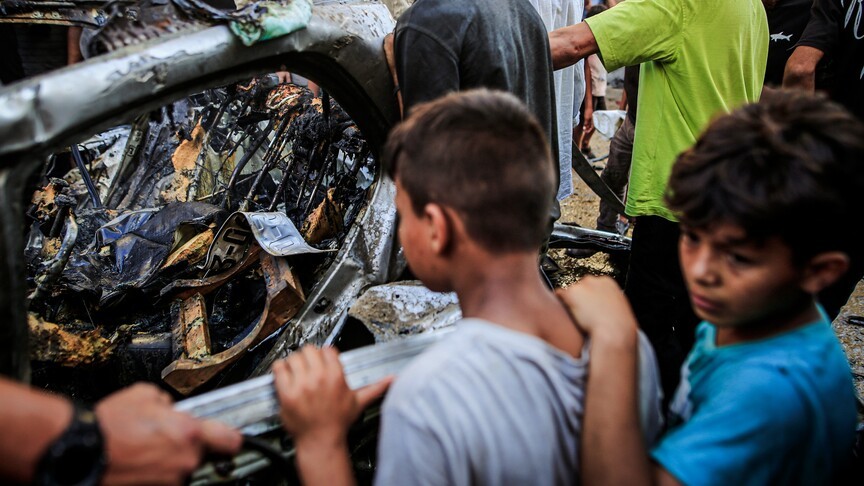
Deadly Evening in Western Gaza City
The strike on Sunday evening hit a civilian car near the Hamid intersection in the al-Nasr neighborhood, a residential area of western Gaza City. Local sources described the moment the warplanes struck, killing two Palestinians, including a young girl, and wounding several others. The two bodies and the wounded were rushed to al-Shifa Hospital in Gaza City, where medical staff received them amid the chaos of a night that was supposed to be quiet under the ceasefire.
The same evening, Israeli artillery shelled the eastern part of the al-Tuffah neighborhood in eastern Gaza City and the northeastern part of the al-Bureij refugee camp in the central Gaza Strip, according to WAFA. These are densely populated residential areas, home to families who have already endured nearly three years of war and displacement. The shelling came without warning, sending residents scrambling for cover, unsure whether their homes would still be standing when the barrage ended.
The names of the two Palestinians killed on Sunday were not released in initial reports, and the Israeli military's account of the incident was not reported by the consulted sources, including WAFA, Petra, Anadolu, Middle East Eye, and IMEMC. Medical workers at al-Shifa Hospital received the dead and wounded with the exhaustion of people who have seen too much.
A Ceasefire That Has Not Ended the Killing
The ceasefire that took effect on 10 October 2025 was supposed to be a turning point. Brokered after months of Egyptian, Qatari and Turkish mediation, and formalized in a signing ceremony on 13 October 2025 involving around 30 countries and US leadership, it promised an end to hostilities, the entry of aid, the release of captives and of about 2,000 Palestinian prisoners, and an Israeli withdrawal to the so-called yellow line. Anadolu and Al Jazeera have both documented the deal's architecture, and its first phase is still described as ongoing. But for the families in al-Nasr, al-Tuffah, and al-Bureij, the ceasefire has become a technicality, a piece of paper that has not stopped the jets or the artillery.
Since the ceasefire took effect, the Health Ministry has recorded 1,334 Palestinians killed and 4,429 wounded as of a report on 2 September 2026, according to figures relayed by IMEMC. Emergency crews have recovered 815 bodies from destroyed areas in that same period, bodies that had been buried under rubble for months, some for nearly a year. The Sunday evening strike adds two more names to a list that grows with grim regularity, even as diplomats speak of progress toward a second phase of the deal.
The pattern is unmistakable. On 3 September, a drone strike targeting a group of civilians on al-Thawra Street in central Gaza City killed one Palestinian and wounded two, medical sources told Anadolu. In separate incidents the same day, Israeli gunfire killed two Palestinians in Beit Lahia in northern Gaza and wounded another at a camp for displaced people in the Hamad residential area north of Khan Younis. Around 5 September, an Israeli special-unit operation in the al-Kataeb area west of Gaza City, supported by 10 to 16 air raids, killed at least four Palestinians, including children and the wife of a man targeted for arrest, according to IMEMC. Gaza hospitals received 17 wounded in the 24 hours before the 6 September ministry update, WAFA reported.
The Toll on Children
The young girl killed on Sunday evening near the Hamid intersection was not named in initial reports, but her death fits a broader and deeply troubling pattern. The UN human rights office said at least 24 Palestinians, including four children and a woman, were killed in Israeli attacks between 28 August and 1 September. In its statement, the office offered a stark assessment that has become a refrain for anyone documenting this war: "There is no safe place, nor safe person, in Gaza."
The overall numbers are staggering. Gaza's Health Ministry says at least 73,651 Palestinians have been killed and 174,592 wounded since 7 October 2023, with thousands more missing and presumed dead under the rubble, as reported by WAFA on 6 September 2026 and corroborated by Middle East Eye. Children have borne a disproportionate share of this violence, not because they are targeted in any official policy, but because they are everywhere in Gaza, in homes, in schools, in cars on Sunday evenings, in the streets where drones strike groups of civilians.
By mid-April 2026, Gaza's Government Media Office had recorded at least 2,400 Israeli violations of the ceasefire, including more than 1,100 bombings and shellings and 921 instances of firing at civilians, Al Jazeera reported. Each violation carries the potential for more child victims, more families shattered, more young lives ended before they have had a chance to understand the world they were born into.
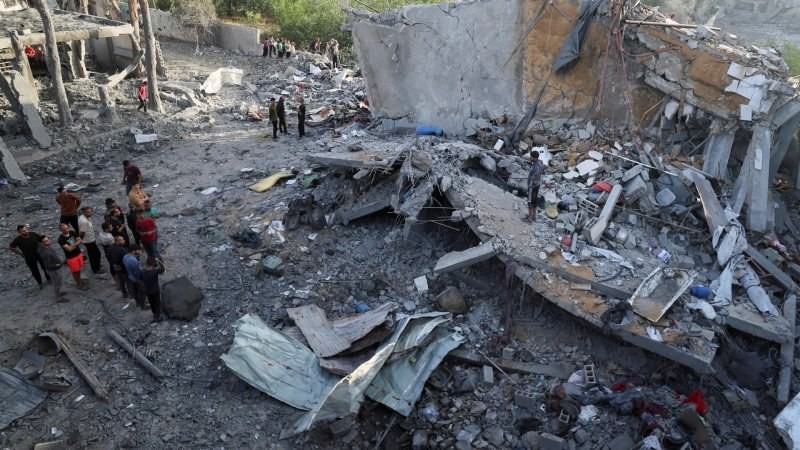
Daily Life Under Attack
For the people of Gaza, the ceasefire has not meant a return to normal life, because normal life no longer exists. The al-Nasr neighborhood in western Gaza City, where Sunday's strike occurred, is an area that had seen relative calm in recent months, a place where displaced families had begun to return, where shops had reopened, where children played in the streets again. The Hamid intersection is a civilian crossroads, not a military target, and the car that was struck was a civilian vehicle, not a convoy of fighters.
At al-Shifa Hospital in Gaza City, which has been repeatedly damaged and partially rebuilt during the war, medical teams continue to receive the dead and the wounded even as resources are stretched thin. Hospitals across the Gaza Strip received 17 wounded Palestinians in the 24 hours before the ministry's 6 September update, a steady stream of casualties that shows no sign of abating.
International Law and Accountability
The strikes on Sunday evening raise serious questions under international humanitarian law, which requires that all parties to a conflict distinguish between civilians and combatants and take all feasible precautions to avoid civilian casualties. The targeting of a civilian car in a residential neighborhood, with a child among the dead, appears to violate these fundamental principles. The UN human rights office has repeatedly called for accountability, and its recent statement, "There is no safe place, nor safe person, in Gaza," was a direct rebuke to the notion that any area of the enclave offers refuge.
Yet accountability has been elusive. The ceasefire agreement, which included provisions for monitoring and enforcement, has not produced any visible mechanism to hold violators to account. The Government Media Office's tally of 2,400 violations by mid-April 2026, including more than 1,100 bombings and shellings, has not led to any public condemnation from the deal's guarantors, nor to any concrete steps to halt the violence. The push announced this summer under US-led mediation to move into the deal's second phase has not halted deadly strikes, suggesting that the political will to enforce the ceasefire is weak.
International legal experts have long argued that the blockade of Gaza and the repeated military operations there constitute collective punishment of the civilian population, a violation of Article 33 of the Fourth Geneva Convention. The continued strikes, nearly a year after the ceasefire took effect, only reinforce that argument. But for the families in Gaza, legal arguments offer little comfort. They want the strikes to stop, they want to be able to bury their dead without fear of further attacks, and they want the world to act on the words of the UN human rights office, which has called for an end to the killing with a clarity that has not been matched by action.
What Comes Next for the People of Gaza
The second phase of the ceasefire, which was supposed to address the broader issues of reconstruction, the lifting of the blockade, and a permanent end to hostilities, remains stalled. The US-led mediation effort announced this summer has produced no visible breakthrough, and the strikes continue. For the people of Gaza, this means that the ceasefire is not a peace agreement but a pause that has been violated so often it has lost all meaning.
The families who lost loved ones on Sunday evening in al-Nasr will bury their dead in the coming hours, joining the tens of thousands of families who have done the same since October 2023. The wounded will recover, if they recover, in hospitals that are short on supplies and staff. The residents of al-Tuffah and al-Bureij will survey the damage from the artillery shelling, wondering when the next barrage will come. And the children of Gaza will continue to grow up in a world where the sky is not a source of wonder but of terror, where the sound of an airplane can send them running for cover, where a car ride on a Sunday evening can end in death.
The ceasefire's future hangs in the balance. Every strike, every shelling, every drone attack erodes the already fragile trust that any agreement can hold. The mediators who brokered the deal in October 2025, and the international community that celebrated its signing, must decide whether they will allow the ceasefire to become a hollow document or whether they will take the steps necessary to enforce it. For the people of Gaza, the answer to that question will determine whether they can begin to rebuild their lives or whether they will continue to bury their children, one Sunday evening at a time, under a sky that offers no safety and no mercy.
This article was produced with AI-assisted research and editorial support. Sources: Middle East Eye, WAFA, Petra, Anadolu, Al Jazeera, Reuters, IMEMC.
By Fatima Al-Rashid, Staff Writer
What's Your Reaction?
 Like
0
Like
0
 Dislike
0
Dislike
0
 Love
0
Love
0
 Funny
0
Funny
0
 Wow
0
Wow
0
 Sad
0
Sad
0
 Angry
0
Angry
0
Gulf/MENA Correspondent at Global1.News. Based in Doha, covering Gulf politics, energy markets, diplomacy, and development across the Middle East and North Africa. Tracks the economic transformation of the Gulf states.













Comments (0)