
Iran's Hidden Leader: Six Months of Silence
Mojtaba Khamenei has not been seen publicly since February's strikes killed his father. An undated video and the appointment of Mohsen Rezaei as Iran's top security chief raise urgent questions about who is really running Tehran while the Strait of Hormuz standoff drags on.
Folks, let me tell you something. The most powerful man in Iran — the man whose word can send missiles flying and keep the world’s oil lifeline shut — hasn’t been seen in public for nearly six months. And the longer he stays hidden, the louder the questions get. Is Mojtaba Khamenei alive? Is he in control? Or is Tehran running on autopilot while the world waits for an answer that may never come?
Iran’s Hidden Leader: Six Months of Silence
Tehran, Iran – August 11, 2026 — The last time the world saw Mojtaba Khamenei, his father was still alive. That was February 28, 2026, the day the United States and Israel launched the first wave of airstrikes that killed several Iranian officials — including Supreme Leader Ali Khamenei. In the chaos that followed, his son, Mojtaba, 56, was thrust into the role of Supreme Leader. But since that moment, he has vanished from public view. No speeches. No public appearances. No confirmation of life beyond a few carefully controlled statements and one undated video that raises more questions than it answers.
The Leader the World Can’t See
Here’s the thing, folks. In a country where the Supreme Leader is supposed to be the ultimate authority — the final word on war, peace, and everything in between — invisibility is a problem. And not just a public relations problem. It’s a governance problem. It’s a stability problem. It’s a “who’s actually running this place” problem.
Mojtaba Khamenei succeeded his father after the February strike that killed Ali Khamenei. That much is fact. But succession is one thing. Consolidating power is another. And doing it while the world watches and waits for proof of life? That’s a whole different ballgame.
The absence has been noted. In late April, a “martyr mural” depicting Mojtaba Khamenei alongside dead Iranian commanders went viral in Iran, according to Euronews. The implication was clear: the new Supreme Leader might be dead or gravely wounded. The regime didn’t deny it. They didn’t confirm it. They just let the image circulate and the speculation fester.
Now, nearly six months after the strike that changed everything, the world still hasn’t seen him. Not once. Not in person. Not in a live broadcast. Not in a photo op. Nothing.
An Undated Video, Fresh Questions
On Monday, August 10, Iran’s semi-official Mehr News Agency released a video of Mojtaba Khamenei talking to a group of people listening attentively. Sounds like proof of life, right? Not so fast. The video was undated. No date. No venue. No indication of when or where it was filmed. Just a man talking, and a room full of people nodding along.
Folks, I’ve been in this business long enough to know that when a government releases an undated video of its top leader, it’s not because they forgot to check the metadata. It’s because they want you to see something without knowing what it actually is. Is this footage from last week? Last month? Before the war? Nobody knows. And that’s the point.
The video sparked fresh questions over his whereabouts and current status. And those questions aren’t just coming from journalists and analysts. They’re coming from inside Iran. From the political establishment. From the military. From the people who need to know who’s giving orders.
The Quiet Purge in Tehran
While the Supreme Leader stays hidden, the machinery of power keeps moving. And it’s moving in ways that tell us a lot about who’s actually in charge.
On Sunday, August 9, Mohsen Rezaei — a former head of the Islamic Revolutionary Guard Corps — was appointed as Supreme Leader Khamenei’s representative on Iran’s Supreme National Security Council. Then, in a rapid follow-up, he was named secretary of that powerful security body, replacing Mohammad Baqer Zolqadr. Reuters notes that Rezaei is “more of an outspoken public figure than his predecessor.”
Let me translate that for you. In a regime where the Supreme Leader is unseen, the appointment of a loud, public-facing former IRGC chief to the most powerful security position in the country is a signal. It’s a signal that the security establishment is consolidating. It’s a signal that the hardliners are tightening their grip. And it’s a signal that decisions are being made — even if the man who’s supposed to be making them is nowhere to be found.
The decree was issued in the name of a Supreme Leader the public has not seen since February. That’s the part that should make you pause. Someone is signing documents. Someone is issuing orders. Someone is running the show. But the face of that authority? Invisible.
Decree From a Ghost
Let’s talk about that decree for a second. It was issued in the name of Mojtaba Khamenei. But who actually wrote it? Who actually signed it? Who actually made the call to elevate Rezaei to the secretaryship of the Supreme National Security Council?
We don’t know. And that’s the problem.
Iranian President Masoud Pezeshkian has been trying to fill in the gaps. He met Khamenei around the start of his third year in office in late July, according to state media. On July 21, the president said interactions with the supreme leader were “increasing day by day.” But by early August, he was singing a different tune. Communicating with Khamenei, he said, was “very difficult.”
Folks, read that again. The president of Iran — the man who’s supposed to be the second-most powerful figure in the country — says it’s “very difficult” to communicate with the Supreme Leader. That’s not a statement of convenience. That’s a statement of concern.
Pezeshkian has also detailed a seven-hour meeting with Khamenei focused on war, sanctions, livelihoods, and national resilience. Seven hours. That’s a long meeting. But it’s also a meeting that happened at some point, somewhere, with no public confirmation of when or where. And it’s a meeting that stands in stark contrast to the president’s own admission that communication is “very difficult.”
So which is it? Is the Supreme Leader engaged and meeting with top officials for hours at a time? Or is he so inaccessible that even the president struggles to reach him? The answer, folks, is that we don’t have one. And that uncertainty is dangerous.
Hormuz: The War’s Lasting Scar
Now let’s zoom out. Because while the world is asking “where is Mojtaba Khamenei?”, there’s a bigger question hanging over the region: what happens to the Strait of Hormuz?
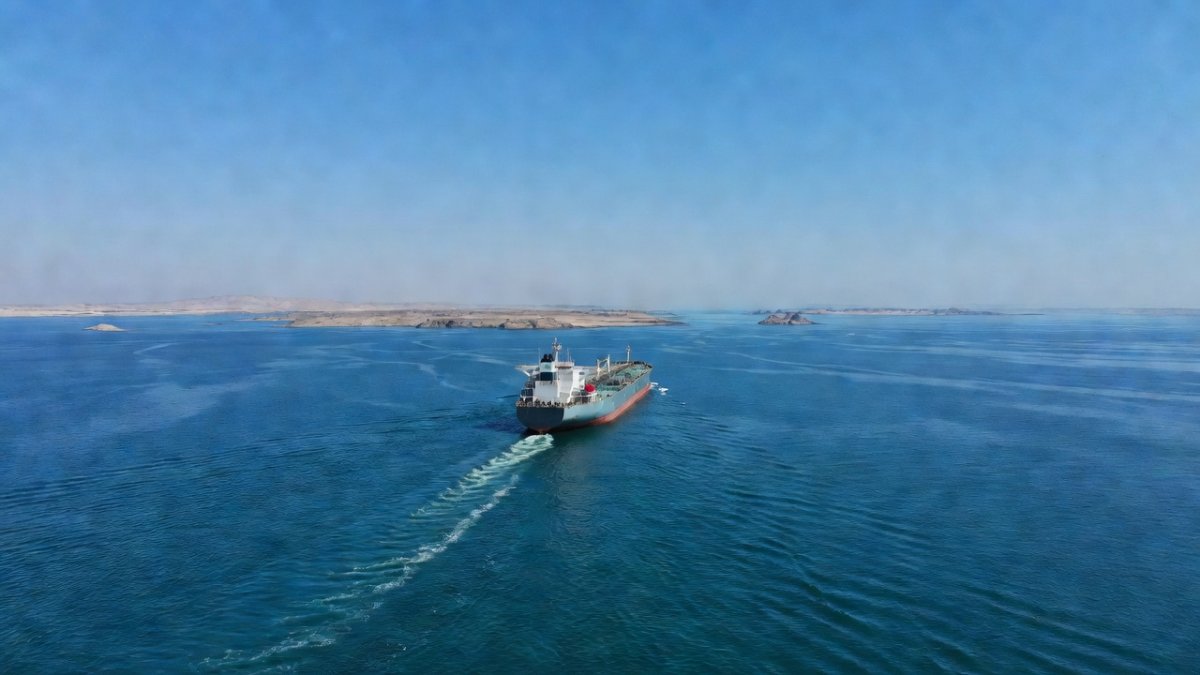
The Strait of Hormuz — a key waterway that normally carries roughly one-fifth of the world’s traded oil supplies — has remained closed since the war began. That closure has become the war’s most lasting consequence. It’s not just a military issue. It’s an economic issue. It’s a political issue. And it’s keeping energy prices a major focus of U.S. politics ahead of November’s midterm elections.
Iran says Hormuz stays shut until the U.S. “pays up.” Tehran has conditioned the reopening of the strait on receiving war reparations from Washington. That’s the official position. And it’s a position that has kept global markets on edge for months.
Meanwhile, President Donald Trump has demanded compensation from Iran for those he claimed were killed by the country, according to Al Jazeera. So you’ve got both sides demanding payment. Both sides pointing fingers. Both sides refusing to blink. And in the middle of it all, the Supreme Leader of Iran is nowhere to be seen.
Trump’s Chess Game
So what’s the U.S. doing about all this? Not much, publicly. And that might be intentional.
The U.S. and Iran are not negotiating directly. Talks are being conducted between Iran and Oman with American input, per Secretary of State Marco Rubio. That’s the structure. Indirect talks. Third-party mediation. And a lot of ambiguity.
Trump told Axios he is “low keying it” with Iran and said the U.S. is only “semi-negotiating,” likening talks with Tehran to a chess game. Chess. That’s the metaphor. Strategic moves. Calculated risks. And a willingness to let the other side wonder what you’re thinking.
Iran’s foreign ministry spokesperson shot back that Iranians had “shown they are professional chess players.” So there you have it. Two sides, both claiming mastery of the game, both refusing to show their hands.
And what about the Supreme Leader in all of this? Secretary Rubio has said Khamenei is alive and “increasingly engaging.” That’s the U.S. position. But “increasingly engaging” is not the same as “publicly visible.” And in a conflict this high-stakes, the difference matters.
What Happens Next
Folks, here’s the bottom line. The mystery of Mojtaba Khamenei is not a sideshow. It’s the main event. Because if the Supreme Leader is alive and in control, then the decrees, the appointments, the policies — they all carry weight. But if he’s not, then every decision coming out of Tehran is being made by someone else. And that someone else is operating without accountability.
The appointment of Mohsen Rezaei to the Supreme National Security Council suggests the security establishment is moving to fill the vacuum. The undated video suggests the regime wants to project an image of normalcy without actually proving it. And the president’s own contradictory statements suggest that even the highest levels of the Iranian government are struggling to present a coherent picture.
Meanwhile, the Strait of Hormuz stays closed. Energy prices stay high. The U.S. and Iran stay locked in a standoff that neither side seems willing to break. And the world waits for a man to appear who may never show his face again.
Here’s what I know. In a war, information is power. And right now, the most powerful man in Iran is also the most invisible. That’s not a coincidence. That’s a strategy. And until we see Mojtaba Khamenei with our own eyes, every statement, every decree, every video — it’s all just noise.
So keep watching. Keep asking questions. Keep demanding proof. Because in a conflict this big, the truth matters more than ever. And the truth, folks, is hiding in plain sight.
Stay informed. Stay sharp. And don’t let anyone tell you that an undated video is the same as a live appearance. It’s not. And you deserve better than that.
By Jessica Ali, Staff Writer
This article was produced with AI-assisted research and editorial support. Sources: Reuters, Al Jazeera, The New York Times, Euronews, The National, Al-Monitor, Al Arabiya, The Jerusalem Post, The Guardian, Tasnim News Agency.
What's Your Reaction?
 Like
0
Like
0
 Dislike
0
Dislike
0
 Love
0
Love
0
 Funny
0
Funny
0
 Wow
0
Wow
0
 Sad
0
Sad
0
 Angry
0
Angry
0

Editor-in-Chief at Global1.News. Atlanta-based journalist who cuts through the BS and tells it like it is. Lead anchor, host, and the voice you hear when the spin stops and the truth starts.









Comments (0)