
Iran war reshapes Brics ties but also exposes divisions
In early September, New Delhi hosted a gathering of the world’s most influential leaders at a round table that symbolised both the promise and the paradox of the BRICS bloc.
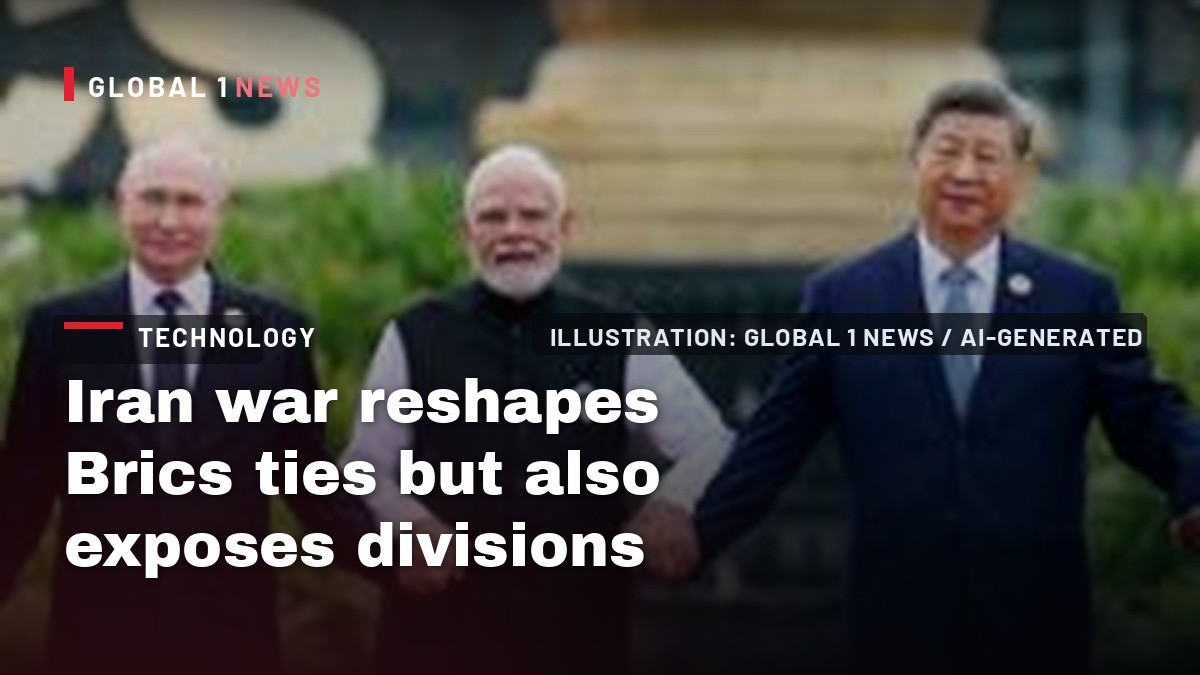
In early September, New Delhi hosted a gathering of the world’s most influential leaders at a round table that symbolised both the promise and the paradox of the BRICS bloc. Prime Minister Narendra Modi opened the summit by urging the participants to become “rule‑shapers” rather than “rule‑takers”, a phrase that captured the group’s ambition to reshape global governance while underscoring the diplomatic tightrope each member must walk. The attendance of Chinese President Xi Jinping, Russian President Vladimir Putin, Iranian President Masoud Pezeshkian, Abu Dhabi Crown Prince Sheikh Khaled bin Mohamed bin Zayed Al Nahyan and South African President Cyril Ramaphosa highlighted the diversity of interests that now converge under the BRICS umbrella, even as historic rivalries and recent conflicts continue to strain the alliance.
Strategic Autonomy versus Anti‑Western Sentiment
Modi’s insistence that BRICS is “not against anyone” reflects India’s broader strategy of strategic autonomy. While China, Russia and Iran view the bloc as a vehicle to dilute U.S. and Western European influence, India has been careful to avoid branding the grouping as overtly anti‑Western. Veteran diplomat Anil Trigunayat noted that India’s achievement lies in pushing for “strategic autonomy in an era of war” and fostering deeper collaboration among members without alienating other partners. This nuanced stance allows Delhi to preserve ties with nations that are often at odds, such as the United Arab Emirates, which sits opposite Iran in the Middle‑East conflict.
The summit’s final declaration, the “New Delhi Declaration”, mirrors this balancing act. It urges “maximum restraint” in the Middle East, condemns attacks on civilian infrastructure and nuclear facilities, and reiterates support for a two‑state solution, yet it stops short of assigning blame. By avoiding direct references to the United States or naming specific sanctions, the text sidesteps potential retaliation while still signaling displeasure at “indiscriminate rising tariffs” and unilateral sanctions.
Iran’s Quest for Economic Lifelines
Amid the ongoing war in the Middle East, Iran’s President Pezeshkian used the summit to demonstrate that Tehran does not stand alone against U.S. and Israeli pressure. With Washington’s “Operation Economic Outcast” and a naval blockade tightening around Iranian ports, Pezeshkian pressed for deeper economic ties with fellow BRICS members, as well as with Malaysia and Ethiopia. The high‑level meeting between Pezeshkian and Abu Dhabi’s Crown Prince marked the first such face‑to‑face encounter since the war began, suggesting that the conflict may be prompting new diplomatic overtures among previously opposed parties.
Iran’s outreach underscores a broader trend: BRICS is increasingly becoming a forum where sanctioned or economically isolated states can explore alternative trade and investment channels. While the New Delhi Declaration does not detail concrete mechanisms, the emphasis on “enhancing greater collaboration amongst themselves” hints at a willingness to develop financial and logistical pathways that bypass Western‑dominated systems.
China‑India Relations: From Border Clash to Business Dialogue
President Xi’s visit to Delhi was his first in seven years, coming after the deadly 2020 border clash that left a lingering mistrust between the two largest Asian economies. The summit provided a rare opportunity for both leaders to signal a tentative thaw. Although the handshake between Xi and Modi was formal rather than the customary hug, both sides agreed to strengthen business ties, improve transport links and address trade barriers. Trigunayat described this as part of a gradual warming, noting that both leaders appear eager to move beyond past hostilities.
Trade imbalances remain a central concern. The official readouts highlighted a “large trade imbalance” tilted heavily in China’s favour, a point that continues to fuel Indian calls for a more equitable economic relationship. While Xi’s stay was brief—less than 24 hours and without attending the gala dinner—the mere presence of the Chinese president at the summit signalled a willingness to engage, even if the depth of future cooperation remains uncertain.
Russia’s Quiet Omission and the Ukraine Question
One of the most striking features of the New Delhi Declaration was the absence of any reference to Russia’s war in Ukraine. Earlier BRICS ministerial meetings this year failed to produce a joint statement, and the current declaration deliberately sidestepped the issue. Analysts such as Praveen Donthi of the International Crisis Group observed that this omission reflects a broader effort to avoid provoking the United States, especially under the watchful eye of former President Donald Trump, who has previously labelled BRICS proposals as “anti‑American”.
The silence on Ukraine suggests a pragmatic calculation: by not confronting the conflict directly, BRICS members can maintain a united front on other priorities, such as trade liberalisation and sanctions reform, while leaving contentious geopolitical disputes to bilateral channels. This approach, however, may test the cohesion of the bloc as member states grapple with divergent security concerns.
Trade Frictions and the Shadow of U.S. Sanctions
The declaration’s language on trade reflects a careful diplomatic choreography. It condemns “indiscriminate rising tariffs” and unilateral sanctions but refrains from naming the United States. This nuance allows BRICS to voice collective displeasure at protectionist measures without directly antagonising Washington, a strategy that aligns with India’s desire to shield itself from potential retaliation.
Donald Trump’s recent threats to label BRICS initiatives—such as linking central‑bank digital currencies for cross‑border trade—as “anti‑American” loom large over the summit’s outcomes. By framing the tariff concerns in generic terms, the declaration provides a platform for members to push back against what they perceive as Western economic coercion while preserving diplomatic flexibility.
Future Trajectories: From Symbolic Unity to Concrete Action
The New Delhi summit succeeded in producing a joint declaration, a notable achievement given the bloc’s internal divisions. Yet the document’s cautious phrasing and omission of several flashpoints reveal the limits of consensus. The real test now lies in translating the summit’s broad statements into actionable policies. For India, the challenge will be to balance its role as a bridge between divergent members while safeguarding its own strategic interests.
For China, Russia and Iran, the summit reaffirmed the value of BRICS as a platform to counterbalance Western influence, but the lack of concrete mechanisms—particularly on sanctions evasion and digital currency integration—means that the bloc’s impact may remain largely symbolic. As global powers continue to navigate the fallout from the Middle‑East war and the lingering shadow of the Ukraine conflict, BRICS will likely persist as a forum where rivalries are managed, but decisive reforms to the international order will require deeper coordination and, perhaps, a willingness to confront the very divergences that currently keep the group from moving beyond rhetoric.
This article was produced with AI-assisted research and editorial support. Reporting is based on the source material cited below. Sources: BBC News Asia; bbc.co.uk; Global1.News (16 September 2026).
By Kenji Tanaka, Staff Writer
What's Your Reaction?
 Like
0
Like
0
 Dislike
0
Dislike
0
 Love
0
Love
0
 Funny
0
Funny
0
 Wow
0
Wow
0
 Sad
0
Sad
0
 Angry
0
Angry
0

Japan Correspondent at Global1.News. Tokyo-based voice covering Japanese politics, technology, economy, and culture. Tracks the intersection of tradition and innovation in one of the world's most dynamic societies.













Comments (0)