
Iran war cost $33 billion as of late June, per Pentagon inspector general report
The U.S. inspectors general for the Department of Defense, State Department and USAID have released their first joint report to Congress on “Operation Epic Fury,” the multi‑year campaign launched in February 2026 to counter Iran’s aggressive actions across the region.
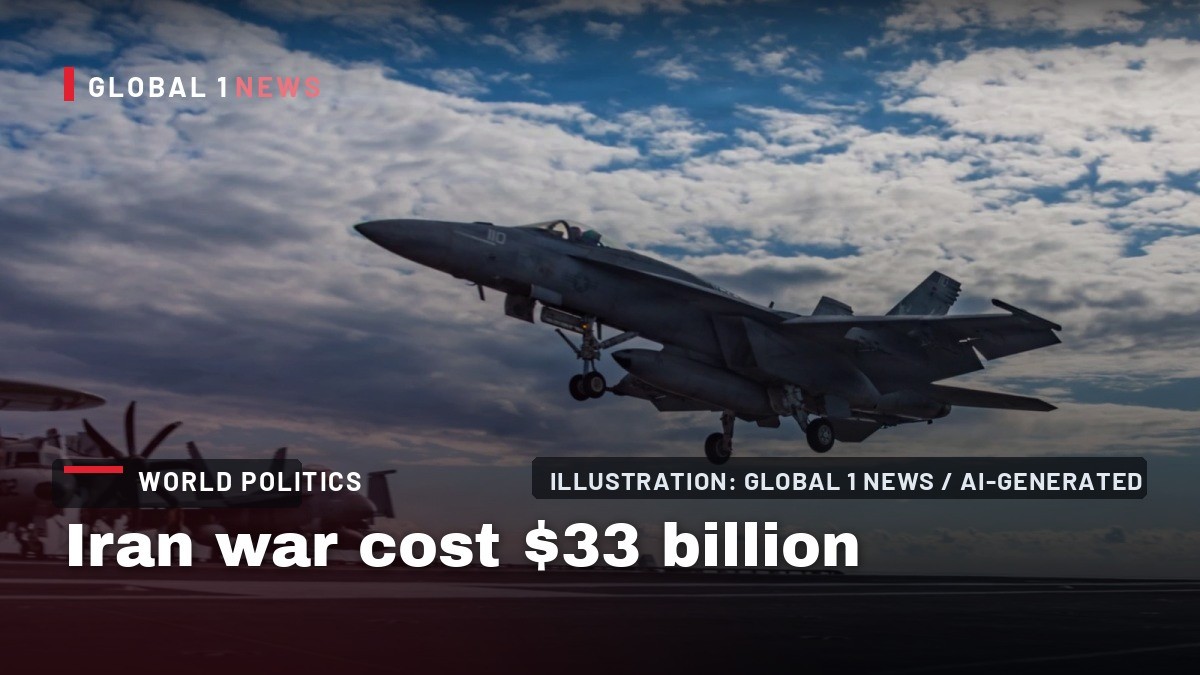
The U.S. inspectors general for the Department of Defense, State Department and USAID have released their first joint report to Congress on “Operation Epic Fury,” the multi‑year campaign launched in February 2026 to counter Iran’s aggressive actions across the region. The document, made public on 15 September 2026, provides the most granular accounting yet of the financial, material and human costs of the operation, and it shines a light on the broader strategic implications for Israel and the wider Middle East.
Scale of the financial burden
The Pentagon’s own estimate places the total cost of “Operation Epic Fury” at $33.4 billion as of 29 June 2026. The figure breaks down into $7.4 billion of cumulative obligations—incremental costs added as the campaign progressed—$22.3 billion for expended munitions and $3.7 billion in equipment losses. Notably, the estimate does not yet include the cost of repairing damaged infrastructure, a category that is expected to add a further, still‑unquantified burden.
Infrastructure repairs are already proving significant. Iranian strikes damaged U.S. diplomatic facilities in four countries, with an estimated total cost of about $184 million. In addition, the State Department reported construction project delays amounting to roughly $24.5 million per month in cities that host key diplomatic missions, including Baghdad, Jerusalem, Tel Aviv, Cairo, Amman, Kuwait City and Muscat. The most severe damage—more than $157 million—stemmed from over 600 attacks on U.S. facilities in Iraq, notably crippling the new U.S. consulate in Erbil.
Material losses and the munitions shortfall
The report lists a sobering tally of U.S. aircraft and unmanned systems lost or damaged since the start of major combat operations in February. Among the casualties were four F‑15 fighter jets, a single F‑35, twelve KC‑135 aerial refueling tankers, six helicopters and as many as 30 MQ‑9 Reaper drones. These losses, combined with the $22.3 billion spent on expended munitions, underscore the intensity of the target set presented by Iran.
U.S. officials highlighted “strategic inventory shortfalls” and industrial‑base bottlenecks that have emerged as a direct result of the campaign’s high‑tempo munitions consumption. The Office of the Under Secretary for Acquisition and Sustainment confirmed that the expenditure has strained critical stockpiles, prompting the Pentagon to accelerate procurement reforms, shorten production lead times and bolster stockpiles of essential components and selected munitions to ensure rapid response capability.
Human cost and operational tempo
Between 28 February and 30 June 2026—the period the department defines as “combat operations” for “Operation Epic Fury”—the United States suffered 14 service‑member fatalities and 417 wounded. A further four service members died during subsequent overseas operations in Iraq and Jordan. These casualties occurred alongside an intense operational tempo: U.S. Central Command reported approximately 36,000 combat sorties and more than 1,800 fire missions against Iranian targets during the same window.
In the air and on the ground, U.S. and partner forces intercepted more than 7,500 Iranian ballistic missile and drone attacks, a figure that excludes the separate wave of attacks directed at Israel. The sheer volume of interceptions illustrates both the potency of Iran’s missile and drone capabilities and the high demand placed on regional air‑defence networks, including Israel’s own integrated missile‑defence shield.
Iran’s defence posture and its regional ripple effects
The report characterises Iran as possessing the largest armed forces in the region, having devoted decades to building a domestic defence industry. Tehran has also invested heavily in passive‑defence measures—underground facilities, dispersed munitions inventories, concealment and deception tactics—to shield its capabilities from aerial and satellite surveillance. This deep‑rooted resilience complicates any effort to degrade Iran’s strike capacity, forcing Israel and its allies to adapt to a more concealed and distributed threat environment.
For Israel, the Iranian focus on underground and dispersed assets means that traditional intelligence collection methods must be complemented by advanced ISR platforms and cyber‑enabled targeting. The high‑cost nature of the U.S. campaign also signals to Israeli defence planners that any future escalation could impose comparable fiscal pressures on domestic defence budgets, especially if Israel were to shoulder a larger share of the burden in a prolonged conflict.
Congressional concerns and the political backdrop
Democratic members of Congress have voiced alarm over the sheer volume of offensive and defensive munitions expended in the campaign. Their concerns echo broader debates about the sustainability of U.S. strategic stockpiles and the long‑term fiscal implications of sustained high‑intensity operations in the Middle East. The report’s disclosure of “strategic inventory shortfalls” lends weight to these worries, especially as the Congressional Budget Office estimates a five‑year timeline to replenish U.S. missile‑interceptor stocks.
The political context is further complicated by former President Donald Trump’s dismissive remarks about munitions constraints, in which he claimed the United States possessed “massive amounts of ‘munitions,’ especially of certain types,” and warned that leakers would be “hunted down.” While his statements downplayed the reported shortfalls, the inspector‑general findings provide an independent verification that the U.S. supply chain is under strain—a reality that Israeli policymakers must factor into their own procurement and readiness calculations.
Implications for Israel’s defence industry
Israel’s defence sector, long intertwined with U.S. procurement cycles, may see both opportunities and challenges emerging from the disclosed shortfalls. Companies such as Israel Aerospace Industries (IAI), Elbit Systems and Rafael have historically supplied components and systems that complement U.S. munitions platforms. A prolonged replenishment timeline for U.S. interceptors could open avenues for Israeli firms to provide complementary missile‑defence solutions, especially in the realm of radar, command‑and‑control and loitering‑munition technologies.
Conversely, the heightened demand for critical materials and components may intensify competition for scarce resources, potentially driving up costs for Israeli manufacturers. The Pentagon’s push to streamline procurement and stockpile critical materials could lead to tighter coordination with Israel’s Ministry of Economy and the Israel Innovation Authority to align supply‑chain resilience strategies across the two allied defence ecosystems.
Regional security outlook and the road ahead
While the immediate cost of “Operation Epic Fury” is now quantified, the broader strategic picture remains fluid. Iran’s continued emphasis on underground and dispersed assets suggests that any future escalation will likely involve a protracted campaign of intelligence‑gathering, precision strikes and attrition of munitions stocks on both sides. For Israel, the proximity of Iranian‑backed proxies and the potential for spill‑over attacks—already evident in the 7,500 intercepted missile and drone strikes—necessitates a sustained high‑alert posture.
The five‑year timeline to restore U.S. missile‑interceptor inventories, as highlighted by the Congressional Budget Office, underscores a looming capability gap that could affect not only the United States but also its regional partners. Israel’s own multi‑layered missile‑defence architecture—Iron Dome, David’s Sling and Arrow—will continue to play a pivotal role in shielding civilian populations and critical infrastructure, while also serving as a force multiplier for allied operations.
In sum, the inspector‑general report lays bare the staggering financial, material and human costs of the U.S. campaign against Iran, while also exposing systemic vulnerabilities in munitions stockpiles that reverberate across the allied defence landscape. For Israel, the findings reinforce the need for continued investment in indigenous defence technology, deeper coordination with U.S. procurement reforms, and vigilant diplomatic engagement to mitigate the risk of a broader regional conflagration.
This article was produced with AI-assisted research and editorial support. Reporting is based on the source material cited below. Sources: JNS (Jewish News Syndicate); jns.org; Global1.News (16 September 2026).
By Hannah Berg, Staff Writer
What's Your Reaction?
 Like
0
Like
0
 Dislike
0
Dislike
0
 Love
0
Love
0
 Funny
0
Funny
0
 Wow
0
Wow
0
 Sad
0
Sad
0
 Angry
0
Angry
0

Israel Correspondent at Global1.News. Based in Tel Aviv, covering Israeli politics, security, technology, and society. Provides balanced, deeply-sourced reporting on one of the most closely-watched regions in the world.











Comments (0)