
Iran Says Gulf Pipelines Aim to Weaken Hormuz as Bypass Routes Reshape Energy War
The Strait of Hormuz, the narrow waterway that has for decades been the world's most critical energy chokepoint, is being fundamentally re-engineered in real time. As Iran's parliament warns that Gulf pipeline construction amounts to "firing missiles at Iran," the strategic calculus of the region is shifting beneath the feet of Tehran, Riyadh, and Abu Dhabi.
Iran's Hormuz Warning: Gulf Pipelines Reshape the Energy War
Dubai, United Arab Emirates – August 22, 2026 — Hamidreza Haji Babaei, deputy speaker of Iran's parliament, delivered a stark warning this week: the construction of new oil pipelines by Gulf countries is a deliberate attempt to "weaken" the strategic importance of the Strait of Hormuz, an effort he likened to firing missiles at the Islamic Republic. The statement, reported by Iranian state media, underscores Tehran's acute anxiety as its traditional leverage over global energy markets erodes with every barrel that bypasses the chokepoint.
Iran's Strategic Logic: Hormuz as the Ultimate Leverage
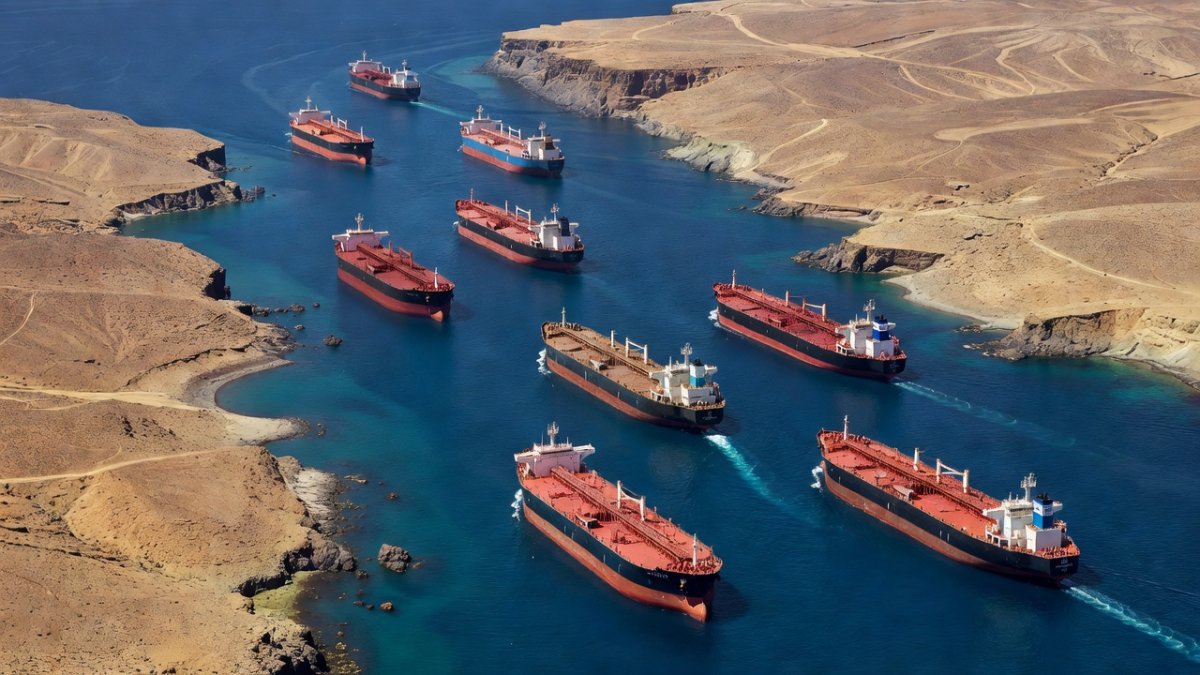
For Tehran, the Strait of Hormuz is not merely a geographic feature—it is the cornerstone of its coercive power. Haji Babaei's rhetoric reflects a deep-seated understanding that the waterway, which normally carries roughly 20 million barrels per day of crude oil and petroleum products (about one-fifth of global consumption and a third of seaborne crude trade), is Iran's most potent weapon in any confrontation with the West and its Gulf rivals. The deputy speaker's framing—that bypass pipelines are equivalent to missile attacks—reveals how Tehran perceives infrastructure projects as existential threats to its strategic position.
This is not hyperbole from an isolated official. Haji Babaei has previously stated that Hormuz is more important to Iran than the atomic bomb, and has claimed that toll fees collected from ships transiting the Strait are transferred directly to the Central Bank of Iran. The message is clear: the waterway is both a revenue source and a deterrent. Since the outbreak of the 2026 Iran war—triggered by US-Israeli strikes on February 28, 2026, following airstrikes that killed senior Iranian officials including Supreme Leader Ali Khamenei—Iran has imposed severe disruption on the Strait. Commercial traffic through the chokepoint has been heavily curtailed since early March 2026, making the waterway the central front in the US-Iran economic war.
Gulf Bypass Infrastructure: Saudi Arabia's Petroline and the UAE's ADCOP
The Gulf states have responded to Iran's aggression not with naval escorts alone, but with a decade-long infrastructure build-out that is now paying strategic dividends. Saudi Arabia has pushed its East-West Pipeline, known as Petroline, to record throughput of approximately 7 million barrels per day. The 1,201-kilometre line runs from Abqaiq across the Arabian Peninsula to Yanbu on the Red Sea, allowing Saudi exports to bypass Hormuz entirely. Saudi Aramco confirmed full capacity was restored around April 12, 2026, after attacks disrupted operations in early April—a testament to the kingdom's resilience and its determination to decouple its exports from Iranian threats.
The UAE has pursued a parallel strategy with the Abu Dhabi Crude Oil Pipeline (ADCOP), commissioned in 2012, which moves roughly 1.5-1.8 million barrels per day from Habshan to Fujairah on the Gulf of Oman. A new 48-inch line is expected to add approximately 1.5 million barrels per day, bringing combined capacity toward 3.3 million barrels per day. This expansion is critical for ADNOC, which shut in more than half of its pre-war production of roughly 3.4 million barrels per day after the Strait's closure. The Fujairah terminal, located outside the Strait, has become a vital export hub that insulates Emirati crude from Iranian naval harassment.
Iraq's Dependence and the Gulf States' Dilemma
While Saudi Arabia and the UAE have engineered their way out of Hormuz dependency, Iraq remains acutely vulnerable. Iraqi Parliament Speaker Haibat al-Halbousi requested on August 19, 2026 that Iran grant Iraq a "special status" to export oil through the Strait of Hormuz, during a meeting with Iranian Parliament Speaker Mohammad Bagher Ghalibaf. This diplomatic plea underscores Baghdad's desperate position: the International Energy Agency notes that Iran, Iraq, Kuwait, Qatar, and Bahrain rely on the Strait for the vast majority of their oil exports. Iraq, with no significant bypass pipeline, is effectively held hostage by Tehran's willingness to allow its crude to flow.
This creates a profound dilemma for the Gulf states. On one hand, they have invested billions in bypass infrastructure to protect their own exports. On the other, their collective security architecture—the Gulf Cooperation Council—is strained by the unequal distribution of vulnerability. Saudi Arabia and the UAE can weather a prolonged Hormuz closure; Iraq, Kuwait, Qatar, and Bahrain cannot. The result is a fragmented Gulf response to the Iranian threat, with Riyadh and Abu Dhabi prioritizing national resilience over collective action, while Baghdad seeks bilateral accommodation with Tehran.
Washington's View: Trump's Hormuz Calculus
President Donald Trump has weighed in with characteristic bluntness, declaring on August 19, 2026 that the Strait of Hormuz "will not be as important as it was in the past," citing the alternative export pipelines being built to bypass it. Three days later, Trump escalated further, claiming the Strait is "American territory right now" and asserting that Iran "wants to make a deal so badly" on its nuclear program. These statements reflect a White House strategy that views the bypass infrastructure as a means to neutralize Iran's primary coercive tool, thereby strengthening Washington's hand in any nuclear negotiations.
Trump's framing is strategically significant. By declaring Hormuz "American territory," he is signaling that the United States will not tolerate Iranian disruption of the waterway, while simultaneously suggesting that Iran's leverage is evaporating. The "maximum pressure" sanctions campaign, combined with the military strikes that decapitated Iran's leadership, has created a situation where Tehran's options are narrowing. The IMF's revised forecast for Iran's 2026 growth—down 7.2 percentage points from January to -6.1 percent—reflects the devastating impact of damage to energy and transport infrastructure and the disruption around the Strait. Iran is bleeding economically, and Trump's calculus is that the bypass pipelines will force Tehran to the negotiating table on American terms.
Energy Market Implications: 20 Million Barrels at Risk
The reconfiguration of Gulf export routes has profound implications for global energy markets. The Strait of Hormuz normally carries roughly 20 million barrels per day—a volume that, if fully disrupted, would send oil prices into uncharted territory. However, the bypass infrastructure is partially mitigating this risk. Saudi Arabia's 7 million barrels per day via Petroline and the UAE's combined 3.3 million barrels per day via ADCOP represent a significant portion of what would otherwise be at risk. Yet the IEA's warning remains stark: Iran, Iraq, Kuwait, Qatar, and Bahrain still depend on the Strait for the vast majority of their exports, meaning a prolonged closure would remove a substantial share of global supply from the market.
The market's response has been volatile. Tanker rates have spiked as shipping companies demand war-risk premiums for transiting the Gulf, and insurance costs have soared. Oil prices have fluctuated wildly, reflecting uncertainty about the duration and severity of the disruption. The strategic question is whether the bypass infrastructure can absorb the shock of a prolonged closure. The answer, based on current capacity, is a qualified no. While Saudi and Emirati exports are largely protected, the combined output of Iraq, Kuwait, Qatar, and Bahrain—amounting to several million barrels per day—remains exposed. The global economy is therefore still vulnerable to a worst-case scenario, even as the Gulf states have built significant buffers.

Historical Context: From Praying Mantis to the 2026 War
The current crisis is the latest chapter in a long history of confrontation over the Strait. Operation Praying Mantis in 1988 saw the US Navy cripple Iranian naval forces in retaliation for mining operations during the Iran-Iraq War. The 2011-2012 Hormuz dispute, triggered by Western sanctions on Iranian oil exports, saw Tehran threaten closure and the US respond with naval deployments. In 2019, a series of tanker seizures and attacks on Saudi oil infrastructure—including the Abqaiq facility—escalated tensions to near-breaking point. Each episode reinforced the strategic importance of the chokepoint, but also accelerated the Gulf states' efforts to build alternatives.
The 2026 conflict, however, is qualitatively different. The US-Israeli strikes that killed Supreme Leader Ali Khamenei and other senior Iranian officials have created a power vacuum in Tehran and a level of disruption unprecedented in the Islamic Republic's history. Iran's response—severe curtailment of commercial traffic through the Strait—has made the chokepoint the central front in the economic war. But the Gulf states' decade-long investment in bypass infrastructure has fundamentally altered the strategic equation. What was once a vulnerability is now a managed risk, and Iran's primary coercive tool is being blunted in real time.
Regional Implications and Outlook: A New Balance of Power
The reconfiguration of Gulf energy routes is reshaping the regional balance of power. Iran's warning that bypass pipelines are "missiles fired at Iran" reflects a recognition that its leverage is eroding. The UAE's rejection of Tehran's maritime claims—in May 2026, Tehran's Persian Gulf Strait Authority published a jurisdiction map extending into Emirati waters, which UAE officials dismissed as "nothing but pipe dreams"—underscores the growing assertiveness of Gulf states in pushing back against Iranian expansionism. The infrastructure build-out is not merely an economic project; it is a strategic declaration that the Gulf states will no longer be held hostage by Tehran's control of the Strait.
Looking ahead, the outlook is uncertain but increasingly favorable to the Gulf states and their Western allies. If the bypass infrastructure continues to expand, Iran's ability to threaten global energy supplies will diminish further, weakening its negotiating position on the nuclear file. However, the risks remain significant. Iraq's dependence on the Strait creates a vulnerability that Tehran can exploit, and a prolonged closure would still cause substantial economic damage globally. The IMF's forecast for Iran—a contraction of 6.1 percent—suggests Tehran is feeling acute pain, but a cornered Iran could escalate further, potentially targeting the bypass infrastructure itself. The coming months will determine whether the Gulf's strategic bet on pipeline resilience pays off, or whether the Strait of Hormuz remains the region's most dangerous flashpoint.
By Malik Hassan, Staff Writer
This article was produced with AI-assisted research and editorial support. Reporting is based on sources cited in the article.
What's Your Reaction?
 Like
0
Like
0
 Dislike
0
Dislike
0
 Love
0
Love
0
 Funny
0
Funny
0
 Wow
0
Wow
0
 Sad
0
Sad
0
 Angry
0
Angry
0

Middle East Correspondent at Global1.News. Based in Beirut, covering politics, conflict, energy, and society across the Middle East. Brings context and depth to a region often reduced to headlines.










Comments (0)