
Iran and “Mecca Pact” countries agree to continue talks amid fears of renewed regional conflict
In the fraught atmosphere of late October 2026, senior officials from Iran, Saudi Arabia, Pakistan and Turkey gathered in Tehran for a quadripartite dialogue that underscored both the fragility and the potential of regional diplomacy.
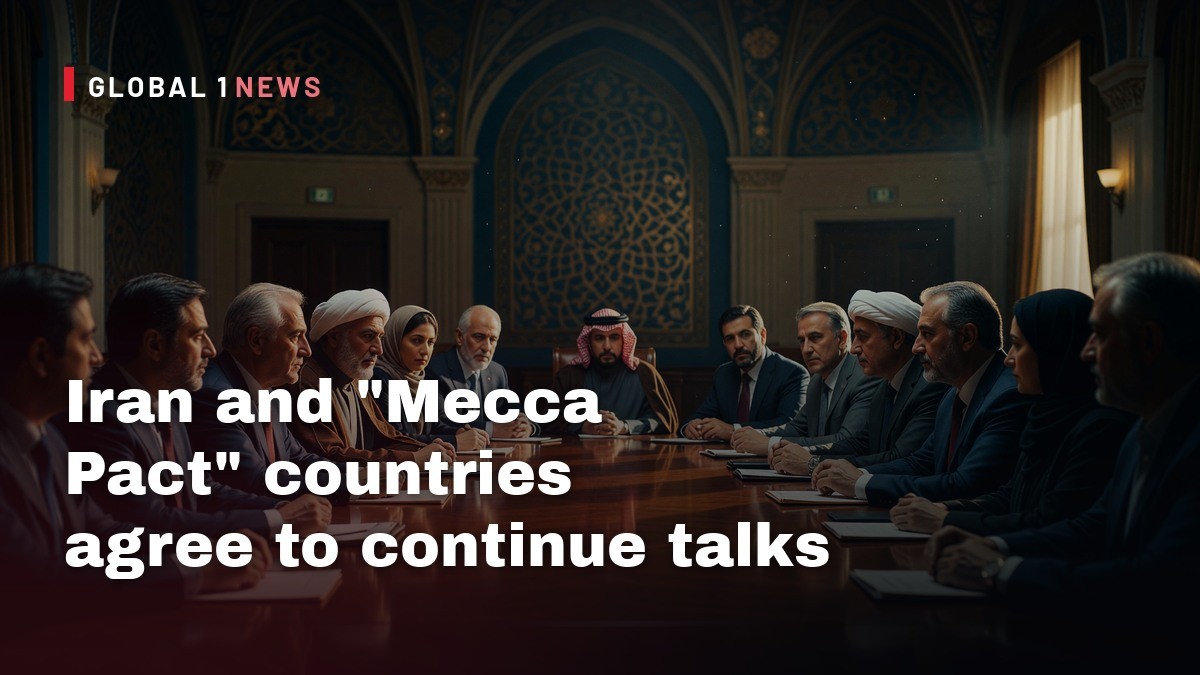
In the fraught atmosphere of late October 2026, senior officials from Iran, Saudi Arabia, Pakistan and Turkey gathered in Tehran for a quadripartite dialogue that underscored both the fragility and the potential of regional diplomacy. The meeting, hosted by Iran’s Supreme National Security Council secretary‑general Mohsen Rezaee and attended by President Masoud Pezeshkian, Foreign Minister Abbas Araghchi, Turkish intelligence chief Ibrahim Kalın, Saudi Defence Minister Prince Khalid bin Salman and Pakistan’s Army Chief Asim Munir, was framed as a step toward de‑escalation amid a renewed flare‑up between Saudi forces and Yemen’s Houthi movement. While no concrete agreements were announced beyond the decision to keep the conversation alive, the very act of convening signalled a willingness, however tentative, to seek diplomatic pathways in a region where the spectre of war looms large.
Background to the Tehran talks
The quadripartite meeting took place against a backdrop of escalating hostilities that began in July 2026, when a truce that had held in Yemen since 2022 collapsed, reigniting clashes between Saudi‑backed forces and the Iranian‑supported Houthi rebels. Riyadh’s support for Yemen’s internationally recognised government and the Houthis’ continued control over large swathes of the country have long been flashpoints in the broader Saudi‑Iran rivalry. The renewed violence has not only intensified humanitarian suffering in Yemen but also heightened fears of a broader regional conflagration, especially as the United States and Israel issued warnings about the possibility of renewed military hostilities.
Against this volatile setting, the three countries that signed the “Mecca Pact” – a joint defence agreement forged last August – sought to reaffirm their commitment to dialogue. The pact, which binds Saudi Arabia, Pakistan and Turkey in a collective security framework, was designed to counter perceived Iranian expansionism. Yet the very fact that representatives of the pact travelled to Tehran for the first joint visit since the alliance’s formation suggests a nuanced shift: a recognition that security concerns are shared and that diplomatic engagement may be preferable to open confrontation.
The composition of the delegation
Prince Khalid bin Salman arrived in Tehran as Saudi Arabia’s defence minister, a role that places him at the centre of Riyadh’s military response to the Houthi attacks. Alongside him, Pakistan’s Army Chief Asim Munir represented a nation that, while geographically distant, has long cultivated strategic ties with both Saudi Arabia and Iran, often acting as a diplomatic bridge. Turkey’s presence was embodied by Ibrahim Kalın, head of the National Intelligence Organization (MIT), reflecting Ankara’s interest in intelligence sharing and regional security coordination. The Iranian side was represented by the highest echelons of the security apparatus, including President Masoud Pezeshkian and Foreign Minister Abbas Araghchi, signalling Tehran’s readiness to engage directly with its neighbours on matters of peace and security.
The inclusion of senior defence and intelligence officials, rather than lower‑level diplomats, underscored the seriousness with which each state approached the talks. Their collective presence also highlighted the intertwined nature of security, intelligence and diplomatic channels in the Middle East, where military calculations often inform political negotiations.
Key themes discussed
According to Iranian state television, the participants agreed to continue discussions aimed at strengthening cooperation in “regional peace and security.” While the statement did not enumerate specific policy measures, the emphasis on cooperation suggests a shared acknowledgement that unchecked escalation would harm all parties. The Saudi Ministry of Foreign Affairs framed the visit as an effort “to de‑escalate the current crisis and promote dialogue and diplomatic solutions,” echoing a broader regional call for restraint.
One of the central topics was likely the renewed confrontations between Saudi forces and the Houthi movement, which have intensified since the July breakdown of the Yemen truce. The Houthi attacks, launched from Yemeni territory, have prompted Riyadh to bolster its defensive posture, while Iran, as a patron of the Houthis, faces accusations of fuelling the conflict. The meeting therefore provided a rare venue for the parties to discuss the Yemen issue directly, potentially laying groundwork for confidence‑building steps that could reduce cross‑border hostilities.
International reactions and the broader geopolitical context
The Tehran talks unfolded as the United States and Israel issued warnings about the possibility of renewed military hostilities, reflecting deep concerns in the West about a destabilising spiral. Meanwhile, United Nations Secretary‑General António Guterres called for “urgent efforts to prevent further regional escalation,” urging all parties to contain tensions while diplomatic initiatives continue. These statements highlight the international community’s anxiety that a flare‑up between Saudi Arabia and Iran‑backed forces could draw in external powers and exacerbate existing conflicts across the Middle East.
Complicating the diplomatic landscape were two major electoral events: Israel’s parliamentary elections scheduled for 27 October 2026 and the United States mid‑term elections the following week. Both elections carry the potential to shift foreign‑policy priorities, especially regarding the Middle East. In this climate, the Mecca Pact nations and Iran may have been motivated to demonstrate a willingness to dialogue, hoping to influence the narratives that would dominate the upcoming electoral debates.
Humanitarian implications of the diplomatic effort
Beyond the high‑level political calculus, the renewed fighting in Yemen has exacted a heavy toll on civilians. The collapse of the 2022 truce has led to fresh displacements, disrupted aid deliveries and heightened insecurity for already vulnerable populations. By seeking to keep diplomatic channels open, the Tehran meeting implicitly acknowledges the human cost of continued hostilities. The UN’s call for an end to escalation aligns with this humanitarian concern, emphasizing that any further deterioration would deepen the suffering of millions in Yemen and exacerbate refugee flows into neighbouring states.
While the statements from the delegations did not reference specific humanitarian actions, the emphasis on “regional peace and security” can be read as an acknowledgement that stability is a prerequisite for humanitarian assistance to reach those in need. Continued dialogue, even without immediate concrete outcomes, therefore carries the potential to create a more favourable environment for aid agencies operating under the shadow of conflict.
Prospects for future cooperation
The decision to maintain ongoing discussions, as reported by Iranian state media, signals a tentative but important step toward institutionalising a dialogue mechanism among the Mecca Pact members and Iran. Although no definitive commitments were announced, the very act of agreeing to “continue diplomatic discussions” suggests that all parties see value in a sustained diplomatic track, perhaps as a counterbalance to the prevailing militarised narratives.
Looking ahead, the effectiveness of this diplomatic channel will hinge on several factors: the willingness of each side to translate dialogue into actionable confidence‑building measures, the capacity of the Mecca Pact to reconcile its collective defence commitments with the need for broader regional stability, and the influence of external actors—particularly the United States, Israel and the United Nations—who can either facilitate or hinder progress. If the quadripartite talks evolve into a regular forum for addressing flashpoints such as Yemen, the Red Sea and broader Iranian‑Saudi rivalry, they could become a modest but meaningful conduit for reducing the risk of a wider regional war.
Conclusion: Diplomacy amid danger
The Tehran meeting of 26 October 2026 stands as a microcosm of the wider struggle between confrontation and conciliation that defines the Middle East today. While the immediate outcomes were limited to a pledge to keep the conversation alive, the gathering of senior defence and intelligence officials from Iran, Saudi Arabia, Pakistan and Turkey reflects a shared recognition that unchecked escalation carries profound costs—for civilians caught in conflict, for regional stability, and for the international order.
In a region where historical grievances and contemporary power politics often eclipse humanitarian considerations, the willingness of these nations to sit together, even briefly, offers a glimmer of hope that dialogue can still find a place alongside the drums of war. The coming weeks and months will test whether this tentative diplomatic overture can translate into concrete steps that alleviate suffering on the ground and uphold international law, or whether it will dissolve into another episode of rhetoric without substance. For the people of Yemen, the broader Middle East and the global community watching closely, the stakes could not be higher.
This article was produced with AI-assisted research and editorial support. Reporting is based on the source material cited below. Sources: Middle East Monitor; middleeastmonitor.com; Global1.News (28 October 2026).
By Fatima Al-Rashid, Staff Writer
What's Your Reaction?
 Like
0
 Dislike
0
 Love
0
 Funny
0
 Wow
0
 Sad
0
 Angry
0
Gulf/MENA Correspondent at Global1.News. Based in Doha, covering Gulf politics, energy markets, diplomacy, and development across the Middle East and North Africa. Tracks the economic transformation of the Gulf states.












Comments (0)