
Indiana's White River Shatters 113-Year-Old Record
Folks, if you live in central Indiana, you already know what I'm about to tell you. If you don't, you need to listen up, because what happened this week in the Hoosier State isn't just a weather story—it's a warning shot.
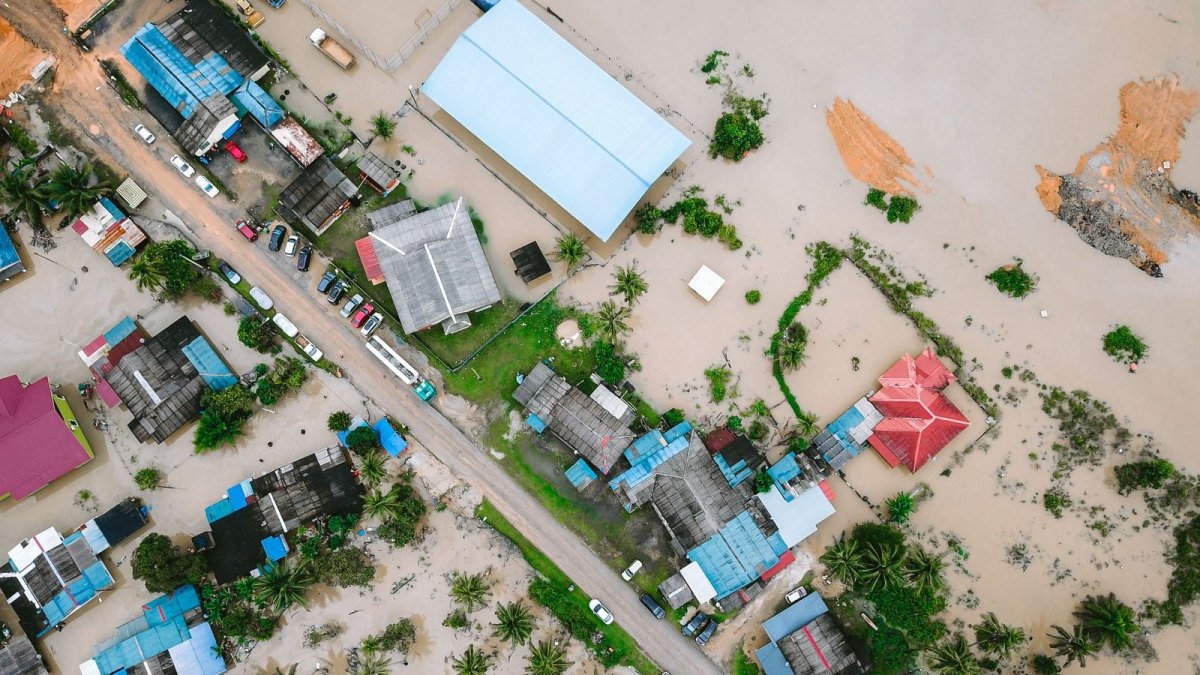
Folks, if you live in central Indiana, you already know what I'm about to tell you. If you don't, you need to listen up, because what happened this week in the Hoosier State isn't just a weather story—it's a warning shot. The White River has done something it hasn't done since 1913, and the ground is still soaked, the water is still rising, and the danger is far from over. Let's get into it.
Indiana's White River Shatters 113-Year-Old Record
Indianapolis, Indiana — The numbers are staggering, and they aren't just breaking records; they are obliterating them. The White River, a waterway that usually meanders peacefully through the heart of the state, has turned into a monster. In the communities of Anderson and Noblesville, the river crested at more than 24 feet, a mark that officially surpasses the historic floods of 1913.
At the Noblesville gauge, the river hit a record crest of 23.96 feet overnight. Let me put that in perspective for you: the previous record was 23.8 feet, set on March 25, 1913—the infamous Great Flood of 1913 that reshaped the Midwest. We just blew past a century-old benchmark by nearly two inches, and that is not a flex. That is a catastrophe.
This isn't just a "high water" situation. This is a "your basement is a swimming pool, your car is a boat, and your neighborhood is a lake" situation. The White River is not playing games, and neither are the officials who are scrambling to keep people alive.
The White River Just Broke a 113-Year-Old Record
Let’s talk about what that record actually means. The Great Flood of 1913 was a generational disaster, a biblical-scale deluge that wiped out infrastructure and killed hundreds across the Midwest. For over a century, that event stood as the gold standard for "worst case scenario" in Indiana. This week, we topped it.
In Noblesville, the water didn't just creep up; it surged. The 23.96-foot crest overnight wasn't a gradual rise—it was a violent response to relentless rainfall that turned creeks into rapids and rivers into oceans. The National Weather Service is calling this a 1-in-1,000-year rain event, and when you look at the numbers, it's hard to argue with them.
More than 11 inches of rain fell east of Indianapolis since Tuesday. New Castle recorded a jaw-dropping 11.23 inches in roughly 31 hours. That is not a sprinkle; that is a monsoon parked over your living room. The ground simply cannot absorb that much water that fast, so it goes somewhere—and that somewhere is your streets, your homes, and your businesses.
Five Lives Lost — And the Water Isn't Done
This is the part of the story that makes my blood boil. We are talking about infrastructure, records, and rainfall totals, but at the end of the day, this is about human lives. Officials have confirmed at least five people have died in flooding across Indiana. Five. That is five families who will never be the same because of this water.
The Associated Press has confirmed these fatalities, and while the details are still emerging, the message is clear: this is a deadly event. These aren't just statistics; they are neighbors, parents, and friends. And the tragedy is that the water isn't done claiming victims yet.
As of Saturday, August 15, flash-flood warnings and watches remain in place across a swath of central Indiana. The National Weather Service is warning that more showers and thunderstorms are moving into the area throughout the day. The ground is saturated, the rivers are swollen, and any additional rain is going to run straight into already-engorged waterways. We are not out of the woods, folks. Not even close.
A 1-in-1,000-Year Rain Event
I want you to wrap your head around the phrase "1-in-1,000-year rain event." It sounds like a statistic, but it’s a reality check. It means that statistically, there is a 0.1% chance of this happening in any given year. But statistics don't matter when you're standing on your roof watching your car float away.
Forecasters used that term to describe the deluge that dumped 11.23 inches on New Castle in just over a day. To put that in perspective, that is nearly a quarter of the annual average rainfall for some parts of Indiana—in 31 hours. The sheer volume of water is mind-boggling, and it overwhelmed drainage systems, creeks, and rivers that were never designed to handle this kind of load.
This wasn't just a rainstorm; it was a derecho system that swept through the state. We're talking straight-line winds, tornadic activity, and torrential rain all wrapped into one apocalyptic weather package. Earlier in the week, the same system knocked out power for more than 170,000 customers in the Ohio/Cincinnati region. This storm is a multi-state menace, and Indiana is bearing the brunt of it right now.
Braun Declares Disaster — Washington Answers
Governor Mike Braun did what he had to do. On Thursday, August 13, he declared a statewide disaster emergency. This wasn't a symbolic gesture; it was a necessary administrative step to unlock resources and cut through the red tape. The declaration covers severe storms, tornadic activity, heavy flooding, and the derecho that tore through the state.
Braun didn't stop there. He requested federal help, and Washington answered. President Trump plans to approve Indiana's request for a Presidential Emergency Declaration, a move that could release up to $5 million in federal support for emergency response and recovery. That money is critical, but let's be clear: $5 million is a drop in the bucket compared to the damage we are likely looking at.
Braun has been on the ground, traveling to northwest Indiana to assess the damage. He was joined by leaders of the Indiana National Guard, Indiana State Police, and the Indiana Department of Homeland Security. That is the right move—leaders need to see the devastation with their own eyes to understand the scale of the response required.
Heroes in the Floodwaters
Amidst the chaos and the tragedy, there are stories that will restore your faith in humanity. Mass water rescues and evacuations have been taking place in Noblesville, Anderson, and surrounding communities. These aren't just official operations; these are neighbors helping neighbors, strangers pulling strangers out of rising water.
First responders have been working around the clock, navigating submerged roads and treacherous currents to reach people trapped in their homes. The Hamilton County government has issued a State of Emergency by order of the Board of Commissioners, and they are pleading with residents to stay off the roads. But even with those warnings, there are always those who need saving, and our emergency personnel are answering the call.
These are the moments that define a community. When the water rises, the heroes emerge. We are seeing boat rescues in neighborhoods that have never seen a drop of flooding. We are seeing shelters opening their doors to families who have lost everything. It is a grim situation, but the human spirit is fighting back.
What Comes Next: The Slow Grind of Recovery
Here is the hard truth, folks: the water recedes, but the nightmare doesn't end. Recovery is a marathon, not a sprint. Once the floodwaters finally retreat, they will leave behind a thick layer of mud, contaminated debris, and ruined possessions. The mold will start growing within days, and the insurance adjusters will be overwhelmed.
Hamilton County remains under a State of Emergency, and flooding is expected to continue. The White River is still high, and the tributaries are still swollen. Even if the rain stops today, it will take days, if not weeks, for the water to fully recede. And when it does, the real work begins.
We are talking about rebuilding homes, repairing infrastructure, and dealing with the psychological toll of watching your life wash away. The $5 million from the federal government is a start, but it is just a start. We need to be prepared for a long, difficult road ahead. This isn't a one-week news cycle; this is a months-long recovery effort.
The Bigger Picture: A Warning for the Midwest
Now, I want to step back and give you some analysis, because this isn't just an Indiana problem. This is a warning for the entire Midwest. We are seeing weather patterns shift, and the "1-in-1,000-year" events are starting to happen with alarming frequency. We cannot keep building in floodplains and expecting nature to respect our boundaries.
When you break a record that stood for 113 years, you have to ask yourself: what changed? The climate is changing, and the atmosphere can hold more moisture. That means when it rains, it pours—literally. We need to be looking at our infrastructure, our levees, our drainage systems, and asking if they are ready for the next storm, because there will be a next storm.
This flood is a wake-up call. We can't just rebuild the same way and hope for the best. We need to be smarter about where we build, how we build, and how we prepare. The 1913 flood was a catalyst for change a century ago. We need to make sure this flood is a catalyst for change now.
What You Can Do Right Now
Alright, folks, I’m not going to leave you with doom and gloom. I’m going to leave you with action. If you are in central Indiana, your number one priority is safety. Listen to local officials. If they tell you to evacuate, you evacuate. Do not drive through flooded roadways—turn around, don't drown. It’s not just a slogan; it’s a survival tactic.
For those of you watching from outside the affected area, don't just shake your head and move on. Check on your friends and family in Indiana. Donate to reputable relief organizations like the Red Cross or local food banks. The need is going to be immense, and it’s going to last long after the cameras leave.
And for everyone, I want you to take this personally. Look at your own flood risk. Do you have an emergency kit? Do you have a plan? If you think it can't happen to you, just ask the folks in Noblesville who are currently pumping out their basements. It can happen anywhere. Be prepared. Be vigilant. And be kind to your neighbors, because when the water rises, we are all in the same boat.
We will get through this. Indiana is tough. The Midwest is tougher. But we need to be smart, we need to be safe, and we need to be there for each other. Stay dry, stay safe, and stay informed. We’ve got your back here at Global1 News.
By Jessica Ali, Staff Writer
This article was produced with AI-assisted research and editorial support. Sources: Associated Press, ABC News, U.S. News & World Report, National Weather Service, Hamilton County Government, WAVE3, WBIW, The Indianapolis Star.
What's Your Reaction?
 Like
0
Like
0
 Dislike
0
Dislike
0
 Love
0
Love
0
 Funny
0
Funny
0
 Wow
0
Wow
0
 Sad
0
Sad
0
 Angry
0
Angry
0

Editor-in-Chief at Global1.News. Atlanta-based journalist who cuts through the BS and tells it like it is. Lead anchor, host, and the voice you hear when the spin stops and the truth starts.













Comments (0)