
Single check-in for those flying through Hong Kong from mainland China under new scheme
The launch of a single‑check‑in service for passengers travelling from Hangzhou and Wuhan through Hong Kong marks a subtle yet significant shift in the logistics of cross‑border air travel in the region.
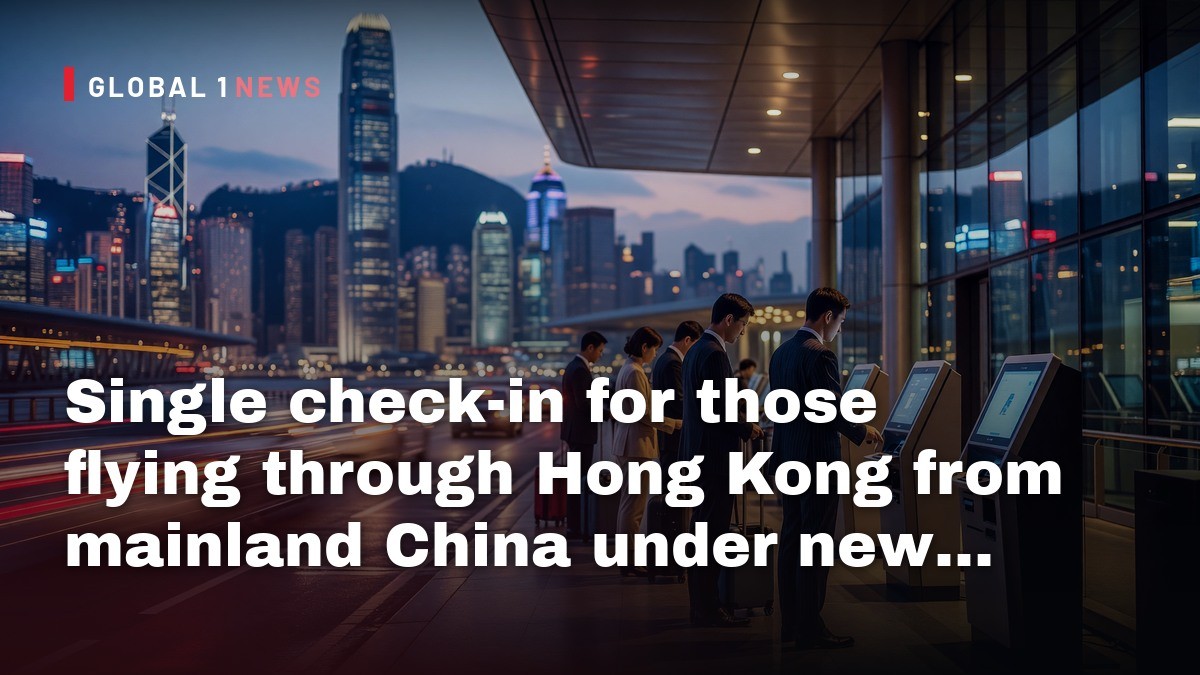
The launch of a single‑check‑in service for passengers travelling from Hangzhou and Wuhan through Hong Kong marks a subtle yet significant shift in the logistics of cross‑border air travel in the region. By allowing baggage to be transferred directly to the final overseas destination, even when passengers change airlines in Hong Kong, the new one‑stop arrangement seeks to streamline the passenger experience and reinforce Hong Kong International Airport’s role as a connective hub between mainland Chinese cities and the wider world.
Background to the new one‑stop service
Hong Kong International Airport (HKIA) has long positioned itself as a gateway for travelers from mainland China, offering extensive flight connections and a reputation for efficient handling of transit passengers. The recent announcement by Secretary for Transport and Logistics Mable Chan that the airport is “launching a game‑changing service” reflects a strategic effort to deepen that role. By eliminating the need for a second baggage check‑in at Hong Kong, the airport reduces a common source of inconvenience for passengers who often face tight transfer windows and the risk of delayed luggage.
The service specifically targets two major Chinese hubs: Hangzhou Xiaoshan International Airport and Wuhan Tianhe International Airport. Both cities have experienced rapid economic growth and expanding international air links, making them logical candidates for a pilot program aimed at enhancing outbound travel flows. The decision to start with these two airports suggests a measured rollout, allowing authorities to monitor operational impacts before potentially extending the scheme to additional mainland departure points.
Operational mechanics of the single‑check‑in system
Under the new arrangement, travelers departing from either Hangzhou or Wuhan can check their baggage through to the final overseas destination at the point of origin. This means that once bags are loaded onto the initial flight to Hong Kong, they are tagged for the ultimate endpoint, regardless of whether the passenger switches airlines for the onward leg. The key operational requirement is a seamless data exchange between the airlines involved and the baggage handling systems at HKIA, ensuring that luggage is correctly routed without the need for manual re‑checking.
While the source material does not detail the technical integration, it can be inferred that the service relies on existing inter‑airline agreements and the airport’s robust IT infrastructure. Hong Kong’s baggage handling system is already equipped to manage high volumes and multiple carrier operations, which facilitates the implementation of through‑checking across different airlines. The process also likely involves coordinated security screening and customs clearance protocols to maintain safety standards while expediting transfers.
Implications for airlines and passengers
For airlines, the service offers a competitive advantage by simplifying the transfer experience for their customers. Carriers operating flights from Hangzhou or Wuhan to Hong Kong can now market a smoother journey to destinations beyond Hong Kong, potentially attracting passengers who might otherwise prefer a direct flight from mainland China. The ability to hand over baggage to a different airline for the onward segment reduces the operational burden of handling transfers and may improve aircraft turnaround times at HKIA.
Passengers stand to benefit most directly from reduced transfer stress. The common practice of retrieving luggage at a transit hub, re‑checking it for the next flight, and navigating a new security checkpoint can be time‑consuming and fraught with uncertainty. By eliminating the second check‑in, travelers can move more swiftly through the airport, freeing up time for lounges, dining, or simply a quicker connection. This convenience aligns with broader trends in the aviation industry toward passenger‑centric services that prioritize seamless travel experiences.
Strategic significance for Hong Kong’s aviation hub status
Hong Kong International Airport’s ambition to remain a premier Asian hub depends on its ability to offer differentiated services that other regional airports cannot easily replicate. The single‑check‑in initiative reinforces HKIA’s value proposition as a “one‑stop” gateway, not merely a layover point. By facilitating baggage through‑checking across airlines, the airport demonstrates a high level of operational coordination and flexibility, traits that are attractive to both airlines and travelers.
In the competitive landscape of East Asian aviation, airports such as Shanghai Pudong, Guangzhou Baiyun, and Chengdu Shuangliu are expanding their own international connectivity. Hong Kong’s response—enhancing the passenger journey through procedural innovations—helps maintain its relevance. The move also dovetails with the broader “Greater Bay Area” integration strategy, which seeks to deepen economic and transport links among Hong Kong, Macau, and Guangdong provinces.
Potential challenges and risk considerations
Implementing a cross‑airline baggage through‑check service inevitably raises operational and regulatory challenges. Coordination among multiple carriers requires clear agreements on liability, especially in cases of lost or delayed luggage. While the source material does not specify the legal framework, it is reasonable to assume that airlines have established protocols to address such contingencies, possibly through shared indemnity clauses.
Security considerations are also paramount. Baggage that bypasses a second security screening in Hong Kong must still meet stringent safety standards. The airport’s existing security infrastructure likely incorporates risk‑based screening that can accommodate through‑checked bags without compromising safety. Nonetheless, any perceived lapse could attract scrutiny from aviation authorities and the traveling public, necessitating transparent communication about the safeguards in place.
Broader economic and diplomatic context
The timing of the service’s launch in November 2026 coincides with a period of renewed emphasis on cross‑border connectivity between mainland China and international markets. Both Hangzhou and Wuhan have become important nodes in China’s “dual circulation” strategy, which aims to balance domestic economic resilience with outward‑looking trade and investment. Enhancing outbound travel options supports that policy by facilitating business travel, tourism, and cultural exchange.
From a diplomatic perspective, the initiative underscores Hong Kong’s role as a neutral transit point that can bridge mainland China and the global community. By offering a smoother transit experience, Hong Kong reinforces its image as an open, service‑oriented city, a narrative that has been central to its post‑1997 development. The cooperation between Hong Kong authorities and mainland airports also reflects a pragmatic approach to regional integration, focusing on tangible benefits for travelers rather than purely political symbolism.
Future outlook and possible expansions
While the current rollout is limited to Hangzhou and Wuhan, the success of the pilot could prompt an expansion to other major Chinese departure airports such as Shanghai, Chengdu, or Shenzhen. The scalability of the service depends on the ability of HKIA’s baggage handling and IT systems to manage increased data flows and coordination among a larger number of airlines.
In addition to baggage handling, the concept of a “single check‑in” could be extended to other aspects of the travel experience, such as integrated boarding passes or unified loyalty programs that span multiple carriers. Such enhancements would further solidify Hong Kong’s reputation as a seamless gateway, encouraging more passengers to choose a Hong Kong transit even when direct flights are available from their origin city.
Overall, the introduction of a single‑check‑in service for travelers from Hangzhou and Wuhan represents a calculated step toward greater efficiency and passenger satisfaction in the region’s air travel ecosystem. By reducing friction at a critical transfer point, Hong Kong International Airport not only improves the immediate journey for thousands of passengers but also reinforces its strategic position in the broader network of Asian aviation.
This article was produced with AI-assisted research and editorial support. Reporting is based on the source material cited below. Sources: South China Morning Post; scmp.com; Global1.News (03 November 2026).
By Kenji Tanaka, Staff Writer
What's Your Reaction?
 Like
0
 Dislike
0
 Love
0
 Funny
0
 Wow
0
 Sad
0
 Angry
0

Japan Correspondent at Global1.News. Tokyo-based voice covering Japanese politics, technology, economy, and culture. Tracks the intersection of tradition and innovation in one of the world's most dynamic societies.














Comments (0)