
Hundreds rally in Stockholm against Israeli strikes on Gaza
Protests Erupt in Stockholm Amid Ongoing Gaza Crisis Hundreds of demonstrators gathered in central Stockholm on June 27, 2026, to protest Israeli airstrikes on Gaza and restrictions on humanitarian aid. Reports from Anadolu Agency indicate that the rally responded to calls from several civil society organizations. Participants accused Israel of violating the ceasefire reached o
Protests Erupt in Stockholm Amid Ongoing Gaza Crisis
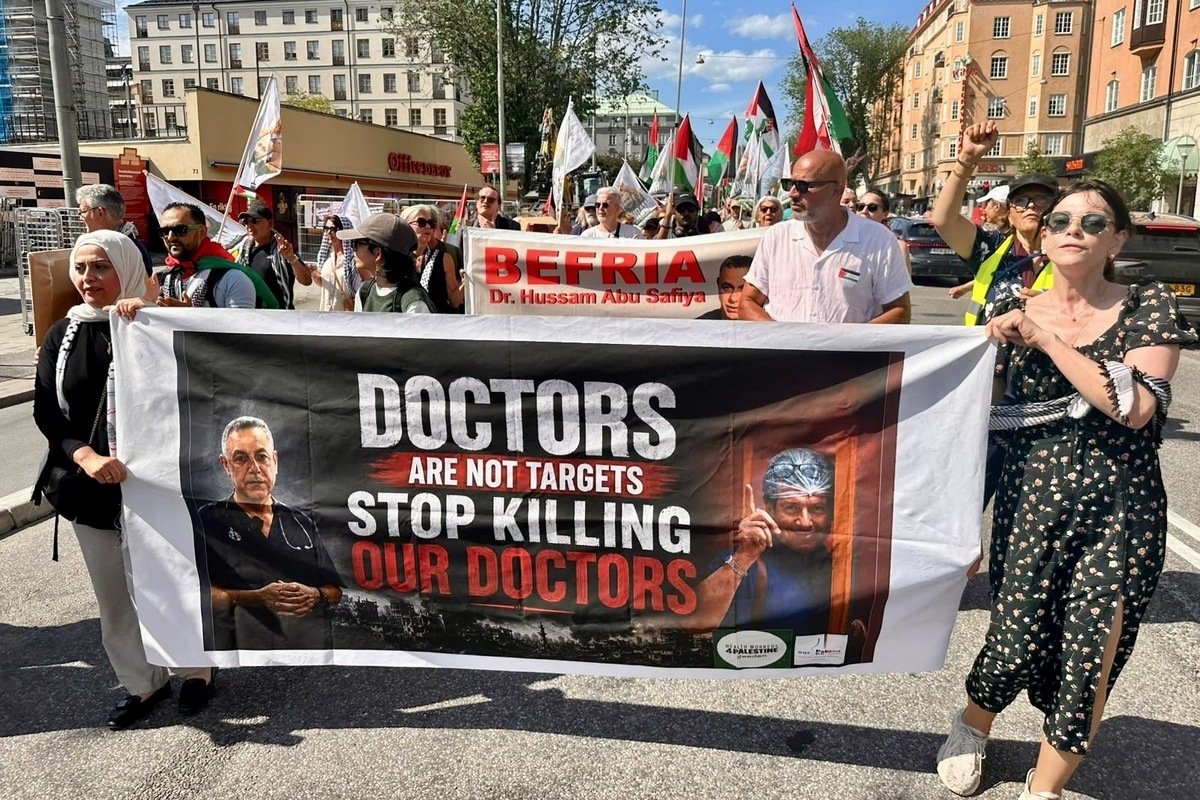
Hundreds of demonstrators gathered in central Stockholm on June 27, 2026, to protest Israeli airstrikes on Gaza and restrictions on humanitarian aid. Reports from Anadolu Agency indicate that the rally responded to calls from several civil society organizations. Participants accused Israel of violating the ceasefire reached on October 10, 2025, and called for an immediate end to military operations. The event took place in a city known for its active civic engagement on international issues.
The demonstration highlighted the persistent violence affecting Gaza's population. Banners carried by protesters read "Children are being killed in Gaza," "Schools and hospitals are being bombed," and "End the blockade on food." A street theatre performance in Odenplan Square illustrated the humanitarian conditions inside the enclave. Such public actions reflect growing European attention to events in the Middle East.
Demonstrators Demand Action from Swedish Authorities
Protesters urged the Swedish government to halt arms sales to Israel. This demand connects directly to concerns over how military equipment might contribute to operations in Gaza. The rally emphasized accountability from European states that maintain defense ties with Israel. Organizers framed the protest as part of broader efforts to influence policy decisions in Stockholm.
Participants included families, students, and members of local advocacy groups. Their presence underscored the role of public pressure in shaping foreign policy debates. The event remained peaceful, with clear messaging focused on ending restrictions on aid and stopping airstrikes. Local authorities monitored the gathering without reported incidents.
Ceasefire Violations and Escalating Tensions
The ceasefire agreement of October 10, 2025, was intended to halt major hostilities that began on October 8, 2023. According to Gaza's Health Ministry, Israeli ceasefire violations have killed 1,031 Palestinians and injured 3,309 others as of the most recent Thursday. These figures illustrate the fragile nature of the truce and the continued impact on civilian areas.
Local authorities report that more than 73,000 Palestinians have been killed and over 173,000 injured since the war started. Around 90 percent of civilian infrastructure has been destroyed. Such destruction affects daily life, including access to water, electricity, and medical services. The pattern of violations raises questions about enforcement mechanisms in the agreement.
The Humanitarian Blockade and Its Devastating Effects
Restrictions on humanitarian aid entering Gaza have compounded existing hardships. Protesters highlighted the blockade on food supplies, which limits nutrition for residents already facing severe shortages. The enclave's economy, dependent on external assistance, struggles under these constraints, affecting markets and household stability.
Daily life in Gaza involves navigating damaged roads and limited services. Families report difficulties obtaining basic goods, while hospitals operate with reduced capacity. The blockade's effects extend to agriculture and small businesses, deepening economic strain. International organizations continue to document these conditions through field assessments.
European Civil Society's Growing Solidarity with Palestine
European civil society has maintained consistent engagement with Palestinian issues through protests, petitions, and advocacy campaigns. In Sweden, groups coordinate events that connect local activists with broader networks across the continent. These efforts often focus on human rights documentation and calls for policy changes in EU member states.
Solidarity actions frequently reference the lived experiences of displacement and conflict. Participants draw on historical context of occupation to frame current events. Such movements operate alongside official diplomatic channels, providing public platforms for voices from affected regions. Coordination among organizations strengthens visibility for these concerns.
Implications for Swedish and EU Arms Policies
Calls to halt arms sales to Israel carry direct implications for Sweden's defense export regulations. Swedish policy requires assessments of how weapons might be used in conflict zones. The Stockholm protest adds to existing debates within the EU about common standards for arms transfers.
EU-level discussions involve balancing security partnerships with human rights considerations. Member states review export licenses on a case-by-case basis, yet public pressure can influence parliamentary reviews. Any shift in Swedish policy could affect joint procurement programs and bilateral agreements. Analysts note that sustained advocacy often precedes formal policy adjustments.
The Toll on Palestinian Children and Families
UNICEF reported that more than 260 Palestinian children have been killed in Gaza since the ceasefire began. This figure adds to the broader toll documented by local health authorities. Children face disrupted education, limited healthcare, and exposure to ongoing insecurity in their communities.
Families navigate the loss of homes and livelihoods while managing psychological strain. Long-term effects include interrupted development and reduced access to nutrition. Community support networks work to address immediate needs, yet the scale of destruction challenges recovery efforts. These conditions shape the daily reality for generations growing up under these circumstances.
Voices from the Ground and Calls for Accountability
Residents in Gaza describe the cumulative impact of airstrikes and aid restrictions on their ability to rebuild. Accounts emphasize the need for sustained international attention beyond periodic protests. Local organizations document incidents to support advocacy efforts at regional and global levels.
The Stockholm rally represents one link in a chain of international responses. Continued monitoring by groups such as the Gaza Health Ministry and UNICEF provides data that informs these discussions. Accountability measures remain central to demands from both protesters and affected communities seeking durable solutions.
Source: Anadolu Agency, Gaza Health Ministry, UNICEF By Fatima Al-Rashid, Staff WriterThis article was produced with AI-assisted research and editorial support. Reporting is based on sources cited in the article.
What's Your Reaction?
 Like
0
Like
0
 Dislike
0
Dislike
0
 Love
0
Love
0
 Funny
0
Funny
0
 Wow
0
Wow
0
 Sad
0
Sad
0
 Angry
0
Angry
0

Gulf/MENA Correspondent at Global1.News. Based in Doha, covering Gulf politics, energy markets, diplomacy, and development across the Middle East and North Africa. Tracks the economic transformation of the Gulf states.













Comments (0)