
Houthi Assault on Mokha Port Deepens Yemen's Red Sea Crisis
Iran-backed Houthi rebels have turned Yemen's Red Sea coast into the front line of a widening regional energy war, launching a two-wave missile and drone assault on the port city of Mokha that killed at least 18 people and damaged recently restored infrastructure near the Bab al-Mandeb Strait.
Iran-backed Houthi rebels have turned Yemen's Red Sea coast into the front line of a widening regional energy war, launching a two-wave missile and drone assault on the port city of Mokha that killed at least 18 people and damaged recently restored infrastructure near the Bab al-Mandeb Strait. The attack, which came alongside a drone strike on Saudi Arabia's Jazan refinery, signals that the Houthis are prepared to escalate their maritime campaign against the kingdom's oil exports even as Washington and Tehran remain locked in a parallel standoff over the Strait of Hormuz.
Houthi Assault on Mokha Port Deepens Yemen's Red Sea Crisis
Mokha, Yemen – August 10, 2026 — Yemen's Transport Minister Mohsen Al Omari, quoted by the state news agency Saba, said the Houthi barrage on Mokha involved at least 25 projectiles — ballistic missiles and more than 20 drones — that bombed economic zones, employee housing, warehouses, private fuel stations, storage tanks and other port facilities. The first wave on Sunday morning killed at least 11 people, including eight military personnel and three civilians, and wounded 32, according to a toll cited by Agence France-Presse from a medical source in Mokha. A second wave on Sunday evening killed at least seven more — four military personnel and three civilians — and wounded 30 others, most of them civilians, Yemen's armed forces said on Monday.
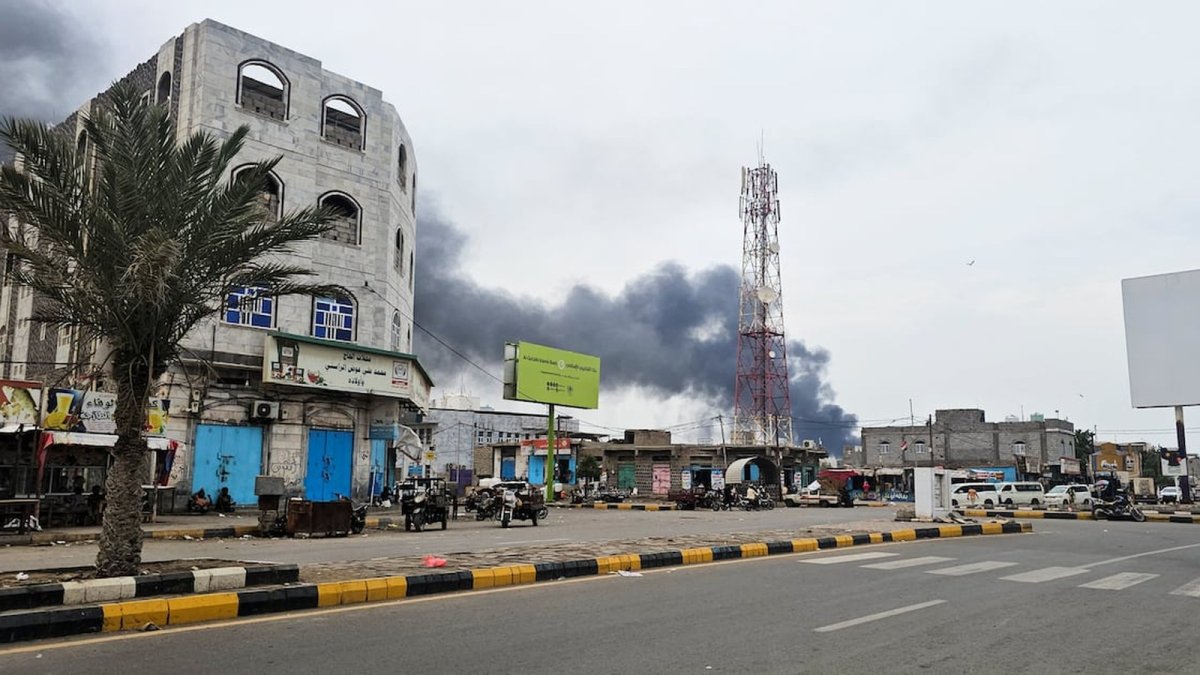
Two Waves, One Strategy: Testing the Government's Red Sea Lifeline
Yemeni air defences intercepted and shot down 11 drones during the renewed assault, while two ballistic missiles fell into the sea without reaching their targets, and an explosive-laden unmanned boat approaching the commercial port was destroyed. The National Resistance Forces, aligned with the internationally recognised government and led by Presidential Leadership Council member Tareq Saleh, urged residents of Mokha to remain indoors, accusing the Houthis of indiscriminate shelling of civilian areas.
The choice of target was not incidental. Mokha sits on Yemen's western coast, roughly 75 kilometres from the Bab al-Mandeb Strait, the 29-kilometre-wide chokepoint that carries an estimated 10 to 12 per cent of global trade and a significant share of Gulf energy exports. For the Houthis, the port is both a strategic military objective and a symbolic one: it was liberated from their control in 2017 and has since been restored as a commercial lifeline for the government-held coast. Houthi military spokesman Yahya Saree described the operation as a "large-scale" missile and drone strike targeting Saudi troop concentrations and weapons depots in the Mokha area, launched in response to what the group called an alleged Saudi military buildup along Yemen's western coast and in Taiz province.
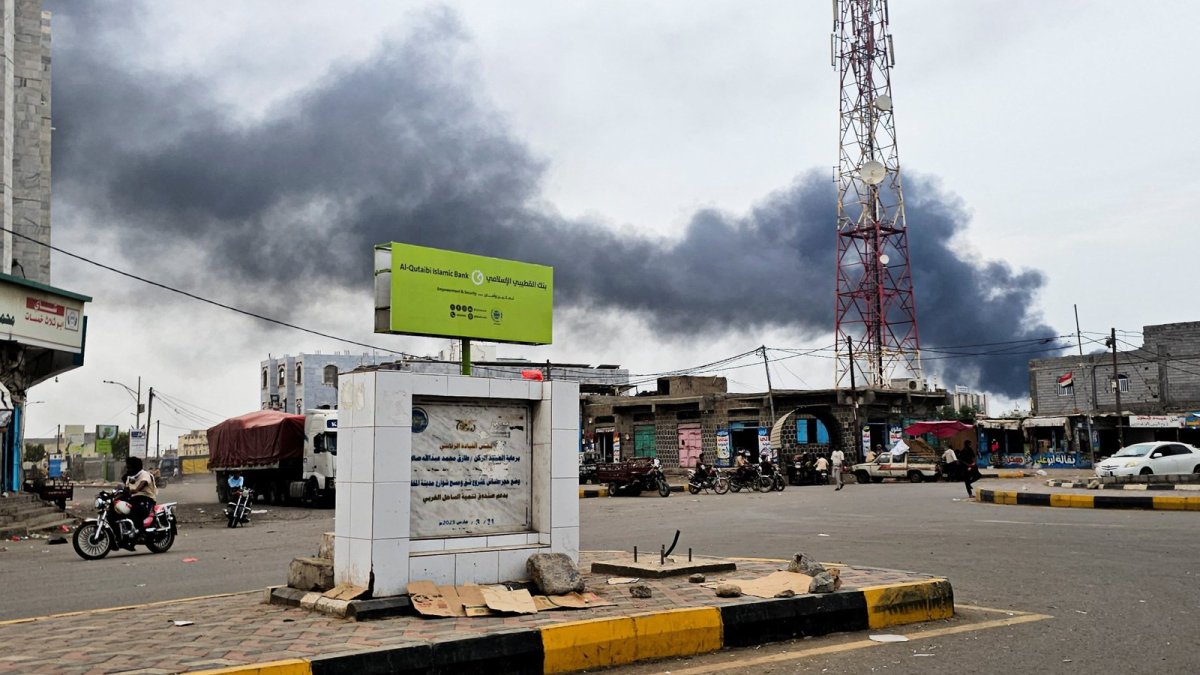
The Jazan Refinery: Saudi Arabia's Energy Exposure on the Red Sea
The Mokha assault was matched by a strike on Saudi territory. The Houthis claimed a drone attack on the Saudi Aramco refinery complex at Jazan, a 400,000-barrel-per-day facility on the Red Sea coast near the Yemeni border. Saudi Arabia's Energy Ministry said the resulting fire was brought under control at dawn with no injuries reported, with Aramco's industrial firefighting teams extinguishing the blaze. The ministry did not disclose the cause, but the Jazan refinery had already been damaged on July 27, when an alleged Houthi attack hit its gasification complex and tank farm.
The double strike — Mokha and Jazan on the same day — underscores how the Houthis have widened their targeting from vessels at sea to the fixed infrastructure of Saudi energy export. The group declared a maritime "embargo" on Saudi shipping in the Red Sea on July 20, 2026, citing what it calls an alleged Saudi siege of Yemen, which Riyadh denies. Kpler data shows the impact is already severe: Bab al-Mandeb ship traffic fell to 15 commodity vessels on Sunday, down 56 per cent from the 34 that crossed on the day the embargo was announced. Cargoes of crude oil, grain and fertiliser bound for China, India, Pakistan and the Netherlands have been disrupted, and Saudi Arabia has begun shifting some oil exports to the Suez route to bypass the threatened waterway.
Historical Background: From Mocha Coffee to a Decade of War
The port city that now anchors a regional energy crisis was once a global trading powerhouse. Mokha — spelled Mocha in the European coffee trade — was for centuries the principal outlet for Yemeni coffee, giving its name to the beverage that fuelled coffeehouses from Istanbul to London before Aden and Hodeidah eclipsed it in the nineteenth century. Its modern tragedy began in September 2014, when the Houthi movement seized the capital Sanaa, prompting a Saudi-led coalition to intervene in March 2015 in support of Yemen's internationally recognised government. Mokha was recaptured by government forces in 2017, and its port has since been rebuilt as a hub for humanitarian and commercial cargo on the western coast.
A UN-brokered ceasefire in 2022 largely halted large-scale fighting between the Houthis and the government for years, even as the Houthis launched their parallel campaign against international shipping in the Red Sea. That fragile calm has now shattered. On Friday, more than 17 people were killed in a Houthi attack on Marib province, and three more died in strikes on areas hosting internally displaced civilians. Government forces have responded on multiple fronts, and in the coastal district of al-Khokha south of Hodeidah, the government-appointed governor, al-Hassan Taher, survived an assassination attempt after a Houthi ballistic missile struck his residence.
Regional Dynamics: Iran's Proxy Leverage at Bab al-Mandeb
The escalation must be read within a broader regional architecture. The Houthis are the most active node in Iran's network of proxies, and their Red Sea campaign gives Tehran a second chokepoint to threaten alongside the Strait of Hormuz, where more than 100 ships a day transited before the Iran war that began on February 28, 2026 — a figure that has since collapsed to roughly a dozen crossings on some days. With both straits under pressure, oil prices surged past US$100 per barrel last week, and shipping markets have been forced to price in a dual-strait supply shock unseen since the 1973 embargo era.
For Riyadh, the timing compounds the threat. The kingdom is already diverting Red Sea crude to Suez and facing insurance and freight cost spikes on its western export routes. Its response has been diplomatic as well as military: on Friday, Saudi Arabia, Pakistan and Turkey signed a joint defence pact stipulating that an attack on one state is an attack on all, a rare trilateral alignment that reshapes the security geometry of the Arabian Peninsula. Saudi Foreign Minister Prince Faisal bin Farhan hailed the agreement as a unification of efforts to confront regional threats, while Turkish Foreign Minister Hakan Fidan stressed it was not directed against Iran — a reassurance that underscores how carefully the region's powers are calibrating their postures as the war widens.
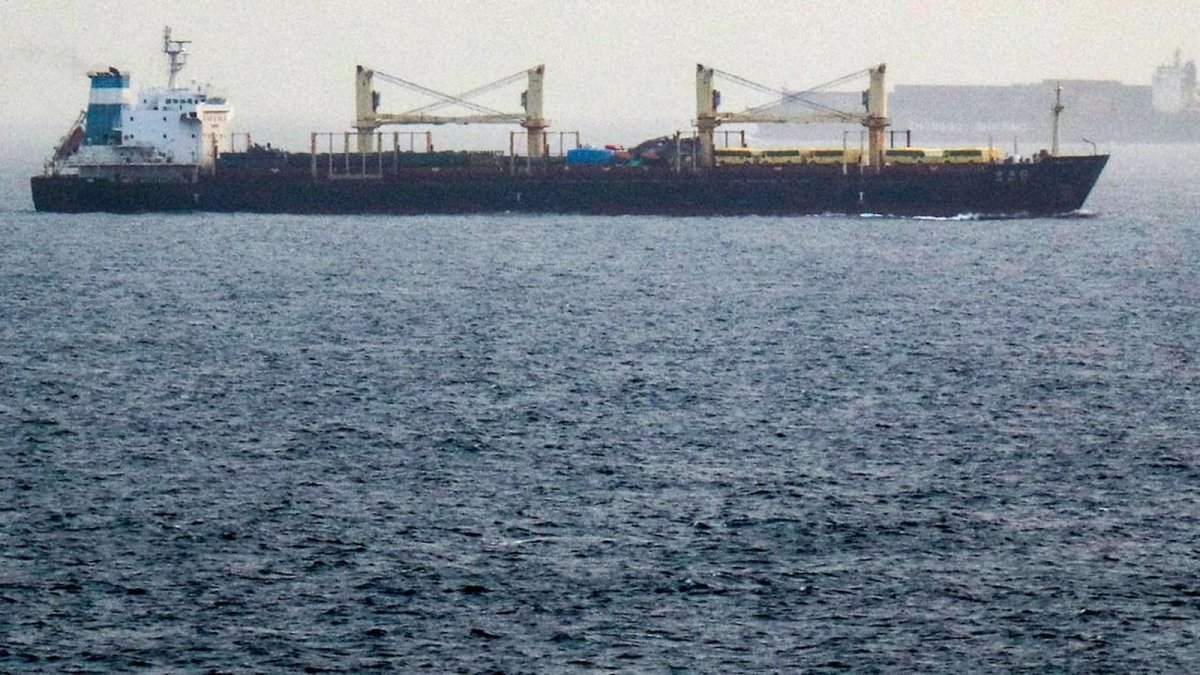
Strategic Calculus: What Each Side Wants
For the Houthis, the Mokha and Jazan strikes serve three purposes: they punish Saudi Arabia for backing the government, they demonstrate that Iran's proxy network can strike fixed energy infrastructure at will, and they burnish the group's domestic legitimacy as the defender of Yemen against foreign "aggression." Houthi political council member Hizam al-Assad claimed the explosions and fires at Mokha port were caused by large quantities of weapons and military equipment stored there — a narrative designed to justify the targeting of a civilian port and to shift blame for civilian casualties onto the government forces the Houthis accuse of militarising the facility.
For Riyadh, the calculus is more constrained. The kingdom has spent a decade trying to exit the Yemen war, and its current priority is defending its energy export routes without being dragged back into a full-scale ground campaign. The Jazan refinery strike, coming less than two weeks after the July 27 damage, raises the cost of inaction: every successful Houthi hit on Saudi infrastructure emboldens the group and tests the credibility of Saudi deterrence. For Yemen's internationally recognised government, the assault is a reminder that the Houthis retain the offensive initiative, and that the restoration of state authority on the western coast — symbolised by the rebuilt Mokha port — remains a primary Houthi target.
Regional Implications: A Two-Strait Energy Shock
The immediate risk is that the Houthi campaign and the Hormuz standoff feed each other. If shipping through both Bab al-Mandeb and Hormuz remains suppressed, global oil markets face a supply disruption that US$100-per-barrel prices may not fully reflect, particularly with winter demand approaching. Insurance underwriters are already treating the southern Red Sea as a war-risk zone, and the diversion of Saudi exports toward Suez adds cost and congestion to an alternative route that carries its own vulnerabilities.
For Middle East readers, the deeper implication is strategic: the Red Sea has become a contested arena where a non-state actor holds effective veto power over a global energy chokepoint, backed by the region's principal revisionist power. The Saudi-Pakistan-Turkey pact signals that the Gulf's established order is consolidating, but it has yet to produce a concrete deterrent against the Houthis' missile and drone arsenal. Until the group's supply lines, command structures or political incentives are meaningfully addressed — or until a comprehensive settlement to the Yemen war re-emerges — the Red Sea will remain the region's most volatile maritime frontier, and ports like Mokha will keep paying the price.
By Malik Hassan, Staff Writer
This article was produced with AI-assisted research and editorial support. Reporting is based on sources cited in the article.
What's Your Reaction?
 Like
0
Like
0
 Dislike
0
Dislike
0
 Love
0
Love
0
 Funny
0
Funny
0
 Wow
0
Wow
0
 Sad
0
Sad
0
 Angry
0
Angry
0

Middle East Correspondent at Global1.News. Based in Beirut, covering politics, conflict, energy, and society across the Middle East. Brings context and depth to a region often reduced to headlines.










Comments (0)