
Islamic Jihad says Palestinian factions agree in Cairo to postpone elections
Palestinian factions gathered in Cairo this week reached a tentative consensus to postpone the long‑awaited national elections, an outcome announced by the Islamic Jihad movement.
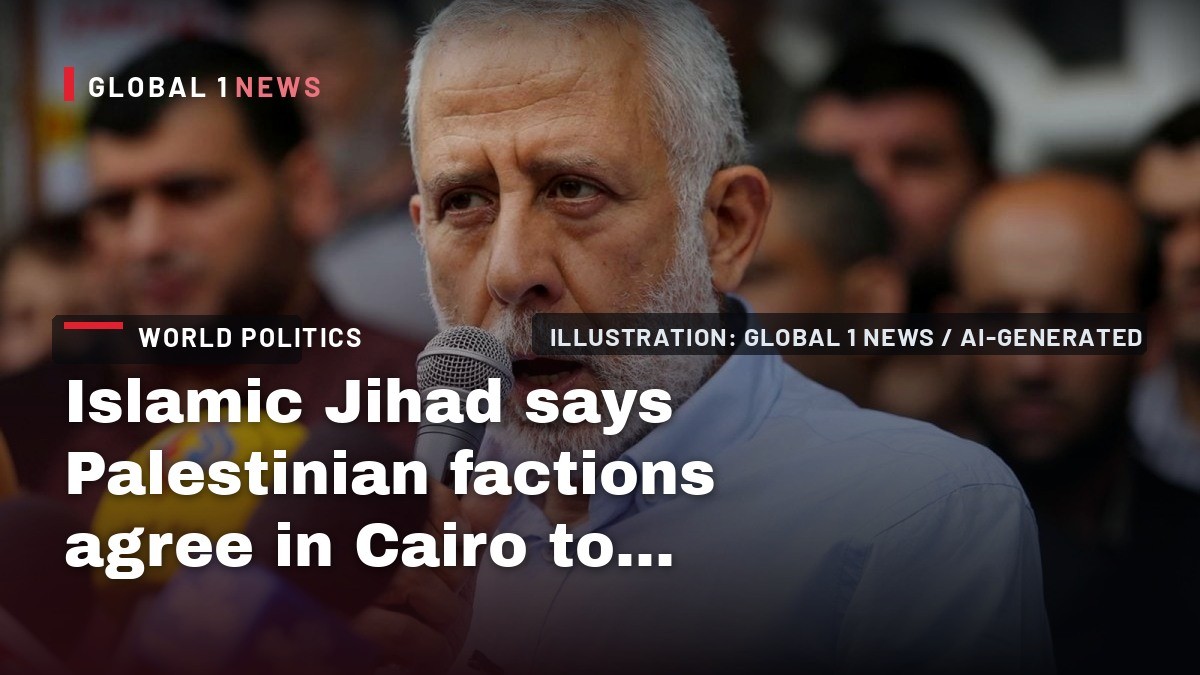
Palestinian factions gathered in Cairo this week reached a tentative consensus to postpone the long‑awaited national elections, an outcome announced by the Islamic Jihad movement. Deputy secretary‑general Mohammed al‑Hindi told reporters that the talks, hosted by Egypt, produced an agreement to delay the vote as part of broader understandings aimed at addressing pressing national issues and sustaining internal dialogue. While the exact timing of an official statement remains pending, the development signals a renewed, albeit cautious, attempt to revive a political process that has been stalled for years.
Background to the Cairo talks
The meeting in Cairo brought together representatives from the major Palestinian factions, including the dominant Fatah movement and the Islamic Jihad organization. According to al‑Hindi, the talks were framed as a platform to discuss “national issues” and to reinforce a “national dialogue” that could underpin future political decisions. The Egyptian host, long a mediator in intra‑Palestinian disputes, facilitated the discussions, underscoring its continued role as a regional broker seeking stability on the ground.
These talks come after a series of stalled attempts to hold elections that would determine the next leadership of the Palestinian Authority and potentially reshape the political landscape. The postponement reflects the persistent challenges of reconciling divergent visions among factions, as well as the broader context of occupation, settlement expansion, and humanitarian hardship that continues to shape daily life for Palestinians.
The decision to delay elections
Al‑Hindi emphasized that the decision to postpone the elections was not taken lightly. He described the agreement as part of “broader understandings” aimed at addressing “national issues” and maintaining “internal dialogue.” The language suggests that the factions view the electoral timetable as intertwined with broader political negotiations, rather than a standalone event. By agreeing to delay, they signal a willingness to prioritize consensus‑building over immediate electoral competition.
Importantly, al‑Hindi noted that the Fatah delegation would return to Ramallah to follow up on the understandings reached in Cairo. This step indicates that the postponement is intended to be temporary, with the expectation that a new election date will be set once a broader consensus is achieved. The emphasis on “consensus among the various Palestinian factions” underscores the desire to avoid a repeat of past elections that were marred by low turnout and boycotts.
Implications for Palestinian governance
The postponement carries significant implications for the governance of the Palestinian territories. Elections have been viewed by many international observers as a critical pathway to renewing the legitimacy of Palestinian institutions, especially in the face of ongoing Israeli occupation and the fragmentation of Palestinian political authority between the West Bank and Gaza. Delaying the vote may preserve internal unity in the short term, but it also risks prolonging a governance vacuum that hampers effective administration and service delivery to a population already burdened by restrictions on movement, economic hardship, and periodic escalations of violence.
From a human‑rights perspective, the delay raises concerns about the political rights of Palestinians to participate in free and fair elections. International law affirms the right of peoples to self‑determination, which includes the ability to choose their representatives. While the factions argue that postponement is a consensual decision, the broader public may perceive it as a setback to democratic aspirations, especially given the protracted nature of the occupation and the limited avenues for political expression.
Egypt’s mediating role
Egypt’s hosting of the talks reflects its longstanding involvement in Palestinian reconciliation efforts. By providing a neutral venue, Cairo aims to facilitate dialogue that might otherwise be stalled by mistrust and logistical challenges on the ground. The Egyptian government has often positioned itself as a key interlocutor between rival Palestinian factions, leveraging its regional influence to encourage compromise.
The outcome of the Cairo talks—namely, the agreement to postpone elections—demonstrates Egypt’s capacity to shape the political timetable, even if indirectly. While the decision does not resolve the underlying disputes, it creates a space for further negotiations, which could be instrumental in building a more cohesive Palestinian political front capable of confronting the realities of occupation and seeking broader international support.
Human cost of political uncertainty
For ordinary Palestinians, the postponement of elections translates into continued uncertainty about their political representation and future. The daily reality for many includes restricted access to employment, education, and health services due to Israeli-imposed movement controls. In such a context, the promise of a forthcoming election offers a rare glimpse of hope for change. Delaying that promise can deepen frustration and exacerbate feelings of disenfranchisement.
Human‑rights advocates stress that political stagnation often compounds humanitarian crises. When governance structures remain in limbo, the ability to coordinate aid, rebuild infrastructure, and protect civilians from violence is weakened. The consensus reached in Cairo, while aiming to strengthen “Palestinian consensus,” must therefore be measured against the immediate needs of a population that endures regular hardship and insecurity.
International legal dimensions
The decision to postpone elections, framed as a consensus among Palestinian factions, also carries weight under international law. The right to self‑determination, enshrined in the United Nations Charter and subsequent resolutions, includes the ability of peoples to freely determine their political status and pursue economic, social, and cultural development. Any delay in exercising this right must be justified by legitimate internal processes rather than external coercion.
In this case, al‑Hindi’s statements indicate that the postponement stems from internal dialogue rather than external pressure. Nonetheless, the international community will monitor whether the agreed‑upon delay respects the spirit of the right to participation. Observers may call for transparent timelines and inclusive mechanisms to ensure that the eventual election reflects the will of all Palestinians, not just the leading factions.
Looking ahead: prospects for a new election date
Al‑Hindi affirmed that a new election date will be set through consensus among the factions, suggesting that the postponement is intended to be temporary. The next steps will involve the Fatah delegation’s return to Ramallah to operationalize the understandings reached in Cairo. This phase will likely involve internal consultations within the Palestinian Authority, as well as continued dialogue with other factions to secure broad-based agreement.
The success of this process will hinge on the ability of the factions to address lingering political grievances, reconcile differing visions for governance, and present a unified front capable of navigating the complex realities of occupation. If consensus can be achieved, the forthcoming election could reinvigorate Palestinian political life, restore a measure of democratic legitimacy, and strengthen the collective claim to self‑determination under international law. Conversely, prolonged delays risk deepening political fatigue and eroding public confidence, underscoring the delicate balance that Palestinian leaders must manage as they seek to chart a path forward.
This article was produced with AI-assisted research and editorial support. Reporting is based on the source material cited below. Sources: Middle East Monitor; middleeastmonitor.com; Global1.News (09 October 2026).
By Fatima Al-Rashid, Staff Writer
What's Your Reaction?
 Like
0
Like
0
 Dislike
0
Dislike
0
 Love
0
Love
0
 Funny
0
Funny
0
 Wow
0
Wow
0
 Sad
0
Sad
0
 Angry
0
Angry
0
Gulf/MENA Correspondent at Global1.News. Based in Doha, covering Gulf politics, energy markets, diplomacy, and development across the Middle East and North Africa. Tracks the economic transformation of the Gulf states.












Comments (0)