
Hong Kong leader says firms must strive to survive despite government support
Chief Executive John Lee Ka‑chiu reiterated the central theme of his recent policy address on Saturday, emphasizing that while government support will remain a pillar of Hong Kong’s economic recovery, the onus of competitiveness ultimately rests with the private sector.
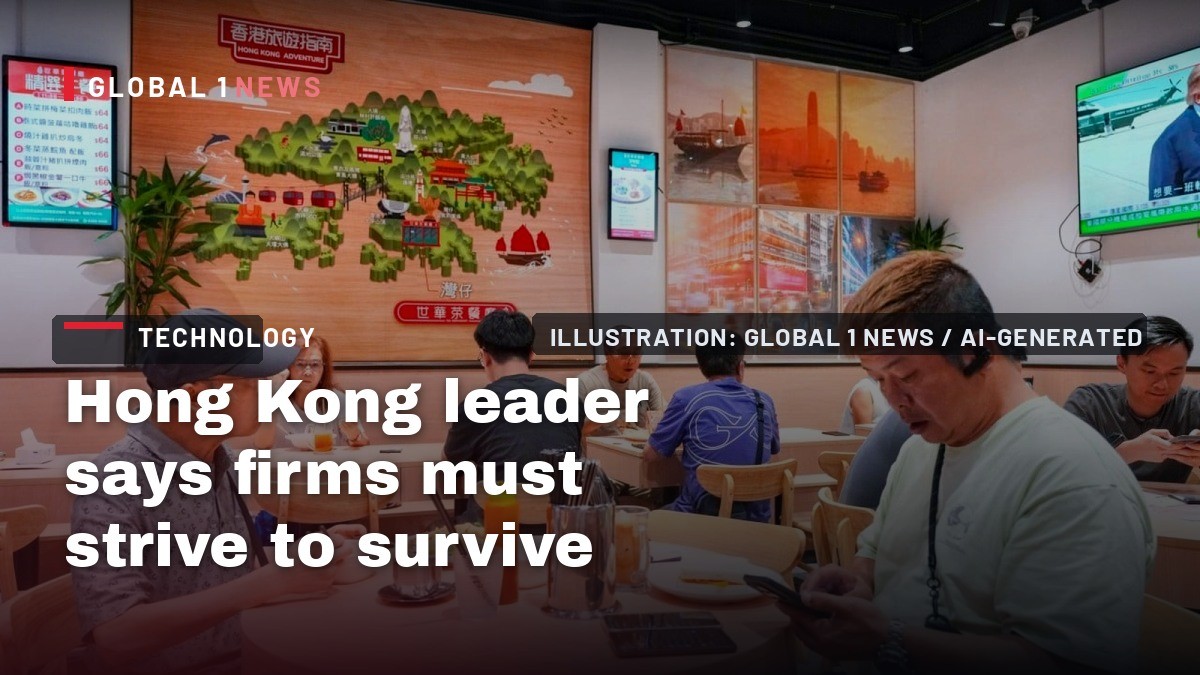
Chief Executive John Lee Ka‑chiu reiterated the central theme of his recent policy address on Saturday, emphasizing that while government support will remain a pillar of Hong Kong’s economic recovery, the onus of competitiveness ultimately rests with the private sector. Speaking on a radio programme that examined the details of the administration’s inaugural five‑year blueprint, Lee highlighted the breadth of the “livelihoods” segment of his speech, describing it as the longest and most expansive portion of the address. His remarks underscored a dual‑track approach: state‑led stimulus to expand the macro‑economy, coupled with a call for firms to adapt to a market that remains, by necessity, highly competitive.
Policy Address: A Blueprint for Growth
Lee’s policy address, delivered earlier in the week, laid out a comprehensive plan aimed at revitalising Hong Kong’s economic engine. The chief executive framed the initiative as a “five‑year plan,” signaling a medium‑term horizon for structural reforms and investment. While the full text of the address was not reproduced in the interview, Lee’s comments suggest that the blueprint covers a range of measures designed to broaden the economic base, from infrastructure upgrades to incentives for innovation.
Crucially, Lee positioned the “livelihoods” component of the address as the most extensive in scope. By describing it as the longest part of his speech, he signalled that social welfare and household well‑being are central to the government’s agenda. Yet, he paired this emphasis with a reminder that economic expansion must precede any substantial improvement in living standards, a narrative that aligns with traditional fiscal policy logic: a larger economic pie creates the fiscal space needed for social spending.
Government Aid: Scope and Limits
The chief executive acknowledged that government assistance can play a pivotal role in cushioning households from short‑term shocks. However, his remarks also conveyed a clear boundary: aid is a catalyst, not a substitute for market discipline. “You need to develop the economy first to have the resources to improve people’s livelihoods,” Lee asserted, indicating that fiscal generosity alone cannot sustain long‑term prosperity.
This stance reflects a broader trend in Hong Kong’s policy circles, where authorities have been cautious about over‑reliance on direct subsidies. By framing aid as a temporary bridge, Lee seeks to preserve confidence among investors and entrepreneurs, assuring them that the regulatory environment will remain conducive to business while still addressing the needs of residents who have yet to feel the benefits of recent economic policies.
Competitive Pressures on Firms
Lee’s insistence that businesses must “adapt in a competitive market” carries significant implications for the private sector. Hong Kong’s economy, long characterised by low tax rates, free‑flowing capital, and a service‑oriented structure, faces mounting pressures from regional rivals and shifting global supply chains. The chief executive’s call to “remain competitive and survive” suggests that firms will need to enhance productivity, embrace digital transformation, and possibly diversify into emerging sectors such as green technology or fintech.
While the interview did not enumerate specific policy tools, the emphasis on competitiveness implies that any future government support will likely be contingent on demonstrable performance improvements. Companies that fail to innovate may find themselves excluded from preferential programmes, a scenario that aligns with Lee’s broader message that the “pie” must grow before targeted assistance can be justified.
Targeted Support for Vulnerable Groups
Lee recognised that, even as the overall economy expands, certain segments of the population may require “extra help.” This acknowledgement hints at a differentiated approach to social policy, where universal measures are complemented by targeted interventions for groups that are lagging behind. The chief executive’s reference to “certain groups that may need extra help” suggests that the government is prepared to allocate resources to sectors such as low‑income households, the elderly, or workers displaced by structural changes.
However, the interview did not detail the mechanisms for delivering such support. The absence of specific programmes or funding figures underscores the chief executive’s broader point: without a robust macro‑economic foundation, any ad‑hoc assistance risks being unsustainable. Consequently, the government’s priority appears to be fostering a resilient economic environment that can underwrite longer‑term social safety nets.
Implications for Hong Kong’s Five‑Year Plan
The five‑year horizon articulated by Lee signals a strategic shift from short‑term crisis management to a more measured, forward‑looking agenda. By coupling economic growth targets with a call for private‑sector adaptability, the administration is attempting to balance fiscal prudence with social responsibility. This approach mirrors the “dual circulation” model promoted in mainland China, which emphasizes internal demand while maintaining openness to external markets.
In practice, the success of this plan will depend on how effectively the government can translate its policy promises into concrete actions. The chief executive’s emphasis on the breadth of the livelihoods section suggests that policy instruments—such as housing subsidies, healthcare enhancements, or education grants—may be rolled out in a phased manner, contingent on the pace of economic expansion.
Business Community’s Response
While the interview did not capture direct reactions from business leaders, the tone of Lee’s remarks is likely to resonate with firms that have been navigating a volatile post‑pandemic landscape. Companies that have already invested in digital platforms or diversified their client base may view the chief executive’s message as validation of their strategic choices. Conversely, enterprises that remain heavily reliant on traditional sectors may interpret the call to “adapt” as a warning to accelerate transformation.
Industry associations are expected to monitor the rollout of the five‑year plan closely, particularly any incentives linked to innovation, talent development, or green investment. The emphasis on competitiveness may also spur a re‑evaluation of cost structures, prompting firms to seek efficiencies through automation or supply‑chain optimisation.
Outlook: Balancing Growth and Livelihoods
Lee’s articulation of a two‑pronged strategy—government‑led economic expansion paired with private‑sector agility—reflects a pragmatic response to Hong Kong’s current challenges. By positioning the “livelihoods” agenda as the most extensive component of his policy address, the chief executive signals a commitment to improving the everyday lives of residents, while simultaneously reminding stakeholders that such improvements are contingent on a thriving economy.
In the months ahead, the effectiveness of this approach will be measured by how quickly the “pie” grows and whether the growth translates into tangible benefits for those who have yet to feel the impact of recent policies. The interplay between state support and market discipline will shape Hong Kong’s trajectory, determining whether the city can sustain its status as a global financial hub while ensuring broader social well‑being.
This article was produced with AI-assisted research and editorial support. Reporting is based on the source material cited below. Sources: South China Morning Post; scmp.com; Global1.News (19 September 2026).
By Kenji Tanaka, Staff Writer
What's Your Reaction?
 Like
0
Like
0
 Dislike
0
Dislike
0
 Love
0
Love
0
 Funny
0
Funny
0
 Wow
0
Wow
0
 Sad
0
Sad
0
 Angry
0
Angry
0
Japan Correspondent at Global1.News. Tokyo-based voice covering Japanese politics, technology, economy, and culture. Tracks the intersection of tradition and innovation in one of the world's most dynamic societies.













Comments (0)