
Gulf of Paria Tensions Rise as Venezuela Presses Trinidad Over May Oil Spill
Venezuela has formally renewed its demand for information and compensation from Trinidad and Tobago over a 1 May oil spill in the Gulf of Paria, disputing Port of Spain's assessment of a minor, quickly contained ten-barrel incident.
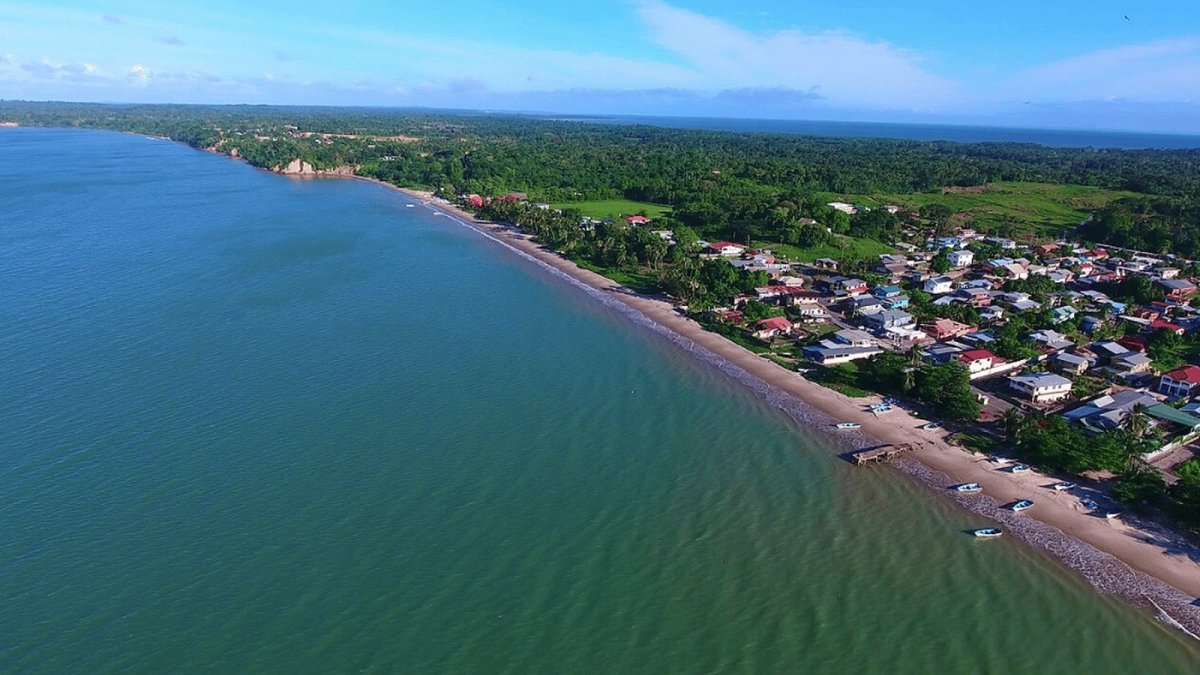
Gulf of Paria Tensions Rise as Venezuela Presses Trinidad Over May Oil Spill
Port of Spain, Trinidad — 11 August 2026
The shared waters of the Gulf of Paria have once again become a flashpoint between Port of Spain and Caracas, as Venezuela has formally renewed its demand for detailed information and compensation over a 1 May oil spill it insists originated in Trinidadian territory. The fresh diplomatic note, reported in early August, has revived friction between the two neighbours, with Venezuela warning of serious environmental damage to the ecologically sensitive Gulf of Paria and Trinidad firmly disputing the scale and impact of the incident.At the heart of the disagreement is a spill detected by state-owned Heritage Petroleum Company Limited at approximately 07:25 hrs on 1 May 2026, at Riser Platform No. 2 in the Main Soldado Field. Heritage immediately activated its oil spill response protocols, identified the source of the leak, and completed repairs by 2 May. The company’s estimate of the volume released was about ten barrels — a figure that Port of Spain has consistently maintained represents a minor, quickly contained event.Venezuela, however, sees the matter very differently. Caracas has argued that the spill has caused serious environmental damage along the coastlines of at least two of its states and within the Gulf of Paria itself. The dispute has now simmered for more than three months, with diplomatic notes exchanged, public accusations levelled, and domestic critics in Trinidad demanding greater transparency from both Heritage Petroleum and the current administration.A Dispute Over Scale and Notification
The Trinidad and Tobago Government, through the Ministry of Energy and Energy Industries (MEEI), has consistently pushed back against Venezuela’s characterisation of the event. Energy Minister Dr Roodal Moonilal has said that the ministry, working alongside Heritage Petroleum and the Trinidad and Tobago Air Guard, conducted a joint operation to determine the source and nature of the substance. He has insisted that the spill posed no threat to Venezuela’s environment and was contained before it could spread across the maritime border.Minister Moonilal has maintained that the spill was a minor event, contained quickly and effectively, echoing the official position that the ten-barrel estimate reflects the true scale of the incident. The Government has also pointed to the ongoing exchange of information between the two countries, noting that both sides have agreed to continue sharing data as scientific work and technical investigations proceed.Venezuela’s Foreign Minister, Yvan Gil, has taken a far more serious tone. In formal demands issued in May and June, and again in the fresh note reported this month, Gil has warned that the spill could impact an area of up to 1,625 square kilometres across the country’s twelve strategic wetland systems. He has also highlighted the potential threat to the livelihoods of more than five hundred fishermen who depend on the Gulf of Paria’s fisheries.Perhaps most pointedly, Venezuela has denounced what it describes as Trinidad’s lack of timely notification following the spill. Caracas has characterised this omission as a direct violation of current international obligations, arguing that neighbouring states have a duty to inform each other promptly of any incident that could affect shared waters.Domestic Criticism and Calls for a Probe
While the diplomatic row has played out between Port of Spain and Caracas, there has been significant criticism at home. Former energy minister Stuart Young has called for a formal investigation, alleging that both Heritage Petroleum and the current administration deliberately withheld information from the Trinidadian public about what he described as a “major offshore oil spill.”Young’s comments have added a political dimension to the affair, with opposition figures and commentators questioning whether the Government has been fully transparent about the incident. The environmental advocacy group Fishermen and Friends of the Sea (FFOS) has also joined the chorus, calling for more information on the spill and its potential impact on Trinidad’s own coastal communities and marine life.The domestic pressure reflects a broader concern among Trinidadians about the management of the country’s energy resources and the protection of its environment. The Gulf of Paria is not only a vital oil and gas producing zone but also supports fisheries, mangroves, and coastal livelihoods on both sides of the maritime boundary. For many in Trinidad, the dispute with Venezuela is not merely a matter of international diplomacy but a question of how well the nation safeguards its own natural heritage.Historical Context: A Troubled Shared Waterway
The Gulf of Paria has a long history of both cooperation and contention between Trinidad and Venezuela. The body of water, which separates the two countries, has been an important zone for oil and gas exploration for decades. It has also seen its share of environmental incidents, including previous spills and ongoing concerns about the health of its ecosystems.One of the most notable recent episodes was the saga of the Nabarima, a floating storage and offloading vessel that lay listing in the Gulf for months, raising fears of a major spill before it was eventually stabilised. That incident, like the current dispute, highlighted the vulnerability of the shared waterway and the challenges of coordinating responses across national boundaries.The maritime boundary between Trinidad and Venezuela has itself been a subject of negotiation and occasional tension. While the two countries have managed to maintain working relationships on energy matters, the current dispute over the May spill has exposed the fragility of that cooperation. The fact that the Gulf of Paria is a shared resource, vital to both nations, makes incidents like this particularly sensitive.Regional and Energy Implications
The timing of the dispute is significant for the wider Caribbean energy landscape. Trinidad and Tobago has positioned itself as a key player in the monetisation of Venezuelan natural gas, with the bp-led Loran project advancing as a cornerstone of that strategy. The project, which involves the development of gas fields that straddle the maritime border, depends on a cooperative relationship between Port of Spain and Caracas.Any prolonged diplomatic friction over the oil spill could complicate these energy negotiations. While neither side has suggested that the Loran project is under direct threat, the atmosphere of mistrust generated by the dispute is unlikely to help. Regional observers will be watching closely to see whether the two governments can separate the environmental disagreement from their broader energy cooperation.For the wider Caribbean, the dispute serves as a reminder of the acute vulnerability of small island developing states (SIDS) to oil spills and other environmental disasters. The region’s economies and ecosystems are heavily dependent on the health of its coastal and marine environments, and incidents like the May spill underscore the need for robust regional mechanisms for prevention, response, and compensation.The Path Forward: Diplomacy and Science
As of early August, the two governments have agreed to continue exchanging information as scientific work and technical investigations continue. This commitment to dialogue, at least on the surface, offers a pathway towards resolving the dispute. However, the repeated formal demands from Venezuela suggest that Caracas is not satisfied with the pace or substance of Trinidad’s responses.The key questions remain unresolved. Was the spill truly limited to ten barrels, or was it larger, as Venezuela and domestic critics have suggested? Did Trinidad fail in its obligation to notify Venezuela promptly? And what, if any, compensation is owed to the fishermen and coastal communities who may have been affected?These are questions that cannot be answered by diplomatic notes alone. They require transparent investigation, independent verification, and a willingness on both sides to accept the findings of scientific and technical experts. The Gulf of Paria is too important, and the livelihoods that depend on it too precious, for the truth to be obscured by political posturing.For Trinidad, the dispute also raises domestic questions about accountability and transparency. The calls from Stuart Young and Fishermen and Friends of the Sea for more information reflect a public that is increasingly demanding that its government and its state-owned companies operate in the open. The people of Trinidad and Tobago, who share the Gulf of Paria with their Venezuelan neighbours, deserve to know exactly what happened on 1 May and what is being done to prevent a recurrence.As the diplomatic exchanges continue, the hope must be that cooler heads prevail and that the two nations can find a way to address the legitimate concerns raised by the spill without allowing the dispute to poison their broader relationship. The Gulf of Paria has been a source of both wealth and worry for generations; it is in the interest of both countries to ensure that it does not become a source of lasting division.By Sharon Sahatoo, Staff Writer
This article was produced with AI-assisted research and editorial support. Sources: Caribbean360, Associated Press, Trinidad Guardian, Trinidad Express, Kaieteur News, OilNOW, teleSUR, UPI.
What's Your Reaction?
 Like
0
Like
0
 Dislike
0
Dislike
0
 Love
0
Love
0
 Funny
0
Funny
0
 Wow
0
Wow
0
 Sad
0
Sad
0
 Angry
0
Angry
0

Sharon Sahatoo
Caribbean Correspondent at Global1.News. Based in Port of Spain, Trinidad, covering Caribbean politics, economy, energy, climate, and culture. Amplifying the voices and stories of the Caribbean region.










Comments (0)