
Greek Wildfires Force Sea Evacuations as Winds Ground Aircraft and Threaten UK Holiday Plans
Greek wildfires have forced thousands from their homes and holiday villas this weekend, with gale-force winds turning routine summer blazes into life-threatening fronts. The scenes carry direct consequences for British travellers, as the Foreign, Commonwealth & Development Office updates its advice.
Greek wildfires have forced thousands from their homes and holiday villas this weekend, with gale-force winds turning routine summer blazes into life-threatening fronts. The scenes carry direct consequences for British travellers, as the Foreign, Commonwealth & Development Office updates its advice for one of the UK's favourite summer destinations.
Greek Wildfires Force Sea Evacuations as Winds Ground Aircraft and Threaten UK Holiday Plans
Athens, Greece – 2 August 2026 — A wildfire that began on Friday 31 July near the coastal village of Agios Vasileios has swept toward the popular resort of Porto Germeno on the Gulf of Corinth, 70km northwest of Athens. Nearly 500 firefighters, supported by specialised forest-fire crews temporarily deployed from France and Romania, battled three separate fronts created when winds reached 130km/h. Aerial operations were repeatedly grounded by turbulence, leaving ground teams to contain flames that have already damaged or destroyed more than 100 homes.
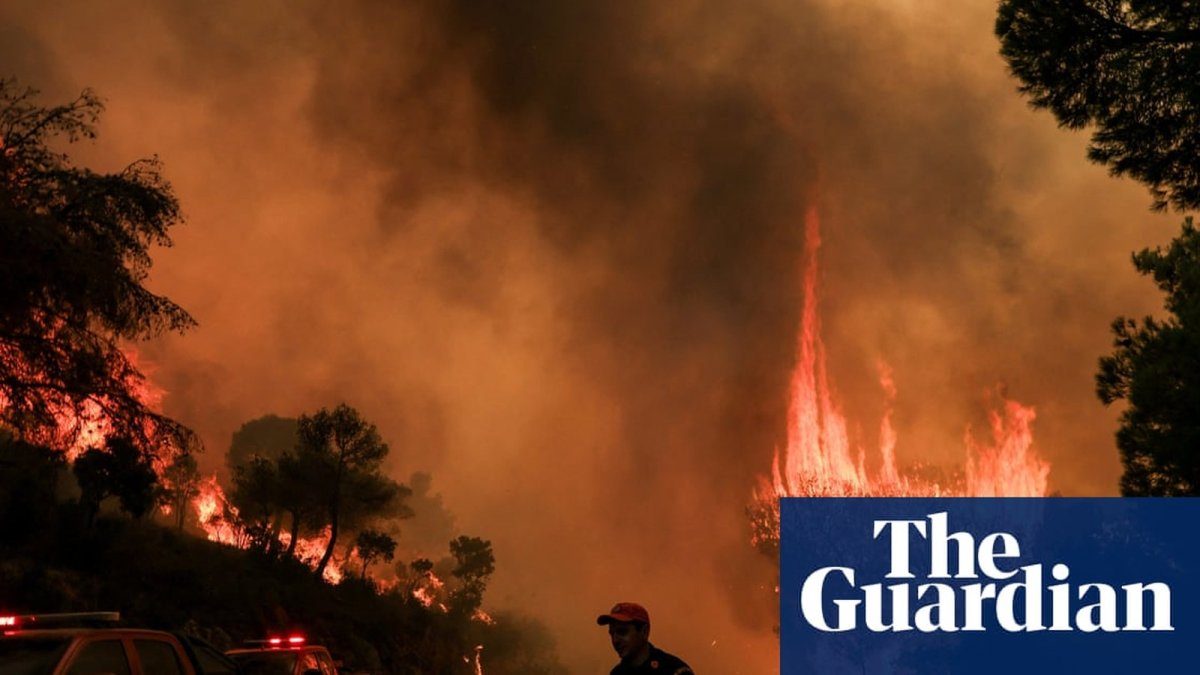
The Scale of Destruction Around Porto Germeno
Emergency 112 alerts ordered immediate evacuation from Porto Germeno, Livadostra and Domvraina. On Friday, 254 residents left Agios Vasileios by sea; another 12 departed Porto Germeno the following day when roads became impassable. Theodore Giannaros of the National Observatory of Athens estimates 40-50 sq km affected, while meteo.gr records more than 6,500 hectares burned in the Gulf of Corinth fires alone. On Sunday 2 August further orders were issued for Kandili, Agia Skepi and Toutouli as flames advanced through western Attica toward the Geraneia mountains and an industrial district outside Megara. A new fire east of Nafpaktos triggered alerts for four additional villages.
Nineteen water-dropping planes and eleven helicopters have been committed to the operation, yet extreme turbulence has repeatedly prevented aircraft from collecting water from the sea or executing close drops. Flames have crossed a mountain ridge to reach a military firing range, where they have triggered unexploded ammunition and exposed how terrain and legacy land use continue to shape fire behaviour. The scale of the effort underscores the logistical strain on Greek authorities as they attempt to contain multiple fronts while coordinating foreign reinforcements under hazardous flying conditions.
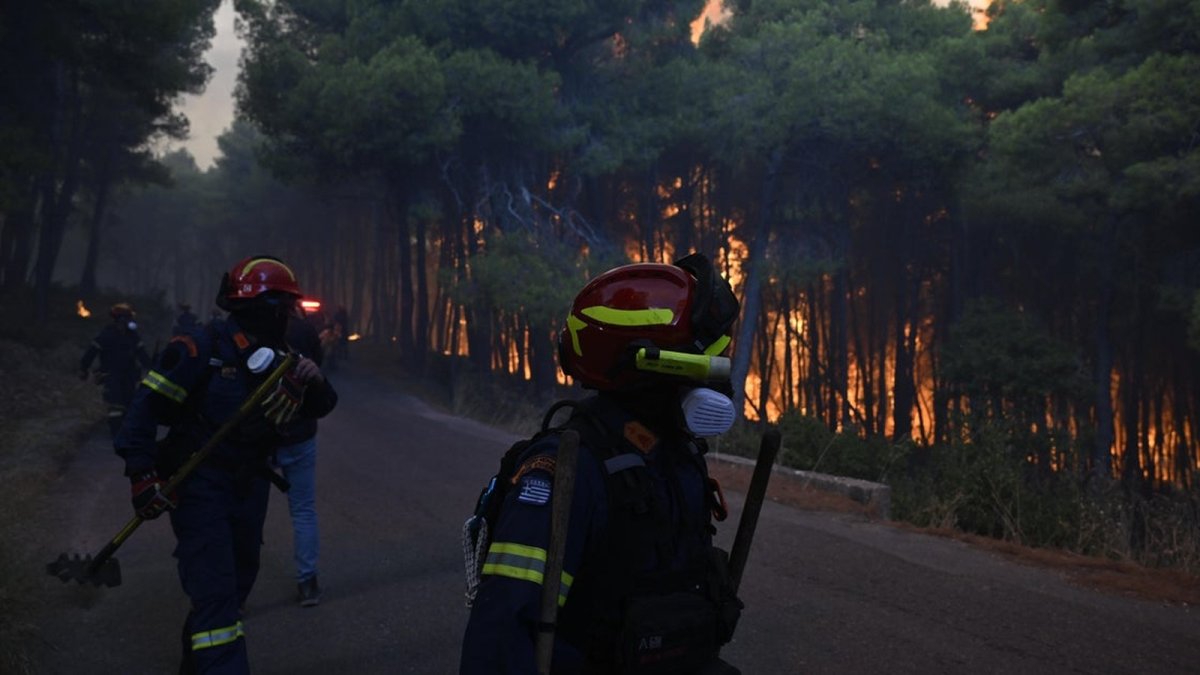
Fires Rage Across Crete, the Peloponnese and the Ionian Islands
Further fronts remain active in Aigialeia in the northern Peloponnese, where about 100 firefighters are deployed, and in southern Rethymno on Crete, where gusts reached nearly 80mph earlier in the week. Roughly 8,000 people were evacuated overnight in Rethymno, with another 6,000 hectares burned across Crete and Paros according to meteo.gr. On Saturday evening a new blaze broke out on the Ionian island of Cephalonia; a 44-year-old man was arrested on Sunday on suspicion of deliberately starting the fire in the Pastra area in the island's south. Three firefighters have already died in the line of duty this week: two in Crete and one in the Peloponnese. Greater Athens, nearby Voiotia and the island of Evia remain under near-maximum fire risk.
Greek daily Protothema reported that more than 10,000 hectares of land had likely been destroyed across the country by Sunday, with flames reaching the settlement of Veniza and a major effort under way to prevent the fire from reaching the nearby coastal town of Megara. In the village of Agios Konstantinos, residents were doing what they could with hoses and buckets. "The fire has been burning since last night; it is certain that they cannot have forces everywhere. We as residents are doing everything we can," said Tasos Tzempelikos, 61, who was pouring water on the blaze alongside his son.
A European Summer on Fire
Greece has become the focus of a continental emergency that has already displaced hundreds of thousands of people. In southwestern France, the Gironde megafire west of Bordeaux has consumed 420 square kilometres of pine forest — an area four times the size of Paris — in just ten days, and forced roughly 224,000 people to flee in what may prove the largest peacetime evacuation in French history. Interior Minister Laurent Nunez stated the blaze was "now under control with vigilance points in a few sectors," yet nearly 3,000 firefighters remain deployed against the Gironde and a second blaze in Provence, and about 198,000 evacuees have been allowed home so far. Along 240km of fire edge, heat could remain hidden underground and erupt again.
In the Var region of southeastern France, the Gros Bessillon fire was revived by mistral winds amid temperatures approaching 42C, leaving about 1,300 firefighters on the ground and 2,500 residents still unable to return home; Var Prefect Simon Babre said the blaze's sudden return "defies understanding". Twenty French departments were under an orange heat warning on Saturday. Spain's major fires have stopped advancing, with Madrid officials describing them as the worst the region has experienced, while Portugal's principal blaze is now under control. Roughly 360,000 people have been evacuated across France and Spain since the crisis began, and fires in France and Spain alone have driven about a third of a million people from homes and holiday sites at the height of the summer season.
What This Means for the UK
The Foreign, Commonwealth and Development Office advises British travellers in Greece to consult the fire risk index, heed 112 emergency alerts and follow local authority instructions without delay. Current guidance states that "wildfires are highly dangerous and unpredictable" and that the situation can change quickly. Wildfire season runs from April to October, and airlines including easyJet, Jet2 and TUI operate routes to Athens, Crete and the Ionian islands; road and airport closures could therefore strand families and disrupt return flights.
Greece remains one of the most popular destinations for UK travellers, with tens of thousands expected in the affected regions this August bank holiday weekend. The wet winter that encouraged dense vegetation growth, followed by successive heatwaves, has left tinder-dry fuel across the very areas British tourists favour. Holidaymakers planning travel are urged to check with their airline before departure and to recognise that local evacuation orders must be obeyed immediately if conditions deteriorate.
Deeper Analysis — Climate Pressures and Historical Resonance
The EU's Copernicus Climate Change Service records that Europe is the world's fastest-warming continent, heating at more than twice the global average since the 1980s, and World Weather Attribution's rapid analysis found that human-caused climate breakdown has doubled the likelihood of the extreme fire conditions now observed. Greece's unusually wet winter produced dense vegetation that successive heatwaves rapidly turned to tinder, creating ideal conditions for fast-moving and destructive blazes.
The current danger carries grim resonance for Greek communities. In 2018, a wind-driven wildfire trapped residents in the seaside community of Mati, east of Athens, killing 104 people in Europe's deadliest wildfire this century — a tragedy that reshaped Greek civil protection and remains a reference point for every summer since. For the thousands of British visitors who return to the same coastline each year, the fires are a reminder that the Mediterranean holiday idyll now carries a climate risk that is no longer hypothetical.
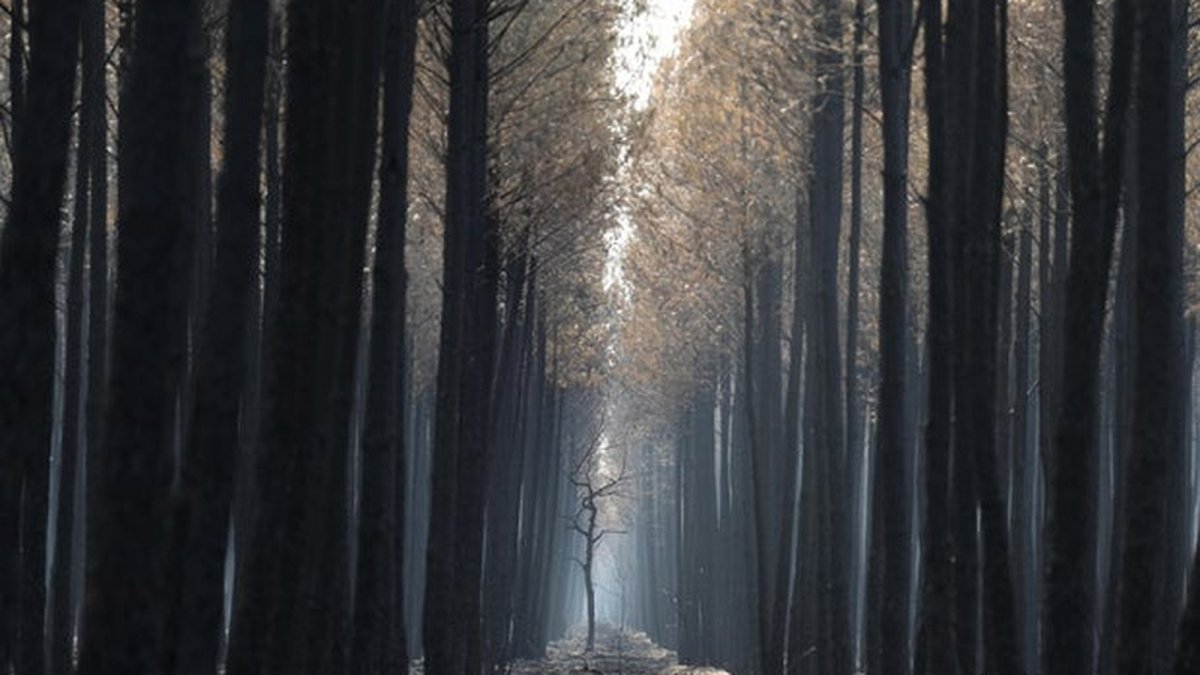
Reaction and Response from Greek Authorities
Prime Minister Kyriakos Mitsotakis was briefed on the operation and warned that Greece faced "difficult days". Climate Crisis and Civil Protection Minister Evangelos Tournas stated that "the very strong to gale-force winds continue to create exceptionally difficult conditions" and that the fire department had been "pushed to its limits". Local farmer Minas Tzortzanis, 60, described the scene near Porto Germeno: "A pristine forest, a paradise, was surrendered to the hands of the fire. There are no words to explain what has happened. Destruction. Total destruction."
Greek authorities are also confronting a further tragedy after two firefighting helicopters collided mid-air near Psatha, close to Athens. Television footage captured one aircraft exploding and plunging to the ground in flames following an apparent rotor collision. A search-and-rescue operation for the four crew members was under way on Sunday evening while crews continued to battle fires that have already destroyed more than one hundred homes. The incident highlights the acute risks borne by aerial units operating in turbulent conditions and the pressure on command structures to maintain operational safety even as the emergency widens.
The Bottom Line — What Comes Next
With winds forecast to persist and new fronts still emerging, Greek civil protection services remain on maximum alert through the coming days. British travellers should check the FCDO website, register with their tour operator, and prepare contingency plans for the August bank holiday period. The combination of extreme weather, dense vegetation and expanding tourism infrastructure has created conditions that will test both Greek response capacity and the resilience of UK holiday arrangements for years to come.
By Erica Thornton, Staff Writer
This article was produced with AI-assisted research and editorial support. Reporting is based on sources cited in the article.
What's Your Reaction?
 Like
0
Like
0
 Dislike
0
Dislike
0
 Love
0
Love
0
 Funny
0
Funny
0
 Wow
0
Wow
0
 Sad
0
Sad
0
 Angry
0
Angry
0

US Politics and Policy Correspondent at Global1.News. Based in Washington DC, covering American politics, policy, elections, and the courts. Knows how the system works and tells you what it actually means.










Comments (0)