
Grand Canyon Flash Flood: 20 Missing, 62 Evacuated
The Grand Canyon National Park is reeling from a catastrophic flash flood that struck the Bright Angel Creek corridor on Saturday afternoon, August 29, 2026, leaving more than 20 individuals unaccounted for and destroying critical infrastructure in one of America's most iconic wilderness destination
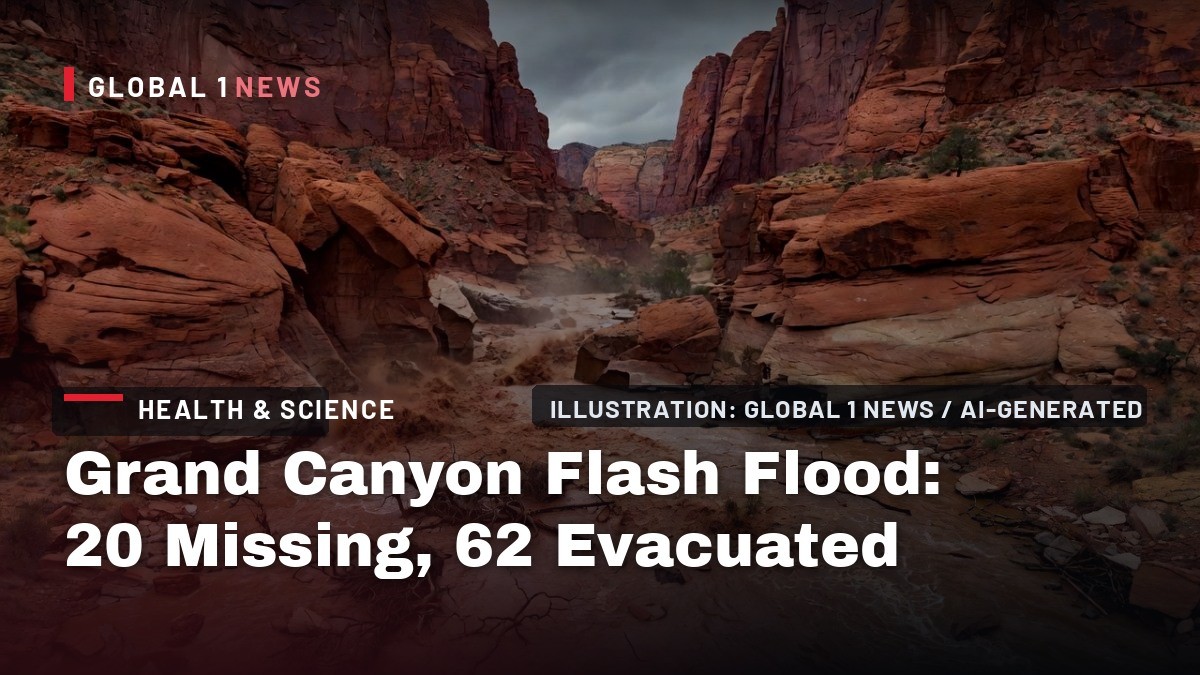
The Grand Canyon National Park is reeling from a catastrophic flash flood that struck the Bright Angel Creek corridor on Saturday afternoon, August 29, 2026, leaving more than 20 individuals unaccounted for and destroying critical infrastructure in one of America's most iconic wilderness destinations. The flood, triggered by a series of intense storms, obliterated the footbridge over Bright Angel Creek and forced the emergency evacuation of more than 60 people from the isolated Phantom Ranch settlement, marking a major search-and-rescue operation for the park.
Grand Canyon Flash Flood: 20 Missing, 62 Evacuated
Grand Canyon, Arizona – August 31, 2026 — Search-and-rescue teams are combing the rugged terrain of the Grand Canyon's inner gorge after a ferocious flash flood tore through Bright Angel Canyon on Saturday afternoon, destroying a footbridge and leaving more than 20 hikers and backpackers unaccounted for in the remote wilderness below the canyon rim.
The Disaster: A Sudden Surge in Bright Angel Creek
The flash flood struck with devastating force on Saturday afternoon, August 29, 2026, when a series of thunderstorms dumped torrential rainfall across the canyon's vast watershed. The floodwaters surged down Bright Angel Creek, a tributary that feeds into the Colorado River, transforming a normally benign stream into a raging torrent of mud, rocks, and debris within minutes. Video footage circulating on social media captured the sheer destructive power of the event, showing massive walls of water and debris tearing through the narrow canyon corridor.
The National Park Service (NPS) has confirmed that more than 20 individuals may be missing or unaccounted for following the flash-flood event, with the agency publicly appealing for information on the whereabouts of these hikers and backpackers. Fox News, The Guardian, and USA Today have all reported approximately 15 people potentially missing, though the NPS's broader request for information suggests the number could be higher as search-and-rescue operations continue into Sunday. The Associated Press has documented that at least 62 people were successfully evacuated from Phantom Ranch, a historic settlement that has served as a critical waypoint for Grand Canyon travelers since it first opened its doors in 1922.
The destruction of the footbridge over Bright Angel Creek — with only the remnants of the stone bridge pylons remaining visible in photographs taken by Associated Press photographer James Thompson — has severed a vital link in the canyon's trail network, complicating both evacuation efforts and the ongoing search for the missing.
Why Canyon Flash Floods Are So Deadly
The catastrophic nature of this event underscores a fundamental truth about canyon country: flash flooding remains one of the most serious and least predictable hazards in these landscapes. The science is unforgiving. Because narrow canyons like Bright Angel Canyon are so confined, even a relatively small amount of rainfall spread over a large area can concentrate into a powerful, destructive flood. The floodwater in a confined canyon rises with terrifying speed, and warning time can be measured in minutes, not hours.
Critically, the storms that trigger these floods can dump rain miles away from where hikers are standing, sending water surging downstream through drainages that were bone-dry just moments earlier. This is the insidious nature of canyon flash floods: the danger is often invisible until it is upon you. The floodwaters carry not just water but a deadly cocktail of mud, rocks, sand, and debris, transforming a hiking trail into a churning debris flow capable of destroying infrastructure and sweeping away even experienced outdoorsmen.
This is not an isolated phenomenon. The Grand Canyon event comes on the heels of a similar flash flood at Bryce Canyon in Utah on August 24, 2026, which stranded 11 hikers across four popular trails and hospitalized two individuals for hypothermia. The past week has seen a series of canyon-country flash flood events across the US Southwest, a pattern that has disaster management experts on high alert.
Phantom Ranch: An Isolated Outpost in the Crosshairs
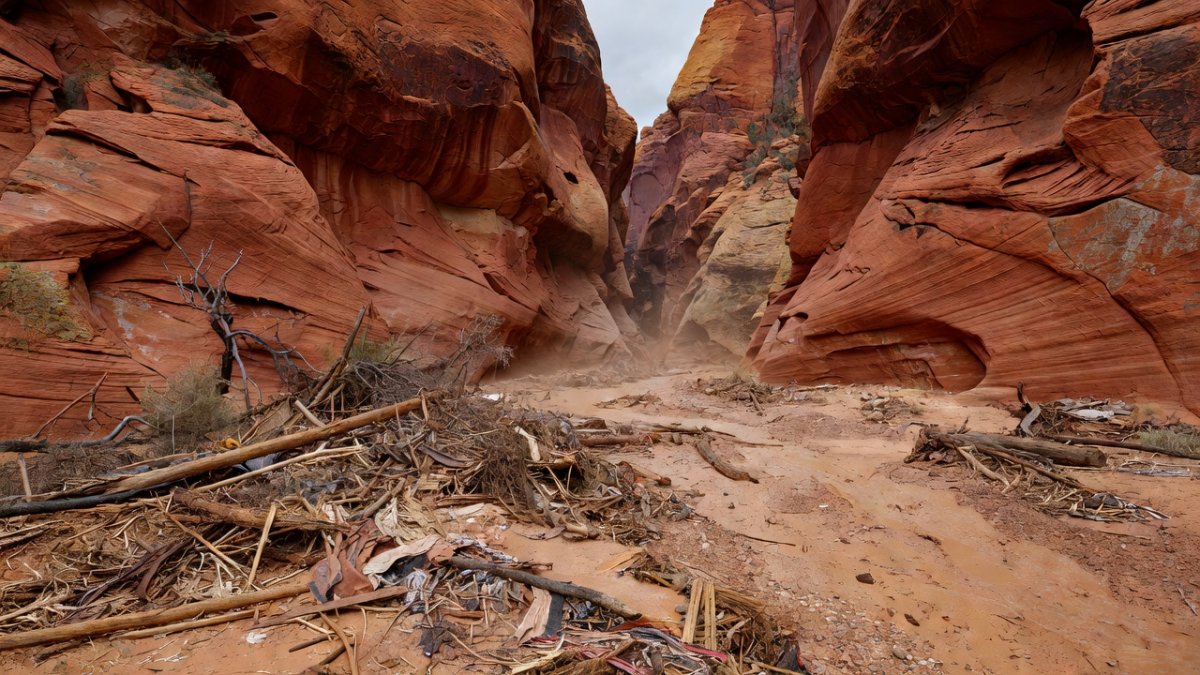
The epicenter of this disaster, Phantom Ranch, represents a unique vulnerability that has been part of the Grand Canyon experience for over a century. Situated deep within the canyon on the north side of the Colorado River, Phantom Ranch is accessible only by hiking, raft, or mule transport — there is no road access, no quick evacuation route, and no way to bring in heavy equipment for rescue operations. The settlement, with its historic canteen and dormitories, has been a coveted destination for Grand Canyon visitors since 1922, serving as a critical rest stop for hikers traversing the canyon and a launch point for river rafters.
The destruction of the footbridge over Bright Angel Creek has transformed an already challenging logistical situation into a crisis. With the bridge gone, rescue teams must now contend with a raging creek crossing to reach stranded individuals, and the evacuation of additional hikers from Cottonwood Campground, further up the trail, is expected to be a complex and dangerous operation. The NPS has urged all hikers and backpackers who were in the area to contact investigators, as the agency works to reconcile its list of missing individuals with those who have safely made it out of the canyon.
The isolation that makes Phantom Ranch so appealing to adventurers is precisely what makes it so dangerous in a flash flood scenario. When disaster strikes, there is no quick extraction and no emergency road access. The search-and-rescue operation, which continued through Sunday, is a testament to the extraordinary challenges posed by this uniquely remote environment.
A Week of Canyon Floods: A Climate-Driven Pattern
The Grand Canyon disaster is not an isolated incident but rather the latest in a series of flash flood events that have hammered the US Southwest over the past week. The Bryce Canyon flood on August 24, 2026, which stranded 11 hikers and required hypothermia treatment for two, was a stark warning of the dangers lurking in the region's iconic red-rock landscapes. Together, these events paint a picture of a region increasingly vulnerable to extreme weather events.
The science linking climate change to these disasters is well-established. Climate models and observational data consistently show that a warming atmosphere holds more moisture, leading to more intense, short-duration rainfall events. This is not a future projection — it is happening now, and it is happening with increasing frequency. The US Southwest, like many parts of the world, is experiencing a shift toward more extreme precipitation patterns, with longer dry periods punctuated by intense, destructive downpours.
For canyon country, this means the risk of flash flooding is not just a seasonal concern but a year-round threat that is intensifying. The narrow, confined spaces of slot canyons and steep-walled gorges act as natural funnels, concentrating rainfall from vast watersheds into narrow channels where even modest precipitation can become a deadly torrent. The events of the past week — from Bryce Canyon to the Grand Canyon — are a sobering reminder that these landscapes, while breathtakingly beautiful, are also inherently dangerous.
What This Means for India
For Indian readers, the Grand Canyon disaster carries profound and immediate relevance. India faces parallel flash-flood risks across multiple landscapes, from the monsoon cloudbursts that regularly devastate Himachal Pradesh and Uttarakhand to the trekking routes of the Western Ghats and the urban flash floods that paralyze Mumbai and Bengaluru with alarming regularity. The Kedarnath disaster of 2013, which killed thousands in Uttarakhand, remains a stark reminder of the catastrophic potential of flash floods in mountainous terrain.
India's disaster management framework — coordinated by the National Disaster Management Authority (NDMA) with the National Disaster Response Force (NDRF) on the ground and the India Meteorological Department (IMD) providing nowcast warnings — has made significant strides in recent years. However, the Grand Canyon event highlights critical gaps that India must address. The challenge of forecasting canyon-specific and valley-specific flash flood risks remains formidable, particularly in the Himalayan foothills where microclimates can produce sudden, localized cloudbursts with little warning.
For the thousands of trekkers who venture into Indian hill routes each monsoon season, the lessons from the Grand Canyon are stark. The danger of flash floods in narrow valleys and gorges is often invisible until it is too late, and the warning time can be measured in minutes. India's trekking community, particularly in popular destinations like Lonavala, Kodaikanal, and the Tamil Nadu hills, needs better education about flash flood risks and more robust warning systems. The Sendai Framework for Disaster Risk Reduction, to which India is a signatory, commits the nation to strengthening early warning systems and disaster preparedness — commitments that must be translated into concrete action at the local level.
The Bottom Line
The Grand Canyon flash flood of August 29, 2026, with more than 20 individuals missing and 62 evacuated, is a tragedy that transcends national borders. It is a stark reminder that flash floods remain one of the most serious and least predictable hazards in canyon country — and, by extension, in any mountainous or canyon terrain, including India's own Himalayan and Western Ghats regions.
The data is unambiguous: climate change is intensifying short-duration extreme rainfall events globally, making flash flood risk a shared US-India concern. The events of the past week — from Bryce Canyon to the Grand Canyon — are not anomalies but harbingers of a future where extreme weather events become more frequent and more destructive. For policymakers in both nations, the message is clear: invest in early warning systems, educate the public about flash flood risks, and prepare for the worst. The canyon walls that make these landscapes so spectacular also make them deadly, and the warning time for those caught in a flash flood can be measured in minutes, not hours.
— By Dr. Raj Patel, Staff Writer
This article was produced with AI-assisted research and editorial support. Sources: NDTV, Associated Press, The Guardian, Al Jazeera, USA Today, Fox News.
What's Your Reaction?
 Like
0
Like
0
 Dislike
0
Dislike
0
 Love
0
Love
0
 Funny
0
Funny
0
 Wow
0
Wow
0
 Sad
0
Sad
0
 Angry
0
Angry
0

India/South Asia Correspondent at Global1.News. Analytical voice with a background in science and health journalism. Based in New Delhi, covering Indian politics, education, healthcare, technology, and policy. Breaks down complex data into clear, actionable reporting.














Comments (0)