
Hair Fall vs Hair Thinning: The Clinical Divide Every Indian Needs to Understand
For millions of Indians, the sight of hair on a pillow or a widening parting is a daily source of anxiety. But clinically, there is a world of difference between hair falling out and hair thinning out—a distinction that determines whether you need a simple blood test or a lifelong medical regimen.
For millions of Indians, the sight of hair on a pillow or a widening parting is a daily source of anxiety. But clinically, there is a world of difference between hair falling out and hair thinning out—a distinction that determines whether you need a simple blood test or a lifelong medical regimen. In the latest India Today Health Wealth episode, 'Hair Fall vs Hair Thinning: What You Need To Know,' host Sonal Mehrotra Kapoor sat down with dermatologist Dr Ankur Sarin to dissect this confusion, armed with new data that suggests nearly 79% of Indian men and 21% of Indian women will grapple with pattern hair loss in their lifetime.
Hair Fall vs Hair Thinning: The Clinical Divide Every Indian Needs to Understand
New Delhi, India – August 31, 2026 — The conversation around hair loss in India is often reduced to a single complaint: "Doctor, my hair is falling." But as Dr Ankur Sarin explained in the India Today Health Wealth episode, the treatment pathway diverges sharply depending on whether the patient is experiencing shedding (hair fall) or miniaturization (hair thinning). Misdiagnosing one for the other is why millions of Indians waste years on ineffective oils and shampoos while their condition silently progresses.
Hair Fall vs Hair Thinning: Why the Distinction Matters
The first clinical rule of thumb, Dr Sarin noted, is that hair fall is often a symptom, while hair thinning is a disease process. Hair fall—technically termed telogen effluvium—is a sudden, diffuse shedding of hair that occurs 2 to 3 months after a physiological shock. This could be a high fever, a viral illness like COVID-19, childbirth, major stress, rapid weight loss, surgery, or stopping hormonal medication. The mechanism is straightforward: about 90% of scalp hairs are in the anagen (growth) phase at any given time, which lasts 2 to 6 years. A trigger forces a large number of these hairs prematurely into the telogen (resting) phase, which lasts about 3 months, after which they fall out en masse.
Hair thinning, on the other hand, is usually androgenetic alopecia—a genetic, hormone-driven miniaturization of the hair follicle. This is not a sudden event but a progressive one. In men, it follows the Hamilton-Norwood scale, starting at the temples and crown. In women, it follows the Ludwig scale, presenting as diffuse thinning along the central parting while the frontal hairline is usually preserved. The distinction is critical because telogen effluvium is typically reversible once the trigger is corrected, whereas pattern hair loss requires long-term medical intervention to halt progression.
The Numbers Behind India's Hair Crisis
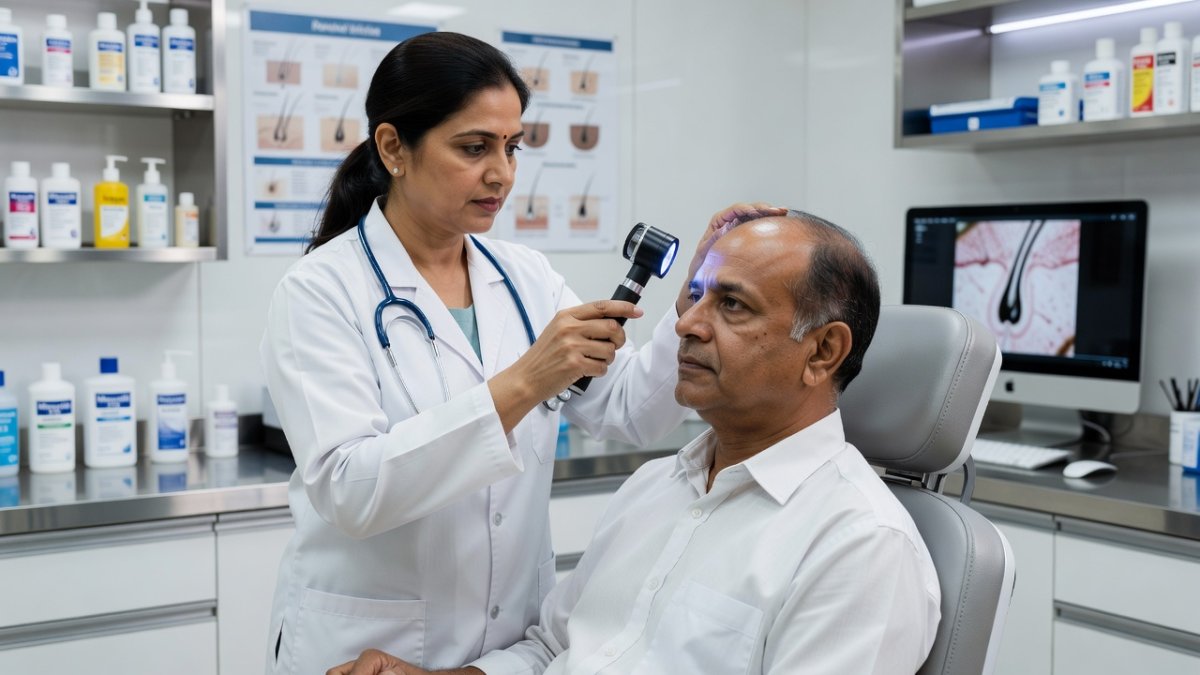
The epidemiological data presented in the episode paints a stark picture. According to the HAILO study (Epidemiology and Treatment Aspects of Hair Loss in India), a retrospective, multicentre, cross-sectional analysis of electronic medical records covering June 2018 to June 2021 in patients aged 12 and above, published in 2023 in the Asian Journal of Research in Dermatological Science, the burden is immense. The study, alongside other dermatological surveillance, indicates that roughly 79% of Indian men and 21% of Indian women experience androgenetic alopecia. Projections cited in the episode suggest that about 50% of Indian men will have visible hair loss by the age of 50, with onset often occurring in their 20s.
These figures are not just cosmetic statistics; they represent a significant psychological and economic burden. In a country where hair is culturally tied to vitality and youth, the premature onset of thinning in the 20s is driving a surge in clinic visits. Dr Sarin emphasized that the rising incidence is compounded by environmental and lifestyle factors unique to India: hard water in cities like Delhi and Bengaluru, high ambient air pollution, erratic dietary patterns, rising stress levels, and a high prevalence of thyroid disorders and PCOS among women. These factors do not cause pattern baldness, but they can unmask a genetic predisposition earlier and exacerbate telogen effluvium episodes.
What the Blood Tests Reveal
One of the most actionable takeaways from the India Today Health Wealth episode was the emphasis on diagnostic blood work before any treatment begins. Dr Sarin stressed that a dermatologist will typically order a panel including serum ferritin (iron stores), vitamin D, a thyroid panel (TSH/Free T4), vitamin B12, a complete blood count, and zinc. The rationale is data-driven: dermatology studies indicate that about 80% of women presenting with diffuse hair loss show low ferritin, low vitamin D, thyroid dysfunction, or a combination of these.
This is where the Indian context becomes crucial. The ICMR and AIIMS have repeatedly flagged widespread micronutrient deficiencies in the Indian population, particularly vitamin D and iron. A patient with telogen effluvium who is deficient in ferritin will not recover fully until the iron stores are replenished, regardless of how much minoxidil they apply. Conversely, a patient with androgenetic alopecia who has normal blood work will not be cured by iron supplements alone. The blood test is the fork in the road that separates the two conditions, preventing the common Indian habit of self-medicating with multivitamins and proprietary hair tonics that do not address the root cause.
Treatments That Work (and How Long They Take)
For confirmed pattern hair loss, Dr Sarin walked viewers through the evidence-based arsenal. Topical minoxidil (2% or 5%) and oral finasteride (1 mg) remain the two major FDA-approved medicines. Minoxidil, originally developed as a blood-pressure drug, works by stimulating hair follicles, while finasteride blocks the conversion of testosterone to DHT, the hormone responsible for follicle miniaturization. The critical caveat, repeated in the episode, is that both require months of consistent use—often 6 to 12 months for visible results—and stopping usually reverses the gains within a few months.
Beyond pharmacology, the episode covered in-clinic procedures that are increasingly popular in Indian metros. Microneedling (derma-rollers), red-light (LED) therapy, PRP/PRF injections, and mesotherapy are offered widely. PRP in India typically costs between Rs 3,000 and Rs 15,000 per session, with 6 to 8 sessions commonly recommended for initial results. Dr Sarin cautioned that these procedures are adjuncts, not replacements, for medical therapy. He also mentioned emerging exosome therapies, which are promising but not yet standardized. For those seeking a permanent solution, the FUE hair transplant method remains the gold standard, with India positioning itself as a global destination offering quality comparable to leading international centres at a fraction of the cost.
The Truth About DIY Remedies and the Scalp
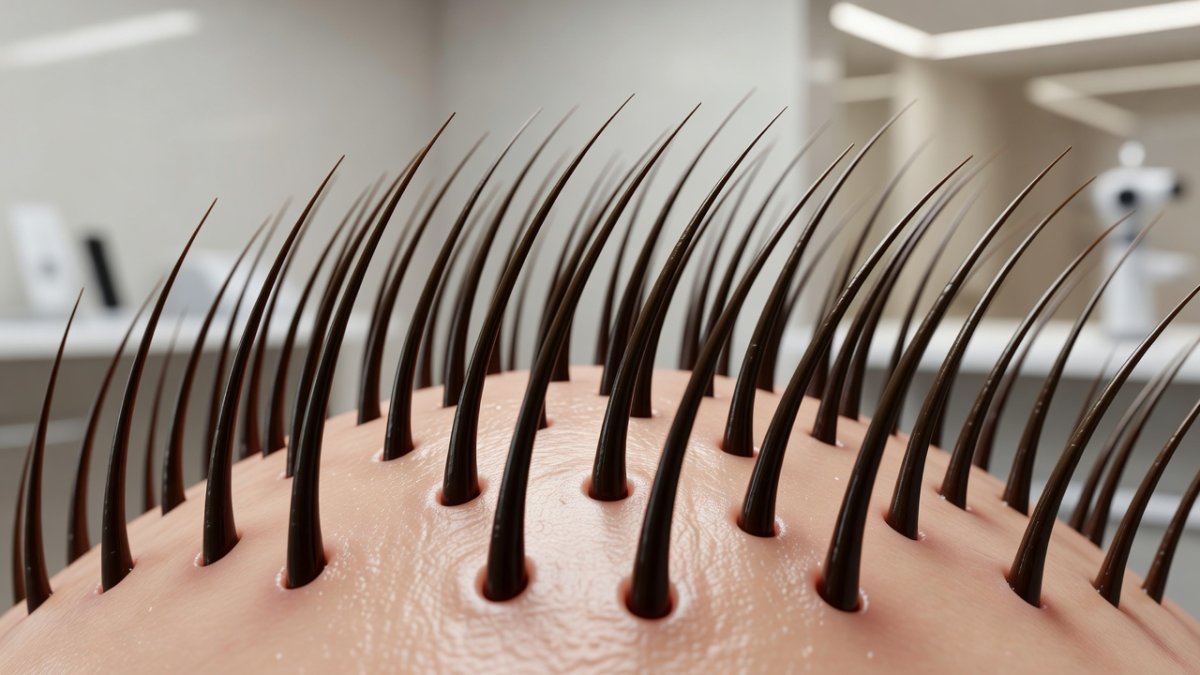
The episode did not shy away from debunking the DIY myths that clog Indian social media feeds. Onion juice, rice water, and egg masks have weak evidence at best for treating pattern hair loss. Dr Sarin clarified that while these may improve hair shaft texture or provide a placebo effect, they do not address the hormonal or genetic drivers of thinning. Oiling, a staple of Indian hair care, is useful for the scalp and hair ends to prevent breakage and dryness, but it is not a cure for androgenetic alopecia.
He also flagged the risks of chemical exposure. Hair dyes containing PPD (paraphenylenediamine) can cause severe allergic reactions and scalp damage, which can ironically lead to scarring alopecia. Similarly, shampoos with high sulfate content can be harsh on sensitive scalps, stripping natural oils and exacerbating irritation. For conditions like scalp psoriasis or autoimmune diseases that cause shedding, home remedies are not just ineffective—they are dangerous. These require dermatologist care, often involving topical corticosteroids or immunomodulators, and delaying treatment can lead to permanent hair loss.
The Surgery Question: India vs Turkey
For those considering surgical intervention, the episode provided a comparative analysis of the global market. India is a leading destination for FUE hair transplants, with per-graft pricing well below Western rates and quality that matches top international centres. Turkey remains the primary competitor in medical tourism, but Dr Sarin noted that India offers a distinct advantage in follow-up care and the ability to manage complications locally. The decision to undergo surgery, however, should be made only after a confirmed diagnosis of androgenetic alopecia and a trial of medical therapy, as transplanting hair into a scalp that is still actively thinning can lead to an unnatural "plugged" look.
Looking ahead, the episode touched on clascoterone, a topical anti-androgen currently used for acne, which is being studied for male pattern baldness. 2026 trial analyses reported by US media showed hair-count improvements of around 539% in some measures. If FDA-cleared for hair loss, it would be the first new male-pattern-baldness drug in about 30 years. While this is exciting, Dr Sarin advised Indian patients to remain cautious and stick to proven therapies until regulatory approvals are secured.
What This Means for India
The implications of this clinical distinction are profound for Indian patients, families, and the healthcare system. Misdiagnosis leads to wasted expenditure—millions of rupees spent on unproven serums, salon treatments, and "hair growth" oils that line the shelves of every pharmacy. The FSSAI and the Indian Medical Association have repeatedly warned against the unregulated market of nutraceuticals claiming hair benefits, which often contain undisclosed steroids. For the taxpayer, the burden is indirect but real: untreated thyroid disorders and PCOS, which manifest as hair loss, lead to more severe metabolic complications down the line, increasing the load on public hospitals like AIIMS.
Dr Sarin's core message was one of early intervention. A 25-year-old man noticing temple recession, or a 30-year-old woman seeing a widening parting, should see a dermatologist immediately. The cost of a consultation and a blood panel is a fraction of the cost of a hair transplant or years of ineffective self-treatment. In a country where the average age of onset is dropping, this is not vanity—it is preventive healthcare.
The Bottom Line
Hair fall and hair thinning are not interchangeable terms. One is a temporary alarm bell; the other is a chronic condition requiring lifelong management. As the India Today Health Wealth episode with Dr Ankur Sarin made clear, the path to healthy hair in India begins with a correct diagnosis, a targeted blood test, and evidence-based treatment—not with a bottle of onion juice. The data is on the side of science: 79% of men and 21% of women will face pattern loss, but with the right approach, the progression can be slowed, and the psychological toll can be managed.
— By Dr. Raj Patel, Staff Writer
This article was produced with AI-assisted research and editorial support. Sources: India Today Health Wealth (YouTube, Aug 30, 2026); HAILO study, Asian Journal of Research in Dermatological Science 6(1):22-32 (2023); dermatology research data and 2026 news reports.
What's Your Reaction?
 Like
0
Like
0
 Dislike
0
Dislike
0
 Love
0
Love
0
 Funny
0
Funny
0
 Wow
0
Wow
0
 Sad
0
Sad
0
 Angry
0
Angry
0

India/South Asia Correspondent at Global1.News. Analytical voice with a background in science and health journalism. Based in New Delhi, covering Indian politics, education, healthcare, technology, and policy. Breaks down complex data into clear, actionable reporting.















Comments (0)