
Government making up China policy as it goes along, say MPs
The Business, Innovation, Science and Trade Committee has warned that the government’s approach to China is characterised by “inconsistency”, a failure that it says is heightening national security risks and leaving British businesses in the dark.
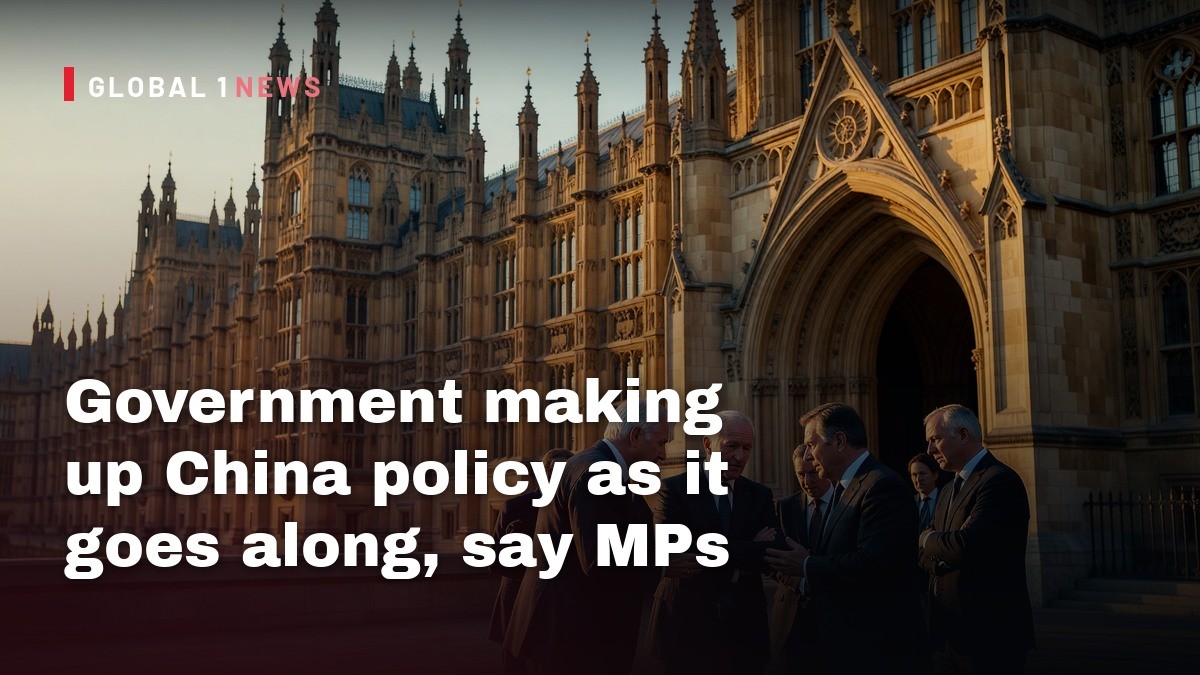
The Business, Innovation, Science and Trade Committee has warned that the government’s approach to China is characterised by “inconsistency”, a failure that it says is heightening national security risks and leaving British businesses in the dark. In a damning report published this week, MPs argued that ministers are “making up policy as they go along”, a charge that stands in stark contrast to the department’s own insistence that its China strategy is “consistent”. The clash over how, and indeed whether, the United Kingdom should engage with the world’s second‑largest economy has moved from the back‑benches of Westminster to the forecourt of national security, with implications for trade, technology and the very fabric of Britain’s strategic autonomy.
Committee’s Core Criticism: Inconsistency and Uncertainty
The committee’s report describes a pattern of ad‑hoc decision‑making that it says undermines both economic resilience and the country’s defence against espionage. It argues that successive governments have “failed to reassure” the public that adequate measures are in place to protect national security, and that the unpredictability of policy has left firms unable to plan for the future. As Labour MP Liam Byrne, chair of the committee, put it, “Britain’s businesses cannot plan for the future when the government keeps making up its China policy as it goes along.”
According to the committee, this lack of clear guidance has resulted in “opportunities missed, risks unmanaged and decisions left until the eleventh hour”. The report suggests that without a stable framework, British companies are forced to navigate a maze of diplomatic niceties and opaque regulations, a situation that could deter investment and erode confidence in the UK’s trade agenda.
Government’s Defence: A “Balanced” and “Long‑Term” Approach
The Department for Business and Trade rejected the committee’s conclusions, insisting that its China policy is “consistent”. In a statement, the department claimed that the UK has placed its relationship with Beijing on a “more stable, balanced, long‑term footing”, based on a “clear‑eyed assessment of both the opportunities and the risks”. It highlighted a trade strategy that seeks to “capitalise on every opportunity to grow our economy while never compromising on our national security”.
The department also pointed to “increased discussions with China” as evidence that it can raise concerns directly when they arise. This narrative suggests a diplomatic tightrope: cooperate where possible, challenge where necessary, while maintaining a veneer of consistency that the committee says is missing in practice.
Calls for Concrete Measures: Data, Technology and Forced Labour
The committee’s recommendations go beyond general criticism, calling for specific actions to protect UK interests. It urges ministers to block the transfer of sensitive data to China and to ban imports made using forced labour. It also recommends a ban on Chinese‑made connected technology devices in critical national infrastructure, noting that “low‑cost” Chinese technology has become “wide‑spread” in the UK and that the government has “prioritised diplomatic politeness over the UK’s national security”.
In addition, the report proposes the creation of “red” and “green” zones to delineate areas where trade and investment are encouraged versus those that are “off limits”. This zoning would, in theory, give businesses a clear map of permissible activity, reducing the current uncertainty that the committee says hampers commercial planning.
Trade Reciprocity and Potential Tariffs
Beyond security concerns, the committee also flags economic fairness. It advises the government to prepare tariffs that could be imposed if China continues to subsidise its own industry or fails to offer “fully reciprocal” market access. The suggestion reflects a broader frustration that the UK is often forced to play catch‑up in negotiations, while Chinese firms benefit from state support and market access that is not equally granted to British companies.
The report’s emphasis on “fair trade” aligns with long‑standing concerns in Westminster that the UK’s relationship with China should not be one‑sided. By tying tariffs to reciprocity, the committee hopes to pressure Beijing into a more level playing field, though it stops short of specifying the scale or timing of such measures.
Academic and Research Implications
Universities are also caught in the policy limbo. The committee urges faster advice for academic institutions collaborating with Chinese research bodies, highlighting the need for clear guidance on handling sensitive research data. This call reflects wider anxieties about espionage in the research sector, where partnerships with Chinese institutions have been scrutinised for potential intellectual property theft.
By recommending quicker, more decisive advice, the committee hopes to protect the UK’s scientific enterprise while still allowing legitimate collaboration. The balance between openness in research and safeguarding national interests remains a delicate one, and the report suggests that current diplomatic caution is insufficient.
Political Context: From Starmer to Burnham
The report also situates its criticism within the broader political narrative. Former Prime Minister Sir Keir Starmer had advocated for a closer relationship with China, arguing that the UK could not afford to ignore economic opportunities, yet he insisted that this should not compromise national security. His successor, Andy Burnham, has yet to set out a definitive position on China, leaving a policy vacuum that the committee says exacerbates uncertainty.
Moreover, an audit of the UK‑China relationship carried out last year remains unpublished, with the government claiming that it contains classified information. The lack of transparency around this audit fuels the committee’s claim that the public and businesses have not been adequately reassured of the steps being taken to defend national security and economic resilience.
Looking Ahead: The Need for a Coherent Strategy
The clash between the Business, Innovation, Science and Trade Committee and the government underscores a fundamental dilemma: how to engage with a major economic power without compromising security. The committee’s report makes clear that without a coherent, transparent strategy, Britain risks having its relationship with China shaped by external forces in Washington or Beijing, rather than by its own policy choices.
In the months ahead, the pressure will mount on ministers to deliver the “clear rules” and “fair trade” measures the committee demands. Whether the government will adopt the proposed red‑green zoning, impose bans on sensitive technology, or introduce tariffs tied to reciprocity will determine not only the health of UK‑China trade but also the broader credibility of Britain’s strategic autonomy in a world where great‑power competition is intensifying.
This article was produced with AI-assisted research and editorial support. Reporting is based on the source material cited below. Sources: BBC News UK; bbc.co.uk; Global1.News (02 November 2026).
By Erica Thornton, Staff Writer
What's Your Reaction?
 Like
0
 Dislike
0
 Love
0
 Funny
0
 Wow
0
 Sad
0
 Angry
0

US Politics and Policy Correspondent at Global1.News. Based in Washington DC, covering American politics, policy, elections, and the courts. Knows how the system works and tells you what it actually means.














Comments (0)