
Germany’s Political Split Echoes Tensions Over Jerusalem’s Sheikh Jarrah
In a recent Middle East Eye broadcast recorded on 23 September 2026, the channel’s correspondents linked two seemingly distant developments: the sharp polarization of German politics and the expansion of a religious school in occupied East Jerusalem’s Sheikh Jarrah neighbourhood.
In a recent Middle East Eye broadcast recorded on 23 September 2026, the channel’s correspondents linked two seemingly distant developments: the sharp polarization of German politics and the expansion of a religious school in occupied East Jerusalem’s Sheikh Jarrah neighbourhood. While the German story centres on the rise of Die Linke in Berlin and the AfD’s victory in Mecklenburg‑Western Pomerania, the Jerusalem story highlights a UK charity’s financial support for a yeshiva that now seeks approval to broaden its campus into Sheikh Jarrah. The juxtaposition underscores how European political currents intersect with the lived realities of Palestinians under occupation, and how funding streams from abroad can influence contested spaces on the ground.
German Electoral Shifts Signal Growing Polarisation
The video report opens with a description of Germany’s latest state elections. In Berlin, the left‑wing party Die Linke secured a leading position, while in the northeastern state of Mecklenburg‑Western Pomerania the far‑right Alternative für Deutschland (AfD) emerged victorious. This dual outcome, the programme notes, illustrates a widening gap between Germany’s political extremes, leaving the centrist parties squeezed from both sides.
Correspondent Mohamed Hashem frames the development as a symptom of broader disenchantment with centrist politics across Europe. He asks associate professor Samuel Clowes Huneke of George Mason University whether this polarization could herald a divided future for the continent. Huneke’s analysis, as captured in the footage, points to a “deepening mistrust” among voters who feel that traditional parties no longer represent their concerns, whether on economic policy, immigration, or foreign affairs.
The report does not provide specific vote percentages, but the emphasis on “left‑wing” and “far‑right” victories signals a shift away from the post‑war consensus that has long underpinned German governance. The commentators suggest that such fragmentation could affect Germany’s stance on international issues, including its approach to the Israeli‑Palestinian conflict, where domestic politics often shape diplomatic posture.
From German Ballots to Jerusalem Streets: A Funding Trail
After outlining the German political landscape, the broadcast pivots to a more concrete case involving a UK charity. Oscar Rickett, a Middle East Eye reporter, joins the discussion to explain how the charity has been funding a yeshiva—a Jewish religious school—located in occupied East Jerusalem. The charity’s involvement, according to the video, includes financial contributions that have enabled the yeshiva to operate and expand.
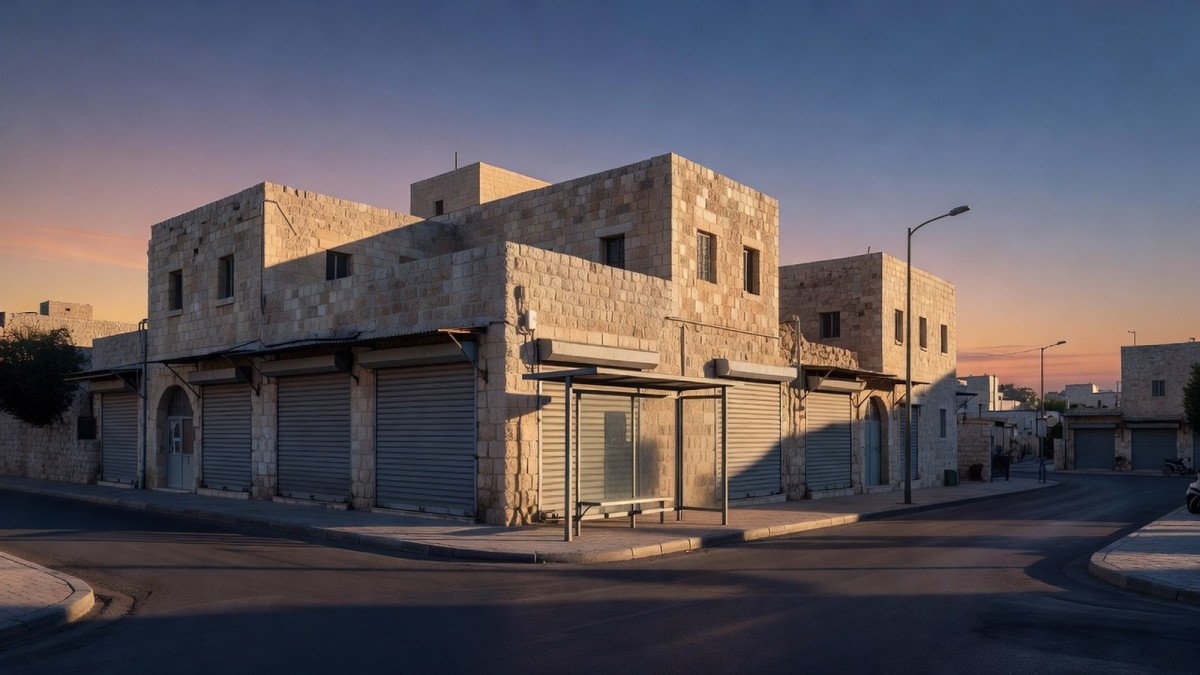
The report highlights that the yeshiva, already established in East Jerusalem, has recently received approval to extend its facilities into Sheikh Jarrah. This neighbourhood, known internationally for the ongoing legal battles over Palestinian homes, is a flashpoint of the occupation’s daily reality. The expansion, therefore, is not merely an educational development; it represents a further entrenchment of Israeli presence in an area where Palestinians face forced evictions and demolition orders.
While the video does not name the UK charity, it underscores the broader pattern of foreign funding that supports settlement‑related projects. By linking the charity’s contributions to the yeshiva’s expansion, the report raises questions about the responsibilities of donors abroad, especially when their money facilitates activities that alter the demographic and geographic fabric of occupied territories.
Human Impact of the Sheikh Jarrah Expansion
Sheikh Jarrah’s significance lies in the lived experiences of its Palestinian residents. The neighbourhood has been the subject of international legal scrutiny, with families facing court orders that could see them displaced from homes they have inhabited for generations. The addition of a yeshiva campus, financed in part by foreign donors, intensifies the pressure on the already fragile community.
In the video, Oscar Rickett emphasizes that the expansion “means more Israeli families moving into the area, more infrastructure that supports settlement growth, and fewer options for Palestinians to remain.” He notes that the yeshiva’s presence brings not only students but also staff, security personnel, and ancillary services, all of which contribute to the normalization of settlement expansion on the ground.
The human cost, as the report frames it, is the further erosion of Palestinian rights to property and freedom of movement. Each new building, each new institution, deepens the sense of dispossession felt by families who have already endured years of legal uncertainty and physical intimidation. The video’s focus on this expansion serves as a reminder that funding decisions made far from Jerusalem can have immediate, tangible effects on the daily lives of Palestinians.
International Law and the Legality of Settlement Funding
Under international law, the construction and expansion of Israeli settlements in the occupied West Bank, including East Jerusalem, are widely regarded as violations of the Fourth Geneva Convention, which prohibits an occupying power from transferring its civilian population into occupied territory. The video does not delve into legal texts, but by highlighting the charity’s role in supporting a settlement‑linked institution, it implicitly raises the question of whether such funding contravenes international legal norms.
Professor Huneke, though primarily focused on European political trends, acknowledges that “the way European societies fund projects abroad can have legal and moral implications, especially when those projects are situated in contested territories.” This comment connects the German political split to a broader European debate about the ethics of overseas philanthropy, particularly when it intersects with contested geopolitical issues.
The report therefore situates the UK charity’s contributions within a framework that invites scrutiny from both human‑rights organisations and legal scholars. By linking financial support to settlement expansion, the video suggests that donors may be complicit, at least indirectly, in actions that the international community has repeatedly deemed illegal.
European Public Opinion and the Palestinian Narrative
The Middle East Eye broadcast underscores how European public opinion is increasingly shaped by narratives from the ground in Palestine. As German voters drift toward the political extremes, their views on foreign policy—including the Israeli‑Palestinian conflict—are likely to be influenced by media coverage such as this report. The video’s focus on the human cost in Sheikh Jarrah provides a counterpoint to abstract diplomatic statements, grounding the debate in personal stories of loss and resilience.
By presenting the expansion of a yeshiva as a concrete example of settlement growth, the report invites European audiences to consider the everyday realities of occupation. It also highlights the role of civil society—both within Europe and in the occupied territories—in shaping the discourse. The UK charity’s involvement illustrates how non‑governmental actors can become entangled in the geopolitics of the region, sometimes unintentionally reinforcing policies that undermine Palestinian rights.
In the broader context of European politics, the report suggests that the left‑right divide may also manifest in how parties and their supporters view the Palestinian cause. While Die Linke traditionally champions anti‑imperialist and human‑rights positions, the AfD’s nationalist platform often aligns with more pro‑Israeli stances. The juxtaposition of these parties’ electoral successes thus mirrors the contested narratives surrounding Jerusalem’s neighbourhoods.
Looking Forward: Accountability and Advocacy
The video concludes without offering a definitive solution, but it leaves viewers with a clear call to scrutiny. Oscar Rickett urges audiences to “track where charitable money goes, especially when it fuels projects that alter the status quo in occupied territories.” This plea aligns with broader advocacy efforts that demand transparency from NGOs and charities operating in conflict zones.
For Palestinian communities in Sheikh Jarrah, the expansion of the yeshiva represents yet another layer of challenge to their claim to remain in their homes. International observers, journalists, and human‑rights defenders are called upon to document these developments, to hold donors accountable, and to amplify the voices of those most affected.
As Germany grapples with its own internal polarization, the decisions made by its citizens, parties, and civil‑society organisations will inevitably influence how the country engages with the Israeli‑Palestinian conflict. The Middle East Eye report, by linking German electoral outcomes to the on‑the‑ground realities of Sheikh Jarrah, underscores the interconnectedness of European politics and Palestinian lives. It reminds us that every policy choice, every funding decision, reverberates far beyond national borders, shaping the human landscape of a region still yearning for justice.
By Fatima Al-Rashid, Staff Writer
This article was produced with AI-assisted research and editorial support. Reporting is based on the source material cited below. Sources: Middle East Eye video report (23 September 2026); Middle East Eye; Global1.News
What's Your Reaction?
 Like
0
Like
0
 Dislike
0
Dislike
0
 Love
0
Love
0
 Funny
0
Funny
0
 Wow
0
Wow
0
 Sad
0
Sad
0
 Angry
0
Angry
0

Gulf/MENA Correspondent at Global1.News. Based in Doha, covering Gulf politics, energy markets, diplomacy, and development across the Middle East and North Africa. Tracks the economic transformation of the Gulf states.










Comments (0)