
Israeli newspaper says Netanyahu’s plane may avoid New York airport amid concerns over Mamdani
Israeli Prime Minister Benjamin Netanyahu’s upcoming visit to the United States has taken an unexpected turn, as the official state aircraft, known as the Wing of Zion, is now slated to avoid John F.
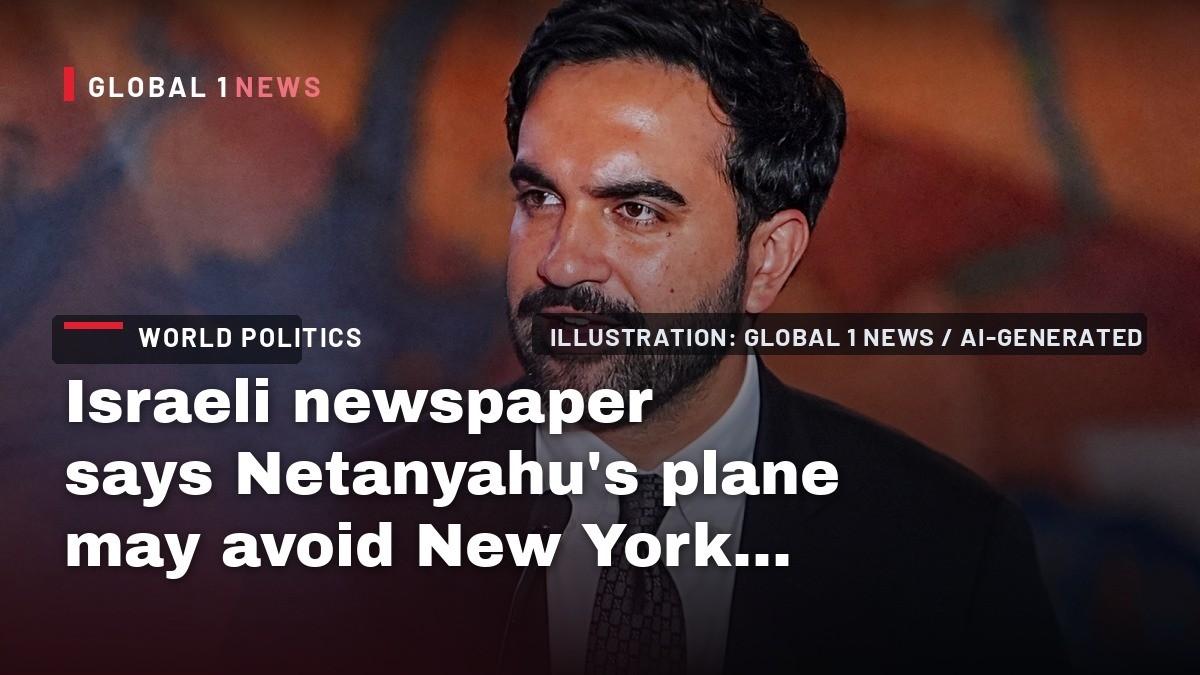
Israeli Prime Minister Benjamin Netanyahu’s upcoming visit to the United States has taken an unexpected turn, as the official state aircraft, known as the Wing of Zion, is now slated to avoid John F. Kennedy International Airport in New York. The change, reported by the Israeli daily Yedioth Ahronoth, reflects a growing unease about the political climate in New York City and the logistical challenges of coordinating with U.S. authorities. For Palestinians and human‑rights observers, the shift underscores how diplomatic gestures are increasingly shaped by concerns over potential protests and the symbolic weight of a leader’s presence in a city that has become a focal point for pro‑Palestinian activism.
Logistical rerouting and the role of New York’s mayor
The decision to land the Wing of Zion at a military base in New Jersey or at Newark Liberty International Airport, rather than at JFK, was attributed by Yedioth Ahronoth to “difficulties in coordinating with US authorities.” The newspaper highlighted a specific worry: that New York City Mayor Zohran Mamdani could order the aircraft to take off immediately, refusing to allow it to remain on the tarmac while Netanyahu is away. This concern about an abrupt departure reflects the mayor’s newly visible authority in matters of public safety and crowd control, especially after a recent fatal stabbing incident in Times Square that placed the city’s security apparatus under intense scrutiny.
While the source material does not detail the exact legal mechanisms that would enable a mayor to compel an international head of state’s aircraft to leave, the implication is clear: local officials now possess a degree of operational leverage that can intersect with high‑level diplomatic protocols. For Palestinians, this development signals that even the most senior Israeli officials must navigate a complex web of municipal, national, and international regulations that can be invoked to limit their movements, especially in cities where public dissent is likely.
Security concerns and the specter of protests
According to unnamed informed sources quoted by Yedioth Ahronoth, Netanyahu has chosen to “significantly shorten his visit to New York and will not stay overnight there because of concerns about protests.” The prospect of large‑scale demonstrations is not new; New York has long been a stage for pro‑Palestinian rallies, particularly during high‑profile visits by Israeli officials. The city’s dense media environment and its reputation as a global platform for human‑rights advocacy amplify the potential impact of any protest, turning a routine diplomatic stop into a highly visible political contest.
For the Palestinian community, the very act of protesting a visiting Israeli leader is a manifestation of their right to freedom of expression and assembly, rights enshrined in international law. Yet the logistical decision to avoid JFK illustrates how the anticipation of such protests can alter diplomatic itineraries, effectively limiting the space in which Israeli officials can operate without confronting dissent. This dynamic raises broader questions about the balance between security considerations and the democratic right to protest, especially when the protests are rooted in the lived realities of occupation and displacement.
Cancellation of the Texas stop and broader diplomatic implications
In addition to the New York adjustment, Netanyahu’s itinerary has been trimmed further with the cancellation of a planned stop in Texas to meet U.S. billionaire Elon Musk. An Israeli source told Yedioth Ahronoth that “there were challenges in coordinating, either because of the need to land to refuel or because the Americans prefer not to coordinate at the last minute.” While the source does not elaborate on the precise nature of these challenges, the cancellation suggests a broader pattern of logistical friction that is affecting the prime minister’s U.S. tour.
The meeting with Musk, a high‑profile figure in technology and business, would have offered Netanyahu an opportunity to showcase Israel’s innovation sector and to cultivate private‑sector support. Its removal from the agenda may signal a reluctance among certain U.S. actors to engage publicly with Israel amid heightened scrutiny of its policies toward the Palestinians. For Palestinians, the loss of such a platform underscores how international diplomatic outreach can be constrained when the host nation’s civil society and political climate are increasingly critical of Israel’s actions in the occupied territories.
Human‑rights dimensions of the airport decision
Choosing a military base or Newark Liberty International Airport over JFK carries symbolic weight. JFK is not only a major international gateway but also a site of historic civil‑rights demonstrations, including the 1963 March on Washington. By diverting the Wing of Zion to a less publicized venue, Israeli officials may be seeking to reduce the visibility of their presence and to avoid confrontations that could draw international attention to the Palestinian plight.
From a human‑rights perspective, the decision illustrates how the logistics of state visits can be weaponized—intentionally or unintentionally—to mute dissent. When a leader’s itinerary is altered to sidestep potential protests, the underlying grievances that fuel those protests remain unaddressed. In the case of the Israeli‑Palestinian conflict, the protests often call for an end to settlement expansion, the lifting of the blockade on Gaza, and accountability for alleged violations of international humanitarian law. Avoiding a public forum where these issues can be aired does not resolve them; it merely postpones the confrontation of uncomfortable truths.
The role of municipal authority in international diplomacy
Mayor Zohran Mamdani’s involvement, as reported, highlights an emerging trend where city leaders play a more pronounced role in the diplomatic choreography of foreign visits. While the mayor’s primary responsibility is the safety and order of New York City, his potential to order an aircraft’s immediate departure illustrates how local governance can intersect with sovereign diplomatic protocol. This intersection raises legal questions about the extent of municipal power over foreign dignitaries, a matter that has not been fully explored in international law but is increasingly relevant in an era of heightened security concerns.
For Palestinian activists, the mayor’s stance may be seen as an ally in the broader struggle for visibility and accountability. By asserting the authority to limit the prime minister’s presence, local officials can create space for protest and for the amplification of Palestinian narratives within a global media market. However, the reliance on municipal discretion also underscores the precariousness of protest rights, which can be curtailed if local authorities choose to prioritize security over free expression.
Implications for future Israeli diplomatic trips
The adjustments to Netanyahu’s U.S. visit signal a cautionary tale for future Israeli delegations. As cities like New York become increasingly vigilant about the potential for large‑scale protests, Israeli officials may need to anticipate more complex coordination with multiple layers of government—federal, state, and municipal. The need to secure landing rights at less prominent airports or military installations could become a standard contingency, reshaping the logistical planning of state visits.
For the Palestinian cause, this evolving diplomatic landscape offers both challenges and opportunities. While the avoidance of high‑profile venues may limit immediate exposure, the very fact that logistical hurdles are being raised on the basis of protest potential validates the potency of civil‑society pressure. It reinforces the principle that sustained, peaceful demonstration can influence the conduct of foreign leaders, compelling them to reconsider the optics of their visits and, potentially, the policies they represent.
Conclusion: The human cost behind diplomatic maneuvering
Behind the headlines about airport changes and cancelled meetings lies a deeper story of human rights, protest, and the lived experience of Palestinians under occupation. The decision to divert the Wing of Zion away from JFK is not merely a logistical footnote; it reflects a broader reality in which the presence of an Israeli prime minister on foreign soil is contested by those who see his policies as a source of suffering for millions of Palestinians.
As the world watches Netanyahu’s shortened U.S. tour, the focus should remain on the underlying issues that fuel the protests he seeks to avoid. The right to protest, the demand for accountability, and the call for a just resolution to the Israeli‑Palestinian conflict are inseparable from the diplomatic choreography of state visits. In the end, the human cost of these political calculations is borne by the families living under checkpoints, the children growing up amid rubble, and the communities whose voices strive to be heard on the global stage.
This article was produced with AI-assisted research and editorial support. Reporting is based on the source material cited below. Sources: Middle East Monitor; middleeastmonitor.com; Global1.News (23 September 2026).
By Fatima Al-Rashid, Staff Writer
What's Your Reaction?
 Like
0
Like
0
 Dislike
0
Dislike
0
 Love
0
Love
0
 Funny
0
Funny
0
 Wow
0
Wow
0
 Sad
0
Sad
0
 Angry
0
Angry
0
Gulf/MENA Correspondent at Global1.News. Based in Doha, covering Gulf politics, energy markets, diplomacy, and development across the Middle East and North Africa. Tracks the economic transformation of the Gulf states.











Comments (0)