
Russia's Ambassador to Washington Dies at 66, on the Day the Abu Dhabi Round Ended
Russia's ambassador to the United States, Alexander Darchiev, died suddenly at 66, the Russian Foreign Ministry said. No cause was disclosed and no successor named. He was appointed in March 2025 to rebuild the Washington channel, and died the day the Abu Dhabi talks round ended.
Folks, the timing on this one is going to sit with you. Russia's ambassador to the United States is dead at 66, announced by his own foreign ministry on Wednesday evening in Moscow — hours after the first three-way talks between Moscow, Kyiv and Washington since February closed in Abu Dhabi. No cause. No place of death. No successor named. A short statement, a photograph, and one word doing an enormous amount of work: "suddenly."
Russia's Ambassador to Washington Dies at 66, on the Day the Abu Dhabi Round Ended
Washington, D.C. — Alexander Darchiev spent twenty months trying to rebuild the most damaged diplomatic channel on earth. He died on the day that channel finally produced something. What follows is what is on the record, what is not, and why the distance between the two is the story.
What the Ministry Said
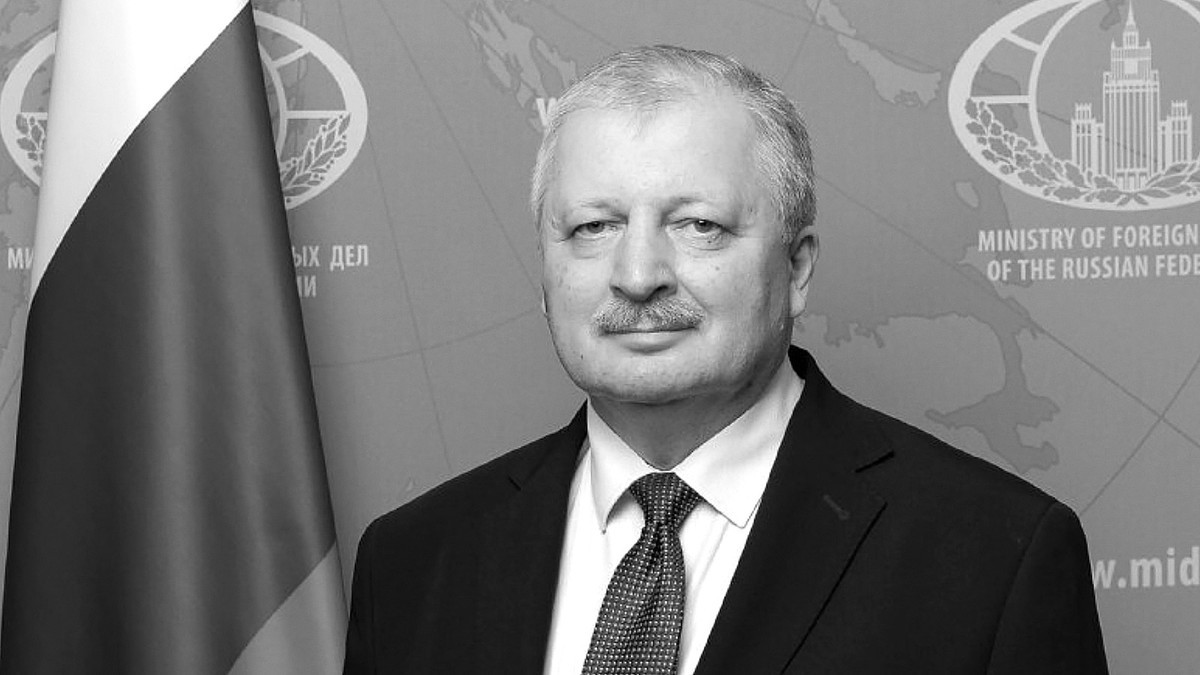
The Russian Foreign Ministry posted the announcement on its official Telegram channel on Wednesday, and Interfax and RIA Novosti carried the text in full. "The leadership and staff of the Russian Foreign Ministry announce with deep sorrow that Alexander Darchiev, Russian Ambassador Extraordinary and Plenipotentiary to the United States, passed away suddenly on November 11 at the age of 66," the statement read. It described him as "an outstanding diplomat, an experienced leader, a kind friend, and a mentor," and as "a consummate professional and a brilliant expert on American affairs" who worked "in one of the most critical areas of Russian foreign policy." It closed with condolences to his family and the line that the memory of a colleague "who left us too soon" would remain "in our hearts forever." That is the entire official account. Everything else in this story has had to be assembled from the record around it.
Twenty Months, One Mandate
Vladimir Putin appointed Darchiev by presidential decree on 6 March 2025, filling a post that had sat empty since Anatoly Antonov's mission ended in October 2024. Washington had sent Moscow the agrément, the formal acceptance of a nominated ambassador, in a note at the end of February 2025 — during the Istanbul round of talks, where Darchiev himself had led the Russian delegation. Reuters reported the mandate plainly: he was sent to lead a rapprochement with the Trump administration "that has rattled Ukraine and European countries." He arrived in the American capital in late March and was concurrently accredited as Russia's permanent observer to the Organization of American States. By the time of his death he had held the job for 615 days, just over twenty months. That is not a long tenure for an ambassador. It is, in the circumstances, a very long time to be the only senior Russian official living full-time inside the American system.
The Afternoon at the White House
The scene that defined him came on 11 June 2025, when Darchiev went to the White House and presented his credentials to President Donald Trump — on the eve of Russia Day, as he pointedly noted afterwards. Speaking at a reception at the embassy that evening, he said: "It was a great honour for me, as Russian ambassador, to speak with President Trump and I assured him that I and this embassy under my direction will do everything to restore Russian-American relations and bring them back to normality and common sense." He added that the two countries were "destined, as great powers, to have non-confrontational peaceful existence," and that Moscow and Washington had at last moved "from monologues under the previous administration" to "quite a pragmatic conversation, a complicated conversation." He called the Oval Office meeting short, as protocol dictated, and constructive. Read those lines again knowing how this ends. They are the mission statement of a man who did not get to finish the sentence.
A Career on the American File
Darchiev was a hereditary diplomat, born in Budapest on 14 May 1960 into the family of a Soviet embassy employee. He graduated from Lomonosov Moscow State University in 1983 and went to work at the Institute of the USA and Canada under the Soviet Academy of Sciences, where he defended a candidate's dissertation before joining the diplomatic service in 1992. The American file then became his life's work: an adviser's posting at the embassy in Washington from 1997 to 2002, deputy director of the North America Department in 2003, minister-counsellor in Washington from 2005 to 2010, then director of the North America Department. From 2014 he served as Russia's ambassador to Canada, returning to head the North America Department again before taking charge of the North Atlantic Department, which covered Britain, Ireland, Canada and the United States. He held the diplomatic rank of Ambassador Extraordinary and Plenipotentiary, conferred in February 2016.
What Moscow Left Out
Three absences in that statement matter more than anything in it. The ministry did not give a cause of death. It did not say where he died. And it did not name an acting chief of mission, which is the ordinary administrative step when an ambassador dies in post. The Moscow Times, citing a former Russian diplomat, reported that Darchiev was a protégé of Yuri Ushakov, Putin's foreign policy adviser and himself a former ambassador to Washington. On one detail the Russian text and the English wires appear to disagree and do not: the ministry wrote that he died "in his 67th year of life," which is the Russian convention for a man of 66; the wires reported his age as 66. Both are accurate. On the last confirmed public appearance, Russian state media carry a photograph of him opening a polling station at the embassy during the State Duma elections on 20 September.
The Same Afternoon in Abu Dhabi
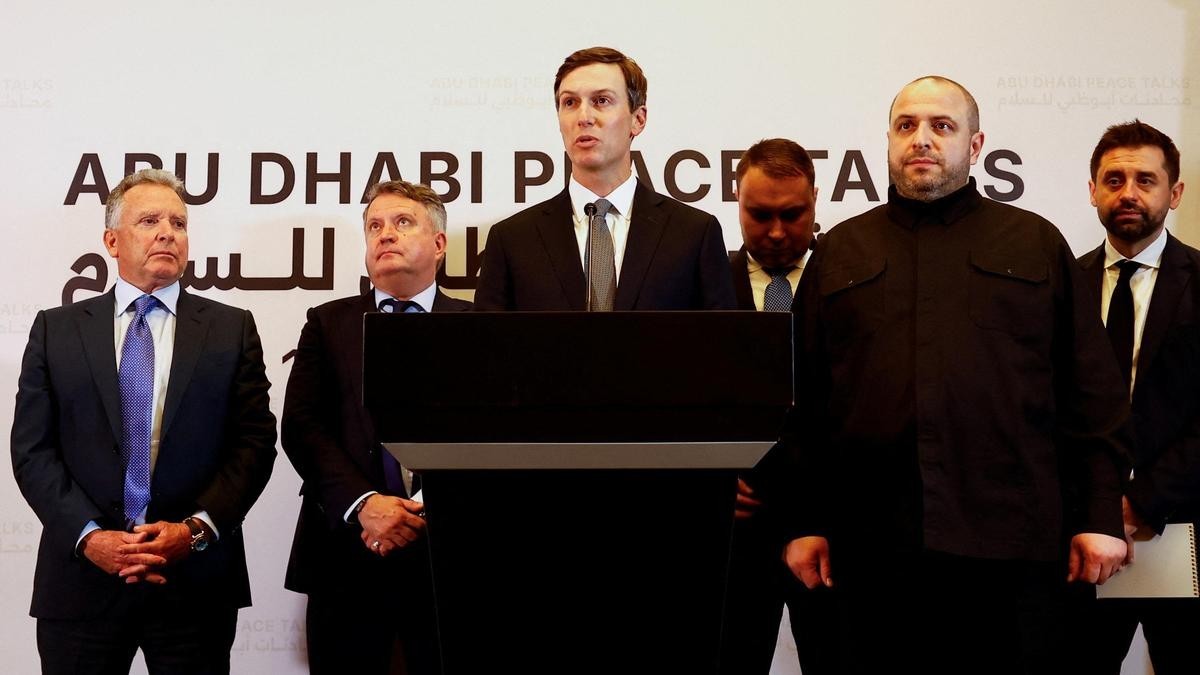
The talks concluded on Wednesday after two days. The Russian delegation was led by presidential aide Vladimir Medinsky; Kyiv sent Rustem Umerov, head of its Foreign Intelligence Service; Steve Witkoff and Jared Kushner mediated for Washington. Day one ran about four hours, day two just under two. The one concrete result was an agreement in principle on a large-scale prisoner exchange. "One of the positives is we agreed that we're going to have the biggest humanitarian release of prisoners, which we're going to finalise the numbers tomorrow," Kushner told reporters. Medinsky and Umerov both confirmed it. Territorial questions went nowhere, and Kushner said they would be the hardest to settle. He and Witkoff fly to Moscow on Thursday to brief Putin, then to Dublin to meet Volodymyr Zelenskyy. Medinsky said the central theme was European security: "Essentially, the whole body is sick, and Ukraine is simply where the abscess burst."
The Channel He Was Running
An ambassador is not a negotiator, and Darchiev was not at the table in Abu Dhabi. But the embassy he ran is the machinery underneath every one of these rounds: visas for delegations, secure communications, the paperwork that lets a chargé d'affaires hand over a note at midnight. That channel has been unusually busy. Kirill Dmitriev, Putin's special envoy, arrived in the United States on 5 November for meetings with the administration. Yuri Ushakov, the Kremlin's foreign affairs adviser, called the Abu Dhabi round "substantive and quite useful." Marco Rubio called it "very productive" while cautioning that a breakthrough would take time. Zelenskyy described Tuesday's session as "constructive and quite substantive." All of that traffic runs through, or is supported by, the building Darchiev commanded until Wednesday evening. It still has staff. It no longer has a principal.
The Building on Sixteenth Street
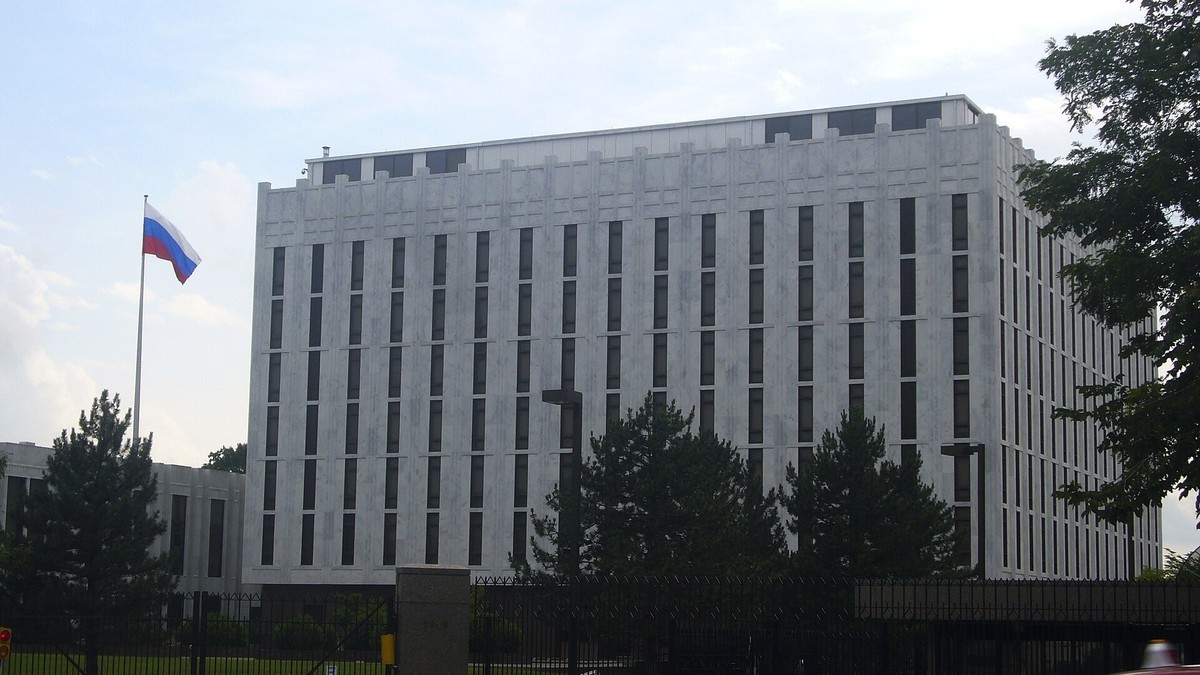
The Russian embassy occupies a large white building behind an iron fence and a stand of trees on Sixteenth Street, with the flag on a pole at the gate. It is not a symbolic address. It is the only piece of Russian state infrastructure on American soil with a full-time, credentialed senior official at its head, and it has been operating under sanctions, tit-for-tat expulsions and a frozen property dispute for years. Darchiev said on arrival that he intended to resolve sanctions, visa obstacles, the suspended air link and the return of Russian diplomatic property. None of those was resolved. Under the Vienna Convention, the mission's functions continue when an ambassador dies; the practical question is who signs, who is received, and who is believed when a message has to be delivered at speed. That question is now open.
The Questions Standing Open
What is established: the death, the date, the age, the foreign ministry's statement, the career, the appointment, the credentials ceremony, and the Abu Dhabi outcome. What is not established, and should not be filled in by anyone guessing: the cause of death, the place of death, whether he had been ill, who is now running the embassy, whether a successor has been chosen, and any American official reaction, of which there was none public by Wednesday evening. Nor is there any reporting that connects his death to the talks in Abu Dhabi. The calendar put them on the same day. That is a fact about the calendar, not a finding about the death, and the difference is the whole discipline of this job. Nine and a half years ago Russia lost its United Nations envoy, Vitaly Churkin, who fell ill in his office at the mission and died in a New York hospital a day before his sixty-fifth birthday.
What to Watch
Three things. First, the Kremlin's appointment of an acting chief of mission, which tells you whether the Washington embassy is being kept on a caretaker footing or handed to someone with a mandate. Second, whether Witkoff and Kushner's Thursday meeting with Putin in Moscow proceeds on schedule — a diplomatic channel that loses its most senior resident officer in the middle of a negotiating round is a channel under strain, and the prisoner-exchange numbers are due to be finalised the same day. Third, the autopsy or medical statement, if one is ever released; Russia did not release a full account for Churkin either. Folks, this is a story where the honest reporting is a list of what nobody has said. Keep your eye on who fills that silence, and how fast. The answer will tell you more about the state of this relationship than any communiqué out of Abu Dhabi.
By Jessica Ali, Staff Writer
This article was produced with AI-assisted research and editorial support. Sources: TASS, Interfax, RIA Novosti, Reuters, The Associated Press, The Moscow Times, ABC News, Al Jazeera, Euronews, The Hindu, Rossiyskaya Gazeta, Lenta.ru, Radio Svoboda, APA and Europa Press. Photographs: Russian Foreign Ministry handout via ABC News; Reuters via The Hindu; Wikimedia Commons (Kent Wang, CC BY-SA 2.0). Cover: Global 1 News editorial image.
What's Your Reaction?
 Like
0
 Dislike
0
 Love
0
 Funny
0
 Wow
0
 Sad
0
 Angry
0

Editor-in-Chief at Global1.News. Atlanta-based journalist who cuts through the BS and tells it like it is. Lead anchor, host, and the voice you hear when the spin stops and the truth starts.










Comments (0)