
Pink cocaine, apple-flavoured ketamine and triple-strength ecstasy: How festival drugs went supersonic
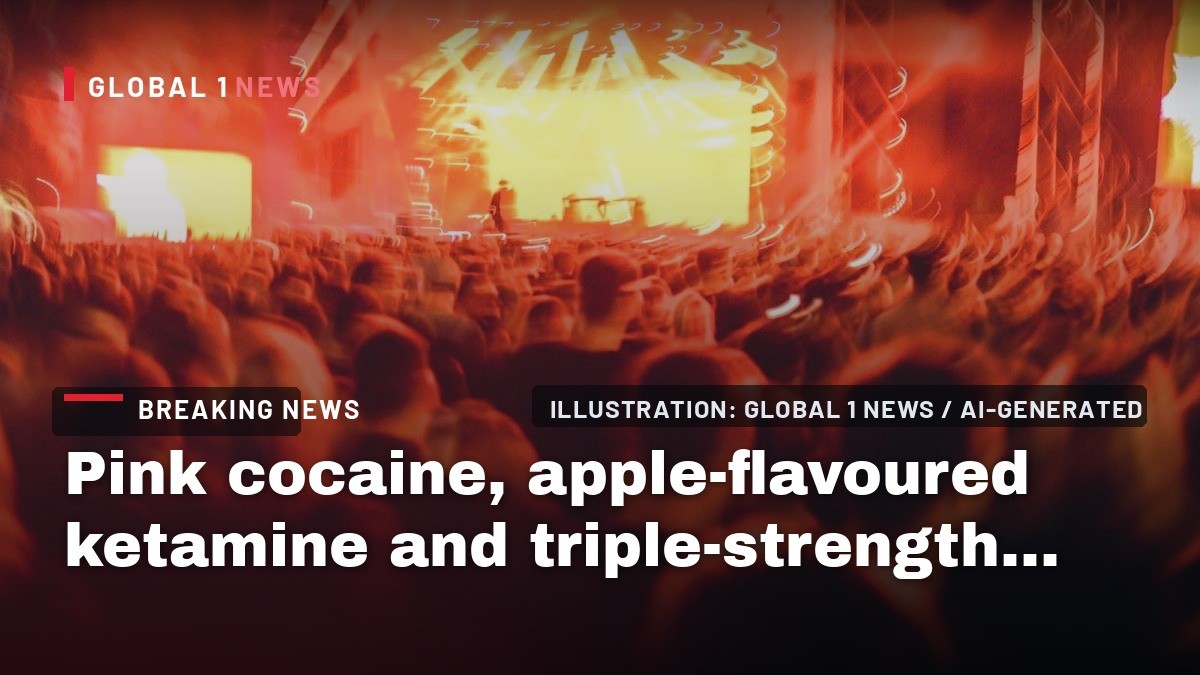
Pink cocaine, apple-flavoured ketamine and triple-strength ecstasy: How festival drugs went supersonic London, United Kingdom — The August bank holiday has an absurdly frenetic energy, a last-hurrah party that pulls even the most autumn-averse back onto the dancefloor. With free day parties in Hackney, the 60th anniversary of Notting Hill Carnival, a double-billing of Tyler, The Creator at All Points East and Maribou State at Lido festival, London alone is reigniting the summer spirit.
Pink cocaine, apple-flavoured ketamine and triple-strength ecstasy: How festival drugs went supersonic
London, United Kingdom — The August bank holiday has an absurdly frenetic energy, a last-hurrah party that pulls even the most autumn-averse back onto the dancefloor. With free day parties in Hackney, the 60th anniversary of Notting Hill Carnival, a double-billing of Tyler, The Creator at All Points East and Maribou State at Lido festival, London alone is reigniting the summer spirit. But the final bank holiday until December is always accompanied by something else: warning messages about drugs, each year seemingly more supersonic than the last.
This year's highlights include pink cocaine (a mixture of ketamine, MDMA and pink colouring), a new-ish form of ketamine called 2-Fluorodeschloroketamine, and high-potency ecstasy. Ahead of Creamfields in Cheshire, police dug up 204 canisters of laughing gas, MDMA and ketamine while searching the grounds. The superintendent in charge said he expected to find more drugs below ground as the dig continued, adding that dealers would be "very disappointed" to find their products had vanished from the site.
A potency problem, or a purity problem?
So, are party drugs getting stronger year on year? Dr Caroline Copeland, senior lecturer in Pharmacology and Toxicology at King's College London and director of the UK's National Programme on Substance Use Mortality (NPSUM), says not exactly. "MDMA is like alcohol. So, the potency doesn't change but a tablet can have more MDMA in it than usual."
Instead, substances are hitting harder due to the increasing number of ingredients frequently mixed into party drugs. "On the database I run, we've seen the average number of substances detected increase from two or three in the mid-2000s to five or six substances on average today. So, polydrug use is definitely going up, which is more dangerous."
"You just don't know what's in it" is a common cry from parents attempting to dissuade young people from recreational drug use. From her research, Copeland has some idea: she has seen cocaine commonly cut with the anti-worming agent levamisole, which has been linked to cancer, and illicit vapes laced with anaesthetics, which can cause abnormal heart rhythms.
The nitazene spectre
A new, particularly troubling, rumour is that nitazenes — a class of synthetic opioid 500 times stronger than heroin — could find their way into party drugs, thus potentially leading naive users, unaware they are ingesting a substance far stronger than fentanyl, towards a fatal overdose. "It's a huge concern for the sector," says Ruth Squires, who oversees the youth drug and alcohol harm reduction service, 1625 Outreach, for the social charity Change Grow Live.
"Currently, synthetic opioids like nitazenes are being found more in opiate use, like heroin. However, there is a fear in the field that this will start to impact the wider market. We're not seeing too much of that on the ground yet, but I think the risk is a real concern."
Synthetics are increasingly appealing to drug gangs — and Copeland concurs the market is about to see much more of them. "Cartels are realising that, for naturally occurring products like the opium poppy, cocoa plants, cannabis, you need land, good weather, cultivation techniques, farming equipment and the products themselves are very bulky, so if you're trying to traffic them, they're much more difficult to hide."
The economics of synthetic drugs
As synthetic substances are astronomically more potent, gangs do not need to make as much, which is cheaper. "You also don't have as large a quantity to smuggle," Copeland notes. "You could put one gram in 100 greeting cards and if 99 of them get intercepted at the border, even if only one gets through, that gram could be diluted into 1,000 doses. When you have a change like that in the market, combined with higher demand, that can lead to bad mixing on behalf of the drug gangs."
This shift has profound implications for UK border enforcement and local policing. The National Crime Agency has repeatedly warned about the rise of synthetic opioids, but the festival circuit presents a unique challenge: temporary sites, thousands of young people, and a black market that adapts quickly to police tactics. The Creamfields dig, which unearthed canisters buried beneath the ground, illustrates the lengths dealers will go to — and the resources police must commit to counter them.
Three scenarios that are 'very bad'
When it comes to the end user mixing substances, Copeland says there are broadly three scenarios that are "very bad": taking multiple depressants together, which can cause respiratory depression; taking multiple stimulants together, which can cause serotonin syndrome or cardiac toxicity; and taking a mix of uppers and downers. "Then you're hitting the break and accelerator at the same time," she says. "If you did that to a car, you'd break it. So, if you're making both systems go, that's a recipe for a physiological crisis."
This is not abstract theory. NHS emergency departments across the country brace for a spike in admissions every bank holiday weekend, and this year is expected to be no different. Paramedics at Notting Hill Carnival, which draws up to two million people, are trained to spot the signs of serotonin syndrome and cardiac toxicity. But with substances now containing five or six different compounds on average, the clinical picture is far more complex than a simple overdose.
Dr Copeland's data, drawn from the NPSUM database, shows a clear trend: the average number of substances detected in fatal cases has more than doubled since the mid-2000s. This is not just a festival problem — it reflects a wider shift in the UK's recreational drug market, where purity is rare and adulteration is the norm.
The 'kiddification' of party drugs
People are buying one substance and it is actually something else entirely. Alongside the challenge of this synthetic cocktail comes the issue of marketing. Much like how colourful, fruit-flavoured vapes have been declared the "kiddification" of smoking, drug gangs have worked out that if you dye these party powders pink and scent them strawberry, then they are much more likely to attract younger users — and much harder for parents and medics to identify what is actually being consumed.
Pink cocaine, despite its name, rarely contains cocaine. It is typically a mix of ketamine, MDMA and pink colouring, sometimes with added stimulants like caffeine or amphetamines. The colouring is a marketing tool, designed to make the product Instagrammable and appealing. Apple-flavoured ketamine takes this further, mimicking the fruit-flavoured vape trend that has already drawn regulatory scrutiny.
For parents, this presents a new challenge: the visual cues they were taught to recognise — white powders, brown heroin, green cannabis — are increasingly obsolete. A pink powder could be anything. A strawberry-scented baggie could contain a synthetic opioid 500 times stronger than heroin. The "just say no" message, already strained, now faces a market where the product itself is deliberately opaque.
What this means for festival-goers and the NHS
The trend raises serious questions for drug policy, festival safety messaging and the NHS as emergency services brace for another busy bank holiday weekend. Harm reduction services, like the one Squires runs, are calling for more testing facilities at festivals, where users can have their substances analysed before consumption. But such services are unevenly distributed, and funding is often precarious.
There is also the question of criminal justice. The police operation at Creamfields, which involved digging up buried canisters, is a visible sign of enforcement. But with synthetic drugs being so potent that a single gram can be diluted into 1,000 doses, the economics of interdiction are shifting. Seizing a kilogram of heroin is a significant blow to a gang; seizing a kilogram of nitazene precursors, which could yield millions of doses, is a different scale of problem entirely.
For the young people heading to Hackney, Notting Hill, All Points East or Lido this weekend, the message from experts is clear: the drug you buy is unlikely to be what you think it is, and the combination of substances in a single pill or powder is more dangerous than ever. The bank holiday may be a time for celebration, but the physiological risks are real — and, as Copeland puts it, "a recipe for a physiological crisis" is not a hangover. It is a trip to A&E, or worse.
As the sun sets on another August bank holiday, the dancefloors will be full, the music will be loud, and the pink cocaine will be circulating. The question is whether the UK's public health infrastructure, policing strategy and harm reduction services can keep pace with a market that is evolving faster than the warnings designed to counter it.
By Erica Thornton, Staff Writer
This article was produced with AI-assisted research and editorial support. Sources: The Independent (UK)
What's Your Reaction?
 Like
0
Like
0
 Dislike
0
Dislike
0
 Love
0
Love
0
 Funny
0
Funny
0
 Wow
0
Wow
0
 Sad
0
Sad
0
 Angry
0
Angry
0

US Politics and Policy Correspondent at Global1.News. Based in Washington DC, covering American politics, policy, elections, and the courts. Knows how the system works and tells you what it actually means.














Comments (0)