
FCC Adds Humanoid Robots and Power Inverters to Covered List in Broadened Tech Crackdown
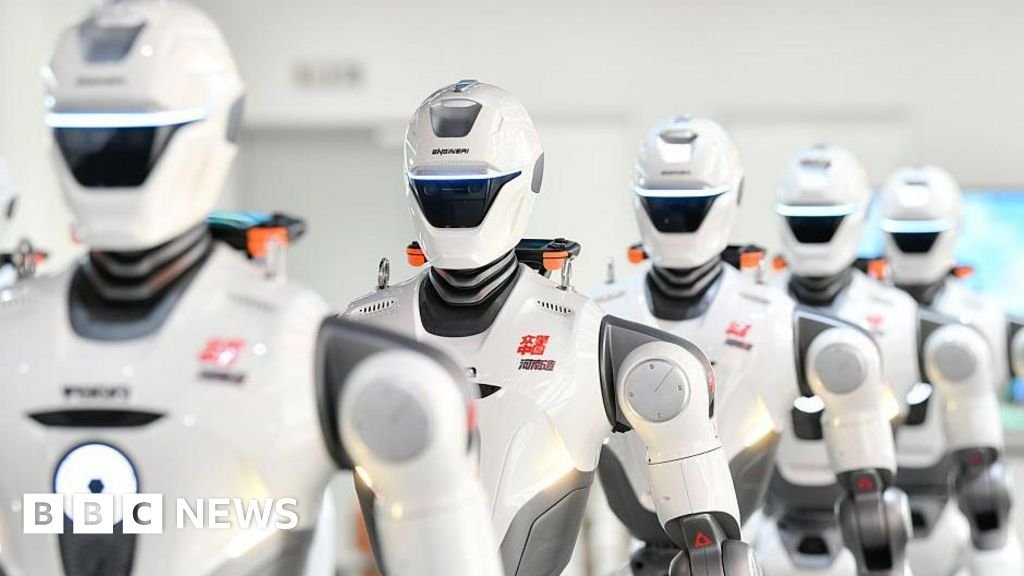
Washington’s Expanding Tech Front The Trump administration has escalated its technological confrontation with Beijing by banning the import of new Chinese-made advanced robotics—including humanoid and four-legged machines—alongside power inverters used in data centers and solar panels.
Washington’s Expanding Tech Front
The Trump administration has escalated its technological confrontation with Beijing by banning the import of new Chinese-made advanced robotics—including humanoid and four-legged machines—alongside power inverters used in data centers and solar panels. The Federal Communications Commission (FCC) announced the move, adding these categories to its Covered List, a register of goods and services deemed a risk to US national security under the Secure and Trusted Communications Networks Act.
FCC Chairman Brendan Carr stated the agency was doing its part "to secure America's critical supply chains." The ban applies to new foreign-produced advanced robotic devices and power inverters, but does not prevent the sale or import of existing models previously authorized by the FCC. This distinction suggests a targeted effort to halt future market penetration rather than disrupt current deployments, a nuance that carries significant implications for the robotics industry’s investment calculus.
The FCC’s Stated Rationale
The FCC cited specific security concerns in its determination. For power inverters, the agency warned that foreign-made devices could allow overseas firms to turn them off remotely, steal data, facilitate access by "foreign government actors," or be exploited through cyberattacks. Given that inverters are critical components in data centers and solar energy infrastructure, the concern extends beyond consumer electronics into the backbone of the US digital economy and its clean energy transition.
Regarding robotics, the FCC argued that machines made outside the US could enable "malign actors to surveil Americans, enhance the capabilities of foreign intelligence services, or to remotely commandeer the robots." This language reflects a broader US government posture that treats Chinese hardware as a potential vector for state-directed espionage, a framing Beijing has consistently rejected as pretextual.
Beijing’s Immediate Response
The Chinese embassy in Washington responded swiftly, stating that Beijing has long opposed the US "politicising" of trade issues and sanctions based on "groundless pretexts." The embassy reiterated that China will "take all necessary measures" in response to any moves that harm its interests, and urged all countries to develop AI "for the positive and for good."
The statement also called on the US to "abandon its hegemonic mindset, and stop smearing Chinese companies and threatening them with sanctions." This rhetorical posture is consistent with China’s established diplomatic playbook, which frames US actions as protectionist and ideologically driven rather than grounded in verifiable security threats. The reference to "all necessary measures" leaves the door open for retaliatory actions, though specifics have not been disclosed.
China’s Robotics Ascendancy
The ban targets a sector where Chinese firms have made rapid and visible progress. Companies such as Unitree Robotics, UBTech Robotics, and AgiBot have developed humanoid and quadruped robots for factory and home use, often marketing them aggressively to businesses and the public. Unitree’s agility demonstrations have drawn global attention, while UBTech is a major listed robotics company with substantial commercial ambitions.
These firms have benefited from Beijing’s industrial policy, which designates humanoid robotics as a key frontier of "new quality productive forces"—a concept promoted by the Chinese leadership to describe high-tech, high-efficiency, and high-quality growth drivers. The FCC’s ban effectively acknowledges that Chinese robotics have reached a level of sophistication that Washington deems strategically significant, even as US rivals like Tesla and Boston Dynamics race to catch up in commercial deployment.
Strategic Calculus: What Each Side Wants
Washington’s objective is twofold: to protect the US domestic robotics and AI industries from Chinese competition, and to prevent the integration of Chinese hardware into critical American infrastructure. The inclusion of power inverters signals that the administration is broadening its definition of national security risk beyond communications equipment and semiconductors to include energy and data infrastructure components.
Beijing’s calculus is equally clear. China seeks to maintain its lead in robotics manufacturing and AI development, which are central to its long-term economic strategy and its goal of reducing dependence on foreign technology. The Chinese government has consistently maintained that its AI progress is "the result of its own dedication and effort as well as international cooperation," a direct rebuttal to US Treasury Secretary Scott Bessent’s warnings that Chinese AI firms could face sanctions over alleged intellectual property theft.
Supply Chain Repercussions and Rare Earth Leverage
The US move carries inherent risks, particularly regarding supply chain vulnerabilities. Washington will be keen to avoid a repeat of the squeeze triggered last year when China tightened export controls on rare earths—critical materials for electronics and defense applications. China’s dominance in rare earth processing gives it significant leverage in any escalation spiral, and the FCC’s ban on inverters, which rely on such materials, could invite a calibrated response from Beijing.
For the global robotics industry, the ban creates a bifurcated market. Chinese manufacturers will likely pivot further toward domestic and non-US markets, including Europe, Southeast Asia, and the Global South, where demand for affordable automation is growing. US robotics firms may gain short-term protection in their home market, but they risk losing access to Chinese supply chains and manufacturing efficiencies that have driven down costs across the sector.
Broader US-China Tech Rivalry
This action is the latest in a series of measures that have broadened the US-China technology rivalry from semiconductors to include AI, robotics, electric vehicles, solar, and critical minerals. China, despite being the world’s largest exporter of electric vehicles, has been effectively shut out of the American market by steep tariffs. Washington has also blocked the sale of cutting-edge US semiconductors to China, citing national security and the need to slow Beijing’s military modernization.
The FCC’s move extends this logic to robotics, a sector where China has not only caught up but in some segments leads in commercial deployment. By adding robots and inverters to the Covered List, the US is signaling that no category of Chinese technology is off-limits for restriction. This approach, however, risks overreach. If the definition of "national security risk" becomes too expansive, it may undermine the credibility of the designation process and complicate alliances with countries that continue to trade with China.
Implications for Global Standards and Innovation
The ban also raises questions about the future of global technical standards. The FCC’s action could prompt other nations to adopt similar restrictions, fragmenting the global market for robotics and AI. Alternatively, it could accelerate efforts by China and its partners to establish alternative standards and supply chains that exclude US components and software.
For innovation, the long-term effects are uncertain. While protectionist measures may shield US firms from immediate competitive pressure, they also reduce the incentives for American companies to innovate at the pace required to match Chinese advancements. Conversely, Chinese firms, now locked out of the US market, may double down on research and development to capture market share elsewhere, potentially widening the technological gap in non-US markets.
Outlook: Escalation or Calibration?
The trajectory of US-China tech relations remains fraught. The Chinese embassy’s pledge to take "all necessary measures" suggests that retaliation is likely, though its form and timing are unknown. Options range from diplomatic protests to export controls on materials or components critical to US industries. The US, for its part, appears committed to a policy of strategic decoupling, despite the economic costs and supply chain risks.
What is clear is that the era of seamless global technology integration has ended. The FCC’s ban on humanoid robots and power inverters is not an isolated regulatory action but a marker of a new phase in the competition for technological supremacy. For Beijing, the response will be framed not as a concession but as a reaffirmation of its commitment to self-reliance and its vision of AI development "for the positive and for good." The coming months will reveal whether this rhetoric translates into concrete countermeasures or whether both sides recalibrate to avoid a mutually destructive spiral.
By Prof. Marcus Chen, Staff Writer
This article was produced with AI-assisted research and editorial support. Reporting is based on sources cited in the article.
What's Your Reaction?
 Like
0
Like
0
 Dislike
0
Dislike
0
 Love
0
Love
0
 Funny
0
Funny
0
 Wow
0
Wow
0
 Sad
0
Sad
0
 Angry
0
Angry
0

World Politics Analyst at Global1.News. Based in Beijing, covering US-China relations, global trade, and geopolitical strategy. Brings deep analytical perspective to the power dynamics shaping international affairs.














Comments (0)