
Colombia Earthquake Kills 180: Rescuers Race to Save Survivors
A magnitude 7.4 earthquake struck western Colombia on Monday, killing at least 180 people and leaving hundreds missing. Rescue crews in Cali and Pereira race against time as aftershocks rattle the region and volunteers rally.
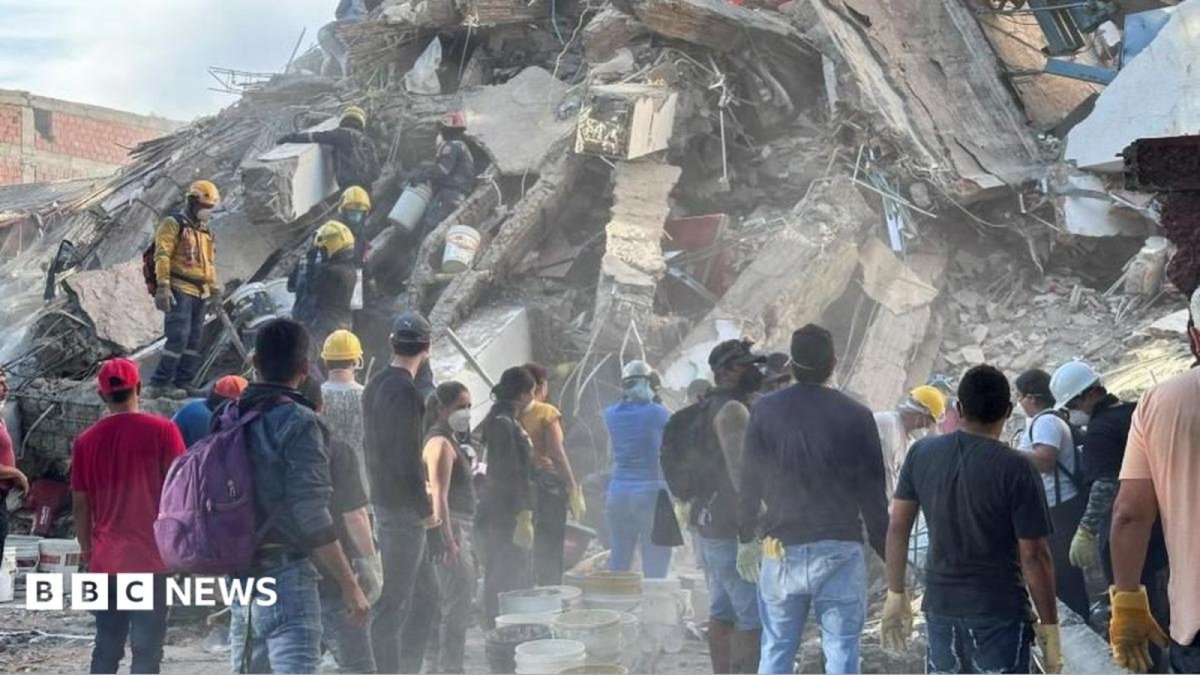
Rescue workers in western Colombia are racing against time to free survivors trapped beneath collapsed buildings after Monday's devastating magnitude 7.4 earthquake, a disaster that has killed at least 180 people and left hundreds more missing. The quake, which struck at 07:34 local time near the village of San Jose del Palmar in Choco province, was felt across an enormous area stretching for hundreds of miles, with fresh aftershocks continuing to rattle the region. In the cities of Cali and Pereira, the human cost is staggering, with entire neighbourhoods reduced to rubble and families clinging to hope as emergency crews dig through concrete and debris. As Colombia confronts its worst seismic event in a century, the nation is also witnessing an extraordinary outpouring of solidarity, from local volunteers to neighbouring countries offering aid.
Bogota, Colombia - Article continues...
A Disaster of National Scale: Death Toll, Injuries, and Widespread Destruction
The official death toll stands at 181, according to President Abelardo de la Espriella, who provided an update on Tuesday from Pereira, one of the hardest-hit cities. However, an aggregated figure gathered from local officials puts the number potentially at more than 240, reflecting the chaos and difficulty of accounting for every victim in the immediate aftermath. Officials have cautioned that the toll is expected to keep rising as search and rescue teams clear debris and account for the missing. The president also reported that almost 2,600 people had been injured and nearly 200 remained missing, though those numbers have fluctuated as rescue efforts progress and new information emerges from affected municipalities.
The physical toll on Colombia's infrastructure is immense. President Espriella confirmed that more than 1,100 homes had been destroyed and over 8,000 damaged, leaving countless families without shelter. In Cali, a city of 2.2 million people, Mayor Alejandro Eder reported 95 deaths, with 239 people trapped and 949 injured as of Tuesday. The city has seen 45 buildings either completely or partially collapse, including several upper floors of a hospital dedicated partly to paediatric care, which left some patients trapped inside. In Pereira, the fire department confirmed 79 deaths, with at least 92 buildings collapsed and 15 people known to be trapped, according to the Association of Colombian Capital Cities (Asocapitales).
The scale of the disaster extends beyond these two urban centres. In Manizales, Mayor Jorge Eduardo Rojas reported five deaths and 60 buildings that had partially or totally collapsed. Across the country, dozens of larger structures have fallen, and the full extent of the damage is still being assessed as aftershocks continue to complicate rescue and recovery operations.
Rescue Efforts Intensify: The 36-Hour Rescue of Daniela Largo
Amid the devastation, there have been moments of profound hope. Daniela Largo, a 32-year-old woman trapped under rubble for 36 hours following the quake, was pulled alive from a collapsed building in Pereira on Tuesday. Her rescue came after a gruelling 10-hour operation by local firefighters, aided by colleagues deployed from the capital, Bogota, and the disaster response team of the national police force. Firefighters had to dig two tunnels to reach her: one from above to provide oxygen, and a second from below to free her from beneath four heavy concrete slabs.
Largo's mother told AFP news agency that a local resident had heard her daughter cry out for help from beneath the rubble, and emergency workers located her with the help of a small camera. President Espriella celebrated her rescue on social media, describing it as "news which fills us with hope." Her mother added that "at home, her 12-year-old son is waiting for her."
In Cali, the rescue effort is centred on the Torres del Limonar building in the Capri neighbourhood, a four-storey structure that held dozens of apartments and has become a symbol of the tragedy. Under the scorching heat on Tuesday morning, the building was a shattered mountain of rubble, with mattresses, furniture, and belongings peeking out from the concrete. Rescuers and volunteers worked in shifts, calling out: "Silence! We are firefighters. If you can hear us, shout or make any noise." More than 100 people waited for news outside, and Mayor Eder estimated that 25 people were trapped beneath the debris as of Monday night. Rescuer James Velasco reported that at least two people had been detected alive, with tunnels being dug to reach them. "One of them has to have his leg freed," he said.
The Human Toll: Families Waiting, a School Tragedy, and Overnight Survivors
The emotional weight of the disaster is borne by families like that of Efrain Gallego, whose 80-year-old brother was buried along with his wife when Torres del Limonar collapsed. "You feel anguish. Every time there is an alert about someone being alive, hope is reborn that we will find him," Gallego told BBC Mundo, his voice thick with emotion. Around him, many residents chose not to speak, visibly affected, some sleeping exhausted on the ground or on a sofa placed in the street. A rescuer at the site offered a glimmer of perspective: "In the past I have participated in operations where we have pulled out survivors after seven days trapped. Those who are meant to survive, survive. Nothing is written."
The tragedy has also struck the youngest victims. In Calima, a neighbourhood in the north of Cali, four children died after a section of the Gimnasio Calima school collapsed. Mayor Antonio Cadavid stated that other children ended up with serious injuries, with a total of 30 children referred to care centres. The loss has sent shockwaves through the community, and Cadavid has ordered a curfew from 20:00 local time until 06:00 on Wednesday morning to combat threats of looting and ensure the safety of rescue operations.
Overnight on Monday into Tuesday, several people spent the night outdoors in cities like Pereira and Cali, either because their homes were destroyed or out of fear of further collapses. In Pereira, the city implemented a car-free day to allow the search to go ahead, with citizens urged to comply. Footage from the city showed the massive scale of the rescue effort, with hundreds of volunteers working to remove rubble and free trapped survivors. Hours after the quake, a resident of the Parque Industrial neighbourhood near the city's airport told BBC Mundo: "It's impossible to get around the city center. In Bolivar Square, at least one building collapsed. Furthermore, there are structures where buses and trucks are trapped, and people are afraid those structures will collapse as well."
Aftershocks and Scientific Context: The Worst Quake This Century
The National Geological Service has confirmed that Monday's earthquake is the worst to hit Colombia this century. The quake had its epicentre near the village of San Jose del Palmar, in Choco province, and seismometers nearest the epicentre registered shaking lasting between 90 seconds and two minutes. The tremor was felt across a vast area, stretching for hundreds of miles across western Colombia, and the region has been on edge ever since.
More than 70 aftershocks have taken place since Monday's earthquake, according to Colombia's geological service, with two earthquakes of magnitude 3.6 occurring early on Tuesday - the first in San Jose del Palmar and the second in Santander. Further tremors were felt in Cali on Tuesday, part of a pattern that has kept residents on high alert. Mayor Rojas of Manizales cautioned the public not to share chain messages or social media posts from unknown sources, as they "may contain false or unverified information... which could cause greater concern and alarm among the public."
Colombia is no stranger to seismic activity, situated as it is along the Pacific Ring of Fire, but the intensity and destruction of this quake have overwhelmed local capacities. The coffee-growing region, where Pereira is located, has a history of resilience, but the scale of this disaster has tested the limits of its infrastructure and emergency services.
State of Emergency and National Response
President Abelardo de la Espriella has declared a state of emergency to coordinate the national response. In a statement from Pereira, he acknowledged the scale of the catastrophe and the challenges ahead, while also celebrating the rescue of Daniela Largo as a symbol of hope. The Trump administration, which backed Espriella in his successful election earlier this year, announced a donation of $15.5m (£11.5m) to Colombia to support relief efforts.
As the search continues, the numbers are still shifting. President Espriella has since said that at least 265 people have died, with 496 others missing — figures that have climbed steadily since the initial count on Monday. In Cali, more than 200 people remained trapped as of 16:00 local time on Tuesday, and the city's mayor declared a night-time curfew, saying that soldiers would be on patrol in the worst-hit areas. "We need to ensure that the rescue work can be carried out safely," he said, adding that there was still hope of finding more people alive.
International and Regional Solidarity
The international community has rallied around Colombia. A spokesperson for UN Secretary-General Antonio Guterres stated that he "expresses his solidarity with the people and government of Colombia" and that the UN is working to support the government's response. Spain's Foreign Minister, Jose Manuel Albares, reported that 164 Spaniards were still missing, though there were no reports of injuries or deaths of its citizens. Offers of help have also come from Ecuador, Brazil, El Salvador, and Venezuela — a testament to regional solidarity in times of crisis.
On the ground, the response has been marked by extraordinary community effort. Alejandro Mahecha, a 19-year-old volunteer in Cali, said: "I wanted to help from the very beginning. The earthquake affected my city and the homes of people I know." Gallego, the man waiting for news of his brother, wanted to acknowledge the work of ordinary citizens: "We must mention all the people who have come to help with water, supplies, tools, equipment; there is a lot of collaboration. Volunteers are plentiful."
As the search continues, the numbers are still shifting. President Espriella has since said that at least 265 people have died, with 496 others missing — figures that have climbed steadily since the initial count on Monday. In Cali, more than 200 people remained trapped as of 16:00 local time on Tuesday, and the city's mayor declared a night-time curfew, saying that soldiers would be on patrol in the worst-hit areas. "We need to ensure that the rescue work can be carried out safely," he said, adding that there was still hope of finding more people alive.
By Elena Vasquez, Staff Writer
This article was produced with AI-assisted research and editorial support. Sources: BBC News.
What's Your Reaction?
 Like
0
Like
0
 Dislike
0
Dislike
0
 Love
0
Love
0
 Funny
0
Funny
0
 Wow
0
Wow
0
 Sad
0
Sad
0
 Angry
0
Angry
0

Latin America Correspondent at Global1.News. Based in Mexico City, covering politics, economics, energy, and culture across the region. Brings an on-the-ground perspective to stories spanning from the Rio Grande to Patagonia.









Comments (0)