
Explainer-How Yemen's Houthis went from a small mountain militia to a big regional threat
The rapid seizure of the Bab el‑Mandeb Strait by Yemen’s Houthi movement in the past weeks has thrust a once‑remote highland militia onto the world stage, turning a local insurgency into a regional power capable of threatening global shipping lanes and Saudi energy infrastructure.
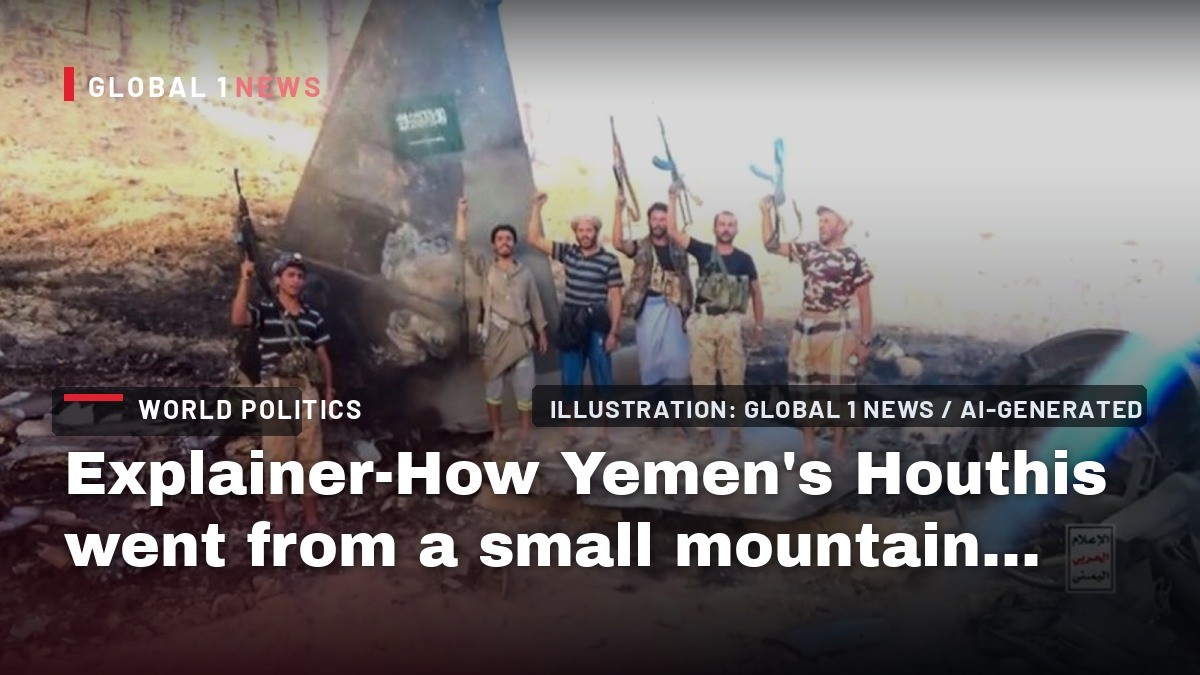
The rapid seizure of the Bab el‑Mandeb Strait by Yemen’s Houthi movement in the past weeks has thrust a once‑remote highland militia onto the world stage, turning a local insurgency into a regional power capable of threatening global shipping lanes and Saudi energy infrastructure. For Israeli readers, the development is a stark reminder of how quickly proxy forces can evolve when backed by external patrons, and why Israel’s own security and economic interests must remain attuned to the shifting balance of power in the Red Sea corridor.
From Zaydi Revival to Armed Insurgency
In the late 1990s the Houthi family launched a Zaydi Shi’ite revival movement in northern Yemen, positioning themselves as defenders of a marginalized religious community. Over the next decade the group fought six wars against the central government, gradually building a local militia that combined tribal loyalties with a growing cache of weapons.
The Arab Spring of 2011 proved a watershed. As Yemen’s central state fragmented, the Houthis seized the opportunity to expand their territorial control, establishing a foothold that would later enable a partnership with Iran and its Lebanese ally Hezbollah. By 2014 they had captured the capital, Sanaa, effectively halting a Gulf‑backed political transition and prompting a Saudi‑led military intervention.
The Saudi‑Led Intervention and a Stalemate
The Saudi coalition’s air campaign, launched to restore the internationally recognised government, turned the conflict into a protracted civil war. After years of grinding combat, a ceasefire was brokered in 2022, but the front lines remained fluid. The ceasefire held only tenuously, with periodic flare‑ups in Marib, Jawf, Taiz, Dhale and the coastal Tihama strip.
During the 2023‑25 Gaza war, the Houthis demonstrated a new willingness to strike beyond Yemen’s borders, firing missiles and drones at Israel and at international shipping in the Red Sea, framing these attacks as solidarity with the Palestinian cause. Their ability to reach Israel—more than 1,000 miles away—signalled a qualitative shift in their operational reach.
Iranian Support and Indigenous Production
Iran’s role in the Houthi transformation is well documented. Iranian sources acknowledge the supply of weapons and experts, while Tehran officially denies breaching the United Nations arms embargo. United Nations expert panels in 2023 and 2025 reported extensive smuggling of drone components, missile parts and other military hardware across the Omani border and by sea.
Technical assistance from Iran and Hezbollah, including the presence of Qods Force General Abdolreza Shahlaei and Hezbollah missile and drone operatives, has underpinned the Houthis’ ability to field ballistic missiles and increasingly sophisticated drones. A 2025 International Institute for Strategic Studies assessment noted that, despite progress in domestic arms production, the Houthis remain dependent on Iranian technology for advanced capabilities.
Militarisation on the Ground: Numbers and Tactics
According to the United Nations panel of experts, the Houthi force now numbers around 350,000 fighters, a figure bolstered by the recruitment of combatants under 18. Their tactics have evolved from guerrilla ambushes to a blend of infiltration, drone strikes, artillery shelling and extensive mine‑laying along front lines.
Videos released by the Houthis in September show a mixed arsenal: pickup trucks fitted with machine guns, assault rifles, light and heavy machine guns, scoped rifles, and captured Saudi‑backed equipment such as armored vehicles, a tank, an artillery gun and a drone‑jamming device. While the footage rarely depicts the captured hardware in active use, it underscores the group’s capacity to appropriate and repurpose enemy materiel.
The Bab el‑Mandeb Takeover
In the latest offensive, the Houthis swept into the southern Tihama region, first seizing the historic port city of Mocha and then extending control along the entire Red Sea coastline. Their forces now line the 12‑mile‑wide (19‑km‑wide) Bab el‑Mandeb Strait, a chokepoint through which a significant share of Saudi oil exports to Asia passes.
Control of the strait gives the Houthis a strategic lever to disrupt shipping, a capability they have already demonstrated by firing missiles and drones at vessels in the Red Sea. The proximity of their positions to the strait also creates a potential launchpad for a ground thrust toward the port city of Aden, further threatening maritime traffic and regional stability.
Implications for Israel and the Wider Region
For Israel, the Houthi expansion presents several intersecting risks. First, the ability to strike at Saudi oil facilities and shipping routes could trigger broader regional volatility, potentially drawing Israel into a wider confrontation to protect its own energy security and diplomatic ties with Gulf partners. Second, the demonstrated reach of Houthi missiles—already having struck the perimeter of Israel’s main airport in 2025—means that any escalation could see direct attacks on Israeli assets, especially if Iranian patronage intensifies.
Moreover, the Houthis’ growing proficiency with drones mirrors trends seen in other Iranian‑backed proxies, such as Hezbollah in Lebanon. Israel’s own defence industry, including firms like Elbit Systems and Rafael, must therefore anticipate a market for counter‑drone technologies and missile defence solutions that could be exported to regional allies seeking to protect their coastlines and critical infrastructure.
What the International Community Can Do
Efforts to curb the flow of arms to the Houthis have been hampered by porous borders and the clandestine nature of smuggling networks. The United Nations’ 2025 panel highlighted the need for tighter monitoring of overland routes across Oman and enhanced maritime inspections to intercept seized drone components and missile parts.
At the same time, diplomatic engagement with Iran remains essential. While Tehran denies direct arming of the Houthis, the presence of Iranian experts on the ground and the continued flow of technology suggest that a negotiated framework—perhaps linked to broader regional security arrangements—could help limit the proxy’s capacity to threaten international shipping.
For Israel, maintaining close coordination with the United States, Saudi Arabia and other Gulf states will be crucial in shaping a collective response. Joint naval patrols, intelligence sharing on Houthi missile launches and coordinated sanctions against entities facilitating arms smuggling could collectively blunt the group’s expanding reach.
This article was produced with AI-assisted research and editorial support. Reporting is based on the source material cited below. Sources: Al-Monitor; al-monitor.com; Global1.News (17 September 2026).
By Hannah Berg, Staff Writer
What's Your Reaction?
 Like
0
Like
0
 Dislike
0
Dislike
0
 Love
0
Love
0
 Funny
0
Funny
0
 Wow
0
Wow
0
 Sad
0
Sad
0
 Angry
0
Angry
0

Israel Correspondent at Global1.News. Based in Tel Aviv, covering Israeli politics, security, technology, and society. Provides balanced, deeply-sourced reporting on one of the most closely-watched regions in the world.












Comments (0)