
EU Boards Russia-Linked Tanker in Mediterranean Flag Verification
EU naval forces boarded the Russia-linked oil tanker MV SUN in the Mediterranean for flag verification, the latest European action against Moscow's shadow fleet, EU foreign policy chief Kaja Kallas said Monday.
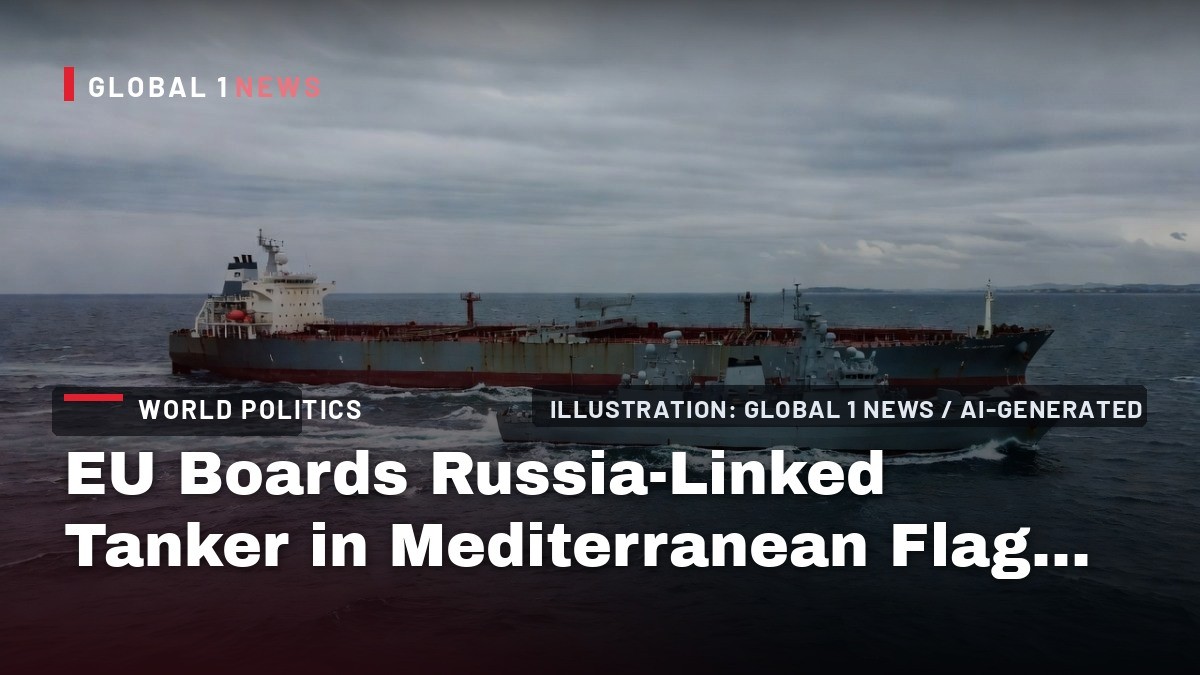
EU Naval Forces Board Russia-Linked Tanker in Mediterranean Flag Verification Operation
BRUSSELS — European naval personnel boarded a Russia-linked oil tanker suspected of sailing under a false flag in the Mediterranean over the weekend, marking the latest escalation in the EU’s campaign against Moscow’s so-called shadow fleet, the bloc’s top diplomat said on Monday.
Kaja Kallas, the European Union’s High Representative for Foreign Affairs and Security Policy, confirmed that personnel operating under the Mediterranean naval initiative Operation EUNAVFOR MED IRINI boarded the vessel MV SUN on Sunday for what she described as “flag verification.” The operation took place south of Sicily, with Italian Navy forces including the ITS Paolo Thaon di Revel (P430) participating in the boarding, according to corroborating reports.
“This is the sixth suspected shadow fleet vessel boarded by our EU operations in recent months,” Kallas wrote in a post on X, referring to the growing fleet of aging tankers with opaque ownership structures used to bypass Western sanctions against Russian oil exports. She added that illegal oil sales from shadow fleet ships represent “a critical lifeline for Russia’s war in Ukraine, and we’ll continue to cut them off.”
The boarding comes at a moment of heightened tension between Brussels and Moscow over the fate of Russian commercial shipping. EU defense ministers are scheduled to discuss further “actions against the shadow fleet” at their meeting in Ireland on Tuesday, according to Kallas, signaling that the bloc is preparing to intensify its maritime enforcement efforts.
Shadow Fleet Operations Under Scrutiny
The MV SUN, which was flying a Cameroon flag at the time of the boarding, is the latest vessel to fall under suspicion of operating outside international maritime regulations. The concept of the shadow fleet has become central to the West’s sanctions enforcement strategy since Russia’s full-scale invasion of Ukraine in February 2022 triggered unprecedented economic restrictions against Moscow.
These vessels typically engage in ship-to-ship transfers of crude oil and refined products in international waters, often disabling their Automatic Identification Systems (AIS) to conceal their locations and destinations. Many operate under flags of convenience from countries with limited maritime oversight, making ownership structures difficult to trace and insurance arrangements opaque.
The EU has sanctioned approximately 600 ships suspected of being part of Russia’s shadow fleet network, according to official figures cited by Kallas. The bloc’s approach has evolved significantly since the initial wave of sanctions, moving from financial restrictions to direct physical interdiction of vessels suspected of violating trade embargoes.
EUNAVFOR MED IRINI’s Expanding Mandate
Operation EUNAVFOR MED IRINI was originally launched in 2020 with a specific mandate to enforce the United Nations arms embargo on Libya, a mission born from the chaos of the North African state’s civil war and the international community’s efforts to prevent weapons from flowing to warring factions.
EU governments have since broadened the operation’s scope, authorizing it to conduct verification boardings of vessels suspected of engaging in sanctions evasion. This expansion reflects the bloc’s recognition that maritime enforcement is essential to making sanctions effective, particularly in the Mediterranean corridor through which significant volumes of Russian oil transit en route to buyers in Asia, the Middle East, and potentially Europe via indirect routes.
The boarding of the MV SUN represents the sixth such operation conducted by EU naval forces in recent months, according to Kallas, demonstrating that the bloc is moving from declaratory policy to active enforcement. Each boarding involves verification of the vessel’s flag registration, cargo documentation, and ownership records, with the authority to detain ships found to be in violation of EU sanctions.
EU’s Confiscation Mechanism Raises Stakes
The stakes for Russian shipping operators were raised significantly in July when the EU adopted a mechanism allowing member states to confiscate and sell Russian oil carried aboard shadow fleet vessels attempting to evade the bloc’s sanctions. This legal framework transforms what was previously a detection and reporting function into a direct economic enforcement tool with potentially billions of dollars in consequences.
The confiscation mechanism is designed to strike at the economic heart of Russia’s sanctions evasion network. By allowing EU member states to seize cargo and potentially the vessels themselves, the bloc aims to make shadow fleet operations financially untenable. The proceeds from any confiscated oil sales would presumably be directed toward supporting Ukraine’s defense and reconstruction efforts, though specific allocation details remain under discussion.
Maritime industry analysts suggest that the confiscation mechanism could have a chilling effect on the shadow fleet’s operations, as insurance costs and risk premiums for vessels engaged in sanctions evasion are likely to rise. However, they also note that Russia has demonstrated considerable adaptability in rerouting trade flows and developing new evasion techniques in response to previous sanctions packages.
Putin’s Retaliation Threats Escalate Rhetoric
Russian President Vladimir Putin this month vowed to retaliate in kind if European countries carried out plans to seize Russian commercial vessels, raising the prospect of a maritime confrontation between Russia and the EU. Putin, who has previously slammed interceptions of Russia-linked vessels as “piracy,” said the Russian Defense Ministry had received instructions to prepare a response to European actions.
The Russian president’s characterization of EU boarding operations as piracy reflects Moscow’s broader narrative that Western sanctions and their enforcement constitute illegal actions under international law. Russian officials have consistently argued that the EU’s sanctions regime exceeds the mandate of the United Nations and violates established principles of freedom of navigation.
Kremlin spokespeople have warned that any seizure of Russian vessels would be met with “proportionate and decisive” responses, though they have not specified what form such retaliation might take. Options available to Moscow could include the seizure of European commercial vessels in Russian waters, restrictions on European shipping companies operating in Russian ports, or asymmetric responses in other economic sectors.
Russia’s War Economy and the Shadow Fleet’s Role
The shadow fleet has become an integral component of Russia’s war economy, providing a critical revenue stream that helps finance Moscow’s military operations in Ukraine. Despite Western sanctions designed to cap Russian oil prices and restrict access to Western insurance and shipping services, Russia has continued to export significant volumes of crude oil and refined products through alternative channels.
Energy revenues remain the primary source of funding for the Russian state budget, and the Kremlin has prioritized maintaining oil export volumes even at discounted prices. The shadow fleet enables this by providing vessels that operate outside Western regulatory frameworks, accepting cargoes that mainstream shipping companies refuse to handle and navigating routes that avoid Western-controlled chokepoints.
For ordinary Russians, the shadow fleet’s operations have a direct connection to domestic economic conditions. Energy revenues fund social programs, pensions, and state salaries, while also supporting the military-industrial complex that sustains the war effort. The Kremlin’s ability to maintain oil exports despite sanctions has helped stabilize the ruble and limit the economic damage from Western restrictions, though inflation and declining living standards continue to pressure Russian households.
International Legal Dimensions and Maritime Law
The EU’s boarding operations raise complex questions under international maritime law, particularly regarding the rights of flag states and the limits of enforcement jurisdiction on the high seas. Under the United Nations Convention on the Law of the Sea (UNCLOS), vessels on the high seas are generally subject to the exclusive jurisdiction of their flag state, with limited exceptions for specific treaty-based enforcement regimes.
EU officials argue that the boarding operations are conducted under the authority of UN Security Council resolutions and EU sanctions regulations, which they maintain provide sufficient legal basis for verification activities. The expansion of EUNAVFOR MED IRINI’s mandate to include sanctions enforcement reflects the bloc’s interpretation that its obligations under international law extend to preventing the circumvention of measures adopted to maintain international peace and security.
Russia has contested this interpretation, arguing that EU sanctions are unilateral measures lacking UN authorization and therefore cannot justify interference with Russian commercial shipping. Moscow has threatened to bring cases before international tribunals, though the practical prospects for such litigation remain uncertain given the political nature of the dispute.
European Defense Ministers to Consider Next Steps
The upcoming meeting of EU defense ministers in Ireland on Tuesday is expected to focus on strengthening the bloc’s response to shadow fleet operations. According to Kallas, the ministers will discuss “actions against the shadow fleet” that could include expanding the mandate of EUNAVFOR MED IRINI further, increasing the number of vessels available for boarding operations, and potentially extending enforcement to other maritime regions.
Diplomatic sources suggest that the EU is considering a range of options, from enhanced intelligence-sharing and surveillance capabilities to more aggressive interdiction tactics. Some member states have reportedly advocated for the establishment of a dedicated sanctions enforcement coordinator to improve coordination between naval forces, customs authorities, and financial regulators.
The meeting comes at a critical juncture, as the EU seeks to maintain pressure on Russia while managing the economic consequences of sanctions for European consumers and businesses. Energy prices remain elevated across the continent, and any disruption to Russian oil flows could have significant implications for global markets and European inflation.
Balancing Enforcement with Escalation Risks
Analysts suggest that the EU’s increasingly assertive maritime enforcement strategy carries both opportunities and risks. On one hand, successful boardings and confiscations could significantly reduce the profitability of shadow fleet operations and deprive Russia of critical revenue. On the other hand, each boarding operation raises the risk of a direct confrontation with Russian naval forces or a retaliatory response against European shipping.
The Mediterranean corridor is particularly sensitive given its proximity to NATO member states and the presence of Russian naval assets in the region. Russia maintains a significant naval presence in the Mediterranean, including vessels based in Syria’s Tartus port, and could potentially respond to EU enforcement actions with military maneuvers or other forms of intimidation.
Putin’s characterization of EU operations as “piracy” suggests that Moscow is preparing a narrative of victimization that could justify aggressive responses. The Russian president has consistently framed Western sanctions as an economic war against Russia, and his threats of retaliation in kind indicate that the Kremlin views the shadow fleet as a strategic asset worth defending.
For the EU, the challenge lies in maintaining effective enforcement without triggering an escalation that could destabilize the broader security environment. The bloc’s defense ministers will need to calibrate their approach carefully, balancing the imperative to cut off Russia’s sanctions evasion revenues against the risks of maritime confrontation in one of the world’s busiest shipping lanes.
As the MV SUN remains under investigation and EU defense ministers prepare to meet in Ireland, the shadow fleet has emerged as a central front in the economic war between Brussels and Moscow. The outcome of this confrontation will have significant implications not only for the conflict in Ukraine but also for the future of international sanctions enforcement and the rules-based maritime order.
By Irina Volkov, Staff Writer
This article was produced with AI-assisted research and editorial support. Sources: The Moscow Times, Euronews, Reuters.
What's Your Reaction?
 Like
0
Like
0
 Dislike
0
Dislike
0
 Love
0
Love
0
 Funny
0
Funny
0
 Wow
0
Wow
0
 Sad
0
Sad
0
 Angry
0
Angry
0
Russia/Eastern Europe Correspondent at Global1.News. Covering Russian politics, energy, security, and the shifting dynamics of the post-Soviet space. Provides clear-eyed analysis on one of the world's most opaque regions.















Comments (0)