
EU Backs Spain After 72,000 Cross Into Ceuta
EU Backs Spain After 72,000 Cross Into Ceuta In a single weekend, more than 72,000 people surged across the border into Spain’s North African enclave of Ceuta, turning a narrow stretch of fence and sea into the focal point of Europe’s migration tensions and leaving families from Dakar to Casablanca
EU Backs Spain After 72,000 Cross Into Ceuta
In a single weekend, more than 72,000 people surged across the border into Spain’s North African enclave of Ceuta, turning a narrow stretch of fence and sea into the focal point of Europe’s migration tensions and leaving families from Dakar to Casablanca holding their breath. At least 75 people died on the Spanish side and 11 in Morocco, while aid workers later counted around 800 unaccompanied children among those who remained. The speed of the crossings and the scale of the returns that followed exposed both the fragility of border agreements and the human stakes carried by every swimmer and climber who reached the enclave.
Dakar, Senegal — Article continues...
Sudden Surge Overwhelms Spanish Enclave
Tens of thousands of people crossed from Morocco into Spain's North African enclave of Ceuta between 30 and 31 July, creating one of the largest single movements recorded at the border in recent years. Spain's Interior Minister Fernando Grande-Marlaska reported that 72,000 migrants entered the territory during those two days. At least 75 people died on the Spanish side, while 11 deaths were recorded in Morocco.
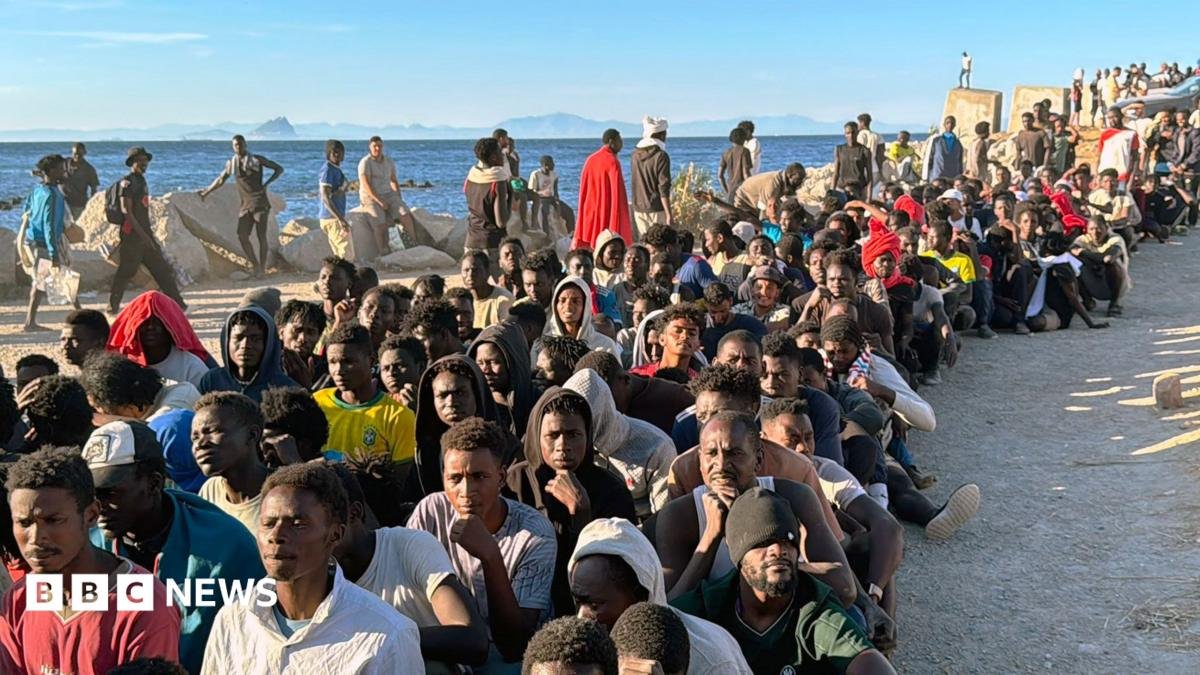
The scale of the movement caught authorities on both sides of the border by surprise. Images showed crowds pressing against fences and swimming across the sea border in a matter of hours. The event quickly drew attention across Europe and raised questions about how such numbers could move so quickly.
Rapid Returns and Official Figures
Grande-Marlaska stated that an estimated 70,000 of those who crossed have since been returned to Morocco. Spanish authorities described the operation as a coordinated effort with Moroccan counterparts. The interior minister said work continues to prevent further large-scale crossings and that remaining migrants in Ceuta will be returned as soon as possible.
The speed of the returns drew both praise and scrutiny. The European Union later commended Spain's response, yet the human cost remains visible in the enclave, where aid groups distributed food and blankets to those still waiting.
Divisions Surface at EU Meeting
EU interior ministers met on Tuesday after several member states raised concerns. Italy suspended its Schengen agreement with Spain, citing shocking images from Ceuta. Prime Minister Giorgia Meloni described uncontrolled immigration as a security threat. Finland, Denmark, and the Czech Republic expressed support for tighter controls, while 22 nations signed a letter of concern.
Spanish Prime Minister Pedro Sánchez pushed back, noting that Ceuta lies outside the Schengen area that normally allows seamless passage for hundreds of millions of people across dozens of nations. He expressed disappointment at what he called attacks driven by prejudice or political interest. Irish Justice Minister Jim O'Callaghan, who chaired the meeting, stressed the need for a united European response and solidarity with Spain. EU Commissioner Magnus Brunner later framed the episode as a successful test of the bloc’s resilience, while Denmark's immigration minister Morten Bødskov emphasised stronger external border control and the 22-nation letter underscored how quickly national priorities can fracture collective policy.
The gathering of interior ministers laid bare longstanding tensions within the European Union over how to manage sudden surges at its external borders. While some member states voiced alarm and took steps to reintroduce checks on arrivals from Spain, others emphasised the need for collective backing. The suspension of free movement rules, limited in practice to air travel between non-adjacent countries, underscored how even symbolic measures can ripple through a zone that normally allows seamless passage for hundreds of millions of people across dozens of nations.
Spanish officials pushed back firmly against accusations of lax control, describing the criticism as rooted in incomplete information or domestic political calculations. In contrast, the meeting chair highlighted the importance of a coordinated European approach to migration, while the European Commission framed the episode as a successful test of the bloc’s resilience. The offer of emergency funding to reinforce border infrastructure signalled an attempt to balance immediate solidarity with longer-term concerns about security and capacity.
These exchanges reveal how migration events quickly become tests of political unity, with differing national priorities shaping responses even when the underlying challenge affects the entire union.
Court Ruling and Unclear Triggers
The crossings followed a Spanish Supreme Court decision that migrants stopped at sea cannot be summarily returned to Morocco. Moroccan authorities had warned that the ruling could create problems, though Spain said it received no prior intelligence about the scale of the movement. EU Commissioner Magnus Brunner suggested criminal networks and social media disinformation played a role in fuelling the influx.
The exact sequence of events that prompted so many to move at once remains under investigation. What is clear is that information spread rapidly online, drawing people from different countries toward the same narrow stretch of coast.
Stories Behind the Numbers
Ayoub, a 23-year-old from Casablanca, told the BBC he swam across after seeing developments on social media. He described the experience as the most traumatic of his life and spoke of wanting freedom and the chance to study. Ahmed Haroun, 29, from Sudan, said reaching Ceuta had been his dream for years because family members were waiting for him.
Local reports indicated around 800 unaccompanied children among those who remained. Spain's government allocated 25 million euros to support minors in the enclave. Aid workers noted that some people slept on beaches and streets while waiting for food and shelter. The Red Cross distributed blankets and meals to those still waiting after most of the 70,000 returns had taken place.
Behind the rapid crossings and returns lie deeply personal journeys marked by exhaustion and uncertainty. Young men who swam or climbed into Ceuta described the experience as profoundly disorienting, driven by hopes of greater freedom and the chance to continue their education or support relatives back home. Ayoub spoke of the trauma of the swim, while Ahmed Haroun carried the weight of years of waiting to reunite with family. Many arrived with little more than the clothes they wore, only to find themselves sleeping on beaches or pavements while aid organisations distributed food and basic supplies.
Particular concern has focused on the hundreds of unaccompanied children now housed in temporary facilities, prompting the Spanish government to allocate dedicated resources for their care. Images of people holding signs requesting asylum and the visible strain on those still waiting for decisions convey the emotional weight of an operation that saw most people returned within days. The 25 million euro allocation and Red Cross presence highlight how policy decisions intersect with the lives of the 800 minors and others left behind.
The contrast between the scale of movement and the individual stories of hardship illustrates how policy decisions intersect with human lives in moments of crisis.
West African Families Watch and Wait
For families in Senegal, Mali, Guinea and Côte d'Ivoire, routes through Morocco to Ceuta represent one of several dangerous paths toward Europe. Many have relatives who have taken the same journey or the longer Atlantic route to the Canary Islands. The hope of sending remittances home often outweighs the known risks, yet each large incident brings fresh anxiety to households already stretched by economic pressure.
The emotional weight is heavy. Young people leave with the expectation that success abroad will lift entire families, yet the reality of returns, detention or loss leaves communities to manage both grief and the quiet continuation of daily life. The Ceuta events serve as another reminder that migration decisions are rarely made in isolation from these family networks across West Africa. News of the 72,000 crossings and the 75 deaths reached villages through the same social media channels that guided Ayoub and Ahmed Haroun, stirring both hope and apprehension among households that rely on remittances.
For communities across Senegal and neighbouring countries, news of the Ceuta events travels quickly through family networks and social media, stirring both hope and apprehension. Migration routes that pass through Morocco or head toward the Canary Islands have long represented a gamble for young people seeking work or stability, with remittances often forming a vital part of household incomes back home. When large groups move together, the ripple effects reach villages and towns far from the border, prompting conversations about risk, opportunity, and the responsibilities of European partners. Families weigh the possibility of a better life against the documented dangers of sea crossings and the likelihood of swift returns.
Such episodes test the relationship between West African societies and European institutions, reminding both sides that border policies carry consequences that extend well beyond the immediate coastline.
Next Steps and Lingering Questions
The EU offered Spain emergency financial support to strengthen borders and manage the crisis. Grande-Marlaska said he hoped Italy would lift additional controls quickly. Brunner described the episode as a test of European resilience that had been passed, while Denmark's immigration minister stressed the need for stronger external border control.
Beyond immediate security measures, the incident highlights deeper policy challenges. Spain continues to coordinate with Morocco, yet the underlying drivers that push thousands to attempt the crossing remain unresolved. For now, attention in Ceuta has turned to providing aid and processing those still on Spanish soil.
By Amara Diop, Staff WriterThis article was produced with AI-assisted research and editorial support. Reporting is based on sources cited in the article.
What's Your Reaction?
 Like
0
Like
0
 Dislike
0
Dislike
0
 Love
0
Love
0
 Funny
0
Funny
0
 Wow
0
Wow
0
 Sad
0
Sad
0
 Angry
0
Angry
0

West Africa/Sahel Correspondent at Global1.News. Dakar-based journalist covering politics, security, climate, and development across Francophone and Anglophone West Africa. Tells the stories of a region undergoing profound transformation.














Comments (0)