
Ethiopian PM puts ministers through military training
Prime Minister Abiy Ahmed’s latest initiative—sending his cabinet and senior officials to the Hurso military training centre—has sparked both admiration and curiosity across Ethiopia and the wider Horn of Africa.
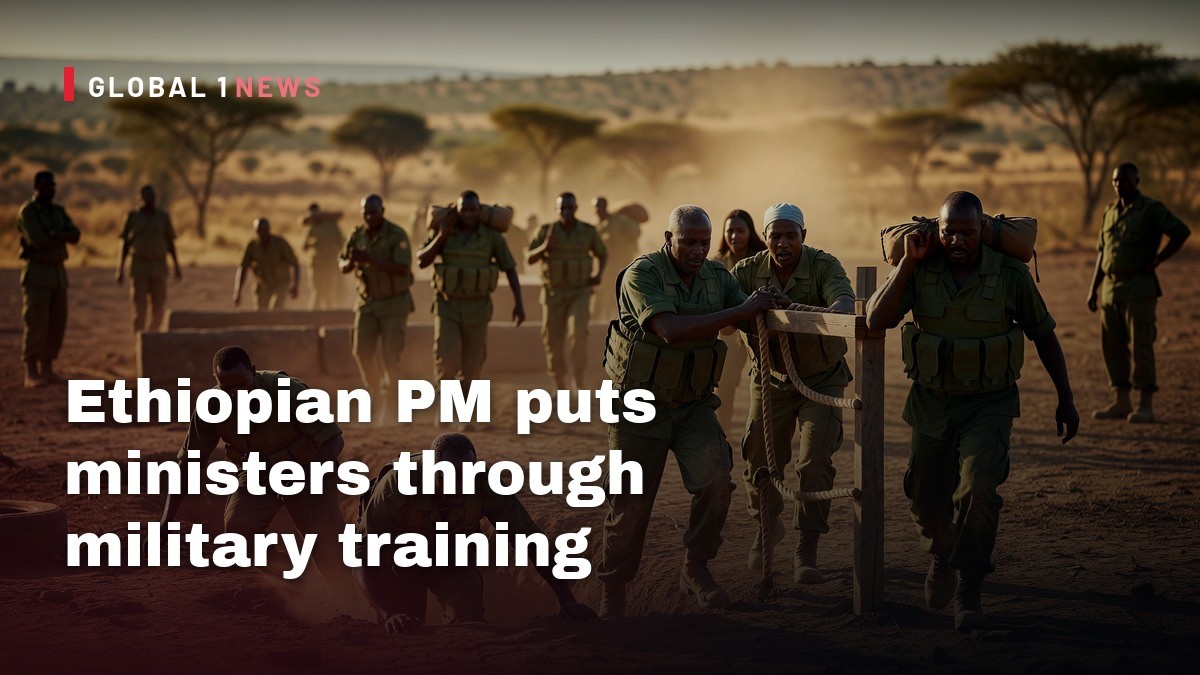
Prime Minister Abiy Ahmed’s latest initiative—sending his cabinet and senior officials to the Hurso military training centre—has sparked both admiration and curiosity across Ethiopia and the wider Horn of Africa. In a series of social‑media posts, Abiy was seen alongside ministers, deputy ministers and heads of government institutions, all wearing combat fatigues and taking part in drills that are traditionally reserved for soldiers. The Prime Minister argues that the rigour of military discipline can forge stronger leaders, a claim that resonates with his long‑standing emphasis on preparedness as a cornerstone of national development.
Why the military camp?
The decision to place civilian leaders in a military training environment marks a departure from Ethiopian precedent, where senior officials rarely, if ever, undergo such exercises. By bringing together the Speaker of the House of Federation, Muferiat Kamil, Finance Minister Fitsum Assefa, Health Minister Mekdes Daba and other senior figures, Abiy is signalling that the challenges facing the nation demand a shared experience of discipline and teamwork. He has described the move as a way to ensure that those at the helm are “physically fit, morally strong and intellectually capable,” echoing his belief that leadership must be forged in the crucible of hardship.
Abiy’s framing of the training underscores a broader narrative: the convergence of military and civilian virtues. He highlighted that soldiers operate with clear targets while civilians pursue broader goals, yet both strive for “victory.” By exposing ministers to the same standards of accountability, patriotism and teamwork that shape soldiers, the Prime Minister hopes to cultivate a generation of leaders who can navigate both the battlefield and the boardroom with equal resolve.
The training itself
Photos shared by the Prime Minister show a disciplined scene: rows of officials marching in step, engaging in obstacle courses and participating in drills that test endurance and coordination. While the exact start date of the program and its intended duration remain unclear, the visual evidence suggests a rigorous schedule that mirrors the routine of regular troops. The presence of high‑ranking officials at Hurso—a centre known for preparing soldiers for Ethiopia’s diverse security challenges—signals that the training is not merely symbolic but intended to be a substantive experience.
Abiy’s own participation sends a powerful message to both the armed forces and the civilian bureaucracy. By standing shoulder‑to‑shoulder with his ministers, he demonstrates a personal commitment to the values he extols—discipline, teamwork and accountability. This public display also serves to bridge the often‑perceived gap between the military establishment and the civilian government, fostering a sense of unity at a time when Ethiopia confronts multiple security pressures.
Security backdrop
The timing of the training cannot be divorced from Ethiopia’s current security landscape. The country continues to grapple with fighting in parts of the northern Tigray region, a conflict that has lingered since the early 2020s and remains a source of humanitarian and political strain. Simultaneously, unrest in Amhara and persistent insecurity in Oromia add layers of complexity to the national security equation. These overlapping crises demand coordinated responses that blend military capability with political acumen.
Beyond internal strife, Ethiopia faces heightened tensions with its neighbour, Eritrea. Concerns about the possibility of renewed conflict have lingered since the 2018 peace agreement, and recent diplomatic signals suggest that the border remains a flashpoint. In this context, Abiy’s emphasis on military preparedness takes on added urgency: a well‑trained leadership could better navigate crisis negotiations, manage defence logistics and ensure that civilian decision‑makers understand the constraints and capacities of the armed forces.
Leadership through discipline
Abiy’s rationale for the training rests on the belief that military institutions impart lessons that transcend the battlefield. He points to “discipline, patriotism, teamwork, accountability and leadership” as core values that can be transferred to civilian governance. By immersing ministers in an environment where hierarchy and order are paramount, the Prime Minister hopes to instil a sense of purpose and responsibility that can translate into more decisive policy‑making.
In particular, the emphasis on teamwork resonates with Ethiopia’s federal structure, where diverse regional interests must be harmonised. The shared experience of training could foster a collective identity among leaders from different ministries, encouraging them to view national challenges as common objectives rather than isolated departmental concerns. This aligns with Abiy’s broader vision of “universal prosperity,” a goal that requires coordinated effort across sectors.
Political symbolism
The visual of senior officials in military fatigues carries potent symbolic weight. In a country where the military has historically been both a protector and a political actor, the image of the Prime Minister and his cabinet undergoing training can be read as a reaffirmation of civilian control over the armed forces. By leading the exercise himself, Abiy positions the civilian leadership as the ultimate authority, while simultaneously showing respect for the military’s role in national security.
Moreover, the inclusion of high‑profile figures such as the Speaker of the House of Federation and the Finance and Health Ministers signals that the training is not limited to a single sector. It underscores a holistic approach where economic policy, public health and legislative oversight are all expected to be informed by the same disciplined mindset. This broad participation may also serve to pre‑empt criticism that the exercise favours certain ministries or political allies.
Public reaction and future implications
Public response to the training has been mixed, reflecting Ethiopia’s diverse political landscape. Some observers praise the Prime Minister’s hands‑on approach, viewing it as a tangible commitment to national resilience. Others question the practicality of diverting senior officials from their primary duties to engage in physically demanding drills, especially amid ongoing crises that demand immediate policy attention.
Looking ahead, the training could set a precedent for how Ethiopian leaders engage with security challenges. If the programme proves successful—measured not by any specific statistics but by observable improvements in coordination and decision‑making—it may become a regular feature of governance. Conversely, if the exercise is perceived as a symbolic gesture without substantive impact, future administrations might abandon the practice.
Broader African context
Ethiopia’s experiment sits within a wider African discourse on civil‑military relations and the role of discipline in governance. Across the continent, several leaders have highlighted the need for robust security apparatuses to support development agendas. Abiy’s approach—integrating military training into civilian leadership—offers a distinct model that blends personal example with institutional reform.
For other African nations observing Ethiopia’s challenges, the initiative may serve as a case study in how to foster a shared sense of purpose among disparate branches of government. While the specifics of Ethiopia’s security environment are unique, the underlying principle—that disciplined, physically fit leaders can better navigate complex crises—resonates beyond its borders. As the continent continues to grapple with conflict, climate pressures and economic transformation, the balance between military preparedness and civilian oversight remains a critical conversation, one that Ethiopia is now contributing to in a very visible way.
This article was produced with AI-assisted research and editorial support. Reporting is based on the source material cited below. Sources: BBC News Africa; bbc.co.uk; Global1.News (01 November 2026).
By Amara Diop, Staff Writer
What's Your Reaction?
 Like
0
 Dislike
0
 Love
0
 Funny
0
 Wow
0
 Sad
0
 Angry
0

West Africa/Sahel Correspondent at Global1.News. Dakar-based journalist covering politics, security, climate, and development across Francophone and Anglophone West Africa. Tells the stories of a region undergoing profound transformation.









Comments (0)