
Elon Musk’s latest Boring Company pitch involves a Hyperloop between Austin and San Antonio
Elon Musk’s latest tweet‑sized promise has the Texas tech corridor buzzing: a “simple precursor Hyperloop” that would slash the Austin‑San Antonio drive to under half an hour.
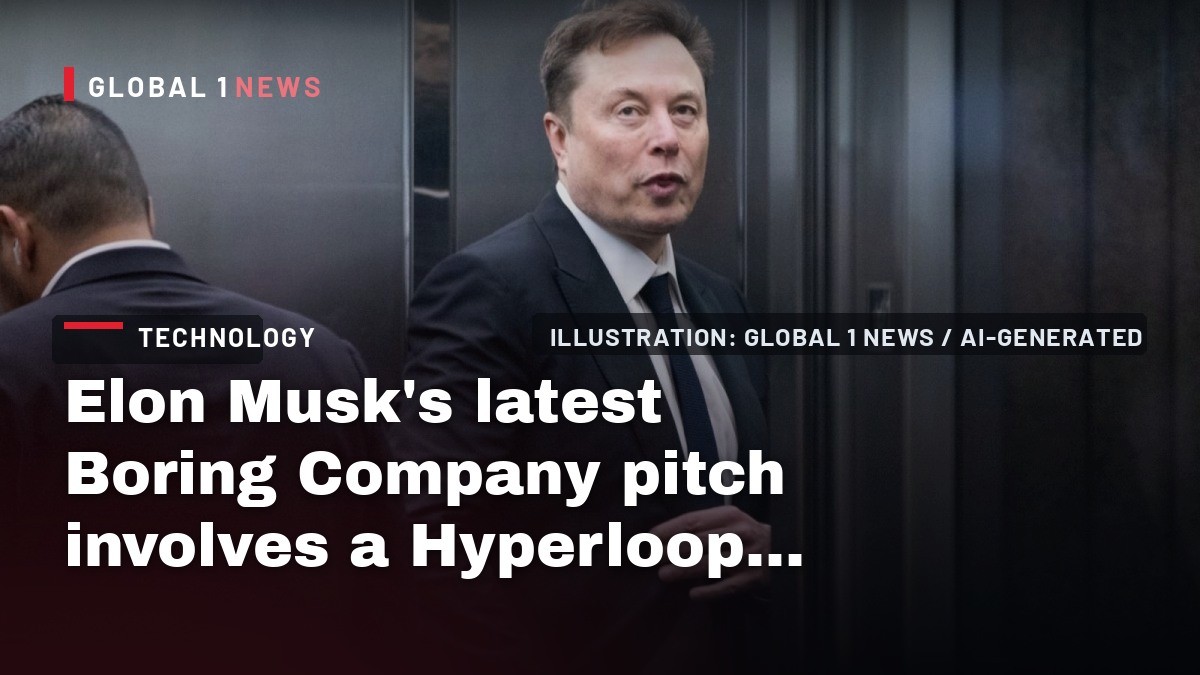
Elon Musk’s latest tweet‑sized promise has the Texas tech corridor buzzing: a “simple precursor Hyperloop” that would slash the Austin‑San Antonio drive to under half an hour. The claim, posted on The Boring Company’s official account, frames the venture as a “massive infrastructure project” the company would be “excited and honored” to build. Yet the hype sits on a familiar pattern of grand announcements that have stalled, prompting a fresh look at who really stands to gain—or lose—if the tunnel‑based transport dream ever leaves the drawing board.
From tweet to tunnel: what the Hyperloop promise actually says
The Hyperloop idea, revived by Musk’s Boring Company, is pitched as a “simple precursor” that would cut the roughly 80‑mile stretch between Austin and San Antonio to a sub‑30‑minute ride. The language is deliberately modest—“precursor” suggests an early, perhaps experimental, version rather than the full‑scale vacuum tube envisioned in earlier Musk‑led concepts. By positioning the project as a stepping stone, the company sidesteps the massive engineering and regulatory hurdles that have stalled larger Hyperloop proposals elsewhere.
Crucially, the announcement came as a response to an AI‑generated sci‑fi video that Musk reshared, declaring, “This is the future we shall bring into being.” The timing links the Hyperloop claim to a broader narrative Musk is cultivating: a futuristic vision anchored in pop‑culture aesthetics, from space colonies to underground high‑speed rails. This framing is designed to rally both investors and a public enamored with techno‑optimism, even as the underlying technical roadmap remains vague.
Why Texas matters to Musk’s tunnel empire
Texas offers a fertile testing ground for The Boring Company’s ambitions. The state’s sprawling highways and rapid population growth create a clear demand for faster intercity links. Austin’s tech boom and San Antonio’s status as a military and tourism hub mean a high‑speed corridor could attract commuters, business travelers, and tourists alike. If the Hyperloop materializes, the economic ripple could be significant for local economies that have long relied on car‑centric infrastructure.
However, the promise also highlights a strategic pivot. While the company already runs a hybrid tunnel‑surface system in Las Vegas—its only operational public transit network—the leap to a 30‑minute Austin‑San Antonio link would be a scale‑up in both distance and complexity. The Las Vegas system, a modest showcase, demonstrates that The Boring Company can deliver a functional tunnel, but it does not prove the feasibility of a high‑speed, long‑distance Hyperloop‑style line. The Texas project, therefore, serves as a litmus test for whether the company can translate a single‑city demo into a regional backbone.
Funding the tunnel: the $3 billion infusion and its implications
The latest financial boost for The Boring Company came from a $3 billion round led by investors from the United Arab Emirates. This infusion underscores two things: the company’s ability to attract sovereign‑wealth capital and the appetite among Gulf investors for high‑profile tech ventures that promise transformative returns. The UAE’s involvement also hints at a geopolitical angle—oil‑rich states are increasingly betting on futuristic infrastructure to diversify their economies.
From a practical standpoint, the $3 billion war chest could fund multiple parallel projects, from expanding the Las Vegas system to exploring new tunnel corridors in other U.S. cities. Whether a sizable slice will be earmarked for the Texas Hyperloop remains unclear, but the presence of deep‑pocketed backers signals that Musk’s vision still commands serious financial muscle, even as critics point to a track record of unfulfilled promises.
The pattern of announced but undelivered projects
Critics have long noted that The Boring Company’s portfolio reads more like a wishlist than a pipeline. Announced tunnel systems in Chicago, Los Angeles, and a cross‑coastal link between New York City and Washington, D.C. have yet to break ground. The pattern raises questions about the company’s operational bandwidth and its ability to navigate the permitting, land‑acquisition, and engineering challenges that accompany large‑scale tunneling.
These stalled projects also affect stakeholder confidence. Municipalities that have entertained Boring proposals may become wary of future overtures, fearing that political capital spent on feasibility studies could be wasted. For investors, the gap between announcement and execution translates into uncertainty about return timelines, especially when the only proven revenue stream is the Las Vegas system, which itself operates on a niche tourism model rather than a mass‑transit framework.
The cultural cachet of sci‑fi branding
Musk’s re‑post of an AI‑generated sci‑fi video and his subsequent declaration that “this is the future we shall bring into being” tap into a cultural narrative that frames technology as destiny. Historian Jill Lepore’s critique—suggesting Musk favors sci‑fi that “completely defeats and defies all of his political beliefs”—highlights a tension between visionary branding and practical policy. By aligning his projects with a futuristic aesthetic, Musk garners media buzz and a devoted fan base, but he also invites scrutiny from those who see the sci‑fi veneer as a distraction from regulatory realities.
The branding strategy works in the digital age, where viral clips can amplify a product pitch far beyond traditional press releases. Yet it also risks alienating pragmatic stakeholders—city planners, local voters, and competing transit agencies—who may view the hype as a veneer over insufficient technical detail. The balance between cultural myth‑making and concrete deliverables will shape public perception of the Hyperloop as it moves from tweet to potential construction bid.
What the Texas Hyperloop means for ordinary commuters
If the Hyperloop becomes a reality, the most immediate beneficiary would be the daily commuter shuttling between Austin’s tech corridor and San Antonio’s military bases and tourism districts. A sub‑30‑minute ride could transform regional labor markets, allowing workers to live farther from their offices without sacrificing travel time. This, in turn, could ease housing pressure in Austin by expanding the viable commuting radius.
However, the upside hinges on pricing, accessibility, and integration with existing transit. The Las Vegas system, while functional, charges premium fares that limit its use to tourists and affluent locals. Should the Texas line adopt a similar pricing model, it may remain a niche service rather than a mass‑transit backbone. Moreover, the “precursor” label suggests an experimental phase that could involve limited capacity or reduced frequency, tempering expectations for immediate commuter impact.
Looking ahead: the next steps and the stakes for Musk’s tunnel empire
The immediate next move for The Boring Company is likely a feasibility study—permits, land acquisition, and engineering design—backed by the fresh $3 billion capital. Given the company’s pattern of announcing projects before securing the nuts‑and‑bolts, observers will watch for concrete milestones: a signed agreement with Texas authorities, a groundbreaking ceremony, or a detailed technical brief outlining tunnel diameter, propulsion method, and safety protocols.
Beyond Texas, the outcome of this Hyperloop will send a signal to other municipalities courting The Boring Company. A successful rollout could revive interest in other stalled corridors, while a faltering pilot could reinforce skepticism about Musk’s tunnel ambitions. For ordinary people, the stakes are simple: whether a futuristic promise translates into a tangible, affordable way to zip across Texas, or remains another headline that fuels the hype machine without delivering a new commuter reality.
This article was produced with AI-assisted research and editorial support. Reporting is based on the source material cited below. Sources: TechCrunch; techcrunch.com; Global1.News (21 September 2026).
By Nova Chen, Staff Writer
What's Your Reaction?
 Like
0
Like
0
 Dislike
0
Dislike
0
 Love
0
Love
0
 Funny
0
Funny
0
 Wow
0
Wow
0
 Sad
0
Sad
0
 Angry
0
Angry
0

Trend Reporter at Global1.News. Based in San Francisco, tracking the stories crossing from social platforms, forums, and community discussions into mainstream news — tech breakthroughs, cultural shifts, and world events that real people are engaging with right now.












Comments (0)