
DepEd Counts 2,424 Classrooms Damaged as Tropical Storm Maymay and Monsoon Worsen PH School Crisis
Tropical Storm Maymay and the enhanced southwest monsoon have damaged 2,424 classrooms across Luzon, with 403 destroyed and 505 sustaining major damage. DepEd is processing repair and cleanup funds while it and DOLE mobilize a TUPAD-Brigada Eskwela convergence to restore schools.
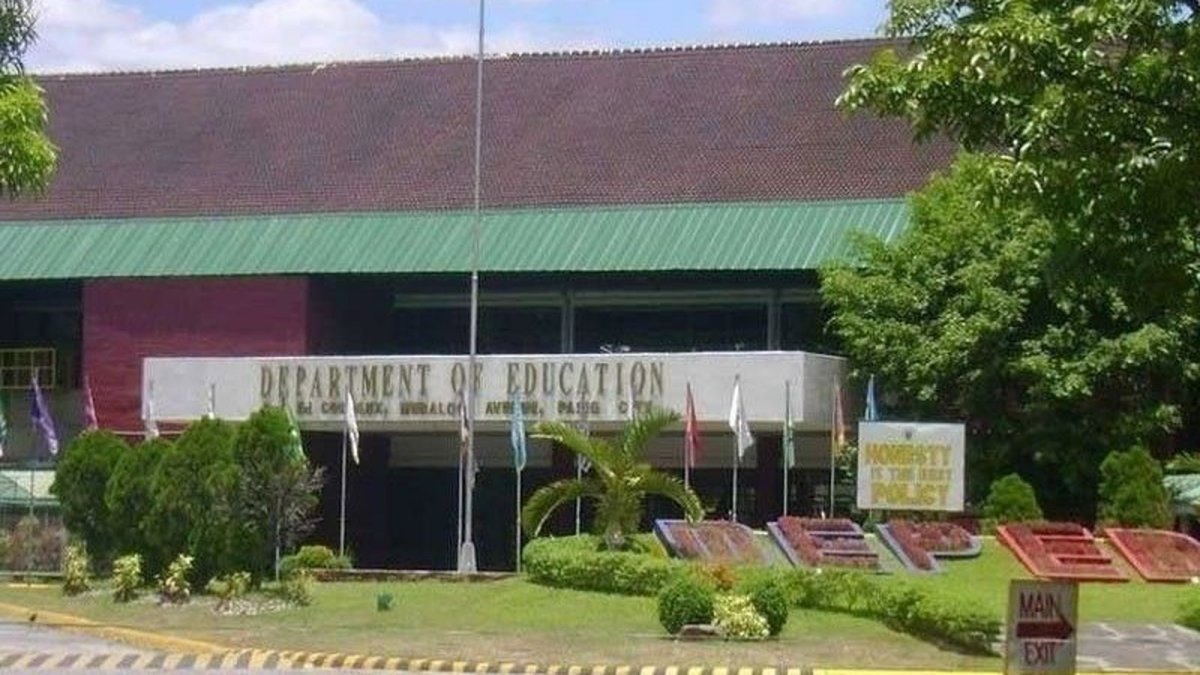
The Department of Education (DepEd) has counted 2,424 classrooms damaged by the combined fury of Tropical Storm Maymay and the enhanced southwest monsoon — a devastating blow to a public school system already struggling with a chronic classroom shortage.
Based on data from DepEd's Disaster Risk Reduction and Management Service (DRRMS) as of 8 a.m. Sunday, 403 classrooms were totally destroyed, 505 sustained major damage, and 1,516 incurred minor damage. The hardest-hit regions were the Ilocos Region (Region I), the Cordillera Administrative Region (CAR), and Central Luzon (Region 3) — areas that bore the brunt of Maymay's landfall and days of unrelenting rain brought by the habagat.
The Damage Report: 403 Classrooms Destroyed
In the Ilocos Region, the Cordillera Administrative Region, and Central Luzon — the areas that absorbed the worst of Maymay's landfall and days of enhanced southwest monsoon rains — classrooms bore the brunt of the destruction. Teachers in these regions now face a grim roll call: classrooms with collapsed walls, flooded floors, and furniture reduced to debris.
DepEd's tally of 2,007 lost chairs, 274 damaged ICT units, and 2,976 waterlogged learning materials is not just a list of losses — it is a measure of disrupted school life. A student may return to find no seat to sit on, a computer teacher may find the lab unusable, and a classroom adviser may have to rebuild lesson modules from memory after the originals were soaked beyond recovery.
The human toll extends beyond school gates. Many learners head to school carrying the stress of damaged homes and days without electricity, even as crews from the Benguet Electric Cooperative work to restore power in Baguio City and Benguet.
P74 Million Needed for Minor Repairs Alone
The breakdown of the initial funding shows where the immediate needs lie. DepEd DRRMS earmarked P74,284,000 for minor repairs across the 1,516 classrooms that sustained minor damage, while P13,718,000 was set aside for clean-up and clearing operations (CUCO) of the 505 classrooms with major damage.
CUCO, in simple terms, covers the urgent work of removing debris, clearing mud and floodwater, and making damaged rooms safe enough for repair crews to enter. It is the crucial first step before any reconstruction can begin, and DepEd said it has already initiated the processing of these funds to support learning continuity.
Beyond these amounts, however, lie bigger questions. The 403 classrooms that were totally destroyed, and the 505 with major damage that go beyond clearing, will require substantially larger allocations from the national budget. The combined P88-million figure represents only the immediate response — the full cost of rebuilding remains a looming burden for a school system already straining under a chronic classroom shortage.
DepEd and DOLE: TUPAD Meets Brigada Eskwela for Disaster Cleanup
In a related development, DepEd and the Department of Labor and Employment (DOLE) have joined forces to fast-track the recovery of public schools damaged by the monsoon rains.
Education Secretary Sonny Angara said the two agencies are pivoting their 2026 Tulong Panghanapbuhay sa Ating Disadvantaged Workers (TUPAD)–Brigada Eskwela convergence into an immediate disaster cleanup mechanism to restore affected classrooms.
The convergence works on two fronts: displaced workers in affected communities earn emergency employment income, while schools get the manpower they desperately need for clearing, cleaning, and repairs. It is a practical application of the Filipino tradition of bayanihan — neighbors helping neighbors rebuild what the storm has taken.
Class Suspensions Across Luzon
Classes remain suspended today in Abra, Bulacan, Ilocos Sur, Nueva Ecija, Dagupan City, Bacoor in Cavite, Benguet, Lemery in Batangas, Marikina, Tuguegarao City, and Metro Manila, with local officials also calling off classes in the 19 towns of La Union and in San Fernando City.
The suspensions leave working parents scrambling for alternative childcare at a time when many families are still dealing with flooded homes and disrupted livelihoods. Each lost school day cuts into instructional time in a calendar already compressed by the three-term academic system, piling pressure on students who must still cover the same lessons while teachers balance cleanup duties at school with their own damaged households.
At the community level, barangay officials are coordinating the response — monitoring conditions in flooded areas, organizing volunteers, and ensuring schools are safe before reopening. DepEd, meanwhile, is processing funds for cleanup and minor repairs so affected classrooms can be restored quickly and learning can resume as soon as the weather allows.
382,000 People Affected Across 8 Regions
The combined effects of the enhanced southwest monsoon and tropical cyclones Luis and Maymay have affected 382,000 people in eight regions, with heavy rains flooding more than 180 areas in Luzon, the Office of Civil Defense (OCD) said.
The Department of Social Welfare and Development (DSWD) reported at least 185,512 people affected in Ilocos Sur, La Union, and Pangasinan alone. Power restoration efforts by the Benguet Electric Cooperative continued across Baguio City and Benguet yesterday, underscoring how deeply the storm disrupted daily life beyond the classroom.
Maymay — international name Kujira — strengthened into a tropical storm at 2 a.m. Wednesday, Aug. 5, near La Union, and made landfall over Magsingal, Ilocos Sur at around 2 a.m. Thursday, Aug. 6. PAGASA said the enhanced southwest monsoon continued to bring heavy to intense rains over the western section of Luzon and Panay through the weekend.
A Classroom Crisis That Predates the Storm
The damage from the recent weather disturbances has laid bare a classroom crisis that long predates this week's devastation. According to the Philippine Institute for Development Studies, 70 percent of public school buildings require major repairs, retrofitting, or condemnation — a grim testament to how fragile the country's educational infrastructure had already become before a single storm made landfall.
The gap between supply and demand is staggering. PIDS figures cited 108,000 new classrooms needed to address congestion in public schools, while EDCOM 2 Co-Chairperson Rep. Roman Romulo has placed the requirement even higher at over 165,000 additional classrooms to accommodate a growing student population. Each destructive typhoon season historically widens that chasm, displacing students into cramped and makeshift learning spaces even as the government races to deliver on its classroom-building promises. With 2,424 more classrooms now out of commission, the path to learning continuity has grown steeper still.
The Road to Recovery: Bayanihan in Action
For the thousands of families in flooded communities stretching from Ilocos Sur to Bulacan, recovery will be a long and difficult journey. The immediate priorities are clearing debris, restoring power, and getting children back into safe learning spaces.
The DepEd-DOLE convergence offers a measure of hope — a way for communities to rebuild through their own labor while earning much-needed income. But the sheer scale of the destruction, layered on top of a pre-existing shortage of more than 100,000 classrooms, raises urgent questions about how the government will manage both immediate repairs and the long-term structural deficit.
For now, teachers, parents, and volunteers are doing what Filipinos have always done in times of crisis: rolling up their sleeves, looking out for their kapitbahay, and working together so that when the floodwaters recede, the classrooms — and the children — will be ready.
By Bella Reyes, Staff Writer
This article was produced with AI-assisted research and editorial support. Sources: PhilStar.com, PAGASA, Office of Civil Defense, Department of Social Welfare and Development, Philippine Institute for Development Studies.
What's Your Reaction?
 Like
0
Like
0
 Dislike
0
Dislike
0
 Love
0
Love
0
 Funny
0
Funny
0
 Wow
0
Wow
0
 Sad
0
Sad
0
 Angry
0
Angry
0

Philippines/Southeast Asia Correspondent at Global1.News. Manila-based journalist covering Philippine politics, environment, maritime security, and social issues. Passionate about marine conservation and the communities protecting the Philippines' natural heritage.














Comments (0)