
Colombia Earthquake Death Toll Climbs Past 180 as Rescuers Dig Through Rubble
A magnitude 7.4 earthquake struck western Colombia on August 10, 2026, killing at least 181 people and injuring 2,595. New President de la Espriella declared a national disaster as rescuers dig for more than 3,000 missing after 70-plus aftershocks.
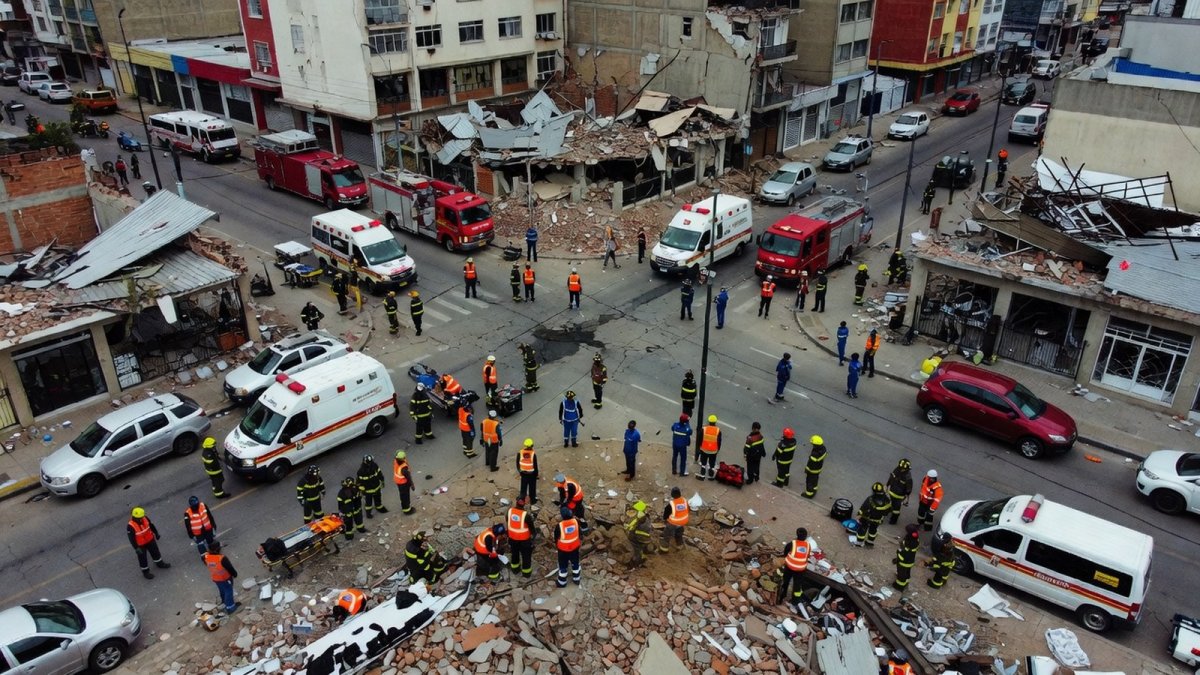
The death toll from Monday's magnitude 7.4 earthquake in western Colombia has climbed to at least 181, with more than 2,595 people injured, according to President Abelardo de la Espriella, who took office just three days before the disaster. The president's Tuesday update, carried by the Associated Press, marks a staggering rise from the 20 to 22 dead reported within hours of the 7:34 a.m. quake on August 10, 2026.
The Colombian Geological Survey confirms this as the strongest earthquake in the country in a decade, and Al Jazeera, citing the Colombian Geological Service, says it is the most powerful this century. The epicenter was near San José del Palmar in Chocó, but the deep rupture — more than 100 kilometers below the surface — sent shockwaves from the capital, Bogotá, to the Coffee Axis and into parts of Ecuador and Panama.
By Monday evening, the AP, Reuters, BBC, and France 24 reported at least 111 dead and 87 injured. By Monday night, Al Jazeera and CNN's live blog pushed the toll to 132 dead and 570 injured. Tuesday brought the starkest numbers: the BBC reported 169 dead before revising to 180, and CNN reported more than 200 dead alongside the declaration of a state of national disaster.
A New President Faces an Immediate National Catastrophe
President Abelardo de la Espriella, sworn in on August 7, 2026, has been thrust into the most severe test of his nascent administration. Within hours he declared a state of emergency, and by Tuesday he escalated to a declaration of national disaster. He said he would personally supervise recovery and install an emergency command center in San José del Palmar, closest to the epicenter.
After an emergency meeting at UNGRD, Colombia's national disaster risk management unit, de la Espriella dispatched cabinet ministers to the west to coordinate rescue operations. He traveled to Pereira, one of the hardest-hit cities, to oversee the response firsthand. The speed is notable, but the destruction across Chocó, Valle del Cauca, and the Coffee Axis will test the new government's crisis-management limits.
The timing could not be more challenging. The New Humanitarian reports the quake strikes when Colombia is already facing its worst humanitarian crisis in years, with rising armed-group violence making it harder for aid groups to reach people in conflict zones. That pre-existing fragility means the logistical hurdles to delivering aid will be severe, even as the government promises a full-scale mobilization.
Collapsed Cathedrals and Shattered Cities: The Physical Toll
The structural damage is extensive and, in some cases, iconic. In Manizales, one of the towers of the city's cathedral collapsed, leaving debris scattered on nearby streets, according to Reuters. Damage has been reported across the Coffee Axis region, known for its steep hillsides and aging infrastructure, as well as in Valle del Cauca and Chocó.
Officials cited by ABS-CBN report more than 1,500 buildings damaged. Buildings collapsed in Cali, Pereira, Manizales, and Quibdó, the capital of Chocó. The collapse of multiple structures suggests the deep quake still transferred significant energy to the surface, particularly where construction standards are vulnerable. The number is expected to rise as inspectors reach remote communities.
In Pereira and Cali, the aftermath was marked by volunteers and residents clearing rubble with their bare hands. Search-and-rescue teams worked through the night, listening for signs of life beneath the debris. Officials have warned the toll will rise as crews reach more collapsed buildings, and with thousands unaccounted for, the coming days will be critical for those trapped.
Aftershocks and the Ongoing Threat of Collapse
Colombia's geological agency has recorded more than 70 aftershocks since Monday's main quake, and tremors were felt again in Cali on Tuesday. Each aftershock poses a fresh risk to already weakened structures, complicating rescue efforts and endangering survivors and first responders alike.
The frequency is consistent with what seismologists expect after a magnitude 7.4 event at depth. The deep rupture likely mitigated some of the surface shaking a shallower quake would have produced, but it also means the rupture zone is vast and the crust is still adjusting. Residents in Cali, Pereira, and Manizales have been told to stay out of damaged buildings until inspected.
The aftershock sequence is a live operational threat. Rescue teams must balance the urgency of digging for survivors against the risk of being inside buildings that could collapse further at any moment. Pausing operations during the strongest aftershocks is a grim calculus rescue coordinators are facing in real time.
International Aid Arrives as the U.S. Pledges $15.5 Million
The U.S. State Department announced $15.5 million in emergency assistance on Monday, earmarked for the hardest-hit regions of Chocó, Valle del Cauca, and the Coffee Axis. That pledge is likely to be followed by more support as the needs assessment is completed.
The United Nations has offered support and confirmed the Colombian government activated its emergency response mechanisms. The UN's coordination will be crucial in the coming weeks, particularly for delivering aid to remote and conflict-affected areas. Direct Relief has also begun mobilizing medical aid, focused on trauma supplies and emergency care.
The $15.5 million pledge is a significant initial commitment, but reconstruction costs will run into the billions. Damage across at least three major departments will require a sustained international effort. That Washington moved within hours signals the strategic importance of the U.S.-Colombia relationship, but the true test will be the long-term commitment to rebuilding.
Thousands Missing as the Search for Survivors Intensifies
While the confirmed death toll stands at 181, the number unaccounted for is far higher. Later tallies, summarized in Wikipedia's account of the event and reported by the Daily News, indicate more than 3,000 people have been reported missing. Not all will be dead — communication networks fail and families are separated in the chaos — but the figure underscores the challenge facing search-and-rescue teams.
The gap between the confirmed toll and the number missing suggests final figures could rise significantly. In the 1999 Armenia earthquake in Quindío, magnitude approximately 6.2, more than 1,100 people were killed. Monday's quake is significantly more powerful, and while the depth may have reduced surface intensity, the widespread collapse of buildings points to a potentially large final toll.
Rescue operations are a race against time. The standard window for finding survivors in collapsed structures is 72 hours, and that window is closing. Teams are working around the clock, but the geographic spread of the damage — from Cali in the south to Manizales in the north — is stretching resources thin. Rural communities in Chocó are also in desperate need of help.
Colombia's Seismic History: A Nation Accustomed to Shifting Ground
Colombia sits above the boundary between the Nazca and South American tectonic plates, a geological reality that has shaped its history with disaster. The January 1999 earthquake in Armenia, Quindío, magnitude approximately 6.2, killed more than 1,100 people. The March 1983 Popayán earthquake, magnitude roughly 5.5, killed approximately 300 people.
Those events led to stricter building codes in major cities, but enforcement has been inconsistent, particularly in smaller municipalities and informal settlements. The damage in Pereira, Manizales, and Cali suggests that while modern high-rises may have performed well, older structures and those built without seismic considerations bore the brunt.
The deep origin of Monday's quake is a double-edged sword. Deep quakes release energy over a wider area, which explains why the shaking was felt as far away as Bogotá and in parts of Ecuador and Panama. But the energy is more diffuse by the time it reaches the surface, reducing peak ground acceleration near the epicenter. That we are still seeing this level of destruction suggests the quake's power was immense — and the region's infrastructure was not ready.
The Road Ahead: A Long Recovery in a Fragile State
The immediate priority is search and rescue, but the recovery effort will be measured in years, not days. The national disaster declaration unlocks federal resources and simplifies international aid, but it also signals the severity of the situation. De la Espriella's commitment to personally supervise the recovery is politically necessary; the operational reality is that this will test the entire state apparatus.
The pre-existing humanitarian crisis, driven by armed-group violence, will complicate every aspect of the response. Aid groups already struggling to reach vulnerable populations in conflict zones now face additional logistical hurdles caused by the earthquake. The risk of disease outbreaks in temporary shelters, the need for mental health support, and the long-term challenge of rebuilding will define the coming months.
For now, the focus remains on the grim task of digging through the rubble. The death toll of 181 will likely rise. The 2,595 injured are filling hospitals that may themselves have been damaged. And the more than 3,000 missing represent families waiting for news. Colombia has faced earthquakes before, but this one struck a nation already on its knees — and recovery will require resilience, resources, and a coordinated international response.
This article was produced with AI-assisted research and editorial support. Sources: Associated Press, Reuters, BBC, CNN, Al Jazeera, The New York Times, France 24, Colombia Reports, UN News.
By Jessica Ali, Staff Writer
What's Your Reaction?
 Like
0
Like
0
 Dislike
0
Dislike
0
 Love
0
Love
0
 Funny
0
Funny
0
 Wow
0
Wow
0
 Sad
0
Sad
0
 Angry
0
Angry
0

Editor-in-Chief at Global1.News. Atlanta-based journalist who cuts through the BS and tells it like it is. Lead anchor, host, and the voice you hear when the spin stops and the truth starts.












Comments (0)