
Caixa Offers 9% Health Plan Cap as Strike Vote Looms
Caixa Economica Federal tabled a new offer for its staff health plan in the early hours of 17 September, lifting its funding cap from 6.5 to 9 percent of payroll from 2027. The workforce, on strike since 10 September, vote on the deal on Monday.
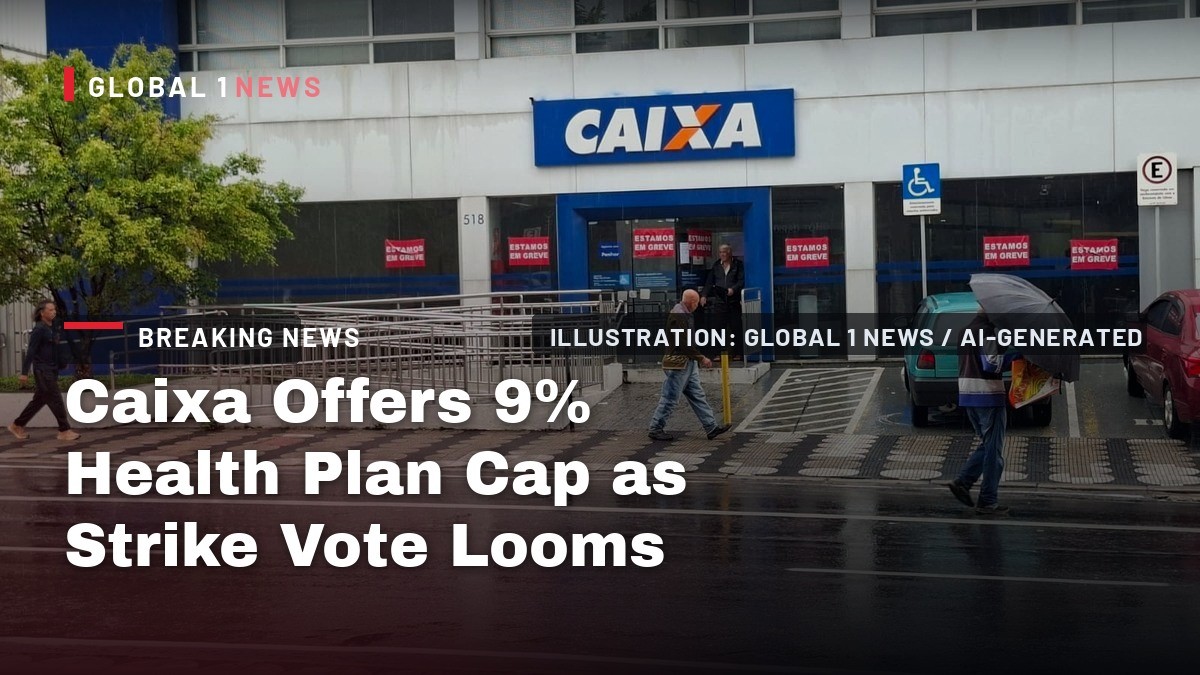
Caixa Econômica Federal tabled a new proposal for its staff health plan in the early hours of Thursday, after an all-night bargaining round in São Paulo. The bank raised its ceiling on health-plan funding from 6.5 percent to 9 percent of payroll from 2027. The workforce has been on a national, indefinite strike since 10 September. Union assemblies vote on the offer Monday.
Caixa Offers 9% Health Plan Cap as Strike Vote Looms
São Paulo, Brazil - Inside Caixa branches across the country, the doors have been shut for a week, and the offer that could reopen them now sits with the workers who walked out.
The Offer That Landed at Dawn
The proposal arrived after a negotiating round that began Wednesday in São Paulo and ran through the night into Thursday morning. It was delivered to the Contraf-CUT and the Comissão Executiva dos Empregados, the two bodies leading talks for the workforce. The text now goes to employees in electronic assemblies on Monday 21 September. The central change is money: Caixa would lift its ceiling on contributions to Saúde Caixa from 6.5 percent to 9 percent of payroll starting in 2027. The bank also keeps the plan inside the Acordo Coletivo de Trabalho, the collective agreement that governs its staff. For the unions, that combination answers the two demands that mattered most. Juvandia Moreira, president of Contraf-CUT and coordinator of the Comando Nacional dos Bancários, called the offer an advance, above all on the funding ceiling. The strike continues until members vote.
What Is Actually in the Proposal
The numbers are specific. From 2027, the titular employee pays 3.7 percent of base remuneration. A direct dependent costs R$560 a month. Indirect dependents and children in the regulated bracket pay R$660. Children aged 24 to 27, and parents who remain on the plan, pay R$900. The family group - holder plus direct dependents - is capped at 9 percent. In 2026 there is no readjustment to monthly fees, and Caixa absorbs the plan's deficit. The bank cut the charge for a walk-in emergency consultation from R$150 to R$120 and kept telemedicine free of coparticipation. It also committed to at least one employee dedicated exclusively to Saúde Caixa in each Gerência de Pessoas and Representação Regional de Pessoas. Beyond health, Caixa adjusted the Super Caixa variable pay programme: initial qualification awards rise from 25 percent to 50 percent, evaluation criteria change, and results panels gain transparency. There is no penalty tied to the Figital and Genesys programmes in 2026, which stay in pilot. A R$3,000 extraordinary award per employee, tied to operational targets already met, remains on the table.
Why a Health Plan Can Shut a Bank
Saúde Caixa is not a side issue. It is the reason the strike began, and the reason it has held. The plan runs a deficit and has done so for years, according to workers who spoke to Folha on condition of anonymity. Those same workers describe doctors leaving the network as credentialing terms tighten. The dispute is about who pays to close the gap. The union position is that the bank must carry more of the cost and that the plan's founding principle - the pacto intergeracional, a single risk pool with no charge differentiated by age - must survive. Caixa's earlier proposals moved in the other direction, shifting more onto employees and dependents. That is what more than 90 percent of union bases rejected before the walkout. The new text keeps the intergenerational pact and the solidarity model. It also sets a 60-day window to design a new governance structure for the plan, reviewing oversight, reporting, new revenue sources and retirement rules for staff who joined from 2018.
Eight Days on the Picket Line
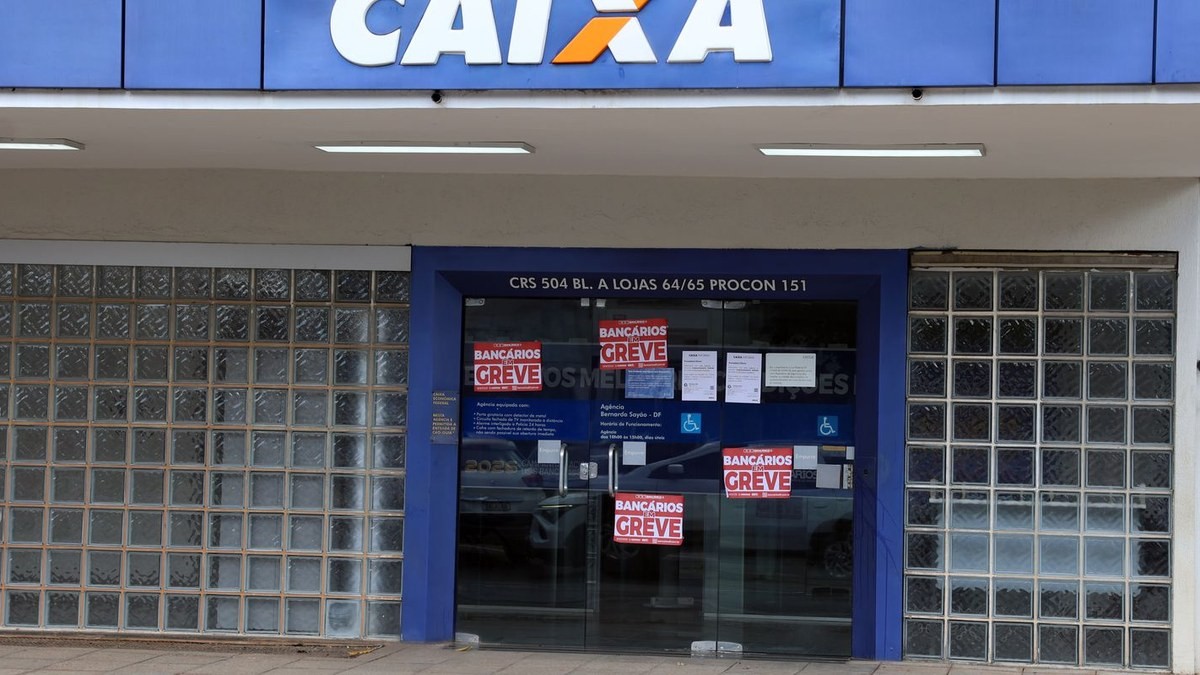
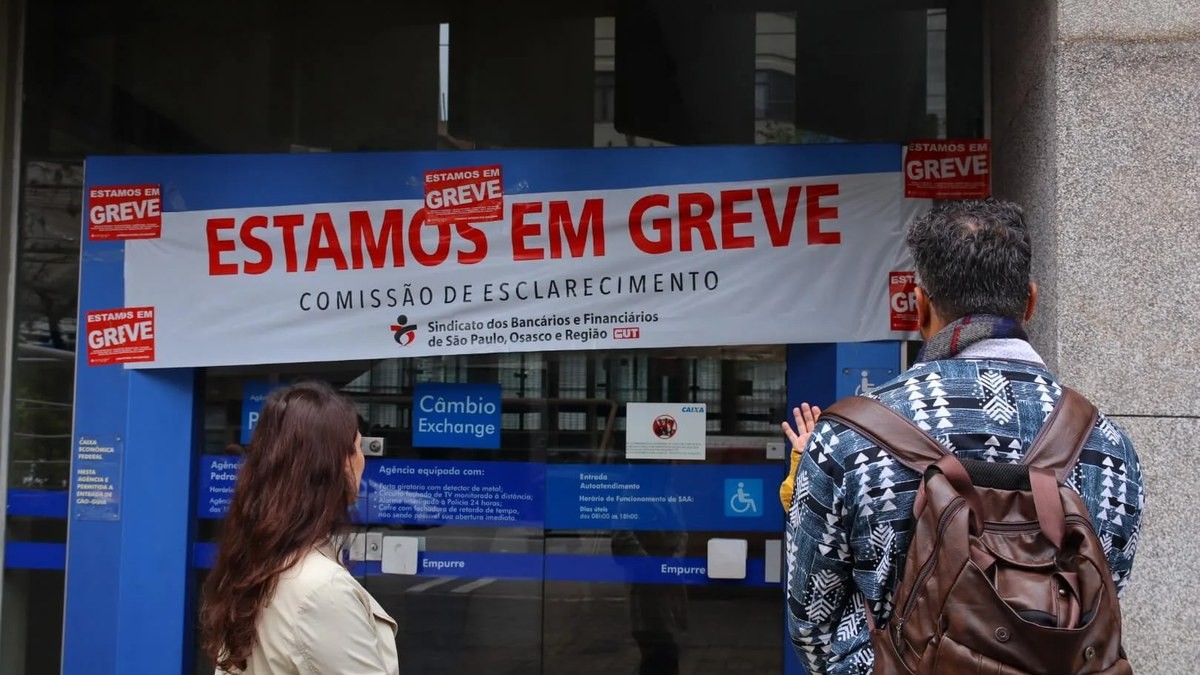
The strike began on 10 September and has run without an end date. In São Paulo, Osasco and the surrounding region, the bankworkers' union reported 292 of 299 Caixa branches and all four administrative buildings shut on the sixth day. A day earlier, it counted 268 of 283 workplaces closed, about 95 percent, with more than 700 employees at an act on Avenida Paulista. On Wednesday, the union marched through central São Paulo from its headquarters on Rua São Bento to the Caixa building at Sé, gathering at 12:30pm and closing with a symbolic embrace of the building. Caixa says clients can use its app, internet banking, WhatsApp line, Caixa Tem and other applications, plus ATMs, lottery houses, Caixa Aqui correspondents and the Banco24Horas network. Telephone service runs through Alô CAIXA. The bank says it has held 54 collective bargaining meetings and put four distinct proposals on the table since the campaign opened.
The Deal the Bank Called Final
The offer rejected before the strike raised employee contributions from 3.5 percent to 5.5 percent of base salary. Monthly dependent charges would have gone from R$480 to R$870. For dependents aged 24 to 27, the figure would have climbed from R$800 to R$1,050. An intermediate proposal lifted the bank's funding ceiling from 6.5 percent to 8 percent and offered to bring forward its share of the 13th monthly payment from 2028, 2029 and 2030 to help cover the deficit. It also carried the R$3,000 award tied to the Índice de Eficiência Operacional reached in June 2026, with salary readjustment, profit sharing, Super Caixa and the award scheduled for payment on 18 September. Workers read the health-plan changes as a charge that would swallow the real wage gain already won. The strike followed. Caixa has since agreed to maintain the ultratividade - the carryover of rights from the expired agreement while talks continue - after Contraf-CUT sent a formal request to reopen negotiations.
A Category That Already Signed
The wider banking category settled before Caixa's staff walked out. On 9 September, the Federação Nacional dos Bancos and union bodies signed a new Convenção Coletiva de Trabalho covering roughly 414,000 bankworkers across some 3,600 municipalities, with 171 banks and 245 union entities party to it. The agreement runs to 31 August 2028. It provides full inflation replacement by the INPC plus a real increase of 0.6 percent in 2026 and 2027, applied also to meal vouchers, food vouchers, profit sharing and childcare allowances. It adds measures on mental health, harassment and the right to disconnect, plus transparency rules and limits on digital monitoring of employees. It creates a qualification and re-placement programme and improves severance for private-bank workers dismissed when branches close. Caixa's own staff are negotiating a separate Acordo Coletivo de Trabalho, and that is where the health plan sits.
Why Caixa Is Not Just Another Bank
Caixa is the federal savings bank, and its reach is different in kind. It pays social benefits, handles FGTS accounts, runs housing programmes and operates the lottery network. Its branches sit in municipalities where no private bank keeps a presence. That is why a strike here lands on people who never chose Caixa as a commercial bank. The bank has leaned on that network during the stoppage, pointing customers to lottery houses, Caixa Aqui correspondents and Banco24Horas terminals, alongside digital channels. A branch stoppage does not by itself suspend benefit payments, the state news agency reported, but anything that needs a counter waits. The dispute also carries a governance dimension beyond pay. The proposed 60-day review would examine the plan's structure, its accounts and possible new revenue sources, and address the retirement position of employees who joined from 2018. For a public bank, those questions touch the state's own liabilities. The union confederations involved - Contraf-CUT, CONTEC and the Fenae association - have framed the fight as one about the sustainability of a state-backed plan that retirees also depend on.
What the Unions Are Claiming
Contraf-CUT and the Comissão Executiva dos Empregados say the offer widens the bank's financial participation and preserves rules the workforce demanded. They list the 9 percent ceiling, the intergenerational pact, the plan's place in the collective agreement, the freeze on 2026 monthly fees and the bank's absorption of the deficit. They also flag the reduced emergency consultation charge and the dedicated Saúde Caixa staff in each Gipes and Repes. Moreira credited mobilisation for the movement at the table, saying it took worker pressure to put more company money into the plan and hold the intergenerational principle. The unions say the text preserves every clause already set out in the collective agreements and the category-wide convention. On the days lost, they say the 20 August stoppage will be written off with no deduction, while strike days will be compensated within 180 days if members approve. Rights for caixa-minuto and tesoureiro staff on fixed terms are also protected.
What the Workers Will Vote On
The vote runs Monday 21 September in electronic assemblies. CONTEC says its affiliated unions will hold sessions from 11am to 6pm and will publish guidance through official channels. The ballot is on the full text: the health-plan funding ceiling, the 2027 contribution rates, the 2026 freeze, the deficit absorption, the compensation of strike days and the Super Caixa changes. It also covers the R$3,000 award and the payment timetable, with the document setting 30 September for salary readjustment, profit sharing, Super Caixa amounts and the award. Approval would mean the strike ends and the negotiated measures take effect. Rejection would send the two sides back to a table that has already met 54 times. Either way, the decision rests with a workforce that has now been out for more than a week.
What Comes Next
Monday's assemblies are the pivot. If members accept, the union confederations expect the movement to close and the terms to be implemented, with strike days compensated over up to 180 days from approval. If they reject, the strike continues with no end date and no further negotiating round announced. The 60-day governance review would begin only under an approved deal, as would the 2027 contribution rates and the raised funding ceiling. Caixa, for its part, says it keeps dialogue open with employee representatives and returned to the table to build an understanding that serves all sides. For clients, the practical picture is unchanged until the count: digital channels, ATMs, lottery houses and correspondents remain the route for everyday banking, while anything requiring a branch counter waits on a workforce that is still, as of Thursday, on strike.
By Jessica Ali, Staff Writer
This article was produced with AI-assisted research and editorial support. Sources: G1, Folha de S.Paulo, Agencia Brasil, Contraf-CUT, CONTEC, Fenae, Veja, IstoE Dinheiro, Brasil de Fato, O Paralelo 13.
What's Your Reaction?
 Like
0
Like
0
 Dislike
0
Dislike
0
 Love
0
Love
0
 Funny
0
Funny
0
 Wow
0
Wow
0
 Sad
0
Sad
0
 Angry
0
Angry
0

Editor-in-Chief at Global1.News. Atlanta-based journalist who cuts through the BS and tells it like it is. Lead anchor, host, and the voice you hear when the spin stops and the truth starts.












Comments (0)