
Brazil Denies Visas to US Officials Over Election Interference Fears
Brazil's President Lula confirmed his government denied visas to two US officials over election interference fears ahead of the October 4 presidential vote, straining Brasília-Washington relations.
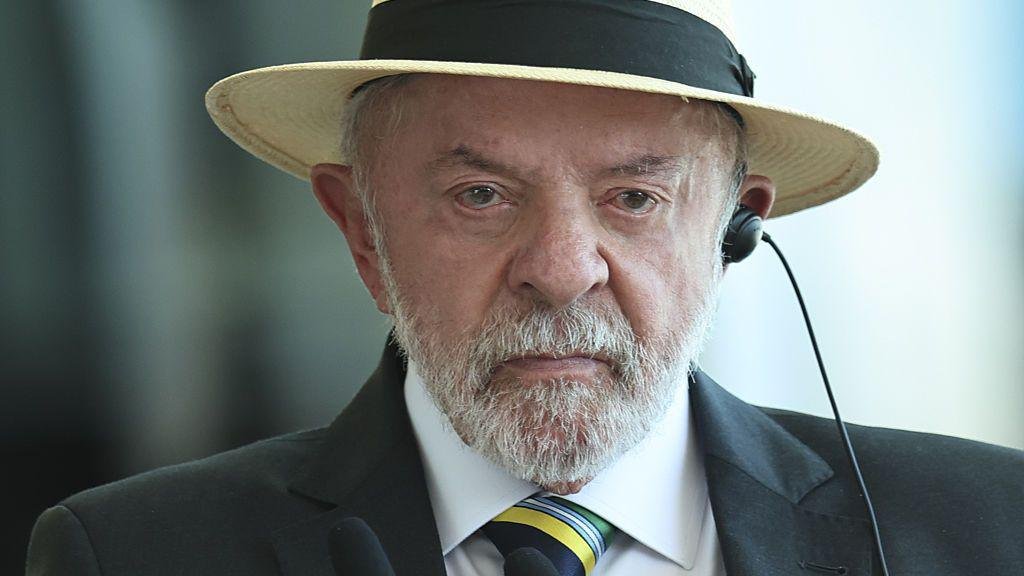
Brazilian President Luiz Inácio Lula da Silva confirmed this week that his government denied visas to two United States officials who planned to travel to Brazil, accusing them of seeking to interfere in the country's October presidential election. The decision, confirmed by Brazil's Foreign Ministry over the weekend, has ignited a diplomatic confrontation between Brasília and Washington barely two months before Brazilians head to the polls. It also shows how deeply the campaign season is already being shaped by foreign policy — and by the long shadow of the disputed 2022 election that ended in the January 8 attacks on the capital.
Brazil Blocks US Officials Over Election Interference Fears
Brasília, Brazil — Lula said on Wednesday that his administration had rejected visa applications from two State Department officials, describing them bluntly as emissaries sent "to meddle in Brazil's elections." The two were scheduled to arrive in late July for meetings on freedom of expression, religious freedom, and election integrity — and were expected to meet with right-wing presidential candidate Flávio Bolsonaro, the senator son of former President Jair Bolsonaro.
Brasília Draws a Line
Lula put the government's position in stark terms. "We had to deny visas to two young folks they were sending to Brazil to meddle in Brazil's elections," he said on Wednesday. The denial had already been quietly confirmed days earlier: Brazil's Foreign Ministry, known as Itamaraty, told Bloomberg News on July 25 and USA TODAY on July 26 that the visas had been rejected.
Brazilian officials said the government saw the visit as potential election interference, arguing the trip could be used to raise suspicions about the reliability of the electoral system ahead of the October vote, according to officials who spoke to Bloomberg. For Brasília, the decision was framed as a matter of sovereignty: who enters the country, and why, is a call the state makes on its own terms. Washington sees it differently, and the gap between those two readings is now the fault line in the relationship.
What the Officials Planned
The two officials were due in Brazil in late July for what Washington described as meetings on freedom of expression, religious freedom, and election integrity. According to reports, they were also expected to meet with Flávio Bolsonaro, the senator who launched his presidential bid at the Liberal Party national convention in São Paulo on July 25 — the same week the visa denials became public.
One of the two officials, according to a Washington Post report, is described as a promoter of President Donald Trump's policies abroad who has cultivated ties to right-wing groups. That profile, Brazilian officials suggested, was precisely the problem: an election-season visit by Trump-aligned envoys to a presidential candidate's orbit, in a country where the reliability of the electronic vote remains a politically explosive subject.
The United States rejected the accusation outright. A State Department spokesperson called the claim that the officials sought to undermine Brazil's election a "baseless lie." The sharpness of that language — and the speed with which both sides went public — suggests the episode was never going to stay inside diplomatic channels.
An Old Battlefield: Brazil's Electronic Vote
The visa dispute lands on familiar ground. Brazil has voted electronically since the 1990s, with the Superior Electoral Court, the TSE, running a fully digital system that tabulates results within hours of polls closing. For most of its history, the system was a point of national pride — a model for developing democracies that struggled with paper ballot fraud.
That changed in the run-up to the 2022 election. Jair Bolsonaro repeatedly cast doubt on the electronic machines without presenting evidence, questioning whether the count could be trusted. He lost that election to Lula, and on January 8, 2023, supporters who contested the result stormed Congress, the Supreme Court, and the presidential palace in Brasília in an assault that left the capital under siege for hours and reshaped Brazilian politics.
For Lula's government, the lesson of that period is that foreign questioning of the electoral system does not stay foreign — it feeds domestic narratives. An official visit framed around "election integrity," arriving weeks before the October 4 vote, was read in Brasília as a potential match to that powder keg. The TSE has repeatedly defended the system's track record, pointing to audits and recounts that have never found evidence of manipulation, but the political sensitivity around the vote is as high as it has been in a generation.
Flávio Bolsonaro's Rocky Campaign
Flávio Bolsonaro's campaign is a central part of the backdrop. The senator launched his presidential bid at the Liberal Party convention in São Paulo on July 25, stepping into the role his father occupied in 2018 and 2022. But his campaign has struggled from the start: he is fighting to recover from a scandal that has rocked his bid, has had difficulty sealing alliances with Brazil's influential centrist bloc, and several key parties have announced they will remain neutral in the October 4 election.
The campaign has also been forced to navigate Washington. According to Al Jazeera, Bolsonaro asked Trump to delay tariffs on Brazil until after the election — a request that underscores how intertwined his political fortunes have become with the United States. The visa denial now means the US officials who were expected to meet him will not be coming at all, depriving the campaign of a high-profile foreign engagement at a moment when it is trying to project momentum. His allies have cast the episode as proof that the government fears the opposition's international connections; his critics see it as a legitimate defense of the electoral process.
A Relationship Under Strain
The visa dispute did not happen in a vacuum. Trump recently signed a continuation of the July 2025 executive order declaring Brazil a "national security threat" to the United States — a designation that has hung over bilateral ties for more than a year and that Brasília has publicly rejected. Tariff tensions have simmered alongside it, with Bolsonaro's request for a delay being one sign of how much the trade relationship now moves to the rhythm of the election calendar.
Lula, for his part, has tried to keep the rupture from becoming total. According to Breitbart, he said he does not want to make an enemy of Trump — "I'm not stupid," he remarked — even as his government draws a hard line on sovereignty. That balancing act is familiar across Latin America, where leaders have learned to defend their democratic processes at home while managing the weight of the hemisphere's dominant power. For Brazil, the calculation is complicated by the fact that the country's biggest trading partners, its security ties, and its diaspora all cut through Washington.
What Happens Next
The immediate consequences are clear: the two officials will not travel, Washington has called the decision baseless, and Brasília insists the call was its sovereign right. The longer-term question is whether the episode escalates into broader retaliation — or whether both capitals allow the October 4 vote to reset the conversation.
For Brazilian voters, the episode is a reminder that the election will be fought as much over the integrity of the process as over policy platforms. The TSE enters the campaign with a system it has defended for three decades, and with a January 8 precedent that weighs on every allegation about the count. For the wider region, the dispute is another sign that the United States' relationships with Latin American democracies are increasingly tested during election season — from Mexico to Argentina, sovereignty disputes have become a recurring theme of the hemisphere's politics.
Lula has made clear he will not back down on the visa decision, and Washington has made clear it will not drop the accusation. Between those two positions sits the election itself — and a Brazilian electorate that, this time, is watching not only the candidates, but the referees.
By Elena Vasquez, Staff Writer
This article was produced with AI-assisted research and editorial support. Reporting is based on sources cited in the article.
What's Your Reaction?
 Like
0
Like
0
 Dislike
0
Dislike
0
 Love
0
Love
0
 Funny
0
Funny
0
 Wow
0
Wow
0
 Sad
0
Sad
0
 Angry
0
Angry
0

Latin America Correspondent at Global1.News. Based in Mexico City, covering politics, economics, energy, and culture across the region. Brings an on-the-ground perspective to stories spanning from the Rio Grande to Patagonia.












Comments (0)