
Bereaved Families Turn October 7 Accountability Into Election Litmus Test
In a recent i24NEWS "The Rundown" interview, Ruby Chen, father of fallen soldier Itay Chen whose body was held in Gaza for 760 days, delivered a stark message to Israeli voters heading to the ballot box in October 2026: make a state commission of inquiry into the October 7 massacre the deciding issue.
In a recent i24NEWS "The Rundown" interview, Ruby Chen, father of fallen soldier Itay Chen whose body was held in Gaza for 760 days, delivered a stark message to Israeli voters heading to the ballot box in October 2026: make a state commission of inquiry into the October 7 massacre the deciding issue. Speaking with anchor Nicole, Chen and political analyst Gil Hoffman laid bare a growing rift between bereaved families demanding accountability and a government that has spent nearly three years avoiding a full investigation into the worst disaster in Israel's history.
The interview comes as Israel prepares for its first national election since the Hamas assault that killed 1,200 people and saw 251 Israelis abducted into Gaza. For the Chen family and thousands of other bereaved and hostage families, the question is no longer merely about security policy or coalition math — it is about whether the state can confront its own failures.
Bereaved Families Turn October 7 Accountability Into Election Litmus Test
Jerusalem, Israel — Ruby and Hagit Chen stood at Habima Square in Tel Aviv on Saturday evening, addressing roughly 200 demonstrators at the weekly anti-government rally. Their message was simple and uncompromising: do not vote for any party that refuses to commit to establishing a state commission of inquiry into the October 7 disaster.
"Who knew, who warned, who ignored, who's responsible?" Hagit Chen demanded from the stage. "We call from here to every party and everyone that seeks the public's trust in the election: Are you going to form a state commission of inquiry into the events of October 7? Yes or no? Whoever is unwilling to commit to seeking the truth — we call on you not to give them your vote."
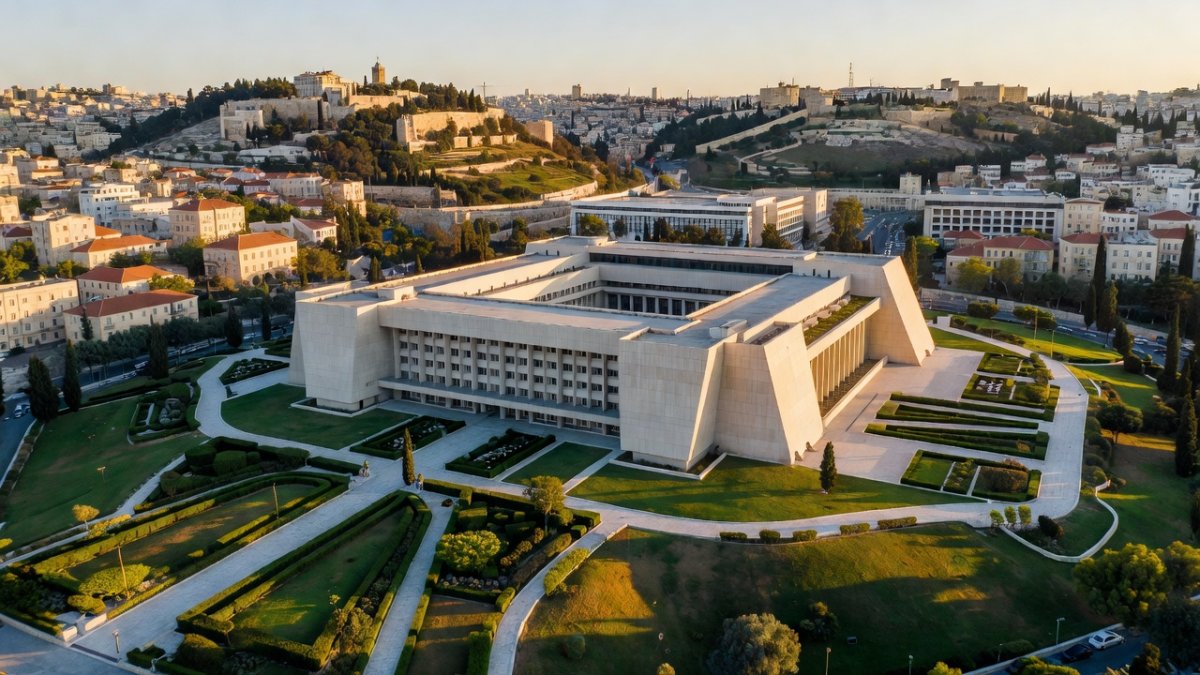
The Supreme Court Petition and the Government's "No Time" Response
The Chens' campaign is rooted in a legal battle that began nearly two years ago. Alongside several other bereaved families, they petitioned the Israeli Supreme Court demanding the government explain why no investigation committee had been established into how 1,200 people were killed in a single day and how 251 citizens were abducted from sovereign Israeli territory.
Two weeks ago, the government finally responded to the court. Ruby Chen summarized the official answer in three words: "We did not have enough time."
"Let me say that again. We did not have enough time," Chen repeated in the i24NEWS interview. "I think after three years, if a government is not willing to investigate how that happened, the biggest disaster of the State of Israel since its inception, I think that is a significant criterion of who you should vote for in this upcoming election."
The government's response to the High Court also argued that ordering a state commission before the election would be "politically sensitive" — a phrase that has infuriated families who have waited 34 months for answers. Ruby Chen called the failure "an evasion from seeking the truth and taking responsibility."
An Election Litmus Test Beyond Left and Right
Chen is adamant that the demand for a state commission of inquiry transcends partisan lines. "We do our best not to speak politics," he said. "At least I think the majority of the hostage families feel that way, as well as those of the fallen."
The numbers he cites are stark: "There are over 2,200 Israeli citizens that have been killed over the last four years of this government. And it goes to responsibility." Chen argues that voters should ask the outgoing government what it accomplished, what it failed to do, and how it can credibly promise that October 7 will not repeat itself.
"Nothing has changed," he warned. "And I think that's a bad way of looking at it."
The Chens have deliberately avoided endorsing any specific party. Their appearance at a Yesh Atid gathering earlier this month was, according to Ruby Chen, not a political endorsement but a gesture of gratitude. The couple had created a wine in Itay's name, and a Yesh Atid member who is also their neighbor purchased bottles to share with party parliamentarians.
"We joined at the end, not as official members of Yesh Atid," Chen clarified. "But I do think that they should be recognized as parliament members because they were always fighting with us in the halls of the Knesset."
He reserved particular criticism for the Haredi parties. "It's unfortunate and it's a fact that needs to be said that the Haredi parties, even though they were able to maybe move the Prime Minister to a place of getting to a hostage deal in 2024, they never put their foot down as much as they did in the last few months when it came to the laws they wanted to pass and the budget they wanted to pass."

The Battle Over the Form of the Probe
At the heart of the political fight is not whether an investigation should happen, but what kind. Bereaved families and the "October Council" — a coalition of civil society groups — demand a full state commission of inquiry, the only body empowered by Israeli law to subpoena witnesses, compel testimony under penalty of perjury, and issue binding recommendations.
The coalition has advanced a rival plan: a politically appointed probe whose members would be selected by a Knesset supermajority. Critics, including opposition leaders and legal scholars, argue this structure would allow the government to effectively choose its own investigators and control the scope of the inquiry.
Prime Minister Benjamin Netanyahu has so far refrained from publicly taking clear responsibility for the October 7 disaster. His office has repeatedly deferred questions about accountability, pointing instead to ongoing military operations and the need for national unity during wartime. Critics say Netanyahu seeks a politically appointed probe to protect himself and senior ministers from findings that could trigger removal from office.
Opposition parties — including Yesh Atid, the Democrats, and parts of the National Unity camp — have vowed to establish a state commission immediately if they win the October election. That pledge has become a central plank of their campaigns, and families are leveraging their moral authority to hold politicians to those promises.
Families Entering the Political Arena
The election has drawn hostage and bereaved families directly into political maneuvering. This week, Einav Zangauker, father of returned hostage Matan Zangauker, accused opposition leader Yair Golan of breaking a pledge to place him on the Democrats' electoral slate. Golan responded on social media, saying he had not given out reserved slots to anyone and expressing regret over the misunderstanding.
Political analyst Gil Hoffman, speaking on i24NEWS, called the dispute "a great gift to Netanyahu" because Zangauker had been "the most annoying gadfly to Netanyahu since October 7" — a vocal presence at every protest and a persistent voice for accountability. Hoffman noted that Golan's decision to refuse the reserved slot, despite Zangauker's public profile, was a statement of loyalty to his party's primary process, in which 113,000 people participated.
Other families have taken a different path. Tzvika Mor, father of returned hostage Eitan Mor, holds a reserved slot on the Religious Zionist Party list. His presence there signals that the demand for accountability is not confined to the center-left — it cuts across the religious and nationalist camps as well.
Ruby Chen, for his part, has ruled out entering politics. "At the moment, no, I'm not looking to go into politics," he said. "I wish to be able to at least have a voice that speaks in a nonpolitical way." His focus remains on a single question: "If we do not check those things, then it'll just happen again. And more families will be sitting like me, needing to speak about how we lost our son without understanding why that happened, who knew, and what actions have been taken to prevent that from happening again."
What This Means for Israeli Democracy
Gil Hoffman argued in the i24NEWS segment that hostage families wield "tremendous" moral influence across the political map. He drew a historical parallel: 50 years ago, Yoni Netanyahu was killed in the Entebbe operation, and his brother Benjamin Netanyahu built an anti-terror organization from that tragedy, launching a diplomatic and political career that would define Israeli politics for decades.
"If he doesn't like hearing voices now that may be critical of him and his role in October 7th," Hoffman said, "he actually ironically has only himself to blame."
The election in October will be the first test of whether that moral voice translates into electoral power. The families' demand is deceptively simple: a state commission of inquiry, with subpoena power, to determine who knew what, when, and who bears responsibility for the failures that allowed the deadliest day in Israeli history to unfold.
The government's response — that it has not had enough time in nearly three years — has become a rallying cry for those who see evasion rather than accountability. For Ruby and Hagit Chen, the choice facing Israeli voters could not be clearer.
"The existing government is only speaking about the future and the threats associated if another side wins the election," Ruby Chen said. "But wait a second, shouldn't we also be asking ourselves what were the accomplishments of the previous government? And I think we should not forget and ask these people: why have you not created an investigation committee and taken responsibility for what happened?"
As Israel heads toward its first post-October 7 election, the Chens and thousands of other families are forcing a national reckoning. The question is whether the political system — and the voters — are ready to answer it.
By Hannah Berg, Staff Writer
This article was produced with AI-assisted research and editorial support. Reporting is based on sources cited in the article.
What's Your Reaction?
 Like
0
Like
0
 Dislike
0
Dislike
0
 Love
0
Love
0
 Funny
0
Funny
0
 Wow
0
Wow
0
 Sad
0
Sad
0
 Angry
0
Angry
0
Israel Correspondent at Global1.News. Based in Tel Aviv, covering Israeli politics, security, technology, and society. Provides balanced, deeply-sourced reporting on one of the most closely-watched regions in the world.











Comments (0)