
Beijing Pushes Chinese AI Terms to Boost 'Discourse Power'
China's state media is urging replacement of English AI terms such as 'agent' and 'LLM' with standard Chinese equivalents, arguing foreign jargon breeds 'cognitive dependency.' The push follows March's official designation of ciyuan as the translation for 'token' and reflects Beijing's drive to b...
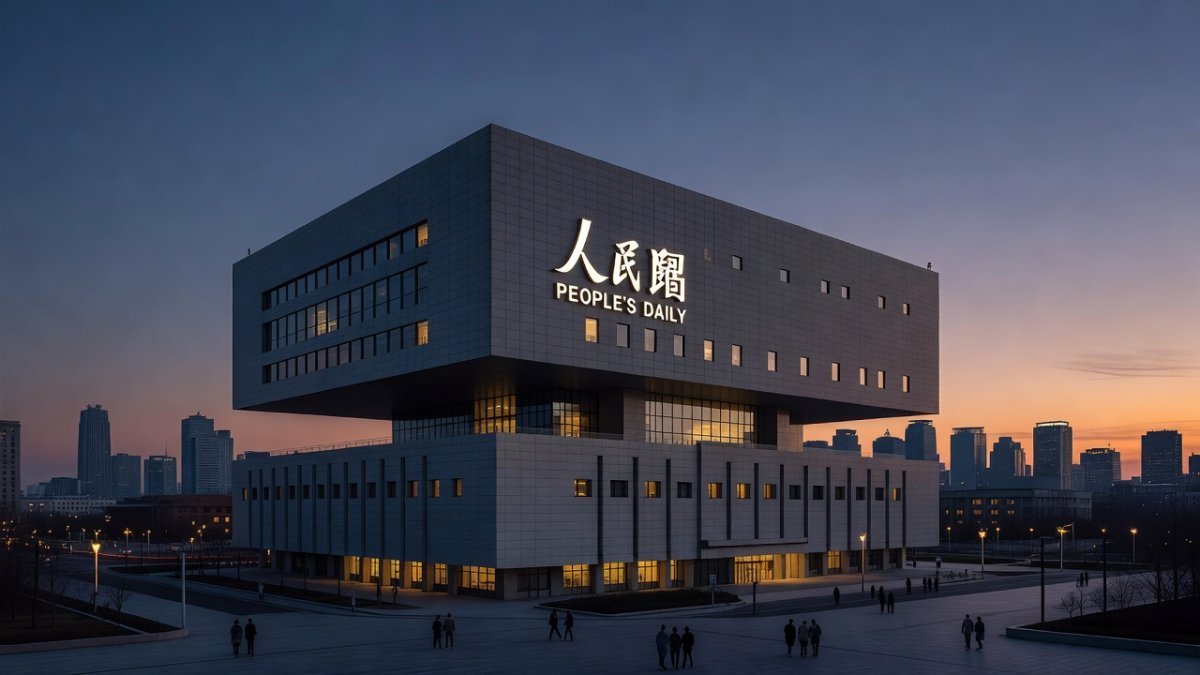
State Media Targets English AI Jargon in Push for 'Cognitive Independence'
Chinese state media has called for English-language terms related to artificial intelligence to be dropped in favour of standardised Chinese equivalents, framing the shift as essential to the country's "discourse power" in global technology governance. A commentary published by the Communist Party mouthpiece People's Daily earlier this month argued that reliance on terms such as "agent" and "LLM" — the abbreviation for large language model — would lead to "cognitive dependency" and ultimately undermine China's voice in shaping the vocabulary of the AI era.
The call extends a language-policy drive that began in earnest in March, when Beijing's National Data Administration designated ciyuan as the official Chinese translation of "token" at the 2026 China Development Forum. For technology watchers across the Asia-Pacific, the push is a signal that Beijing now treats terminology standardisation as a strategic front in its rivalry with the United States over who defines the concepts behind artificial intelligence.
Tags: China AI, Chinese language policy, discourse power, People's Daily, ciyuan, token, state media, English AI terms, language standardization, cognitive dependency, AI governance, technology policy
The People's Daily Argument: Foreign Terms Breed 'Cognitive Dependency'
The commentary contended that untranslated English terms "not only raise the threshold for the public to understand cutting-edge technology, widening the digital divide, but also gradually erode the integrity and continuity of the Chinese language system." It warned that reliance on foreign jargon could deprive China of the authority to define key concepts, stunt the growth of original domestic theories and hinder the development of a Chinese framework for talking about technology.
State media drew a contrast with earlier technologies whose names were successfully localised, such as dian nao — literally "electric brain" — for computer. English AI terms, by contrast, are rarely self-explanatory to ordinary Chinese speakers, the commentary argued, leaving much of the public dependent on opaque foreign vocabulary at the very moment AI applications are spreading through daily life.
Ciyuan: The 'Token' Precedent From March
The latest call follows an official move in March when Liu Liehong, head of the National Data Administration, designated ciyuan as the standard translation for "token" at the China Development Forum 2026 annual meeting. Ci means "word", while yuan is associated with fundamental elements — and is also the base monetary unit of the renminbi, underscoring the administration's view of tokens as the settlement unit of value in the intelligent era.
Official data cited at the designation showed China's daily token usage surging from 100 billion at the start of 2024 to 140 trillion by March 2026 — a thousand-fold increase in just over two years. The scale of that growth gives the terminology question practical weight: as tokens become a priced, metered commodity across China's AI industry, having a standard Chinese term matters for regulation, billing and public comprehension alike. Regulators and consumers alike now share a vocabulary that can be measured, billed and policed — a subtle but real shift in how China's AI economy is governed.
Language Sovereignty as Policy: Japan's Contrasting Approach
For readers in Japan, the push highlights a striking divergence in how the region's two leading technology powers handle English-dominant AI vocabulary. Japanese daily speech absorbs English terms freely through katakana loanwords — AI itself circulates as e-ai, while technical terms such as puroputo (prompt) and tokun (token) move through professional discourse without official coinage.
Tokyo has not sought to standardise AI terminology through administrative fiat. Instead, Japan's policy response to the AI era has centred on institution-building — the AI Safety Institute, the Hiroshima AI Process and guidance for foundation model developers — leaving vocabulary to evolve organically. Major Japanese AI adopters such as SoftBank and NEC publish technical material in English-facing formats, and Japanese universities teach AI courses in a mixture of Japanese and English terms.
Beijing's move to fix terminology by decree, in contrast, treats language as a domain of sovereignty where state direction is expected and where Western terms are viewed as vectors of intellectual dependency. The philosophical difference is stark: Tokyo treats English as a neutral technical lingua franca, while Beijing increasingly treats it as a carrier of foreign assumptions that must be domesticated if China is to define the AI era on its own terms.
A Dual-Track Proposal — Not a Blanket Ban
The People's Daily commentary was careful to stop short of proposing a blanket ban on English terms. It recommended a dual-track approach: retaining English in international exchanges and collaborations to ensure efficient communication, while actively promoting standard Chinese translations in domestic contexts such as education and policy popularisation.
The piece called on authorities to bridge the gap between official terminology and rapid technology iteration, urged media and tech firms to adopt standardised terms, and asked universities to instil "native language awareness" in young people so that they could collectively "build a solid language defence." The phrasing suggests Beijing is preparing a co-ordinated push across classrooms, newsrooms and product interfaces rather than a legal prohibition.
Experts and the Online Debate
Graham Webster, a research scholar in Chinese technology policy at Stanford University, told SCMP that while ciyuan seemed an apt word for "token", framing it as a matter of national power and cultural sovereignty read "more like a symbolic gesture than a real driver of technological or social change." He noted that numerous technical terms already have standard Chinese translations, and that Chinese AI experts normally read research papers and software documentation in English.
"China's real influence in the AI sector comes from the adoption of its open models and the international technical community's appreciation for how they are built," Webster said. Online reaction in China has been divided: some commentators agreed that native terms could help students build better conceptual frameworks, while others questioned whether localisation was necessary at all, pointing to English-origin terms already deeply ingrained in everyday speech — Wi-fi, SIM card, app — whose official translations often feel clunky and redundant.
The debate is not confined to AI. A top party official in June called on the nation's Tibetologists to build up China's discourse power over matters relating to Tibet, and last month another People's Daily article voiced concern that the widespread use of English-origin abbreviations in everyday Chinese conversation was harming the country's "cultural confidence". Language, the pattern suggests, has become a recurring front in Beijing's broader effort to shape narratives at home and abroad.
What to Watch For
The immediate test is adoption. Watch whether China's major AI companies — including Alibaba, Tencent, Baidu and DeepSeek — begin substituting standardised Chinese terms in consumer-facing products and documentation over the coming quarters, and whether the terminology guidance is echoed in national AI regulation. A second signal is international: whether Beijing seeks to promote Chinese AI vocabulary through global standards bodies, extending the ciyuan model to other contested terms.
For Japan and the wider Asia-Pacific, the episode is a reminder that the US-China technology rivalry now extends to the very language in which AI is discussed. As Beijing builds what it calls a "language defence," Tokyo's laissez-faire approach to vocabulary may become the exception in a region where technology, identity and sovereignty are increasingly intertwined. The vocabulary of artificial intelligence is no longer purely technical — it has become a policy battleground.
By Kenji Tanaka, Staff Writer
This article was produced with AI-assisted research and editorial support. Sources: South China Morning Post; National Data Administration.
What's Your Reaction?
 Like
0
Like
0
 Dislike
0
Dislike
0
 Love
0
Love
0
 Funny
0
Funny
0
 Wow
0
Wow
0
 Sad
0
Sad
0
 Angry
0
Angry
0

Japan Correspondent at Global1.News. Tokyo-based voice covering Japanese politics, technology, economy, and culture. Tracks the intersection of tradition and innovation in one of the world's most dynamic societies.














Comments (0)