
Cryptominer Sato Technologies secures neocloud Datum as customer for Canadian data center
When a former Bitcoin miner flips the switch to AI, the industry takes notice. From Bitcoin to B300s: the conversion story Sato’s Joliette site in Québec has long been a high‑density mining farm, built around a 20 MW hydro‑powered footprint.
When a former Bitcoin miner flips the switch to AI, the industry takes notice. Sato Technologies Corp., the TSXV‑listed outfit that once ran crypto rigs in Québec, has just handed over a slice of its hydro‑powered capacity to Datum Technology, an AI cloud and network provider with roots in bare‑metal cloud pioneer Packet. The deal is a textbook case of repurposing existing power‑intensive infrastructure to chase the AI boom, and it raises a host of practical questions for independent data‑center operators who are tired of watching hyperscalers dictate pricing while they scramble to keep the lights on.
From Bitcoin to B300s: the conversion story
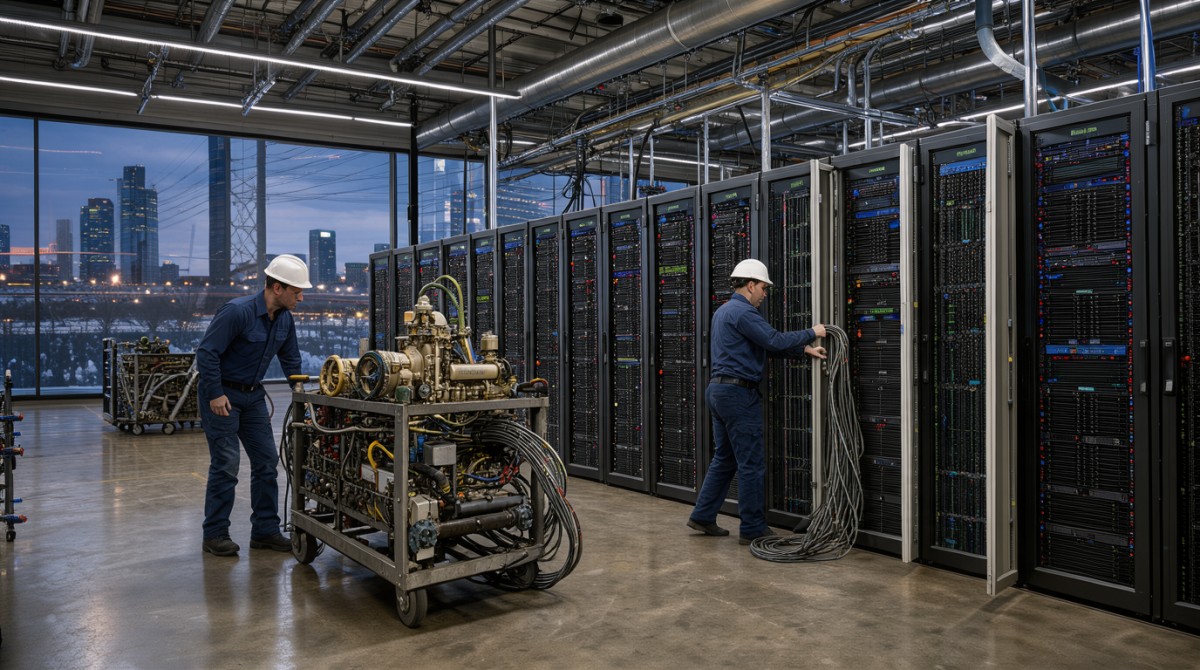
Sato’s Joliette site in Québec has long been a high‑density mining farm, built around a 20 MW hydro‑powered footprint. In late October, Sato’s subsidiary Qritical AI signed a master services agreement with Datum, and within 22 days the company had cleared a former mining hall and installed Nvidia’s B300 (Blackwell Ultra) GPU servers for the new AI customer. The speed of that conversion is noteworthy: most hyperscaler expansions take months, if not years, to bring new racks online. Sato’s ability to pivot “in a matter of weeks,” as Datum’s co‑founder Zachary Smith put it, underscores the value of owning a power‑rich envelope that can be re‑tasked on short notice.
That same hall still hosts active Bitcoin mining rigs, meaning Sato is running a hybrid model—mining on one side, AI on the other. For independent operators, this hybrid approach can be a hedge against market volatility. When AI demand spikes, you can re‑allocate space; when crypto prices tumble, you still have a revenue stream. It’s a pragmatic play that avoids the all‑or‑nothing gamble many startups make when they chase a single vertical.
Hydro power as a competitive edge
Romain Nouzareth, Sato’s president and CEO, highlighted the “clean, stable power” advantage of Québec. Hydro‑electric generation in the province offers low‑cost, carbon‑light electricity, a factor that can shave a few cents per kilowatt‑hour off the bottom line—enough to matter when you’re running thousands of GPUs. For providers that rely on diesel‑backed generators or spot‑market power purchases, the cost differential can be stark, especially as AI workloads become power‑hungry.
From a risk perspective, hydro also provides a more predictable supply chain. Power outages are rare, and the grid is less susceptible to fuel price spikes that can cripple data‑center operations elsewhere. Independent operators looking to attract AI workloads should prioritize sites with stable, low‑cost energy sources; otherwise you’ll be forced to price yourself out of the market or, worse, risk downtime that erodes client trust.
Speed to market versus capital intensity
Building a new data‑center from the ground up is a capital‑intensive, time‑consuming endeavor. Sato’s statement that “developing new data‑center assets is costly and slow” reflects a reality that many founders ignore while chasing VC‑fueled hype. By leveraging existing infrastructure, Sato sidestepped the typical multi‑year build‑out and the associated financing burdens. The result is a rapid go‑to‑market capability that can be monetized almost immediately.
For founders, the lesson is clear: before you raise a massive round to fund a greenfield build, inventory what you already own. Existing power contracts, rack space, and cooling capacity can be retrofitted for AI at a fraction of the cost. The trade‑off is usually a lower tier of tier‑1 networking or less redundancy, but for many early‑stage AI customers, speed and price matter more than carrier‑grade guarantees.
Geographic diversification and future expansion
Sato isn’t stopping at Québec. The company has announced plans for a 100 MW campus in Gelephu Mindfulness City, Bhutan, with an initial 5 MW phase and a potential expansion to 500 MW. While the Bhutan project is still in the planning stages, it signals an intent to replicate the hydro‑powered, low‑cost model in other regions. The choice of Bhutan—another hydro‑rich nation—reinforces the strategic focus on cheap, green electricity.
From a risk‑management standpoint, geographic diversification can mitigate regional power price shocks or regulatory changes. However, expanding into remote locations brings its own challenges: limited fiber connectivity, higher logistics costs, and potential talent shortages. Independent operators should weigh the benefits of cheap power against the increased operational complexity of a far‑flung site.
Network architecture: the Datum angle
Datum’s value proposition rests on its open network cloud built around Nvidia BlueField DPUs, which promise a programmable, unified fabric across cloud, data‑center, and edge environments. By deploying its infrastructure in Sato’s hall, Datum gains a foothold in a hydro‑powered AI node while extending its network to existing PoPs in Ashburn, Dallas, and Salt Lake City. The synergy is evident: Datum brings a sophisticated networking stack, while Sato supplies the raw power and real estate.
This partnership model—where a network‑focused provider pairs with a power‑rich host—could become a template for other indie operators. Rather than trying to build a full‑stack solution in-house, a data‑center can focus on its core competency (power and space) and partner with a specialist for the networking layer. The result is a faster, more cost‑effective service offering that can compete with the monolithic stacks of the hyperscalers.
Risk lenses: fire, regulatory, and market dynamics
Sato’s Centre One facility suffered a fire in June 2024. While the source material does not detail the impact, any fire in a high‑density environment raises red flags about fire suppression, cable management, and overall resilience. Operators must invest in robust fire detection and suppression systems—especially when mixing crypto rigs (which generate heat) with AI GPUs (which also run hot). A single incident can wipe out weeks of revenue and erode customer confidence.
Regulatory risk is another factor. Crypto mining has faced scrutiny in many jurisdictions, and while Sato is pivoting to AI, the legacy perception can affect licensing and community relations. Transparent communication about the shift to clean AI workloads, backed by tangible hydro‑electric usage data, can help smooth the regulatory path. Moreover, aligning with government incentives for green AI compute can unlock subsidies or tax breaks, further improving the economics.
Actionable takeaways for independent providers
First, audit your existing power and space assets. If you have under‑utilized capacity, explore rapid conversion pathways—strip out mining rigs, install GPU racks, and get a customer on board within weeks. Second, prioritize locations with cheap, stable power; hydro‑electric regions like Québec or Bhutan offer a natural cost advantage over diesel‑backed sites. Third, consider partnership models: pair your power base with a network specialist like Datum to deliver a full‑stack AI offering without the overhead of building a proprietary networking layer.
Finally, embed resilience into your design—fire suppression, redundancy, and clear regulatory compliance. The Sato‑Datum deal shows that speed and cost can win the AI market, but only if you back that speed with solid risk controls. Independent providers that can replicate this playbook will find themselves in a sweet spot between the overpriced hyperscaler services and the under‑served niche of AI startups craving clean, affordable compute.
— Allan Ali, Founder
This article was produced with AI-assisted research and editorial support. Reporting is based on the source material cited below. Sources: Data Center Dynamics; datacenterdynamics.com; Global1.News (26 November 2026).
By Allan Ali, Global1.News
What's Your Reaction?
 Like
0
 Dislike
0
 Love
0
 Funny
0
 Wow
0
 Sad
0
 Angry
0

Publisher of Global1.News. Automation architect, systems builder, and the guy making sure the truth gets published.















Comments (0)