
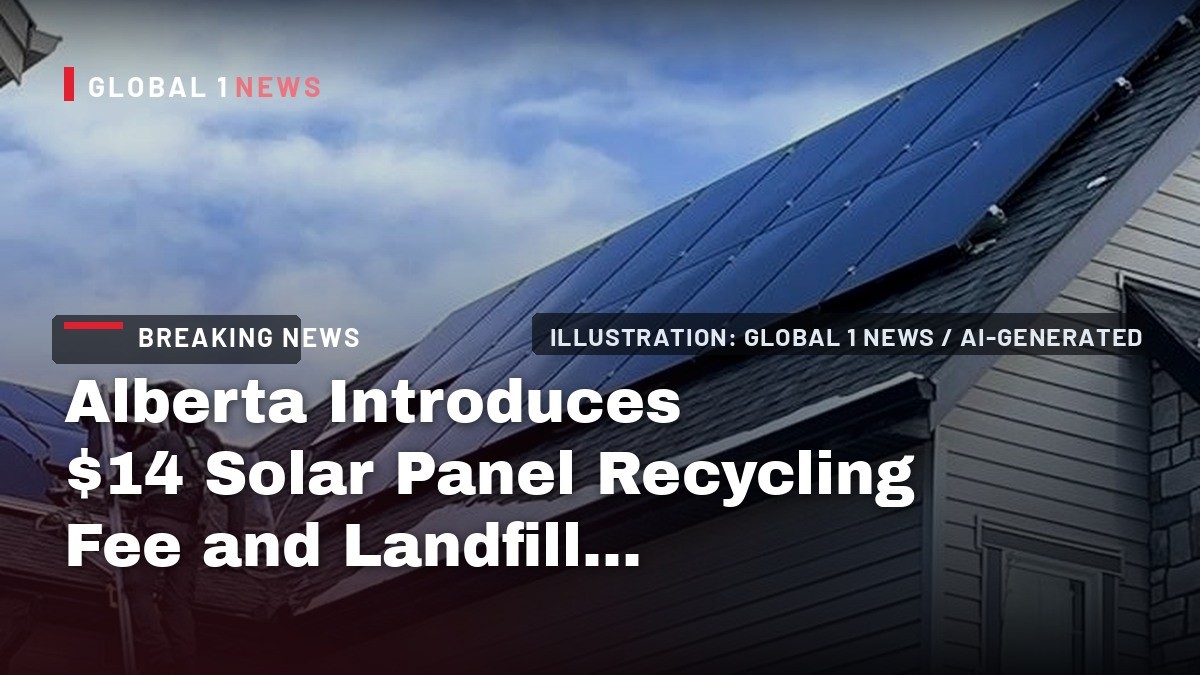
Alberta Introduces $14 Solar Panel Recycling Fee and Landfill Ban
EDMONTON - Alberta is set to become the first province in Canada to mandate a formal, province-wide recycling program for solar panels, complete with a $14 per-panel eco-fee and a ban on sending the units to landfill. Environment Minister Grant Hunter made the announcement Thursday in.
Alberta Introduces $14 Solar Panel Recycling Fee and Landfill Ban
EDMONTON - Alberta is set to become the first province in Canada to mandate a formal, province-wide recycling program for solar panels, complete with a $14 per-panel eco-fee and a ban on sending the units to landfill. Environment Minister Grant Hunter made the announcement Thursday in Brooks, Alberta, framing the move as a necessary step to protect municipalities and taxpayers from the looming costs of solar waste.
The new regulations are set to take effect Oct. 1, 2026, and will be administered by the Alberta Recycling Management Authority (ARMA), the Crown agency that already runs the province's other regulated recycling and eco-fee programs. The initiative marks a significant shift in how the province handles the growing wave of renewable energy infrastructure reaching the end of its operational life.
What Changes Oct. 1 and How the Program Works
Beginning Oct. 1, 2026, new solar panels sold in Alberta will carry a $14 environmental fee to fund their eventual recycling, and panels will no longer be accepted at Alberta landfills. The fee applies to crystalline-silicon and thin-film panels of one square metre or larger, covering residential, commercial, industrial, and utility-scale installations. ARMA will oversee the collection and processing of panels through approved recyclers as it builds out the program.
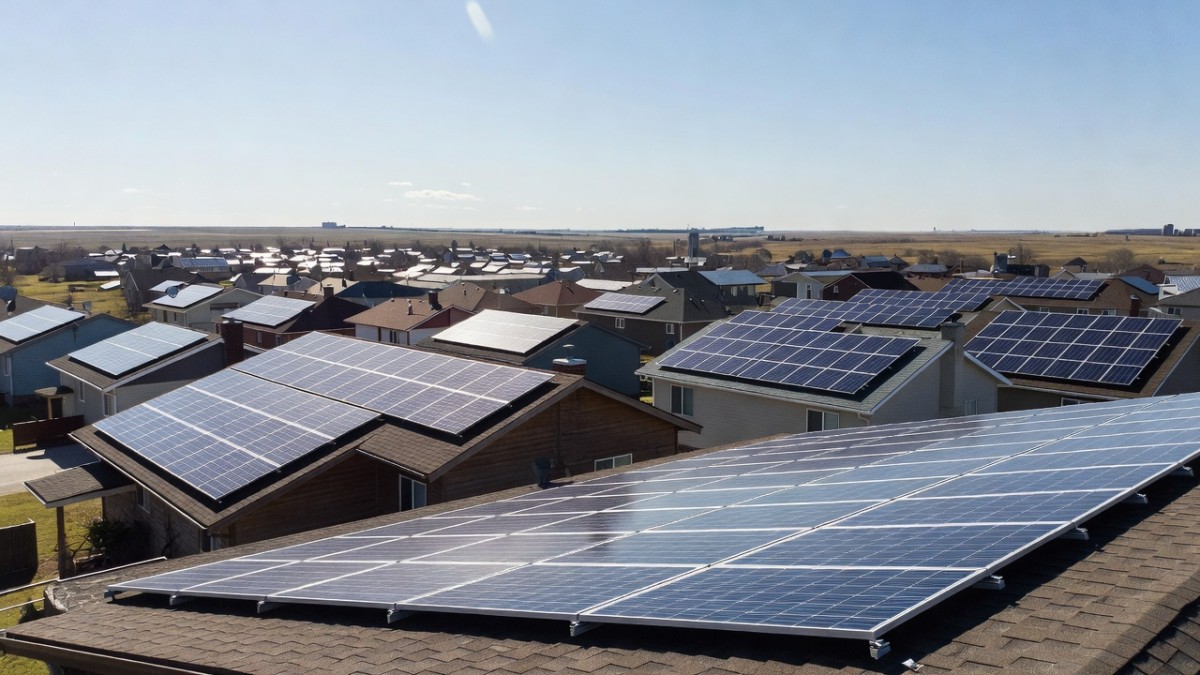
For a typical homeowner, the financial impact is relatively modest but not insignificant. The government estimates that a standard household installation contains roughly 20 panels, meaning the fee adds about $280 to the cost of a new residential solar array. The fee is charged at the point of purchase of new panels - it is not applied retroactively to systems already installed, although the landfill ban means those older panels will eventually have to be managed through the program when they reach the end of their working lives.
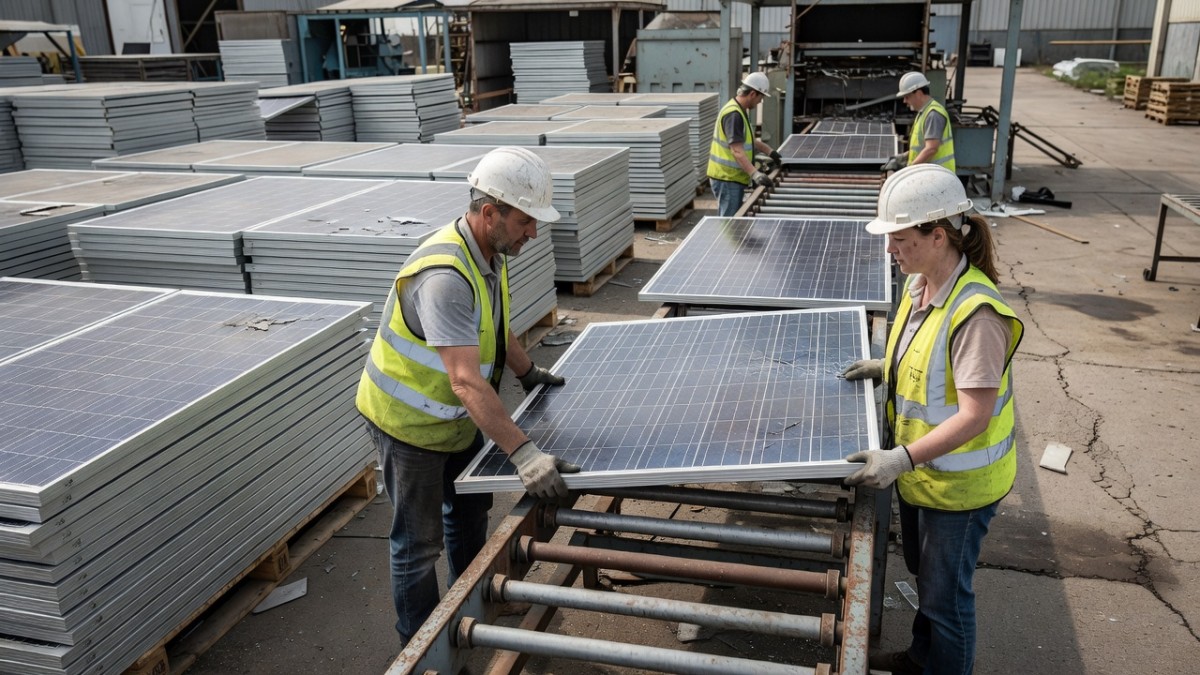
ARMA, which has run Alberta's regulated recycling programs for years, will be responsible for ensuring that collected panels are recycled rather than stockpiled or sent to landfill. The agency will also be tasked with building out a network of collection points across the province, though specific operational details regarding drop-off locations and transportation logistics have not yet been fully outlined.
Minister's Rationale and the 73,000-Tonne Projection
Minister Hunter defended the fee and the landfill ban as a proactive measure to prevent a future environmental crisis. He noted that Alberta's rapid expansion of solar generation over the past decade means a significant wave of decommissioning is on the horizon. By 2045, Hunter said, most of the solar panels currently installed in the province will have reached the end of their useful lives, potentially generating nearly 73,000 tonnes of material that must be managed.
"We're creating the opportunity for new made-in-Alberta recycling programs and industries that recover valuable materials instead of burying them," Hunter said during the announcement in Brooks, a city in Alberta's solar-rich southeast. He argued that without a formal program, municipalities would be left to foot the bill for disposing of bulky panels, costs that would ultimately be passed on to property taxpayers.
Hunter also addressed the question of cost, acknowledging that the $14 fee is higher than some industry estimates. He pointed out that the actual cost of shipping old panels to the United States for processing currently stands at approximately $40 per panel, given that Canada has no large-scale solar panel recycling facility. Hunter said it will take time for recyclers to develop economies of scale, and that if they can recycle panels for less, the saving will be passed on to consumers.
Industry Criticism: Cost, Transparency, and Comparisons
While the environmental rationale for the program has drawn some support, the specific $14 fee has come under sharp criticism from renewable energy advocates and industry groups who argue the figure is arbitrary and potentially punitive. Heather MacKenzie, executive director of Solar Alberta, a non-profit advocacy group for the province's solar industry, said the fee represents a significant financial burden on consumers. For a typical panel, she said, the $14 charge is akin to adding a 10 per cent tax to the purchase price.
More troubling to MacKenzie, however, is the lack of transparency surrounding how the fee was calculated. She said stakeholders repeatedly asked ARMA to provide the underlying data and assumptions used to arrive at the $14 figure, but were refused. "They are not willing to show how they came to that number, which means that nobody can really critique the assumptions that are embedded in it," MacKenzie said. This opacity, she argued, undermines confidence in the program and makes it impossible for independent analysts to verify whether the fee is fair or inflated.
MacKenzie went further, suggesting the fee is not merely about recycling but about altering the competitive landscape in Alberta's electricity market. "It appears that the government of Alberta is artificially increasing the cost of solar, and that will enable natural gas to compete more easily in our marketplace," she said. She warned of tangible economic consequences for the province's growing solar installation sector. "It'll hurt all the small solar installation companies. It'll hurt the electricians, and we will see job losses as a result."
The criticism is echoed by independent research commissioned by the Canadian Renewable Energy Association (CanREA), which put the actual cost of recycling a solar module at approximately $5. That figure is less than half of the provincial fee, raising questions about whether the additional $9 per panel is justified or simply a revenue-generating measure. The Business Renewables Centre Canada, which helps businesses and institutions cut emissions by connecting buyers and sellers of renewable power, said it supports the concept of a recycling fee in principle but expressed dismay at the specific amount. Director Jorden Dye said in a news release: "We're disappointed to see the government saddle the industry with another disproportionate burden." Dye noted that Alberta's fee is higher than that of any other jurisdiction in the world.
The Wider Context of UCP Renewable-Energy Rules
Thursday's announcement does not occur in a vacuum. It is the latest in a series of policy changes from Premier Danielle Smith's United Conservative government that have reshaped the province's renewable energy landscape. In 2023, the government imposed a short-term moratorium on renewable project development, halting approvals for new wind and solar farms while it conducted a review of the sector. That pause was followed by strict new rules on where projects can be built.
The government has also introduced reclamation fees for decommissioned renewable projects, requiring developers to post security to cover the future cost of cleaning up their sites. Those fees were later criticised by industry as being too high, potentially deterring investment. The solar panel recycling fee now adds another layer of cost and regulation to an industry that has already faced significant headwinds in the province.
Alberta was once a leader in Canadian renewable energy, boasting the country's sunniest climate and a deregulated electricity market that encouraged competitive investment. In recent years, however, the province has seen its share of new renewable development decline relative to other provinces, and industry observers say the cumulative effect of these policy changes is chilling investor confidence. The recycling fee, while modest in absolute terms, is seen by many as symbolic of a broader governmental approach that favours traditional fossil fuel generation over clean energy alternatives.
What It Means for Homeowners, Installers, and the Solar Industry
For homeowners who have already invested in solar panels, the landfill ban represents a future consideration that was not part of their original cost calculations. While no retroactive fee is charged on existing systems, the ban means panels must be handled through the recycling program when they are eventually taken out of service, adding to the long-term picture of solar ownership. For those considering new installations, the upfront fee - combined with the recent reclamation charges and siting restrictions - may make solar a less attractive option compared to natural gas, which remains abundant and inexpensive in the province.
Small solar installation companies are likely to feel the impact most acutely. These businesses operate on thin margins and compete fiercely for residential and commercial contracts. MacKenzie's warning about job losses reflects a broader concern that the cumulative regulatory burden is pushing work out of the province or into the hands of larger, out-of-province firms that can absorb the costs. Electricians, project managers, and sales staff who specialise in solar could find themselves facing reduced demand as the economics shift.
On the other hand, the program could create new opportunities for recycling entrepreneurs. Solar panels are roughly 90 per cent recyclable by mass, containing valuable materials such as glass, aluminium, copper, steel, and trace amounts of silver. A well-functioning recycling industry could recover these materials and feed them back into manufacturing supply chains, reducing the need for virgin resource extraction. Hunter's vision of "made-in-Alberta recycling programs" is not without merit, but it depends on the fee being set at a level that is both sufficient to support the industry and low enough not to discourage solar adoption.
What Happens Next
As Oct. 1 approaches, ARMA will need to finalise its operational plans, including the designation of collection sites and the selection of approved recyclers. The agency will also need to communicate clearly with the public about how and where panels can be dropped off, and what documentation, if any, will be required. Municipalities, which have been grappling with how to handle solar waste in the absence of provincial direction, will be watching closely to ensure the program functions smoothly.
The federal government, which has set ambitious national targets for greenhouse gas reductions, is also likely to take note of Alberta's approach. Canada currently has no large-scale solar panel recycling facility, and national estimates suggest that up to 800,000 tonnes of panels could reach end of life by around 2050. No other province has imposed a solar eco-fee, meaning Alberta is charting new territory. Whether other provinces follow suit will depend on how well the program works in practice and whether the fee is seen as a reasonable cost of doing business or an unnecessary barrier to clean energy.
For now, the debate in Alberta is likely to intensify in the coming weeks as stakeholders digest the details and prepare for the Oct. 1 implementation date. Solar Alberta and other advocacy groups have indicated they will continue to press ARMA for greater transparency regarding the fee calculation. The government, for its part, appears committed to the program, framing it as a responsible environmental measure that protects taxpayers and creates new economic opportunities. The true test will come in the months and years ahead, as the first panels are collected and the actual costs of recycling become clear.
By Alex Thompson, Staff Writer
This article was produced with AI-assisted research and editorial support. Sources: The Canadian Press via Global News.
What's Your Reaction?
 Like
0
Like
0
 Dislike
0
Dislike
0
 Love
0
Love
0
 Funny
0
Funny
0
 Wow
0
Wow
0
 Sad
0
Sad
0
 Angry
0
Angry
0

Canada Correspondent at Global1.News. Based in Toronto, covering Canadian politics, energy, trade, and US-Canada relations. Provides the Canadian perspective on North American and global affairs.















Comments (0)