
Herman Mashaba could return as Joburg mayor today
Johannesburg is bracing for a political showdown that could reshape Gauteng’s municipal landscape. From DA stalwart to ActionSA firebrand Herman Mashaba first made headlines when he took the reins of Johannesburg under the Democratic Alliance banner in 2016.
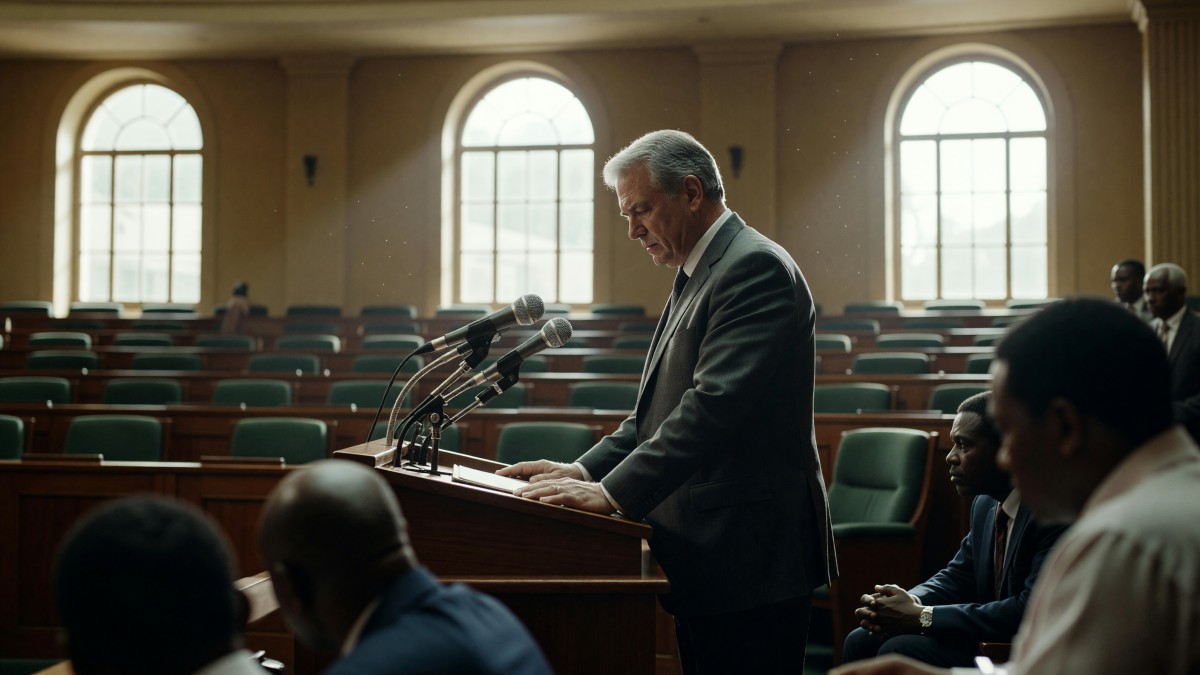
Johannesburg is bracing for a political showdown that could reshape Gauteng’s municipal landscape. On Friday, 27 November 2026, councillors will reconvene to elect a new mayor – a vote that may see ActionSA’s Herman Mashaba step back into the mayoral chain exactly seven years after his last day in office on 27 November 2019. The outcome will not only determine who steers South Africa’s economic powerhouse, but also signal whether the six‑year‑old party can cement its foothold in both the country’s administrative capital and its financial hub.
From DA stalwart to ActionSA firebrand
Herman Mashaba first made headlines when he took the reins of Johannesburg under the Democratic Alliance banner in 2016. Over three years, he navigated the city’s complex service delivery challenges before stepping down in 2019. His departure marked the end of a DA‑led era, but also sowed the seeds for a new political venture. In 2020, Mashaba launched ActionSA, positioning the party as a fresh alternative to the traditional power blocs.
Now, as the city’s political calculus tightens, Mashaba finds himself back in the mayoral race, this time backed by a coalition that includes the ANC, the Economic Freedom Fighters and other smaller parties. The coalition’s reported intention to put Mashaba forward as its candidate reflects a strategic pivot: leveraging his mayoral experience and personal brand to capture the city’s leadership after a period of DA dominance.
The coalition calculus
The upcoming vote follows a postponed mayoral ballot that was delayed on Monday to give parties breathing space for coalition talks. According to the latest reports, the coalition comprising the ANC, EFF and additional partners has coalesced around Mashamba’s candidacy, signalling a concerted effort to unseat the Democratic Alliance’s nominee, former premier Helen Zille. This alliance underscores the fluid nature of Gauteng’s municipal politics, where no single party commands an outright majority.
ActionSA’s ability to attract the ANC and EFF into a joint front is noteworthy. While the ANC holds 63 seats on the 270‑member council and ActionSA controls 43, the DA remains the largest single party with 91 seats. Yet, without a clear majority, the DA must negotiate with smaller factions, a task complicated by the coalition’s unified backing of Mashaba. The dynamics hint at a broader realignment, where traditional party loyalties may be eclipsed by pragmatic alliances aimed at governing the metropolis.
Johannesburg’s electoral math
The council composition paints a vivid picture of the current balance of power. The Democratic Alliance, despite emerging as the largest party with 91 seats, falls short of the 136‑seat threshold needed for an outright majority. The ANC’s 63 seats and ActionSA’s 43 seats together still leave a sizable block of independents and minor parties whose support could tip the scales.
In this fragmented environment, the coalition’s strategy hinges on consolidating enough votes to outmaneuver the DA’s candidate. If the coalition can marshal the ANC’s 63 seats, the EFF’s contribution (exact numbers not disclosed in the source), and the remaining smaller parties, Mashaba’s path to the mayoral office becomes viable. The vote on Friday will therefore be a litmus test for the coalition’s cohesion and its capacity to present a united front against the DA’s seasoned political machine.
ActionSA’s growing metro footprint
A victory for Mashaba would grant ActionSA mayoral control of both Tshwane and Johannesburg – the nation’s administrative and economic capitals respectively. Dr Nasiphi Moya’s re‑election as Tshwane mayor on Thursday, where she secured 115 votes against the DA’s Cilliers Brink’s 87, underscored ActionSA’s surge in the capital’s political arena. The party’s performance in the 4 November local government elections, where it won 48 council seats in Tshwane and overtook the ANC, illustrates a rapid ascent that is reshaping Gauteng’s municipal map.
Securing Johannesburg would amplify this momentum, positioning ActionSA as a formidable third force in South African politics. The party’s ability to translate its local electoral gains into executive authority could reshape policy priorities, especially in service delivery, economic development and urban planning – areas where ActionSA has pledged a fresh, business‑friendly approach.
The DA’s uphill battle
Helen Zille, the DA’s mayoral candidate for Johannesburg, faces a steep challenge. While the DA remains the largest single party on the council, its failure to secure an outright majority reflects a broader erosion of its dominance in metropolitan politics. The party’s 91 seats, though substantial, are insufficient without the backing of smaller parties, many of which have gravitated toward the Mashaba‑led coalition.
The DA’s predicament is compounded by the symbolic weight of Zille’s candidacy. As a veteran of South African politics, her leadership is expected to rally the party’s base and attract undecided councillors. Yet, the coalition’s reported unity around Mashaba suggests that the DA may struggle to forge the necessary alliances, especially when faced with a coalition that includes the ANC – a party historically opposed to the DA’s liberal platform.
Implications for Gauteng’s governance
Should Mashaba secure the mayoral seat, the governance of Gauteng’s two key metros could see a coordinated policy agenda driven by ActionSA’s vision. With Moya already at the helm in Tshwane, the party could pursue synchronized initiatives in transport, housing and economic development, potentially streamlining inter‑city collaboration. This alignment may also influence provincial dynamics, as the Gauteng Premier and other municipal leaders respond to a unified ActionSA front.
Conversely, a DA victory would maintain the status quo of a fragmented opposition, with the party needing to negotiate on a case‑by‑case basis with the ANC, EFF and other partners. Such a scenario could lead to a more contested policy environment, where compromises become necessary to pass budgets and implement service delivery projects. The outcome will therefore shape not only the immediate leadership of Johannesburg but also the broader strategic direction of Gauteng’s metropolitan governance.
What the vote means for South African politics
The Friday vote is more than a municipal contest; it is a bellwether for the evolving multiparty landscape in South Africa. ActionSA’s potential to command both of Gauteng’s largest metros signals a shift away from the traditional binary of DA versus ANC, introducing a third axis that could reshape national discourse. If Mashaba returns to the mayoral chain, it will underscore the potency of coalition politics and the willingness of established parties to align with newer entrants to achieve governing majorities.
For South African voters, the result will reverberate beyond city hall. Johannesburg’s service delivery challenges – from water and electricity to public transport – affect millions of residents. The party that ultimately leads the city will be tasked with delivering tangible improvements, and their performance will likely influence voter sentiment ahead of the next national election cycle. As the city prepares for the decisive council meeting, the nation watches, aware that the mayoral outcome could set the tone for South Africa’s political future.
This article was produced with AI-assisted research and editorial support. Reporting is based on the source material cited below. Sources: The South African; thesouthafrican.com; Global1.News (28 November 2026).
By Dante Williams, Staff Writer
What's Your Reaction?
 Like
0
 Dislike
0
 Love
0
 Funny
0
 Wow
0
 Sad
0
 Angry
0

Breaking News and Investigations Correspondent at Global1.News. Based in London, covering global breaking news, security, and investigative stories. Known for digging deeper and connecting the dots across continents.













Comments (0)