
After a shootout, authorities rescue 3 kidnapping victims and arrest 7 suspects in Puerto Peñasco
On a bright Friday afternoon in Puerto Peñasco, Sonora – the seaside resort better known as Rocky Point – a coordinated operation by federal, state and military forces ended a harrowing kidnapping episode that had left three families in anguish.
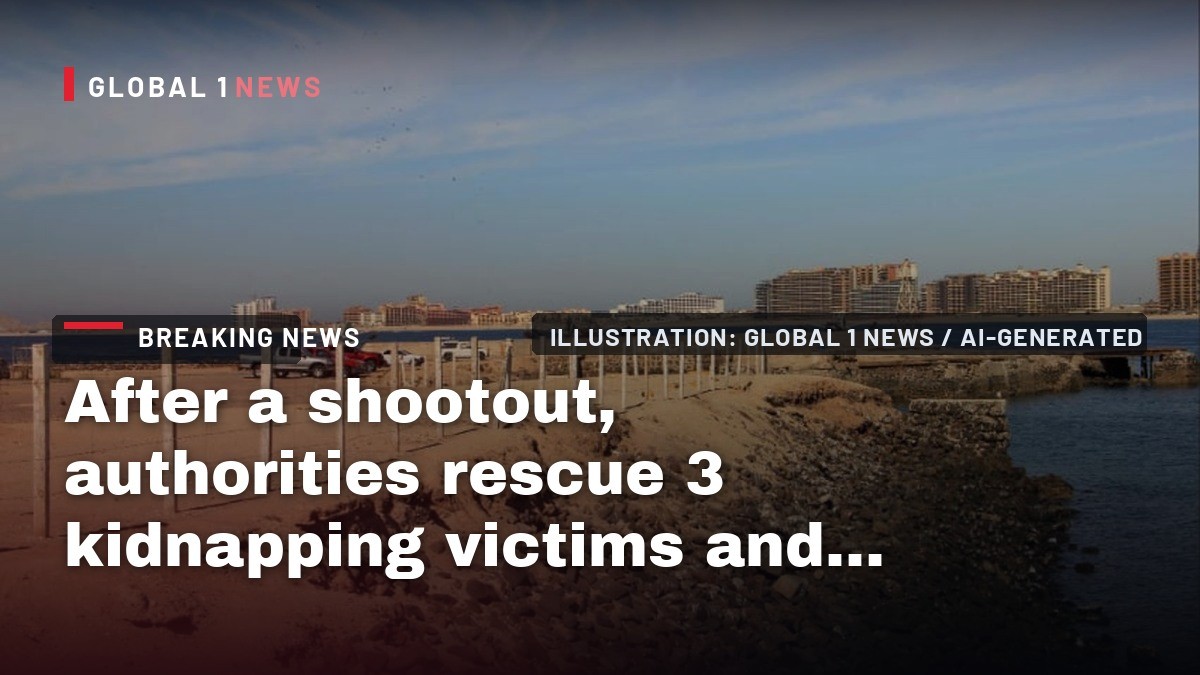
On a bright Friday afternoon in Puerto Peñasco, Sonora – the seaside resort better known as Rocky Point – a coordinated operation by federal, state and military forces ended a harrowing kidnapping episode that had left three families in anguish. The raid, announced by Security Minister Omar García Harfuch, resulted in the rescue of three victims, the capture of seven suspects and the seizure of a sizeable cache of weapons and narcotics. The episode, which unfolded amid the bustling streets of a city that mixes tourist vibrancy with the everyday rhythms of a coastal colonia, underscores the growing complexity of organized crime in northern Mexico and the collaborative effort required to confront it.
How the operation unfolded
The investigation began when several miners, working in the remote areas of Sonora, reported that they had narrowly escaped a kidnapping attempt the week before. Their testimony set off a chain of alerts that moved from the state Attorney General’s Office (FGJES) to three federal agencies and the military. Intelligence gathered by the National Center for Intelligence (CNI), the Secretariat of National Defense (SEDENA), the Navy (SEMAR) and the state security agency AMIC converged on a single property linked to the abductions.
When state police and soldiers arrived at the location, they were met with a volley of gunfire from armed civilians. The forces responded, eventually outflanking the assailants and containing the scene. In the exchange, three Sonora Investigative Police agents sustained injuries – one shot in a lower extremity and two women hit by shrapnel – but all remained in stable condition. The confrontation also left three kidnapping victims free, though the agents’ wounds reminded everyone that the cost of confronting such violence remains high.
The seized arsenal
Following the shootout, authorities secured a search warrant and re‑entered the property. Inside, they uncovered an arsenal that would be the envy of many criminal outfits: more than forty long guns, roughly four thousand rounds of ammunition, two Minimi light‑machine guns and a Browning M2 .50 caliber machine gun. The presence of such firepower signals a level of militarization among criminal groups that challenges traditional policing methods and raises concerns about the flow of weapons across the U.S.–Mexico border.
Beyond the firearms, the raid revealed a cache of tactical gear, including bullet‑proof vests and loaded magazines, suggesting that the suspects were prepared for sustained armed confrontations. The seizure of this equipment not only removes immediate threats but also disrupts the logistical networks that supply illicit actors with the tools of violence.
Narcotics and stolen vehicles
Investigators did not stop at the weapons cache. A second warrant, issued after the initial search, led to two weekend raids on additional properties in downtown Puerto Peñasco. These follow‑up operations uncovered a substantial haul of heroin and methamphetamine, alongside three high‑end vehicles reported stolen in the United States. The drugs, likely destined for distribution through the well‑established trafficking corridors that run through Sonora, illustrate how kidnapping rings often intersect with broader narcotics networks.
The stolen vehicles, described in reports as high‑end, point to a pattern where criminal groups acquire assets abroad to facilitate movement and evade detection. The presence of such cars in a city known more for its beaches than its crime scenes highlights the reach of transnational criminal enterprises into everyday Mexican locales.
Legal repercussions for the suspects
Seven individuals were taken into custody, including one minor. Authorities have charged them with a suite of serious offenses: attempted aggravated homicide, crimes against public servants, aggravated vehicle theft, criminal association and kidnapping. These charges reflect the multi‑faceted nature of the alleged crimes, ranging from violent assaults on state agents to the theft of property and the abduction of civilians.
The inclusion of a minor among the suspects raises difficult questions about the recruitment of youth into criminal organizations, a phenomenon that has plagued many Mexican communities, especially in border states where economic opportunities are limited. The legal process will need to balance accountability with the broader social factors that draw young people into illicit activities.
Impact on the local community
For the families of the three rescued victims, the operation offered a moment of relief amid months of uncertainty. In a city where the rhythm of daily life often revolves around the tianguis, the local market, and the steady flow of tourists to its beaches, the shadow of kidnapping can erode the sense of safety that underpins community cohesion. The injuries sustained by the three AMIC agents, while not life‑threatening, serve as a stark reminder that law‑enforcement officers share the same vulnerabilities as the citizens they protect.
Local businesses, from the tortillerías that feed the neighborhood to the small hotels that rely on tourists, watch closely as security forces intervene. A successful rescue operation can restore confidence, encouraging both residents and visitors to feel secure walking the streets of Puerto Peñasco. Conversely, the knowledge that heavily armed groups operate in the area can fuel anxiety, especially among those whose livelihoods depend on the steady flow of people through the city’s bustling plazas.
Broader implications for security policy
Minister García Harfuch’s statement highlighted the collaborative nature of the operation, noting the involvement of three federal agencies and the military alongside state officials. This joint approach reflects a growing trend in Mexican security policy: the integration of intelligence, military assets and local police to counter organized crime. By pooling resources, authorities can trace the movements of criminal groups more effectively, as demonstrated by the identification of a white Chevrolet Suburban that the near‑victims described.
The operation also underscores the importance of rapid intelligence sharing. The coordination between the National Center for Intelligence, the Secretary of Defense, the Navy and state agencies enabled a swift response that likely prevented further harm. As Mexico continues to grapple with the dual challenges of drug trafficking and violent crime, such inter‑agency cooperation may become a cornerstone of future strategies.
Looking ahead: challenges and hopes
While the successful rescue and the seizure of weapons and drugs mark a decisive victory for law‑enforcement, the underlying issues that fuel kidnapping and organized crime remain. Economic disparity, limited employment opportunities in remote mining towns and the allure of quick profit from illicit activities continue to draw individuals into dangerous circles. Addressing these root causes will require sustained investment in education, job creation and social programs, especially in regions like Sonora where the border economy exerts both positive and destabilizing influences.
For the people of Puerto Peñasco, the incident will likely be remembered as a moment when the community’s resilience was tested and affirmed. The bravery of the three AMIC agents, the quick thinking of the miners who reported the attempted kidnapping, and the coordinated response of federal and state forces together illustrate a collective commitment to safety and justice. As the city returns to its everyday rhythm – families strolling along the Malecón, vendors setting up stalls at the tianguis, children playing near the ejido fields – the hope is that this episode will serve as a reminder of the importance of vigilance, solidarity and the relentless pursuit of a Mexico where every family can live without fear.
This article was produced with AI-assisted research and editorial support. Reporting is based on the source material cited below. Sources: Mexico News Daily; mexiconewsdaily.com; Global1.News (21 September 2026).
By Rosa Martinez, Staff Writer
What's Your Reaction?
 Like
0
Like
0
 Dislike
0
Dislike
0
 Love
0
Love
0
 Funny
0
Funny
0
 Wow
0
Wow
0
 Sad
0
Sad
0
 Angry
0
Angry
0

Latin America/Andes Correspondent at Global1.News. Based in Bogota, covering politics, environment, energy, and social movements across the Andean region. Passionate about environmental journalism and communities protecting their land.















Comments (0)