
2027: Sowore backs return of fuel subsidy
Omoyele Sowore, the presidential candidate of the African Action Congress (AAC), has taken a bold stance ahead of the 2027 elections, promising to reinstate the fuel subsidy that the Bola Tinubu administration removed and to raise the minimum wage to N500,000 per month.
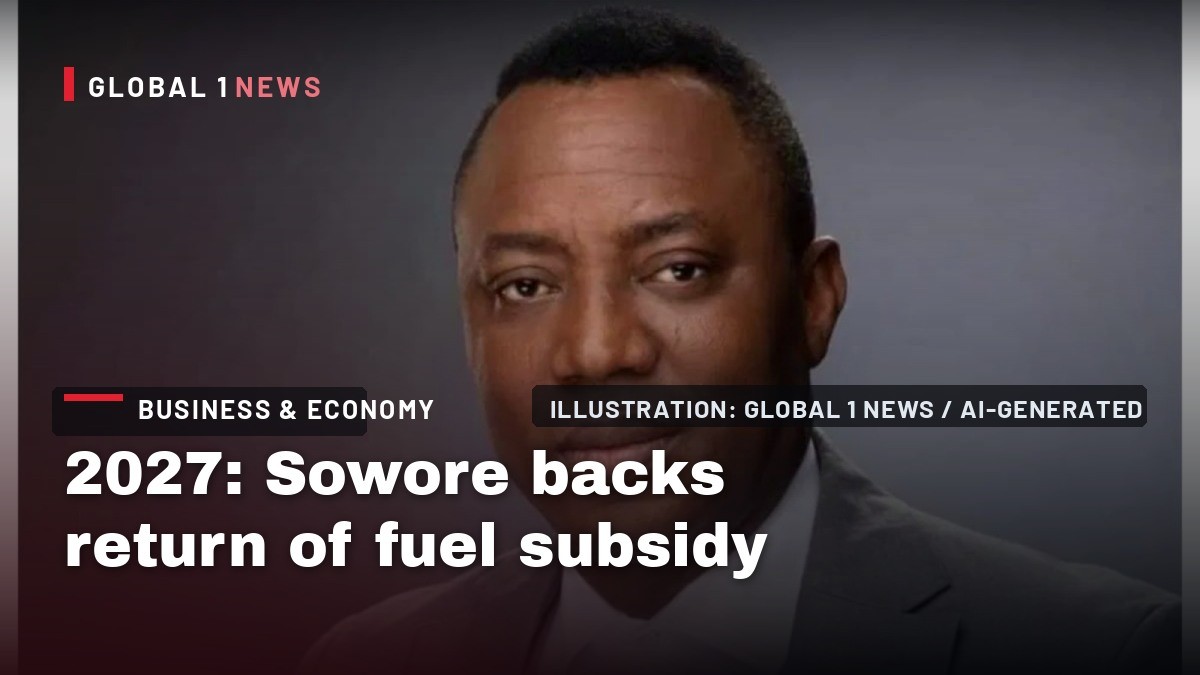
Omoyele Sowore, the presidential candidate of the African Action Congress (AAC), has taken a bold stance ahead of the 2027 elections, promising to reinstate the fuel subsidy that the Bola Tinubu administration removed and to raise the minimum wage to N500,000 per month. In a post shared on his official X handle on Monday, Sowore framed these pledges as a matter of dignity for the Nigerian worker, insisting that “workers deserve wages they can actually live on.” His remarks have reignited a nationwide debate that pits the old subsidy regime against proposals for market‑based reforms, and they place Sowore alongside other candidates who are also courting the electorate with promises of economic relief.
Fuel subsidy: Sowore’s central promise
Sowore’s commitment to restore the fuel subsidy is a direct response to the policy shift implemented by President Bola Tinubu’s government, which eliminated the subsidy in an effort to curb fiscal deficits and curb fuel smuggling. By pledging to bring back the subsidy, Sowore signals a return to a policy that once kept gasoline prices artificially low for consumers, albeit at a significant cost to the national treasury.
The candidate’s declaration that “we will also restore the petrol subsidy” underscores his belief that affordable fuel is a prerequisite for a thriving economy. He argues that without subsidised petrol, the cost of living spirals for ordinary Nigerians, eroding purchasing power and fueling discontent. While the post does not detail how his administration would fund the subsidy, the promise itself taps into a deep well of public sentiment that has historically favored lower fuel prices, even as economists warn of the fiscal strain such subsidies impose.
Minimum wage pledge: N500,000 a month
Alongside the fuel subsidy, Sowore has pledged a minimum wage of N500,000 per month for all Nigerian workers. He framed the proposal as a “living wage,” rejecting what he called “funny statistics” that aim to dilute the figure. The candidate’s insistence that “under our government, Nigerian workers will earn a minimum wage of at least N500,000 monthly” reflects a broader narrative that wages must keep pace with inflation and the rising cost of essentials.
While the post does not provide a breakdown of how the wage would be financed, the promise aligns with a growing chorus among opposition figures calling for higher wages to bridge the gap between earnings and living costs. By coupling the wage increase with the fuel subsidy, Sowore presents a cohesive package aimed at boosting disposable income and alleviating the financial pressures that many Nigerians face.
Competing visions: Atiku Abubakar’s targeted subsidy
Among the candidates who also support reinstating a fuel subsidy, Atiku Abubakar of the African Democratic Congress (ADC) offers a nuanced approach. Atiku proposes restoring a form of subsidy that is “targeted at domestic refiners,” a strategy that would channel financial support directly to Nigeria’s refining sector rather than providing a blanket subsidy to consumers.
This targeted model seeks to address the chronic under‑investment in local refineries while still offering some relief to end‑users through lower domestic fuel prices. By focusing on domestic refiners, Atiku hopes to stimulate local production, reduce reliance on imported refined products, and potentially create jobs in the petrochemical industry. However, the proposal still hinges on significant fiscal outlays and raises questions about the efficiency of subsidy distribution and the risk of corruption.
Opposition to a full subsidy: Peter Obi and Seyi Makinde
In contrast, the presidential candidates of the Nigeria Democratic Congress (NDC), Peter Obi, and the Allied Peoples Movement (APM), Seyi Makinde, have publicly rejected a return to the old subsidy regime. Both candidates argue that reinstating the subsidy in its previous form would be fiscally unsustainable and would not address the underlying structural issues in Nigeria’s energy sector.
Makinde, in particular, has advocated for “cheaper domestic crude pricing for Nigerian refineries” as an alternative pathway to lower fuel costs. By reducing the price of crude oil supplied to local refineries, Makinde aims to lower the production cost of gasoline without the need for a direct consumer subsidy. This approach seeks to balance affordability with fiscal prudence, acknowledging the budgetary constraints that have plagued successive administrations.
The fiscal dilemma: Subsidy costs versus economic relief
The debate over fuel subsidies is fundamentally a fiscal dilemma. Restoring the subsidy, as Sowore and Atiku propose, would require substantial government spending, potentially widening the budget deficit or diverting resources from other critical sectors such as health, education, and infrastructure. Historically, fuel subsidies have been a major drain on public finances, prompting successive governments to cut or eliminate them in pursuit of macro‑economic stability.
Conversely, the market‑oriented proposals of Obi and Makinde aim to achieve affordability through supply‑side interventions rather than direct cash transfers to consumers. By lowering the cost of crude for refiners, they hope to pass savings onto consumers while preserving fiscal space. The effectiveness of such strategies depends on the efficiency of the refining sector, the volatility of global oil prices, and the capacity of the government to enforce transparent pricing mechanisms.
Political stakes: How the subsidy debate shapes the 2027 race
The fuel subsidy issue has emerged as a litmus test for candidates’ economic credibility and their ability to address everyday hardships. For Sowore, the promise of reinstating the subsidy and raising the minimum wage positions him as a champion of the working class, appealing to voters who feel the pinch of high fuel prices and stagnant wages. His direct language—labeling critics’ data as “funny statistics”—signals a willingness to confront established economic narratives.
Atiku’s targeted subsidy proposal offers a middle ground, promising relief while attempting to bolster the domestic refining industry. Meanwhile, Obi and Makinde’s rejection of a blanket subsidy reflects a strategic pivot toward long‑term structural reforms. As the election campaign intensifies, these divergent approaches will likely shape voter perceptions of each candidate’s competence to manage Nigeria’s fiscal challenges.
Looking ahead: Potential impacts of a restored subsidy
If Sowore’s promise were to become reality, the immediate impact would be a reduction in fuel prices at the pump, providing short‑term relief to commuters, transport operators, and businesses reliant on fuel. This could stimulate economic activity by lowering transportation costs, which in turn might translate into lower prices for goods and services across the economy.
However, the longer‑term fiscal implications could be significant. Funding a nationwide fuel subsidy would require either increased borrowing, higher taxes, or the reallocation of budgetary resources from other sectors. The sustainability of such a policy would hinge on the government’s ability to balance short‑term consumer benefits with the need to maintain fiscal discipline. Moreover, without accompanying reforms to improve refinery capacity and reduce inefficiencies, a reinstated subsidy could perpetuate market distortions, encouraging fuel smuggling and undermining domestic production incentives.
This article was produced with AI-assisted research and editorial support. Reporting is based on the source material cited below. Sources: Daily Post Nigeria; dailypost.ng; Global1.News (21 September 2026).
By Sarah Okafor, Staff Writer
What's Your Reaction?
 Like
0
Like
0
 Dislike
0
Dislike
0
 Love
0
Love
0
 Funny
0
Funny
0
 Wow
0
Wow
0
 Sad
0
Sad
0
 Angry
0
Angry
0

Africa Correspondent at Global1.News. Based in Lagos, covering politics, business, technology, and culture across the continent. Focused on telling African stories beyond the headlines — the innovation, entrepreneurs, and communities shaping the region's future.












Comments (0)