
Chased by Disaster: Venezuelan Teens Face Colombia's Quake
Venezuelan brothers Deivi and Winder Delfín survived twin earthquakes that killed their mother, then fled to Colombia — only to be caught in this week's deadly 7.4-magnitude quake that has killed at least 287 people across western Colombia.
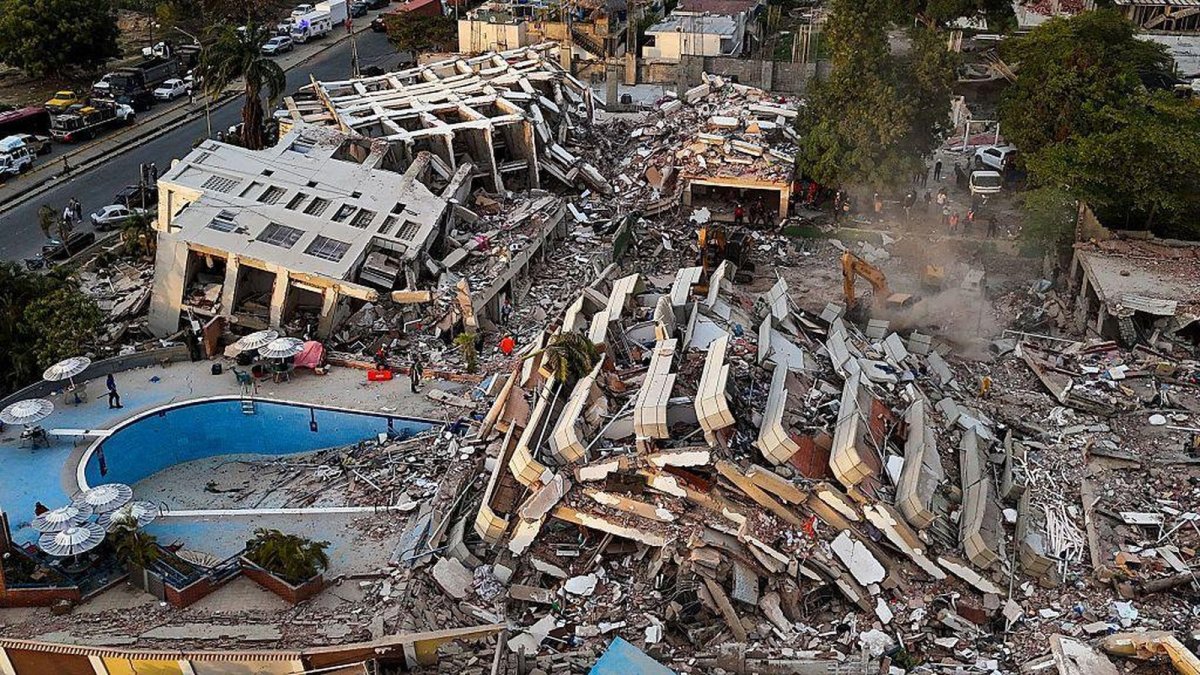
They crossed one border to escape one disaster — and found themselves buried in the wreckage of another. Deivi Delfín, 15, and his brother Winder, 17, survived twin earthquakes in Venezuela that killed their mother, their younger brother and their grandmother, only to be caught this week in the powerful tremor that has shattered western Colombia, killing at least 287 people. Their ordeal has become a searing symbol of a bitter regional truth: in Latin America, disaster does not strike once. It chases the most vulnerable across borders.
Cali, Colombia — Deivi and Winder came to Cali this year to live with their father, Deivid Delfín, 44, after their home in Venezuela was reduced to rubble. On Monday morning, when a magnitude 7.4 earthquake tore through the west of the country, the ground beneath their new life gave way too. "The earthquake is haunting me," Deivi told reporters this week, standing in a city where rescue crews were still pulling bodies from concrete.
The Brothers Who Outran One Disaster
The Delfín brothers' story begins in June, when two powerful earthquakes — measured at 7.2 and 7.5 — struck north-central Venezuela in quick succession, flattening buildings across the corridor from Valencia to Caracas and the coastal state of La Guaira. The Venezuelan government declared a state of emergency. Seismologists later confirmed it as the country's largest seismic event since 1900. Official figures put the death toll at more than 6,300 people, with thousands more injured and no clear count of the missing.
Among the dead were the boys' mother, their younger brother and their grandmother. Deivi and Winder, then still teenagers in a city of collapsed walls, joined the rescue efforts — digging through rubble alongside neighbors. For three days they had nowhere to sleep and nothing to eat, according to the BBC. When their father in Cali learned they had survived, he brought them across the border to Colombia, a country that has absorbed millions of Venezuelan migrants in recent years.
They had been rebuilding their lives for barely two months when the earth moved again. "It feels like the tremors are following us," Deivi said, describing the moment Monday's quake hit Cali, sending his family running into the street as buildings swayed and facades crumbled.
The brothers are far from alone in that experience. Colombia has hosted one of the world's largest displaced populations in recent years: the United Nations has documented more than seven million Venezuelans living abroad, the majority of them in Colombia, fleeing economic collapse and political repression. Now the country that opened its doors to them is itself in ruins, and the migrants who arrived seeking safety have learned that in Latin America, displacement rarely ends with a single border crossing.
A Region Living on the Seismic Belt
Geology offers an unsparing explanation for the brothers' nightmare. Venezuela and Colombia sit along the Pacific Ring of Fire, where the Nazca plate grinds beneath the South American continent, generating some of the most powerful earthquakes on Earth. The June quakes in Venezuela were a reminder that the seismic threat reaches far beyond the Andes: north-central Venezuela had not experienced such destructive shaking in more than a century.
Monday's tremor, centered near San José del Palmar in the department of Chocó, was felt across much of western and central Colombia and in parts of neighboring Ecuador and Panama. The US Geological Survey registered it at magnitude 7.4, with some seismological services reporting up to 7.5. For Latin Americans, the lesson is a familiar one — the ground beneath the region's fastest-growing cities is never as stable as the economies building on top of it.
Colombia's Own Tragedy
For Colombia, the quake has become the country's worst disaster in years. It struck at 07:34 local time on Monday, when many families were still asleep, and devastated cities including Cali, Pereira, Quibdó and Manizales. The government declared a state of national disaster and, days later, three days of national mourning. Damage has been reported across 13 departments and 357 municipalities, with more than 1,500 buildings damaged or destroyed.
The toll continues to climb as rescue teams reach isolated communities. As of this week, at least 287 people had been confirmed dead, more than 3,900 injured, and more than 4,100 reported missing, according to officials and relief agencies tracking the response. Chocó, the department closest to the epicenter, is of particular concern: it is one of Colombia's poorest regions, heavily reliant on water transport, with limited road access and restricted flows of information — conditions that have slowed both rescue and relief. Its riverside towns, many of them home to Afro-Colombian and Indigenous communities, were cut off for days after landslides blocked the few roads that exist.
The disaster has also tested Colombia's emergency systems in real time. Authorities activated search-and-rescue operations within hours, deploying army units, firefighters and specialized urban rescue teams to the worst-hit cities. Yet the sheer scale of the destruction — hospitals damaged, power lines down, water systems broken in cities of millions — has forced officials to plead for international help. Neighboring countries and international agencies have begun sending rescue dogs, medical supplies and assessment teams, a reminder that disaster response in the region still depends heavily on solidarity across borders.
Rescue in the Rubble
Amid the devastation, there have been moments of raw hope. On Wednesday, rescue workers pulled Daniela Largo, a 32-year-old woman, alive from beneath slabs of concrete in Cali after she had been trapped for 36 hours — a rescue operation that lasted 10 hours and ended with her wrapped in a blue sheet, carried to an ambulance as firefighters and neighbors cheered. Her survival became a symbol of the race against time still underway across the affected zone.
Crews from the Colombian army, civil defense and international agencies have been working alongside local volunteers, many of them ordinary residents digging with their hands. Aid organizations warn that the window for finding more survivors is closing, and that the humanitarian need is enormous: thousands of families have lost their homes, and displaced people are sheltering in parks, schools and streets still strewn with debris.
What the Quakes Reveal About Latin America
The twin tragedies — Venezuela in June, Colombia this week — expose structural weaknesses that no single government has fully solved. Much of the region's housing stock, particularly in poorer neighborhoods, was built without seismic standards. Informal settlements cling to hillsides and riverbanks, where the soil amplifies shaking and landslides follow. Disaster preparedness budgets are chronically underfunded, even in countries that know the threat is coming.
Elena's home region knows these patterns well. Brazil, less seismically active, has its own disaster history in floods and landslides that have repeatedly swallowed communities from Rio Grande do Sul to the hillsides of Rio de Janeiro. Across Latin America, the lesson is the same: the poorest are always the first to die and the last to be rescued. The Delfín brothers are the human face of that equation — Venezuelan migrants, displaced once by nature and politics, displaced again by geology.
There is also a warning in the timing. Scientists have long cautioned that climate change is compounding the region's vulnerability — heavier rains loosening slopes, deforestation stripping natural barriers, drought and flood straining the systems that respond when the earth shakes. A quake does not need climate to kill; it needs fragile housing, weak institutions and communities with nowhere else to go. Colombia and Venezuela have all three in abundance, and so do most of their neighbors.
For Deivi and Winder, the tremors have become a permanent companion. Their father told reporters the family is alive, and that is what matters. But as Colombia buries its dead and counts its missing, the brothers' question hangs over the whole region: how many more disasters will Latin America's most vulnerable people have to outrun before the ground they stand on is made safer?
This article was produced with AI-assisted research and editorial support. Sources: BBC News, Reuters, Al Jazeera, The New York Times, US Geological Survey, CARE, World Vision.
By Elena Vasquez, Staff Writer
What's Your Reaction?
 Like
0
Like
0
 Dislike
0
Dislike
0
 Love
0
Love
0
 Funny
0
Funny
0
 Wow
0
Wow
0
 Sad
0
Sad
0
 Angry
0
Angry
0

Latin America Correspondent at Global1.News. Based in Mexico City, covering politics, economics, energy, and culture across the region. Brings an on-the-ground perspective to stories spanning from the Rio Grande to Patagonia.










Comments (0)