
US, Iran Reportedly Agree to Extend Cease-Fire Under Islamabad Accord
The fragile architecture of the June 17 Islamabad Accord is being tested once again, as Washington and Tehran have reportedly agreed in principle to extend their cease-fire beyond the looming Aug.
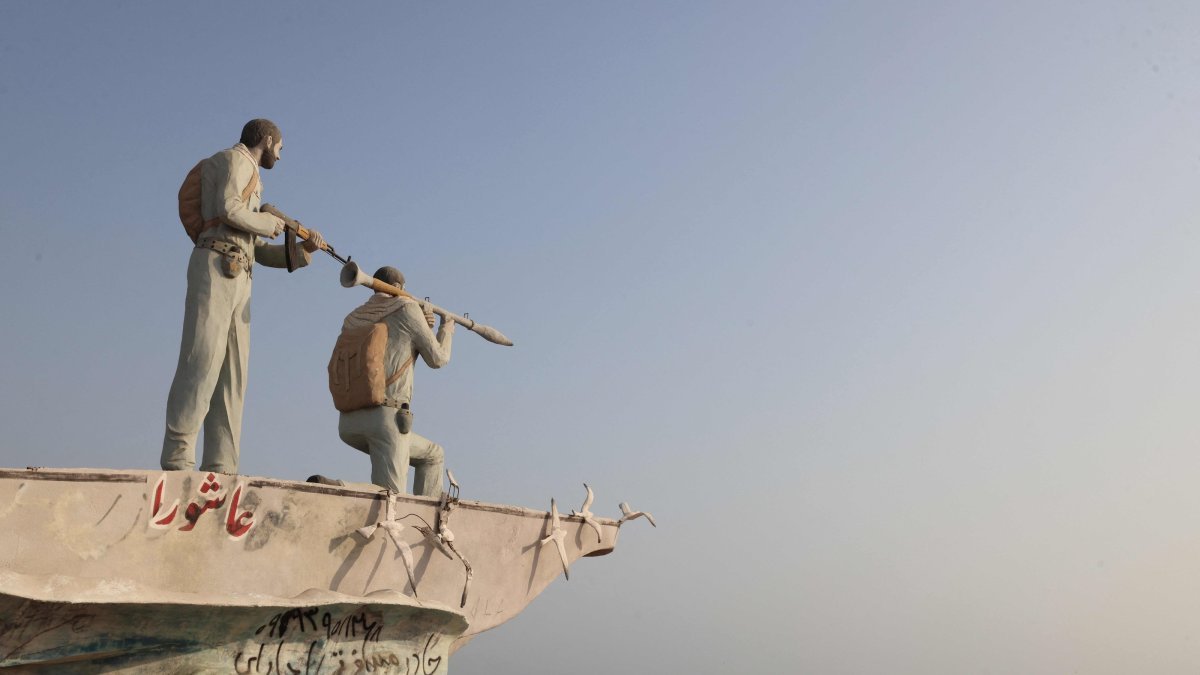
The fragile architecture of the June 17 Islamabad Accord is being tested once again, as Washington and Tehran have reportedly agreed in principle to extend their cease-fire beyond the looming Aug. 17 deadline, even as the US Navy actively enforces a maritime blockade in the Gulf of Oman that threatens to unravel the entire diplomatic process. The dual-track dynamic—diplomatic extension on one hand, kinetic interdiction on the other—captures the precarious state of a peace process that has already survived one violent breakdown and now faces its most critical test.
US, Iran Reportedly Agree to Extend Cease-Fire Under Islamabad Accord as Naval Blockade Enforcement Continues in Gulf of Oman
Beirut, Lebanon – Aug. 12, 2026 — A source close to the Pakistan-mediated negotiation process confirmed to the Turkish state-run Anadolu Agency that both Washington and Tehran have formally conveyed their approval for an extension of the truce to international mediators. However, active contacts remain ongoing between the parties to determine the precise duration of the extended cease-fire beyond the initial Aug. 17 deadline, the source added. Neither U.S. nor Iranian officials have issued formal public statements regarding the extension, leaving significant ambiguity about the sustainability of the current pause in hostilities.
The Fragile Architecture of the Islamabad Accord
The reported extension comes against the backdrop of a peace process that has been on life support since late July. Washington and Tehran agreed to a Pakistan-brokered cease-fire in April, following the outbreak of war on Feb. 28, 2026. The landmark Islamabad Accord, signed by the presidents of both nations on June 17, established a 60-day negotiation period designed to provide diplomatic space for both sides to negotiate a final, permanent settlement to end the conflict. That memorandum also lifted a dual blockade that had been choking maritime traffic in the region.
Yet the talks have stalled over fundamental disagreements on security guarantees and freedom of navigation through the Strait of Hormuz, one of the world's most strategic routes for global energy supplies and trade. The chokepoint, through which roughly 20% of global oil consumption transits daily, remains the central flashpoint of the entire negotiation. Iran's insistence on guaranteed maritime access and the United States' demand for verifiable restrictions on Tehran's naval and missile capabilities have proven mutually incompatible in the current framework.
The July Escalation and Its Aftermath
The diplomatic stalemate produced a dramatic escalation between July 8 and July 24, when the U.S. and Iran exchanged military strikes. Washington launched attacks on targets inside Iran, while Tehran responded by striking what it described as U.S. military facilities and equipment in several Arab countries, including Jordan, Bahrain and Kuwait. This regionalization of the conflict—drawing in Gulf host nations for U.S. forces—represented a dangerous expansion of the war's geography and raised alarms across the Gulf Cooperation Council (GCC) about the potential for a broader conflagration.
The July exchange demonstrated the inherent fragility of the Islamabad Accord's enforcement mechanisms. Neither side possesses sufficient trust in the other's commitment to the memorandum, and the absence of a robust verification regime has allowed both parties to interpret the accord's provisions in ways that suit their strategic interests. For Iran, the strikes on U.S. facilities in Arab countries served as a warning that any continued American military pressure would be met with regional consequences. For Washington, the strikes on Iranian territory signaled that the blockade enforcement would continue regardless of diplomatic progress.
Naval Interdiction: The Vela Nova Incident
Against this volatile backdrop, the U.S. military's Central Command (CENTCOM) confirmed that a US Navy MH-60 helicopter fired two Hellfire missiles into the engine room of the Vela Nova, a cargo ship attempting to breach the maritime blockade, after the vessel's civilian crew ignored repeated warnings from American forces. CENTCOM confirmed that the vessel is no longer transiting to Iran and stressed that the maritime restriction remains in full effect.
Maritime security firm Vanguard reported that the Vela Nova was struck while transiting westbound through the Gulf of Oman about 71 nautical miles (131 kilometers) offshore. The missile strike caused a fire that was subsequently extinguished, and all 17 crew members were accounted for. According to the Wall Street Journal, following the attack, the ship appeared to be trying to move its crew to another civilian vessel—a detail that suggests the interdiction was not without complications.
As of Tuesday, CENTCOM has redirected 55 commercial vessels attempting to run the blockade, disabled three non-compliant ships, and boarded two others. These figures indicate that the blockade enforcement is not a symbolic gesture but an active, ongoing military operation with significant operational tempo. The sheer volume of vessels attempting to breach the restriction—55 redirected—suggests either a deliberate Iranian effort to test the blockade's resolve or a commercial calculation by shipping companies that the risk of interdiction remains acceptable given the potential profits from delivering cargo to Iran.
Pakistan's Mediation: Between Leverage and Limits
Pakistan's role as the primary mediator has been central to the entire peace process, and Islamabad is now working to prevent the accord's collapse. Pakistan's Foreign Ministry says Pakistan is working to bring the US and Iran to the negotiating table and prevent efforts to undermine the peace process, with the 60-day MoU deadline set to expire on Sunday. Pakistani Interior Minister Mohsin Naqvi has visited Tehran as part of these efforts, signaling that Islamabad is deploying its full diplomatic apparatus to keep the process alive.
Pakistan's leverage derives from its unique position as a Muslim-majority state with functional diplomatic relations with both Washington and Tehran, as well as its proximity to the Gulf of Oman—the very waters where the blockade is being enforced. The Vela Nova incident occurred in the Gulf of Oman, underscoring the geographic intimacy of the conflict with the region where Islamabad holds influence. This proximity gives Islamabad both a strategic interest in de-escalation and a practical capacity to influence events on the ground.
However, Pakistan's mediation faces significant structural limits. Iran's Foreign Minister Abbas Araghchi stated on Aug. 9, via PressTV, that Iran will not engage in new negotiations with the US as long as it keeps violating the war-ending memorandum. This position, while perhaps partially rhetorical, reflects a genuine erosion of trust that no amount of Pakistani shuttle diplomacy can fully repair. The blockade enforcement, from Tehran's perspective, constitutes a continuing violation of the accord's spirit, even if the letter of the agreement permits such interdictions.
Strait of Hormuz: The Strategic Core of the Dispute
The negotiations mediated primarily by Pakistan center on extending the April 2026 temporary ceasefire into a broader framework covering the Strait of Hormuz, Iran's nuclear program and ballistic missiles, sanctions relief, and maritime access. These four pillars represent the core strategic interests of both parties, and each is deeply interconnected with the others. Iran's nuclear program and ballistic missile capabilities are, from Tehran's perspective, its primary deterrent against U.S. military superiority. The United States, in turn, views these capabilities as an existential threat to its regional allies and to the free flow of energy supplies.
The Strait of Hormuz sits at the intersection of all these issues. Iran has historically threatened to close the strait in response to economic pressure or military threats, and the current blockade—imposed by the United States—represents a mirror-image strategy. Washington's blockade of Iranian maritime commerce is designed to strangle Tehran's economy and force concessions at the negotiating table. Iran's threats to disrupt shipping through Hormuz, in turn, are designed to raise the global cost of continued U.S. pressure. The Vela Nova incident demonstrates that this mutual coercion strategy remains fully operational even as both sides claim to be extending the cease-fire.
Regional Implications and the Gulf Security Architecture
The continued enforcement of the blockade, even as the cease-fire extension is reportedly approved, sends a complex signal to regional actors. For the GCC states—Saudi Arabia, the UAE, Bahrain, Kuwait, Qatar, and Oman—the message is that Washington remains committed to containing Iran militarily, even while pursuing diplomatic engagement. This dual-track approach mirrors the broader U.S. strategy in the region, which has long combined military pressure with diplomatic outreach.
However, the July strikes on U.S. facilities in Jordan, Bahrain, and Kuwait have introduced a new variable into the Gulf security calculus. These attacks demonstrated that Iran can and will target U.S. assets on the territory of Arab states, potentially drawing those states directly into the conflict. For Bahrain and Kuwait, which host significant U.S. naval and air assets, this represents a direct security threat that cannot be ignored. The GCC's collective security architecture, which has historically relied on U.S. protection, is now being tested by the very conflict that protection was designed to deter.
The energy market implications are equally significant. Any sustained disruption to Strait of Hormuz shipping would have immediate global consequences, potentially spiking oil prices and triggering economic instability in import-dependent economies across Asia and Europe. The fact that 55 vessels have been redirected and three disabled suggests that the blockade is already having a measurable impact on maritime traffic, even if the strait itself remains open. The longer the blockade persists, the more pronounced these economic effects will become, potentially creating new pressures on both Washington and Tehran to reach a genuine settlement.
The Path Forward: Extension Without Resolution
The reported agreement to extend the cease-fire, while welcome, does not address the fundamental issues that caused the talks to stall in the first place. An extension without progress on security guarantees and freedom of navigation merely postpones the inevitable confrontation. The July escalation demonstrated that both sides are willing to resume hostilities when diplomatic progress stalls, and the blockade enforcement suggests that the underlying tensions remain fully operational.
The coming weeks will be critical. If the extension is formalized and the parties return to the negotiating table with genuine flexibility, there remains a path toward a comprehensive settlement. If, however, the extension becomes another period of frozen diplomacy punctuated by continued military pressure, the risk of a renewed conflict—potentially more destructive than the February-July war—will grow substantially. The Vela Nova incident, coming on the same day as the reported extension, serves as a stark reminder that the peace process remains hostage to the very military dynamics it was designed to resolve.
By Malik Hassan, Staff Writer
This article was produced with AI-assisted research and editorial support. Reporting is based on sources cited in the article.
What's Your Reaction?
 Like
0
Like
0
 Dislike
0
Dislike
0
 Love
0
Love
0
 Funny
0
Funny
0
 Wow
0
Wow
0
 Sad
0
Sad
0
 Angry
0
Angry
0
Middle East Correspondent at Global1.News. Based in Beirut, covering politics, conflict, energy, and society across the Middle East. Brings context and depth to a region often reduced to headlines.












Comments (0)