
US Deports First Migrants to Liberia as Third-Country Deportation Network Expands
In a recent DW News report, the spotlight fell on a startling new chapter in the United States' global deportation strategy: the use of African nations as distant holding pens for migrants from the Americas. The report highlights an agreement with Liberia, which has agreed to receive up to 1,200 deportees—including nationals from South America and the Caribbean—making it the 14th African country to sign such a deal with Washington.
First US Deportation Flight Lands in Liberia Under Controversial Third-Country Pact
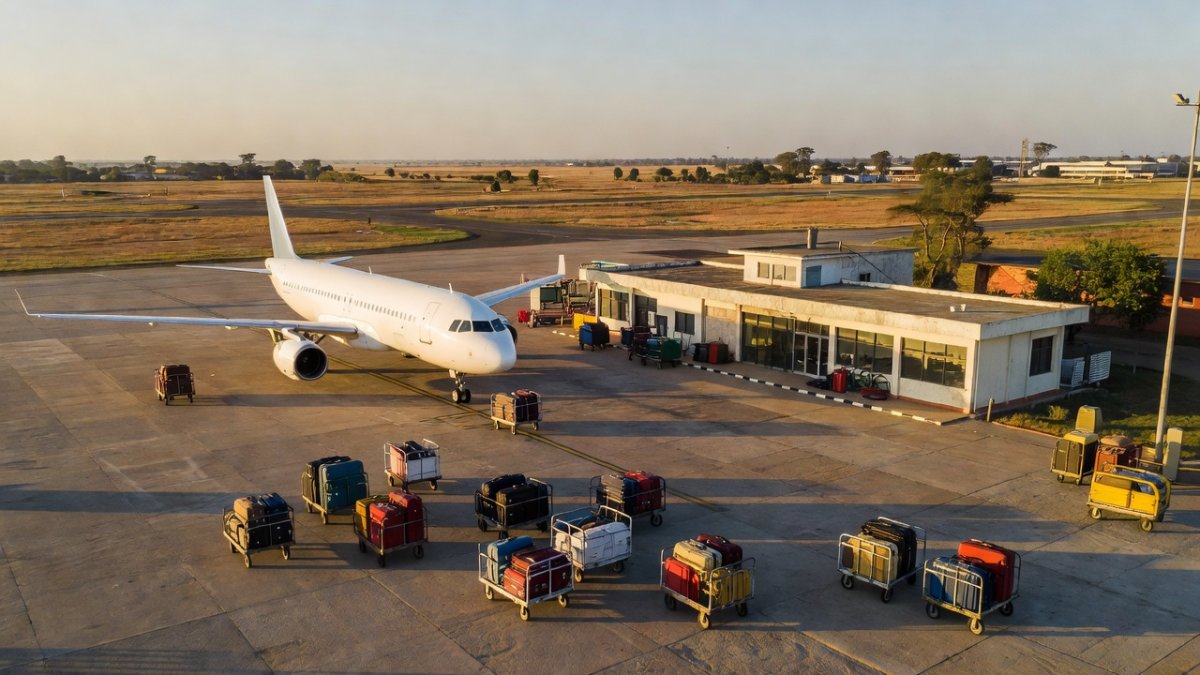
Mexico City, Mexico — The first flight carrying deportees under a new US-Liberia agreement touched down on Thursday at Roberts International Airport outside Monrovia, according to verified reporting from the Associated Press and The Guardian. The 20 individuals on board were not all Liberian citizens; they included African nationals as well as people from North America, South America, and the Caribbean, confirmed Liberian Information Minister Jerolinmek Piah. The flight marks the operational beginning of a deal that could see up to 1,200 third-country nationals sent to the West African nation within 12 months, a plan that rights groups warn is a dangerous expansion of Washington's "deportation to anywhere" policy.
What the Liberia Agreement Actually Says
The six-page agreement, reached in September 2025 and posted on the US State Department website, is notably vague on specifics. It does not enumerate how many people will be sent or from which countries they will originate. However, a statement published Tuesday by the Liberian government clarified the scope: Liberia will accept up to 1,200 deportees who "will include citizens or nationals of African and Western Hemisphere countries who are medically authorized to travel." The language is clinical, but the human reality is complex. Liberian Justice Minister Natu Oswald Tweh has stated that deportees could seek asylum in the West African country if they wished, a provision that asylum experts say is nearly impossible to navigate for someone with no prior connection to Liberia.
The Liberian government has framed the arrangement as a humanitarian gesture, stating that the people will be received "as guests," will be "free to depart the country when they so desire," or may apply for asylum. Officials insist there is "no quid pro quo and no direct compensation," though the statement acknowledges Liberia will receive "support to help manage the program and strengthen its migration system more broadly." For a nation with limited resources and its own economic challenges, that support is the quiet engine driving the deal.
A Growing Network of African Deportation Hubs
Liberia is not an outlier; it is a node in a rapidly expanding network. According to Third Country Deportation Watch, a partnership of Refugees International and Human Rights First, the Trump administration has struck agreements with at least 35 countries to deport people who are nationals of other nations. Of those, 14 are in Africa, including the Democratic Republic of Congo, the Central African Republic, Equatorial Guinea, Cameroon, Ghana, and Sierra Leone. The data shows that more than 23,000 people have already been deported to 26 countries under these agreements. The State Department has called implementing the administration's immigration policies a "top priority," stating it is "unwavering in our commitment to end illegal and mass immigration and bolster America's border security." The US Homeland Security Department declined to confirm Thursday's flight "for operational security reasons," a standard refrain that rights groups say shields the program from scrutiny.
The diplomatic groundwork for this specific deal was laid months ago. In July 2025, Liberian President Joseph Boakai visited President Donald Trump at the White House, a meeting that migration experts now view as the pivotal moment when Washington secured Monrovia's cooperation. The speed with which the agreement moved from a handshake in the Oval Office to a landing at Roberts International Airport underscores the administration's urgency in finding destinations for migrants that US courts have blocked from being returned to their home countries due to the danger of torture or persecution.
The Latin American Connection: Venezuelans and Cubans in West Africa
For Mexican audiences, the most alarming detail in the reporting is the composition of the deportee pool. Reports indicate that many of the South American and Caribbean nationals being routed through these African agreements are Venezuelan and Cuban nationals. These are individuals who fled economic collapse and political repression, often traversing the treacherous Darién Gap and crossing through Mexico to reach the US border. Now, instead of being returned to Caracas or Havana—where they face potential persecution—they are being flown to Monrovia, a city where they have no family, no language skills, and no support network.
This is the essence of the "third-country deportation" strategy: sending people to nations they have never lived in, often because US courts have blocked removal to their home countries. The legal rationale is that they are being given a safe destination, but human rights organizations argue that dumping a Spanish-speaking Venezuelan in a West African nation with high unemployment and fragile infrastructure is a form of exile that borders on cruel and unusual punishment. The Liberian government has said deportees will be received "as guests," but the reality of integration—finding housing, work, and community—is a monumental challenge that no government statement can paper over.

Mexico's Own Experience as a Deportation Destination
Mexico has been living with the consequences of this strategy for years, albeit on its own border. The US has sent non-Mexican migrants—Venezuelans, Cubans, and Central Americans—to Mexico under similar arrangements, straining border cities like Tijuana, Ciudad Juárez, and Matamoros. Shelters in these colonias have been overwhelmed, and local economies have struggled to absorb populations with no legal right to work. The Sheinbaum administration has accepted US deportations of Mexican nationals as a matter of sovereignty and has also hosted non-Mexican deportees under bilateral agreements, a policy that has shaped Mexico's migration agenda since the start of the current sexenio.
The difference now is scale and distance. When a Venezuelan migrant is sent back to Mexico, they are at least in a country with a shared language and a large diaspora community. When they are sent to Liberia, they are utterly isolated. For Mexican migration authorities (INM) and the Secretaría de Relaciones Exteriores (SRE), the global expansion of this policy means that the consular network must now track Mexican nationals who might be caught in these broader sweeps, as well as manage the return of third-country nationals who pass through Mexican territory on their way to the US. The logistical and humanitarian burden is growing, and the need for a coordinated regional response has become a recurring theme in Mexico's public migration debate.
Rights Groups and the Opacity Problem
Rights groups have been vocal in their criticism, pointing out that the details of these agreements are often opaque. Third Country Deportation Watch, the partnership of Refugees International and Human Rights First that tracks the accords through public records requests and news reports, has documented that the public rarely learns who is being sent, where they are going, or what conditions await them. The groups note that many deportees are ultimately repatriated to their home countries after months or years in limbo, suggesting that the third-country arrangements are less about integration and more about political messaging. The case of Kilmar Abrego Garcia, the Salvadoran man mistakenly deported to a prison in El Salvador, has become a flashpoint. In October 2025, Liberia offered to accept him, but he is fighting deportation to Liberia in a federal lawsuit in Maryland and has said he would agree to go to Costa Rica instead. His case illustrates the arbitrary and chaotic nature of the system.
The international dimension is also shifting. The European Union is examining comparable "return hub" plans for rejected asylum seekers, looking to replicate the US model in North Africa and the Balkans. If the EU follows suit, the concept of deporting people to third countries will become a normalized feature of global migration governance, not an American aberration. For Mexico, which has long advocated for a regional approach to migration that addresses root causes, this is a worrying trend. It suggests that the burden of hosting the world's displaced will continue to fall on developing nations, while wealthier countries outsource their responsibilities.
What to Watch For
Several developments bear close monitoring in the coming weeks. First, the legal challenge in the Abrego Garcia case could set a precedent for how US courts view third-country deportations. If the courts rule that such transfers violate US asylum law, the entire network of agreements could be thrown into question. Second, the operational capacity of Liberia to manage the influx will be tested. If the first 20 deportees are followed by hundreds more, the strain on Monrovia's infrastructure will become apparent, and the "guests" narrative may quickly sour. Third, the response from Latin American governments, particularly Venezuela and Cuba, will be telling: both nations are frequent targets of the third-country transfers, yet neither has the diplomatic leverage in Washington to stop them. Finally, for Mexico, the question is whether the Sheinbaum administration will continue its cooperative stance with Washington or begin to push back against a system that increasingly treats Latin American migrants as disposable commodities to be shipped across the ocean.
The landing of that first flight in Monrovia is a milestone, but it is not the end of the story. It is the beginning of a new phase in global migration control, one where the distance between a migrant's home and their destination is measured not in miles but in continents. For the families left behind in Caracas, Havana, and San Salvador, the hope of reunification grows dimmer with each new agreement signed. And for the people of Liberia, a small nation still rebuilding from civil war, the arrival of strangers from across the Atlantic is a test of their own resilience and humanity. The world is watching, and the implications for Mexico—as a transit country, a host country, and a neighbor to the United States—are profound.
By Rosa Martinez, Staff Writer
This article was produced with AI-assisted research and editorial support. Reporting is based on sources cited in the article.
What's Your Reaction?
 Like
0
Like
0
 Dislike
0
Dislike
0
 Love
0
Love
0
 Funny
0
Funny
0
 Wow
0
Wow
0
 Sad
0
Sad
0
 Angry
0
Angry
0

Latin America/Andes Correspondent at Global1.News. Based in Bogota, covering politics, environment, energy, and social movements across the Andean region. Passionate about environmental journalism and communities protecting their land.













Comments (0)