
The Hidden Famine: Urban Starvation and the Legacy of the Arduous March
The image of famine is often rural: parched fields, emaciated livestock, and long lines of refugees. But as a new book-length account by veteran aid worker Kathi Zellweger reveals, the most harrowing dimension of North Korea's great famine of the 1990s was its silent, urban toll. In an excerpt published by The Diplomat from Miss Kathi: Saving Lives in North Korea , co-authored with Mike Chinoy, Zellweger recounts a visit to Sinuiju in September 1998.
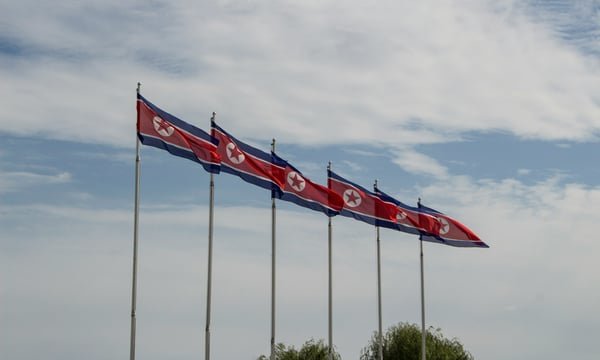
The image of famine is often rural: parched fields, emaciated livestock, and long lines of refugees. But as a new book-length account by veteran aid worker Kathi Zellweger reveals, the most harrowing dimension of North Korea's great famine of the 1990s was its silent, urban toll. In an excerpt published by The Diplomat from Miss Kathi: Saving Lives in North Korea, co-authored with Mike Chinoy, Zellweger recounts a visit to Sinuiju in September 1998. There, in a spotless apartment in a gray Stalinist block, she encountered a family that had not received rations from the Public Distribution System (PDS) in six months. The daughter-in-law, breastfeeding a sick six-month-old, asked a question that cut to the core of the regime's social contract: "Is this the end of the Great Leader taking care of us?"
This vignette, set against the backdrop of the Arduous March (1994-1998), provides a crucial corrective to the historical record. While international attention focused on the visible suffering in the countryside and the flood of refugees across the Tumen River, the famine's most profound tragedy was unfolding quietly in the cities, where residents who had been wholly dependent on state rationing had no means to forage, plant, or barter. Zellweger's account is not merely a memoir; it is a primary source document that illuminates the mechanics of collapse, the ethics of humanitarian intervention, and the enduring scars that continue to shape inter-Korean relations and the logic of aid diplomacy today.
The Collapse of the Public Distribution System and the Urban Trap
To understand the desperation in Mrs. Kim's apartment, one must grasp the centrality of the PDS to North Korean life. Established in the late 1950s, the PDS was the regime's primary mechanism for social control and urban survival. It was a system of state procurement and rationing that guaranteed a daily caloric intake to workers, students, and families in exchange for political loyalty and labor. For decades, the system functioned, albeit with periodic shortfalls. However, the confluence of structural inefficiencies, the loss of Soviet subsidies, and a series of natural disasters in the mid-1990s shattered the system's viability.
Zellweger's observation that "with the collapse of the Public Distribution System, which had been the sole source of food, many urban residents, unable to grow anything for themselves, simply wasted away in their homes, starving quietly and out of sight" is a devastatingly accurate summary of the urban trap. Unlike their rural counterparts, who could cultivate private garden plots or scavenge for wild foods, urban industrial workers—like the son and daughter-in-law in Mrs. Kim's flat who toiled in a textile factory—had no access to land. Their survival was entirely contingent on a state apparatus that had ceased to function. The result was a peculiar form of famine that left few visible traces on the streets but hollowed out families behind closed doors. The "hidden" nature of this famine, as the title suggests, made it difficult for outside observers to gauge the true scale of the catastrophe, and it complicated the international response.
Humanitarian Access and the Politics of the "Guardian Angels"
The excerpt also offers a rare glimpse into the operational realities of aid work in North Korea during this period. Zellweger's presence in Sinuiju was not accidental; it was a direct result of a negotiated transaction. The North Korean authorities and the World Food Program had requested that Caritas, the international charity where she worked, ship 1,500 metric tons of barley to the city. As she notes, "providing the aid opened the door for me to visit an area that had previously been off limits to visitors." This quid pro quo—aid for access—was the foundational logic of humanitarian engagement with Pyongyang.
The presence of "guardian angels," the minders who accompanied her, underscores the pervasive surveillance that defined these missions. Zellweger's decision to remain silent about the Kenny Rogers cassette tape playing in Mrs. Kim's home is a telling detail. It reveals the precariousness of even the most benign interactions. An innocent question about American music could have endangered the family, exposing them to accusations of fraternization or ideological contamination. For the aid worker, every word had to be weighed against the potential consequences for the beneficiaries. This constant negotiation—between the desire to help, the need to maintain access, and the imperative to protect the vulnerable—was the daily reality of humanitarian work in the hermit kingdom. It is a legacy that continues to define the fraught relationship between international NGOs and the North Korean state.
The Symbolism of Pawned Jewelry and the Erosion of Dignity
Perhaps the most poignant detail in the excerpt is the jewelry for sale in the Amnokgang Hotel shop. Zellweger's purchase of a pair of earrings inlaid with red stones, which she keeps to this day, serves as a material artifact of the famine's social cost. The fact that "desperate citizens had pawned their personal valuables to get money to buy food" signals a profound breakdown in social norms. In a society where collective identity was paramount, the act of selling personal heirlooms represented a final, desperate act of individual survival. It was a surrender of the last vestiges of family history and personal dignity in exchange for caloric intake.
This detail also highlights the emergence of a nascent, informal market economy even in the midst of state collapse. While the regime officially prohibited private commerce, the need for survival forced a parallel system into existence. The hotel shop, ostensibly a state-run enterprise, became a de facto pawn shop, a liminal space where the state and the starving citizenry engaged in a grim transaction. For scholars of North Korean political economy, this period marks the genesis of the jangmadang (informal market) system that would later become a central feature of daily life, gradually eroding the state's monopoly on distribution and, by extension, its totalitarian control.
The Arduous March and the Fracturing of the Social Contract
The daughter-in-law's plaintive question—"Is this the end of the Great Leader taking care of us?"—is the emotional and analytical core of the excerpt. It signals a crisis of legitimacy that went beyond mere hunger. The North Korean state had long justified its authoritarian rule through the promise of material provision. The songbun (class) system and the PDS were intertwined mechanisms of this paternalistic bargain. When the state failed to deliver on its most basic promise—food—the ideological foundation of the regime was shaken.
Yet, as history shows, the regime did not fall. The Arduous March, as the famine period is officially euphemized, became a foundational myth of suffering and resilience, used to rally the population around the leadership. The question posed in that Sinuiju apartment, however, reveals that this narrative was not universally accepted at the time. The famine created a deep, intergenerational trauma and a lingering cynicism that persists today. It also fundamentally altered the relationship between the state and the individual, forcing a survivalist mentality that prioritizes personal and family networks over collective loyalty. This psychological shift is a critical, often overlooked, legacy of the famine, and it continues to influence how North Koreans navigate the current era of sanctions and economic stagnation.
Implications for Contemporary Humanitarian Diplomacy
Zellweger's account is not just a historical document; it is a cautionary tale for contemporary policymakers. The current situation on the Korean peninsula, marked by a rigid sanctions regime and the COVID-19 border closures, has raised fears of a return to famine conditions. The North Korean government's decision to expel or restrict international NGOs in recent years has reduced the capacity for on-the-ground assessment, making the kind of access Zellweger achieved in 1998 nearly impossible today. This creates a dangerous information vacuum, where the international community is left to speculate about the severity of food shortages.
The lessons from the 1990s are clear. First, aid must be depoliticized to be effective. The constant suspicion that relief supplies were diverted to the military, which Zellweger had to overcome, remains a major obstacle to scaling up assistance. Second, access is a prerequisite for accountability. Without the ability to monitor distribution, donor governments are reluctant to commit resources. Third, the humanitarian imperative must be separated from the political goal of denuclearization. While the two are often linked in diplomatic discourse, the moral case for preventing mass starvation should stand on its own. As the international community debates its next steps regarding North Korea, the quiet suffering of families like Mrs. Kim's serves as a stark reminder of the human cost of political gridlock. The earrings in Zellweger's box are a silent testament to a tragedy that the world must ensure is never repeated.
This article was produced with AI-assisted research and editorial support. Sources: The Diplomat, "The Hidden Famine: What I Saw in North Korea's Darkest Years" (August 22, 2026).
By Prof. David Park, Staff Writer
What's Your Reaction?
 Like
0
Like
0
 Dislike
0
Dislike
0
 Love
0
Love
0
 Funny
0
Funny
0
 Wow
0
Wow
0
 Sad
0
Sad
0
 Angry
0
Angry
0
East Asia/Technology Correspondent at Global1.News. Seoul-based voice covering Korean politics, technology, business, and culture. Analyzes how technology and geopolitics intersect across East Asia.













Comments (0)