
UPSC CMS 2026 Answer Key: Exam Analysis & Updates
The Union Public Service Commission held the Combined Medical Services Examination 2026 on August 2 in computer-based mode, drawing thousands of medical graduates vying for central government posts.
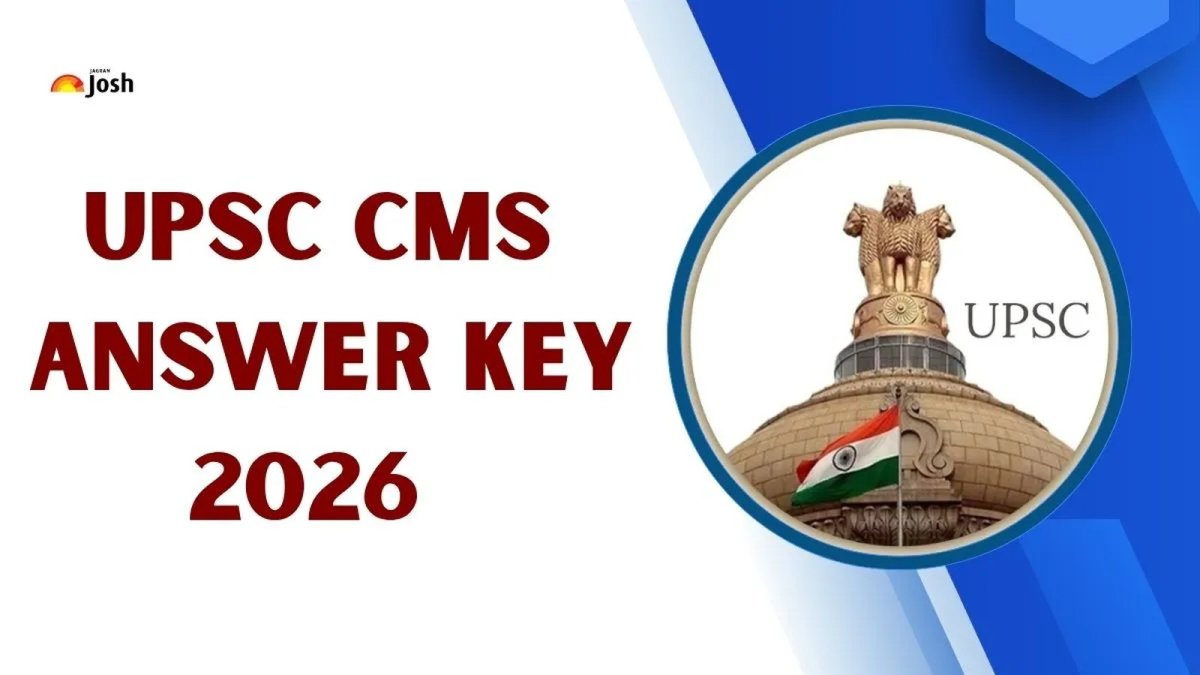
The Union Public Service Commission held the Combined Medical Services Examination 2026 on August 2 in computer-based mode, drawing thousands of medical graduates vying for central government posts. With the provisional answer key now anticipated on upsc.gov.in, candidates are preparing to review their responses and file objections where needed. This development marks a key step in filling critical vacancies across India's public health infrastructure.
UPSC CMS 2026 Answer Key: Exam Analysis & Updates
New Delhi, August 4, 2026 — The Union Public Service Commission conducted the Combined Medical Services Examination 2026 on August 2 in computer-based mode across two sessions, drawing thousands of medical graduates competing for central government posts.
The Exam in Numbers
The written stage comprised two papers of 250 marks each, for a combined total of 500 marks. Each paper contained approximately 120 questions, with 2.08 marks awarded for every correct response. The computer-based format covered objective-type questions drawn from clinical and para-clinical subjects. The shift to computer-based testing enhances transparency compared with the earlier paper-based format by reducing possibilities of manual errors in evaluation and enabling faster result processing. Indian medical graduates already accustomed to NEET-PG style computer-based testing find the interface and navigation consistent, lowering anxiety while maintaining strict proctoring standards.
Negative Marking Mechanics
Negative marking applies at the rate of one-third of the marks allotted to a question (about 0.69 marks per wrong answer). No penalty is levied for questions left unattempted. The one-third negative marking in this UPSC CMS examination demands rigorous attempt discipline from candidates. With 2.08 marks for a correct answer, an incorrect response deducts roughly 0.69 marks, meaning three wrong answers erase the gain from one correct response. This structure discourages random guessing and rewards selective attempts based on strong preparation. Candidates must calculate the break-even point where the probability of accuracy justifies risking a penalty, a calculation familiar to those who have sat similar objective tests. Such mechanics filter for precision rather than volume, directly influencing how medical graduates approach the 120-question papers. The 2.08 marks-per-question ratio further rewards accuracy because partial knowledge yields diminishing returns once negative marking is factored in, pushing aspirants toward thorough revision of clinical and para-clinical subjects rather than superficial coverage.
Provisional Answer Key and Objections
UPSC will release the provisional answer key to promote transparency in the evaluation process. Candidates can submit objections during a designated window, typically seven to ten days after publication. Each challenge must be supported by documentary evidence and accompanied by a fee of Rs. 100 per question challenged, which is refunded if the challenge succeeds — keeping the process accessible while discouraging frivolous representations.
The commission reviews all valid challenges before finalising the key and declaring results. Historical instances of UPSC revising keys after representations have shifted final selections, underscoring how this safeguard protects fairness in high-stakes medical recruitment, where even small corrections can alter merit lists and determine who receives appointments in the Central Health Service and municipal bodies.
1,359 Vacancies and Service Roles
The recruitment drive fills 1,359 posts in the Central Health Service, the Indian Railways Assistant Divisional Medical Officer cadre, and municipal corporations and bodies — positions that form the operational backbone of government healthcare delivery outside medical colleges.
An Assistant Divisional Medical Officer in Indian Railways delivers primary and emergency healthcare to railway employees, their families, and sometimes passengers across zonal networks, managing outpatient services, preventive programmes, and referral linkages within an infrastructure of more than 580 railway hospitals and health units. Municipal and central health service doctors similarly anchor urban primary care, staffing dispensaries, Employees' State Insurance Corporation facilities, and secondary facilities that serve dense populations.
Under the 7th Pay Commission matrix, these posts offer structured pay scales and career progression that attract qualified graduates to public-sector roles. Placement occurs across states, though candidates often prefer postings in major cities such as Delhi, Mumbai, Chennai, and Bengaluru due to better infrastructure and living conditions. Consistent staffing in railway colonies and municipal areas supports both routine care and outbreak response.

India's Doctor-Population Dynamics
India currently has 13.86 lakh registered allopathic doctors, per National Medical Commission data from November 2024, with roughly 80 percent available for active practice. The national doctor-population ratio stands at 1:834, better than the World Health Organization benchmark of 1:1,000.
The favourable national average, however, masks a sharp urban-rural divide: rural areas house about 65 percent of the population yet are served by a minority of registered practitioners, and smaller states continue to face acute shortages. Government recruitment pipelines such as CMS remain essential even as private medical colleges expand, because they channel doctors into sanctioned posts within central and municipal systems that private institutions do not address.
Public health spending hovers around 2.1-2.5 percent of GDP, and recent budget increases aim to strengthen delivery under Ayushman Bharat and the National Health Mission. A steady pipeline through the CMS examination helps close gaps in central and municipal health systems, bolstering emergency services, preventive programmes, and secondary-level facilities. Without steady recruitment, gaps in central health infrastructure widen, disproportionately affecting populations reliant on government facilities rather than urban private options.
The Road Ahead for Candidates
After the written results are declared, shortlisted candidates will appear for the Personality Test, which carries 100 marks and determines final selection for the advertised posts. The final merit list will determine allocation to specific services and cadres. Aspirants should monitor upsc.gov.in regularly for the answer key release date and objection schedule. Preparation for the interview stage should focus on current health policy developments, public health challenges, and administrative aspects of medical service delivery. Timelines typically see written results within two to three months, followed by interviews and final appointments by early 2027.
Broader Implications for Public Health
The CMS examination remains a critical recruitment channel that directly influences the strength of India's public healthcare workforce. With 1,359 vacancies on offer and a transparent answer key process underway, the 2026 cycle will shape staffing levels in central hospitals, railways, and municipal health services for years to come. Accurate and timely evaluation supports both candidate confidence and the broader goal of equitable healthcare access across urban and rural India.
— By Dr. Raj Patel, Staff WriterThis article was produced with AI-assisted research and editorial support. Reporting is based on sources cited in the article.
What's Your Reaction?
 Like
0
Like
0
 Dislike
0
Dislike
0
 Love
0
Love
0
 Funny
0
Funny
0
 Wow
0
Wow
0
 Sad
0
Sad
0
 Angry
0
Angry
0

India/South Asia Correspondent at Global1.News. Analytical voice with a background in science and health journalism. Based in New Delhi, covering Indian politics, education, healthcare, technology, and policy. Breaks down complex data into clear, actionable reporting.











Comments (0)