
UN envoy returns to Cyprus for talks with Turkish, Greek Cypriot leaders
As the Mediterranean continues to serve as a crossroads of competing regional interests, the renewed diplomatic activity surrounding the Cyprus dispute underscores how the island remains a barometer of broader Sunni‑Shia competition, great‑power rivalry and energy security concerns.
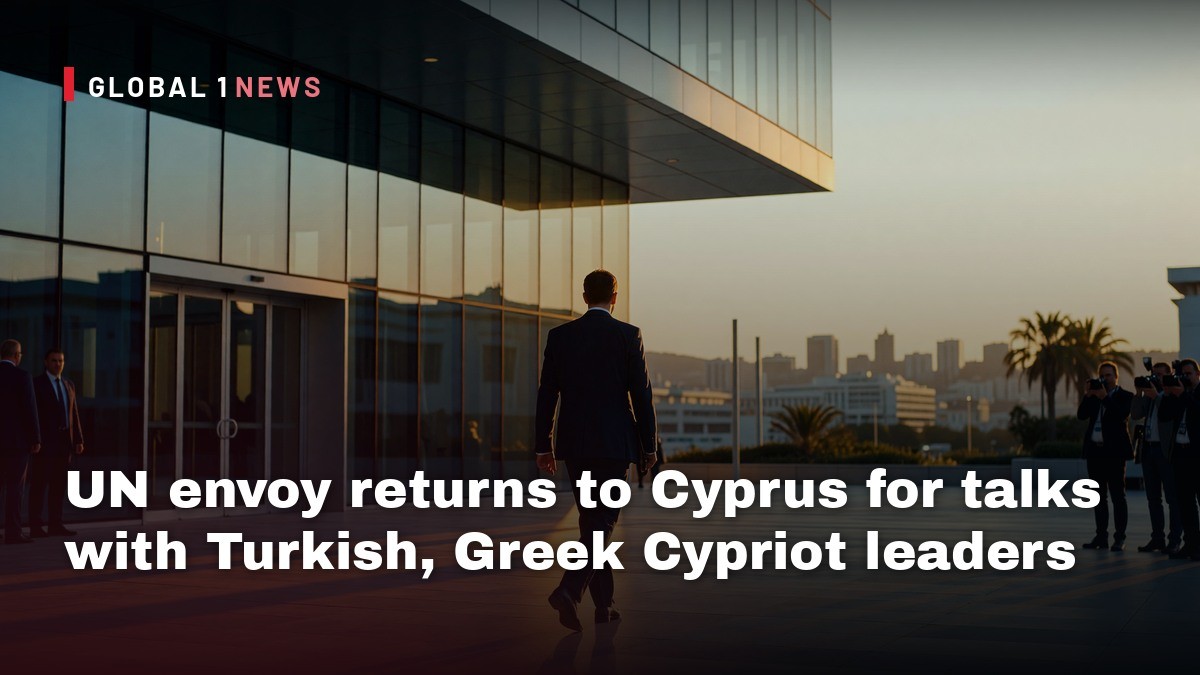
As the Mediterranean continues to serve as a crossroads of competing regional interests, the renewed diplomatic activity surrounding the Cyprus dispute underscores how the island remains a barometer of broader Sunni‑Shia competition, great‑power rivalry and energy security concerns. In October 2026, United Nations Secretary‑General Antonio Guterres’ personal envoy, Maria Angela Holguín, returned to the island for a fresh round of consultations with the leaders of the Greek Cypriot and Turkish Cypriot communities. The timing of the visit, set against a backdrop of shifting alliances in the Eastern Mediterranean, highlights the delicate balance that external actors—particularly the European Union, Turkey and the United States—must navigate while supporting a United Nations‑led peace process that has been stalled for decades.
Renewed UN engagement and the role of the personal envoy
Holguín’s arrival on Friday marked the latest effort by the United Nations to re‑energise talks that have long been hampered by mutual distrust and divergent expectations. As the Secretary‑General’s personal envoy for Cyprus, Holguín is tasked with bridging the gap between the two sides, a role that requires both diplomatic discretion and the ability to steer confidence‑building measures. Her itinerary, as reported, included a meeting with Greek Cypriot President Nikos Christodoulides on Friday, followed by a separate session with Turkish Republic of Northern Cyprus (TRNC) President Tufan Erhürman on Monday, 2 November.
The structure of these consultations—separate bilateral meetings leading to a trilateral session—reflects a classic UN mediation technique aimed at reducing pressure on each party while allowing the envoy to gauge the willingness of both sides to compromise. The plan to convene a three‑way meeting on 9 November under UN auspices suggests that Holguín’s team is seeking to translate the bilateral confidence‑building discussions into a broader framework that could eventually reopen substantive negotiations.
While the source material does not detail the specific agenda items, it notes that the upcoming talks will focus on confidence‑building measures, negotiation methodology and ways to maintain dialogue. This emphasis aligns with the United Nations’ longstanding strategy of first establishing a conducive atmosphere before tackling the core political questions that have historically derailed the process, such as the status of Varosha and the configuration of crossing points.
Confidence‑building measures as a prelude to substantive talks
The emphasis on confidence‑building measures (CBMs) is significant because such steps have historically served as the only viable entry point for dialogue between the two communities. In the October 27 2026 UN‑facilitated meeting, Christodoulides and Erhürman discussed crossing points and the status of Varosha, indicating a willingness to engage on practical issues that affect daily life on the island. By concentrating on CBMs, Holguín’s current mission seeks to create a tangible sense of progress that can sustain public support for a longer‑term settlement.
Greek Cypriot media reports suggest that the upcoming consultations will also address “outstanding differences” between the sides, a phrase that hints at lingering disputes over security guarantees, property restitution and the political status of the north. However, the reports also acknowledge that no concrete progress has yet been achieved toward formally restarting comprehensive settlement negotiations. This underscores the fragile nature of the confidence‑building process, which can be easily undermined by premature public statements or external provocations.
In a broader regional context, CBMs in Cyprus are intertwined with energy security considerations. The discovery of offshore gas reserves in the Eastern Mediterranean has heightened the strategic importance of the island’s maritime zones. While the source material does not reference energy directly, the ongoing diplomatic efforts cannot be divorced from the fact that any settlement will inevitably involve the delineation of exclusive economic zones and the sharing of hydrocarbon revenues—a factor that adds urgency to the UN’s push for dialogue.
The significance of the timing and the restraint agreement
The decision by Christodoulides and Erhürman, following their October 27 meeting, to refrain from making further public statements on substantive aspects of the dispute is a tactical move aimed at preserving the diplomatic space needed for Holguín’s consultations. By limiting public commentary, both leaders sought to prevent the escalation of rhetoric that could derail the delicate confidence‑building process.
This restraint reflects a broader pattern in conflict mediation where parties agree to “quiet diplomacy” to allow mediators to work behind the scenes. In the case of Cyprus, where domestic politics on both sides can be highly polarized, such an agreement is essential for maintaining the momentum of negotiations without triggering nationalist backlash.
Moreover, the timing of Holguín’s visit—just days after the October 27 meeting—suggests that the United Nations is attempting to capitalize on the goodwill generated by the bilateral encounter. By swiftly moving to a new round of talks, the UN aims to prevent a lapse in engagement that could allow hardliners on either side to regain influence and stall the process once more.
Regional dynamics and external actors’ interests
The Cyprus issue cannot be examined in isolation from the broader geopolitical currents that shape the Eastern Mediterranean. Turkey’s involvement in the island’s politics is part of its wider strategy to assert influence over the region’s energy corridors and to counterbalance the European Union’s presence. Meanwhile, the EU, as the guarantor of the Republic of Cyprus, has a vested interest in a stable resolution that would secure its southern flank and ensure uninterrupted energy supplies.
In recent years, the United States has also signalled a willingness to support a negotiated settlement, viewing stability in Cyprus as a prerequisite for broader regional security, especially in light of ongoing tensions between Israel and Iran. While the source material does not detail the positions of these external powers, the very fact that the United Nations continues to serve as the primary facilitator indicates that all parties recognise the need for a multilateral framework that can accommodate the competing interests of regional and extra‑regional actors.
The upcoming trilateral meeting on 9 November will therefore be watched not only for its immediate outcomes but also for the signals it sends to these external stakeholders. A successful confidence‑building session could encourage further diplomatic engagement from the EU, the United States and even Russia, each of which has historically sought to maintain a foothold in the Eastern Mediterranean.
Potential pathways and the limits of the current process
While the source material outlines a clear procedural roadmap—bilateral meetings leading to a trilateral session—the substantive issues that must eventually be addressed remain formidable. The status of Varosha, a deserted quarter of Famagusta that remains a symbol of the island’s division, continues to be a contentious point. Similarly, the configuration of crossing points, while a practical matter, carries deep symbolic weight, as it reflects the degree of freedom of movement between the two communities.
Holguín’s focus on negotiation methodology suggests an attempt to modernise the dialogue process, possibly by introducing new formats such as “track‑two” discussions or confidence‑building workshops that involve civil society actors. However, the source material does not indicate whether such mechanisms are being considered, leaving open the question of how the UN plans to broaden participation beyond the political elite.
Given the entrenched positions on both sides, any progress will likely be incremental. The absence of concrete achievements reported so far points to the need for sustained diplomatic pressure and the willingness of both leaders to make incremental concessions—particularly in the realm of confidence‑building, where small steps can gradually build the trust necessary for tackling the more intractable political questions.
Implications for the future of the Cyprus peace process
The upcoming November meetings represent a critical juncture for the Cyprus peace process. If Holguín can translate the bilateral confidence‑building discussions into a substantive trilateral framework, the United Nations could revive the stalled negotiations that have lingered since the 2004 Annan Plan. Conversely, a failure to achieve tangible progress could reinforce the perception that the UN‑led process is ineffective, potentially prompting the parties to seek alternative avenues, such as direct talks mediated by regional powers.
For the Greek Cypriot side, maintaining the restraint on public statements, as agreed after the October 27 meeting, will be essential to preserve the diplomatic space needed for negotiations. For the Turkish Cypriot side, demonstrating a willingness to engage in confidence‑building without pre‑emptive public posturing could enhance its credibility as a constructive partner.
In the broader regional tableau, a breakthrough—or even a modest step forward—could have ripple effects across the Eastern Mediterranean, influencing other frozen conflicts and energy‑related negotiations. The United Nations’ continued involvement signals a commitment to a multilateral solution that respects the island’s complex demographic and geopolitical realities, even as great‑power rivalries continue to shape the strategic calculus of the region.
Conclusion: A cautious optimism tempered by structural challenges
Holguín’s return to Cyprus in late October 2026 illustrates the United Nations’ persistent, albeit cautious, effort to keep the peace process alive. By focusing on confidence‑building measures and negotiation methodology, the envoy seeks to lay the groundwork for a more substantive dialogue that could eventually address the core political disputes. The restraint agreed upon by the Greek Cypriot and Turkish Cypriot leaders underscores a mutual recognition that public grandstanding would only undermine the fragile progress made in recent weeks.
Nevertheless, the structural challenges—deep‑seated mistrust, divergent security concerns, and the overlay of external strategic interests—remain formidable. The success of the upcoming trilateral meeting on 9 November will hinge on the ability of both sides to translate confidence‑building into concrete steps that demonstrate a genuine commitment to compromise. As regional powers watch closely, the outcome will not only shape the future of Cyprus but also signal the efficacy of UN‑led mediation in a region where great‑power competition increasingly dictates diplomatic outcomes.
In the final analysis, while the path to a comprehensive settlement remains long and fraught, the renewed diplomatic activity offers a modest but meaningful window of opportunity. Should the confidence‑building measures gain traction, they could serve as the foundation for a renewed, albeit gradual, peace process that aligns with the broader strategic imperatives of stability and energy security in the Eastern Mediterranean.
This article was produced with AI-assisted research and editorial support. Reporting is based on the source material cited below. Sources: Daily Sabah Middle East; dailysabah.com; Global1.News (31 October 2026).
By Malik Hassan, Staff Writer
What's Your Reaction?
 Like
0
 Dislike
0
 Love
0
 Funny
0
 Wow
0
 Sad
0
 Angry
0
Middle East Correspondent at Global1.News. Based in Beirut, covering politics, conflict, energy, and society across the Middle East. Brings context and depth to a region often reduced to headlines.










Comments (0)